Explosion at Bulgarian ammunition depot supplying Ukraine sparks massive fire, sabotage probe
 on Google
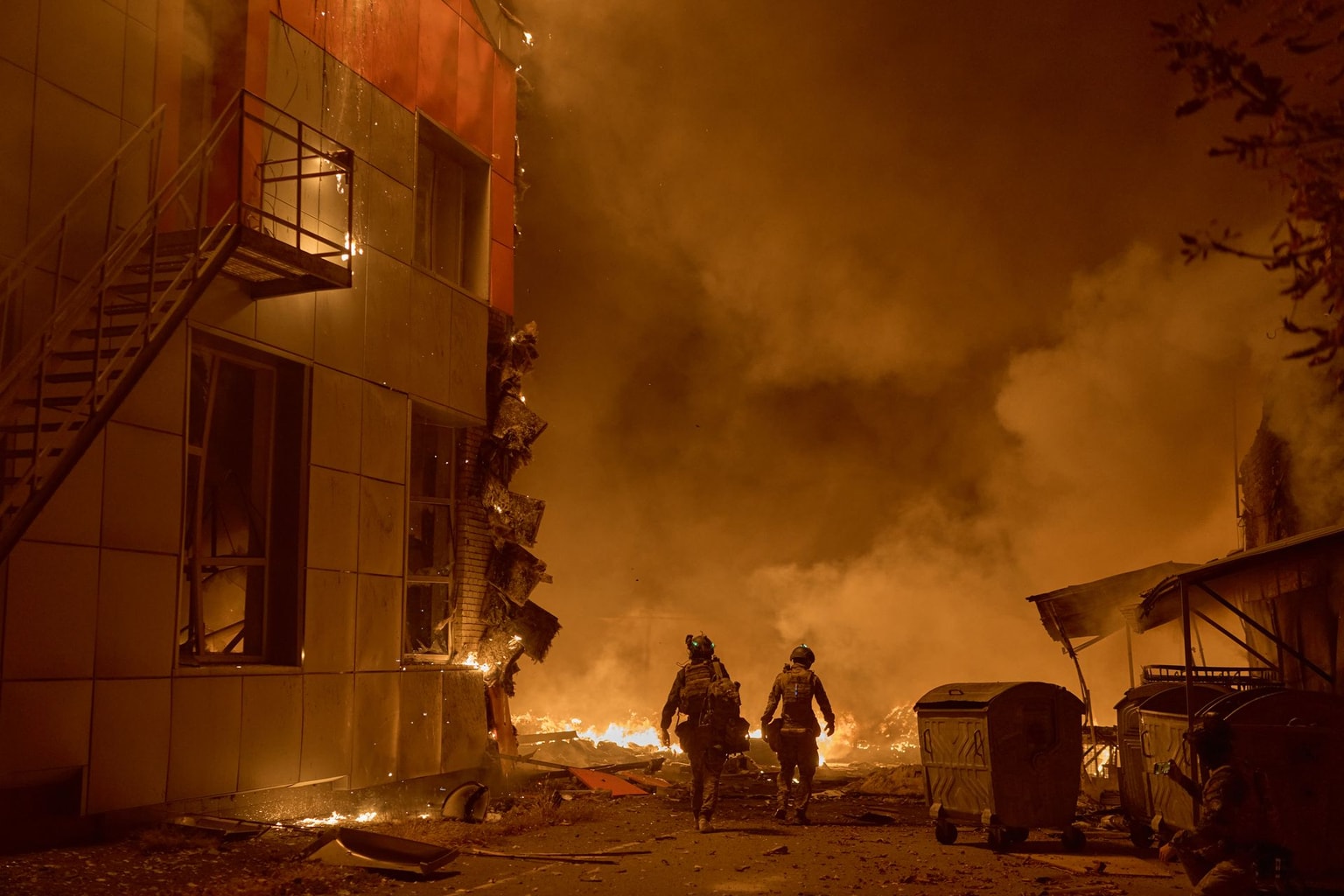
An explosion caused a large fire at a Bulgarian weapons storage facility operated by arms manufacturer EMCO overnight on Sept. 12, according to local authorities.
The blaze marks the second such incident at one of the company's sites in recent weeks.
The fire broke out near the village of Tsareva Livada in central Bulgaria and spread from one warehouse to another, Gabrovo Regional Governor Kristina Sidorova told journalists, as reported by the Bulgarian News Agency.
No injuries were reported.
EMCO supplies ammunition used by Ukraine and is owned by Bulgarian arms trader Emilian Gebrev, whose company and facilities have previously been at the center of investigations into suspected Russian sabotage.

In a statement following the blast, EMCO said the latest explosion was an act of sabotage and rejected human error as a possible cause, saying the warehouse had not been used for months and had recently passed Interior Ministry inspections.
"The incident at its warehouse on September 11 was no exception to the series of sabotage against the Bulgarian defense industry," the company said in a statement.
"The purpose of the particular warehouse is such that it completely excludes human error as the cause of its destruction," EMCO added.
Bulgarian authorities have not reached the same conclusion. Interior Minister Ivan Demerdzhiev said investigators were examining the possibility of sabotage and had not ruled out external interference, while also pointing to shortcomings in storage and site security.
"There is a neglect of the conditions under which explosives and ammunition are stored. There is also a neglect of the method of security," Demerdzhiev said.
"We do not rule out external interference, but when you have neglected the conditions under which explosives are stored and security, then one does not exclude the other."
Demerdzhiev also said authorities would inspect other ammunition warehouses across Bulgaria following the blast.
The Sept. 12 incident marks the second blaze involving the company in just over a month — another explosion and fire occurred at an EMCO facility in August.
read also
EMCO facilities have repeatedly been targets of suspected sabotage operations. In 2024, Bulgarian authorities issued arrest warrants for six Russian citizens accused of involvement in explosions at ammunition warehouses between 2011 and 2020.
Bulgarian prosecutors said at the time that the warehouses involved in the wider investigation stored ammunition intended for export to Ukraine and Georgia.
Prosecutors have also said they could reasonably assume links between the Bulgarian warehouse explosions, a 2015 attempt to poison Gebrev, and the 2014 explosions at ammunition depots in the Czech Republic.
Investigative outlets Bellingcat and The Insider have linked the poisoning attempt and some of the explosions to Unit 29155 of Russia's military intelligence agency, the GRU. Moscow has denied involvement.
The latest incident comes amid broader concern over fires, explosions, and suspected sabotage at European defense facilities supplying Ukraine. An explosion at an ammunition plant in Italy in August prompted an investigation after a fire broke out at a factory producing 155 mm artillery shells supplied to Ukraine.
Earlier this year, six people were injured in an explosion at a plant owned by Rheinmetall — one of Europe’s largest defense manufacturers and a major supplier of military equipment to Ukraine.
In June 2026, Bulgaria's Russia-friendly government announced it would no longer supply arms to Ukraine.