Latvia votes with Russia threat looming large
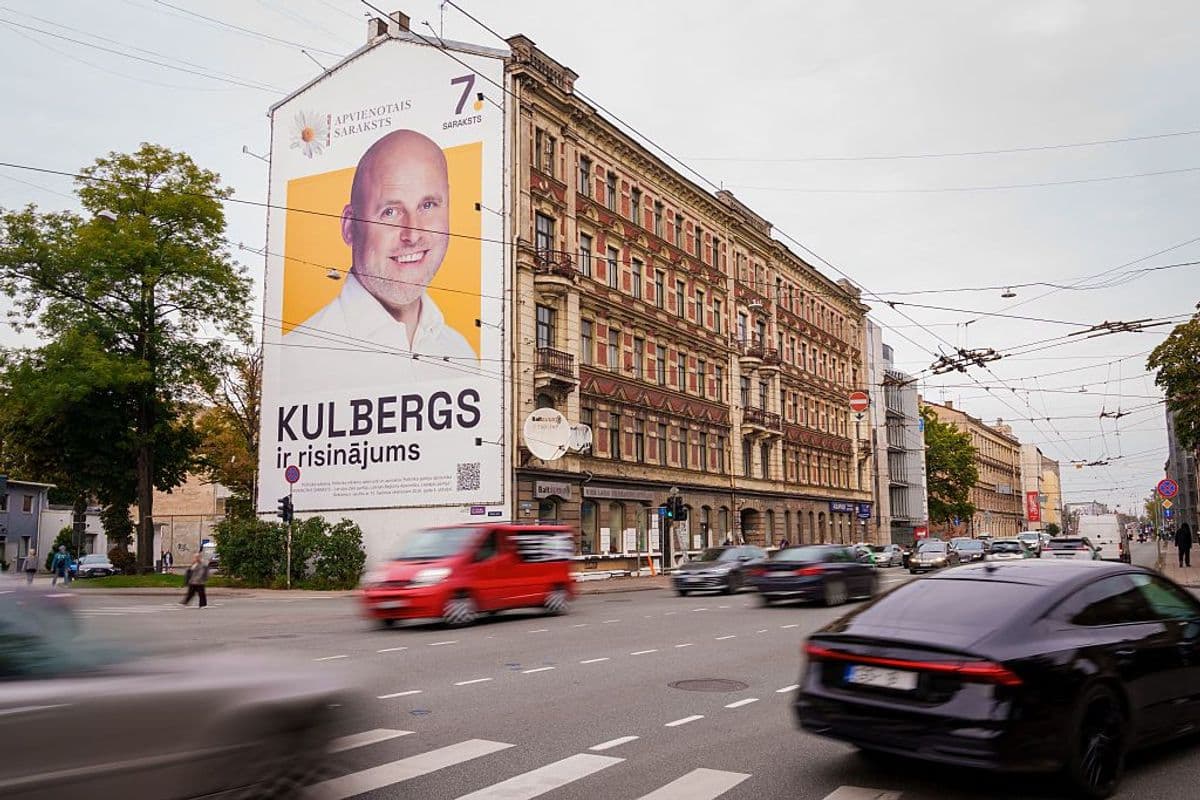
Latvian Prime Minister Andris Kulbergs, leader of the United List party, is seen on an election advertising banner before the upcoming election on Sept. 30, 2026 in Riga, Latvia. (Gints Ivuskans / AFP via Getty Images)
 on Google
Latvia will elect a new parliament this weekend, in an election dominated by security concerns over the now emboldened Russia next door and a cost-of-living crisis shaping the domestic agenda.
The Oct. 3 vote for the 100-member unicameral parliament — the Saeima — will be the second since Russia launched its full-scale invasion of Ukraine, a war in which Latvia threw its full support behind Kyiv.
It also comes as Western officials raise alarm over Moscow's escalating hybrid threat — a particularly pressing concern for Latvia, which borders both Russia and Belarus and where roughly a third of the 1.8 million population speaks Russian as their mother tongue.
Seven of the 14 running parties are expected to enter the parliament, with polling stations set to open at 8 a.m. local time and close at 8 p.m.
Surveys indicate a likely victory for the United List (AS) alliance of pro-Ukraine Prime Minister Andris Kulbergs, but he will still need coalition partners to put together a majority.
Kulbergs has vowed "unwavering support to Ukraine" if reelected, and Riga is broadly expected to maintain a pro-Kyiv, pro-European course after the elections.
Nevertheless, roughly one-fifth to one-quarter of the votes are expected to go to parties fishing for support among Russian speakers, including the Latvia First party, led by a Trumpian tycoon, and the Moscow-friendly Sovereign Power.
A crowded election field
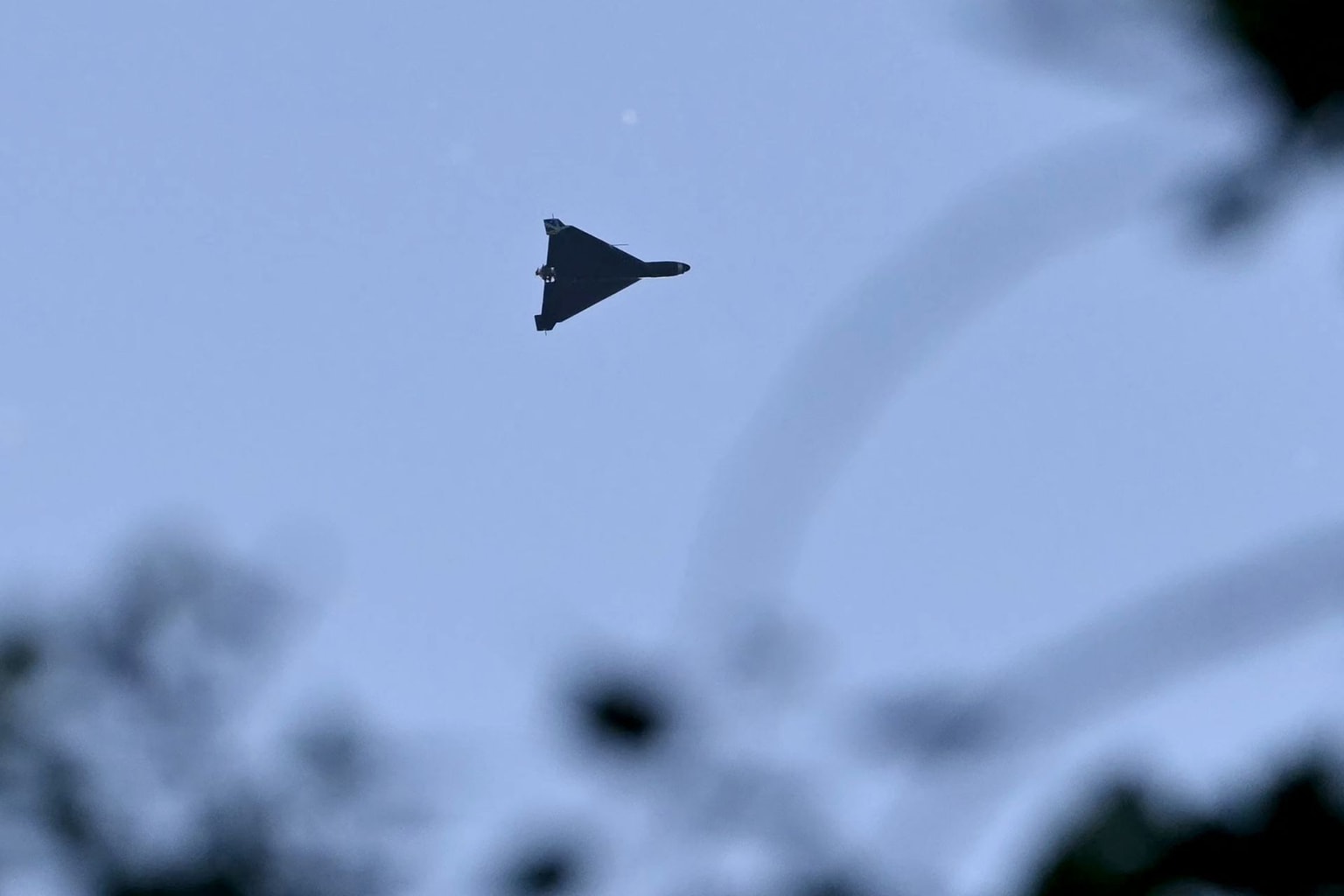
Seen as a relative newcomer to high-level politics, the former race car driver Kulbergs has led the Latvian government since May, when the mishandling of a Ukrainian drone crash led to the collapse of then-Prime Minister Evika Silina's cabinet.
Kulbergs' relatively short tenure saw his United List — an electoral alliance of regionalist and green conservative parties — surge in support.
With the backing of 22.7% of decided voters, according to a September poll by SKDS/LSM, the center-right alliance will almost certainly be the leading force in the next coalition.
Who else will land in it remains unclear.
Kulbergs currently sits in a cabinet with the nationalist National Alliance, the agrarian Union of Greens and Farmers (ZZS), and the liberal-conservative New Unity (JV), led by Silina.
But recent surveys make it uncertain whether the latter two will cross the 5% threshold required to enter the parliament.

The pro-European, social-democratic Progressives — polling around 10% — could help Kulbergs cobble together a pro-Western bloc, but an ideological divide might complicate an alliance with center-right and right-wing parties.
The Progressives left Silina's cabinet in May along with their defense minister, Andris Spruds, whom the prime minister blamed for failing to protect Latvian airspace from Ukrainian drones diverted there by Russian jamming.
Latvia First (LPV), a right-wing populist party polling third at 13.3%, is led by businessman Ainars Slesers, whose political style has often been compared to that of U.S. President Donald Trump.
A populist who leans heavily on anti-establishment talking points and dabbles in disinformation, the "Latvian Trump" could be a wild card if several incumbent parties fail to enter parliament.
Slesers, who has had ties to Russian oligarchs, is courting both Latvian-speaking and Russian-speaking voters, criticizing the government's policies that prioritize Latvian over Russian in public spaces.
His record on Ukraine has been inconsistent. Before the full-scale invasion, he had mocked sanctions against Russia and dismissed warnings of the war.
But the populist leader changed his tune after 2022, naming Russia the aggressor and even booting those members of his party who failed to condemn Moscow.

While saying that Latvia's support for Kyiv should continue, his party also argues that Riga should restore economic ties with Russia after the war ends.
The politicians expelled from Latvia First in 2022 went on to found Sovereign Power, the other major party seeking support among Russian speakers and the only relevant political force opposing aid to Ukraine.
Running as Sovereign Power/Young Latvians Alliance (SV/AJ), it polls second at 14.1%. But its stances make it an unlikely coalition partner in a country where popular support for Ukraine remains strong.

Kulbergs has ruled out a coalition with Sovereign Power, calling it a threat to Latvia's security and democracy.
For now, he has also rejected cooperation with Latvia First — but observers do not rule out that Slesers may eventually join the government, especially if Kulbergs is left with few other potential partners.
Security takes center stage
Security concerns and the Russian threat have loomed large over the election campaign.
Latvian intelligence warned in June that Moscow may be preparing to test Poland and the Baltic countries with hybrid attacks or drone and missile incursions.
Other Western officials have raised similar concerns as Russia's hybrid campaign — ranging from cyberattacks and disinformation to arson and sabotage — continues to grow increasingly brazen.
Mere days before the elections, Latvia's northern neighbor Estonia accused Russia of orchestrating an arson attack against a defense company in Tallinn.
A month earlier, Germany named Moscow as the culprit behind an attempted drone attack against Leipzig Airport.
And while Latvia has said it sees no sign of an imminent conventional Russian attack, the Russia-Ukraine war has already spilled over into Latvian airspace, with several stray drones shot down by NATO planes.
With elections approaching, governing politicians have sought to reinforce their image as Russia hawks.
Latvia was the only country to briefly block a Slovak and French request, ultimately successful, to delist two Russian oligarchs from EU sanctions.
National diplomats previously told the Kyiv Independent that Riga sought to postpone the EU decision until after the Latvian elections, as the delisting would be politically toxic.
Latvia eventually imposed unilateral sanctions on the oligarchs after they were removed from the EU sanctions list.
But Riga's hawkish posture is likely to outlast the election season. As Moscow's shadow war escalates, the next government will have little room to soften its stance on Russia.