Sign of the times: Ukraine’s small dairy farms are disappearing
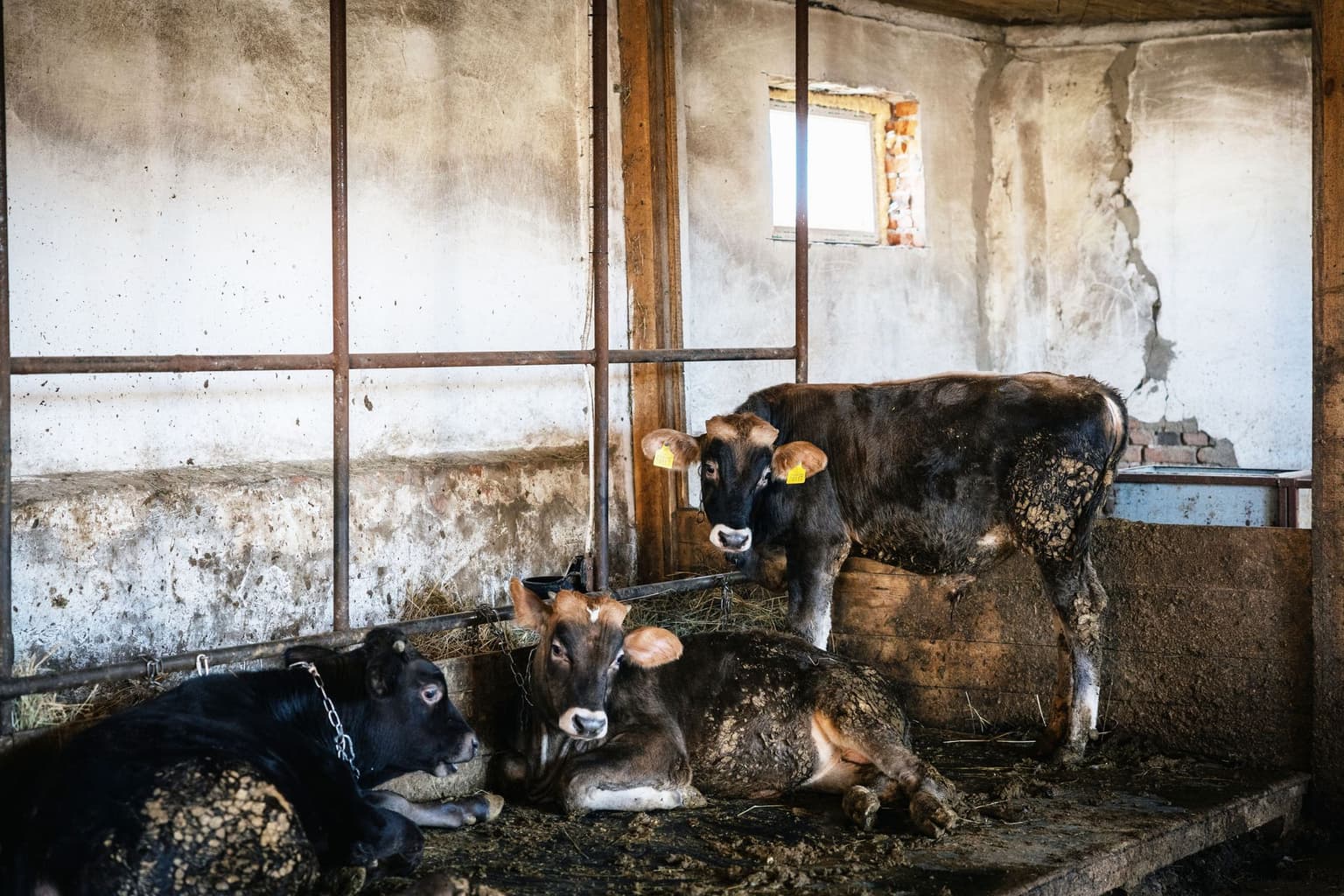
Farm animals owned by Marinka Hritsik on her farm in Chernihiv, Ukraine on Sept. 30, 2026. (Maksym Kishka / The Kyiv Independent)
 on Google
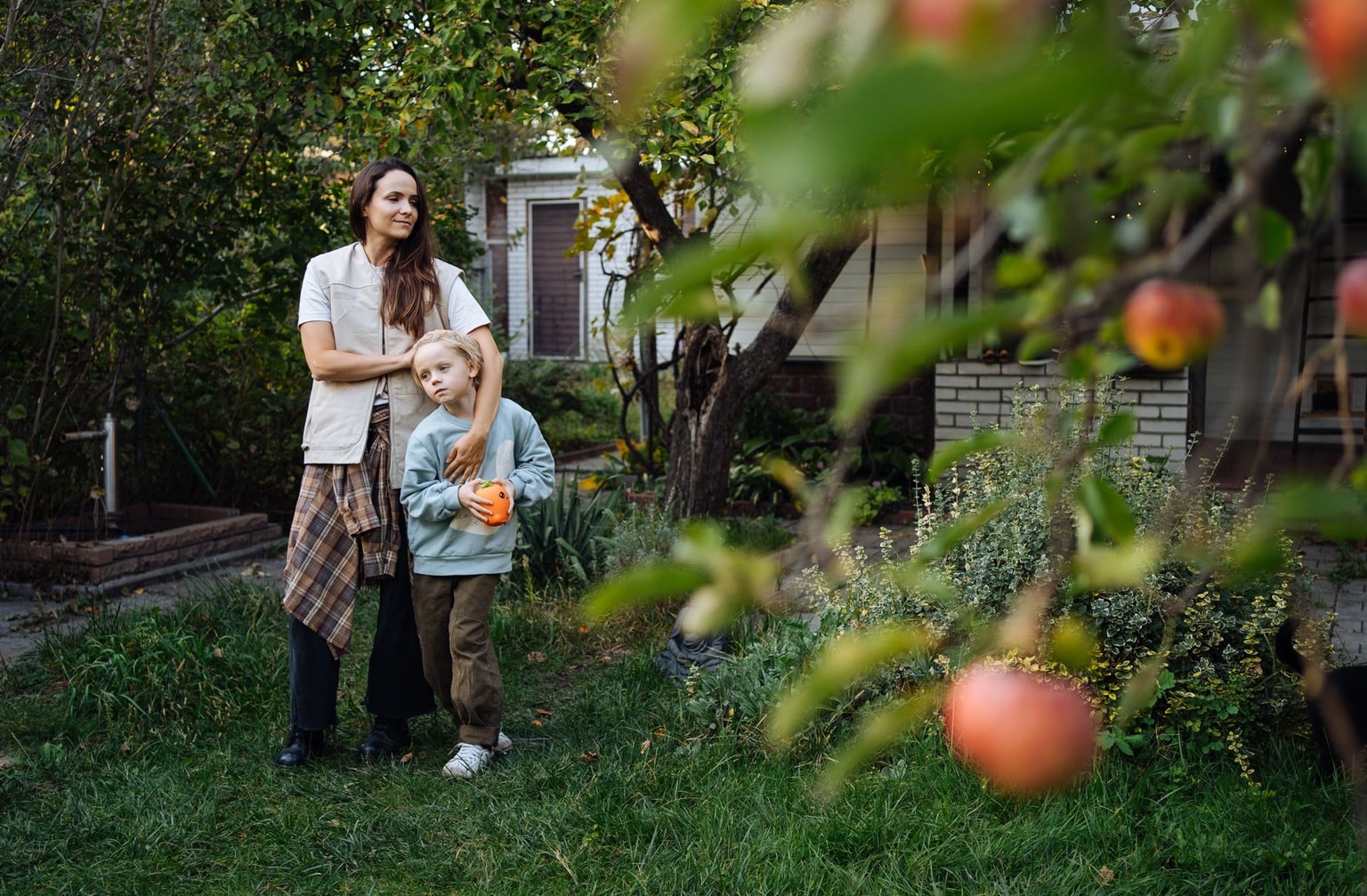
Marinka Hritsik has watched Ukraine’s dairy farming traditions change before her eyes.
"There were eighteen (household-owned) cows in our village in 2022, but now there are seven," said the family farmer from near Chernihiv. "By winter, there probably won’t be any left."
Hritsik's story reflects a national shift: Ukraine's smaller dairy farms are disappearing while the biggest keep growing. High costs and low prices, EU rules, and the war are pushing small producers out even as the government's 2035 draft strategy sets out a future for the industry.
Whether small farms have a future in the country and what the countryside loses if they don't, remains an open question.
The number of official farms in Ukraine fell by a third over five years, with smaller farms disappearing fastest. At the same time, the number of cows owned by household farms — informal and with fewer than five cows — have decreased by two-thirds in a decade.

Only the largest farms with herds of 1,000 cows or more increased in number. If ten years ago as much as 75% of the milk was estimated to be produced on household farms, 2026 is forecast to be the first year that enterprises dominate.
The U.N.-led Food Security and Livelihoods Cluster warned in May of an impending "rural crisis" for "household" farms in Ukraine "driven by prolonged conflict, rising fodder costs, declining profitability of smallholder dairy production, and disrupted rural market systems."
"Smaller farms today are in quite a dire situation," said Hanna Lavreniuk, the director general of Ukraine’s Association of Milk Producers (AMP). But, she warned, even mid-sized farms are at risk. For some farms, "it will be the last season."
Squeezed from all sides
The war has worsened the already difficult situation with small dairy farmers. Workers went off to fight, and land was lost to occupation or devastated by explosive weaponry. Stories abound of livestock being killed during occupation and attacked by drones in villages near the front lines. Farmers are also among the millions of Ukrainians forced to leave their homes.
Even without war, winter, which is right around the corner, is the hardest season on any dairy farm. The grass doesn’t grow, so animals rely on expensive feed. At the same time, cows are generally rested between 'lactations' — meaning there is less milk to sell.

But to understand why times are so tough, you need to look not only at the war, but at the global backdrop.
Milk prices have slumped worldwide, after more milk was produced than anyone knew what to do with in 2025. Fertilizer and fuel prices spiked upwards after the U.S. and Israel’s attack on Iran. And EU regulations are starting to take effect, adding cost and complexity to the day’s work.
All this puts farmers under heavy pressure, operating with small margins or even at a loss.
Hritsik says it costs her around Hr 13 ($0.29) to produce a liter of milk, depending on the price of fuel and feed. On average, farms might sell for Hr 15 per liter. But, she says, factories try to pay smaller farms as little as Hr 9. This means they can even lose money and face closure if they can’t find an alternative market.
"Many people who could, sold their livestock and left," she said. "People don’t have the money to buy our produce. And we can’t go any lower, because of the high cost of feed."
Not only do farmers struggle to make ends meet as a result of global economic shifts. They also have to get used to following the EU’s rules, and competing with European farmers.

Most recent were the introduction of new animal health and welfare standards.
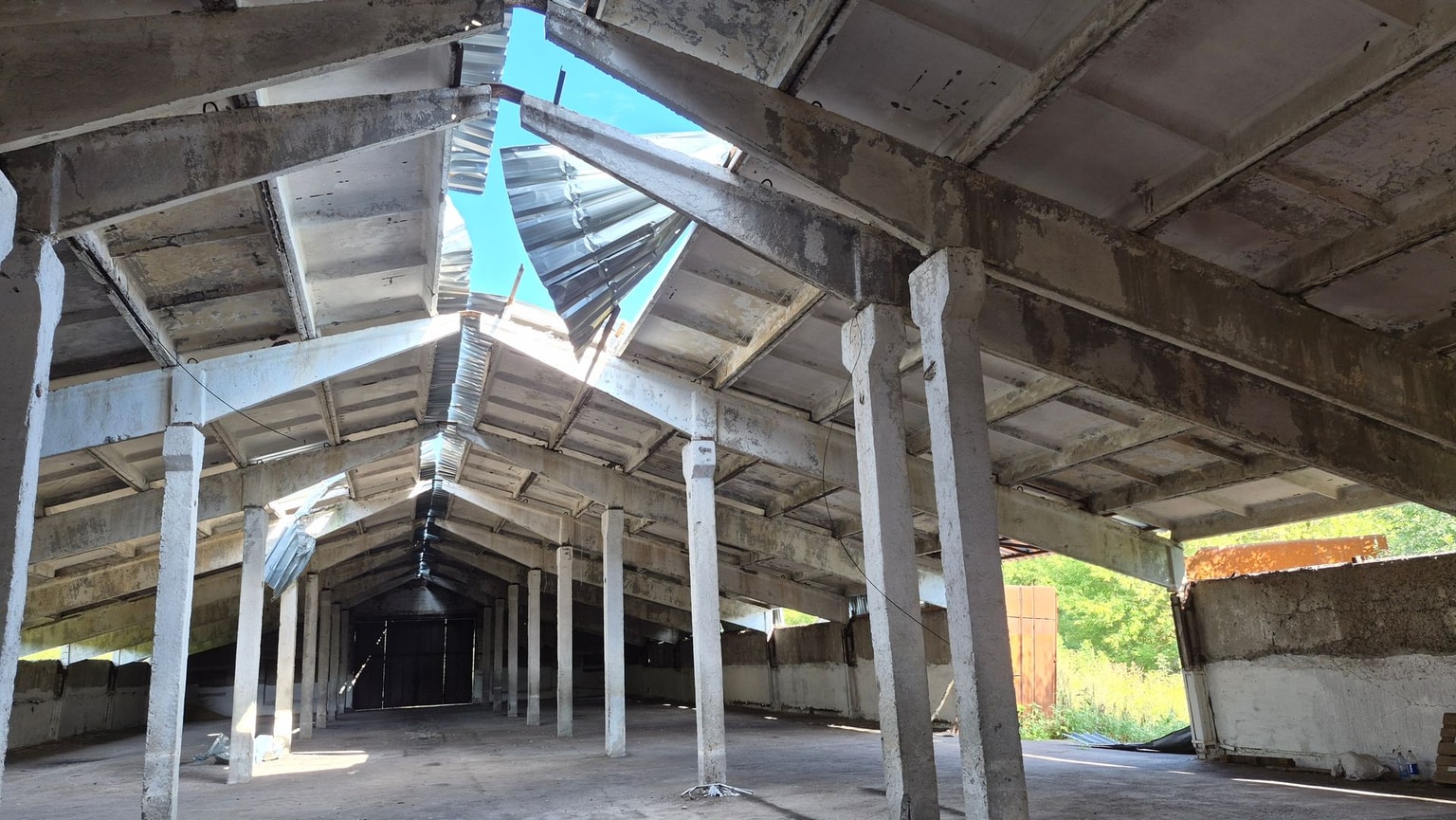
Hanna Lavreniuk from the AMP says the reforms are "logical," because they improve efficiency and quality. But, there are upfront costs. Her research says many farmers will need to upgrade their buildings to comply. It’s hard to afford that investment when the national bank’s interest rate is 16%.
Participation in European markets also has challenges. It is sometimes taken for granted that Ukraine will be a competitive risk for other EU farmers. As they see it, Ukrainian land is plentiful, the soil is nutrient-rich, and wages are comparatively low.

But there is little sense of anticipation among Ukrainian dairies. Instead, they see EU farmers enjoying advantages: more conducive taxes and subsidies, smaller logistics costs over shorter distances, and better investment.
This summer, imported cheese has been the symbol of EU products outcompeting Ukrainian dairy.
While consumer demand for cheese has grown, Ukrainian factories aren’t necessarily equipped to meet that demand. Meanwhile, foreign cheese makers are looking for new markets to sell spare stock. When Ukrainians go to the supermarket, they find that foreign cheese is as affordable as Ukrainian produce, or even cheaper.

Every hryvnia the consumer spends on imports is a hryvnia they don’t spend on Ukrainian dairy. When margins are thin, that hurts.
The issue has even made it into the government’s draft dairy strategy, where it is said that processing plants need help to invest in new machinery to meet demand.
Who benefits
These economic factors are changing the shape of the rural economy. Hritsik, the farmer from Chernihiv, explained that when small farms close, a bigger farm will buy up the land.
Opinions differ as to whether this is a good thing.
Some say it makes Ukraine’s dairy sector more sustainable. Reliable profitability might only start from 400 cows, according to Maks Fasteyev of InfoAgro and the Union of Dairy Enterprises.

Bigger farms produce more milk, meaning they get better prices and bigger revenues. This makes them resilient to price fluctuations. They’re usually more efficient too. They can invest in feed, breeding and equipment, so each cow produces more milk.
But consolidation also has drawbacks.
The environmental campaign group Ecoaction points out that the bigger farms can put a lot of pressure on the land, making them less viable in the long run. They also risk creating pollution if manure isn’t managed properly.
By contrast, Ecoaction’s Mariia Bielkina says, a "small livestock model can be really supportive for this grassland or pasture management," promoting biodiversity and capturing carbon.
Despite the challenges, Ivan Pankiv is an optimist.

As president of the Agricultural Advisory Service, he promotes small and medium farming. In their milk testing laboratory, he has a bird’s eye view of the evolving sector.
With test results in hand, the farmers he consults can better care for their animals’ health, and get the credibility they need to sell milk to factories.
He agrees that the household herd has declined rapidly in recent years, and likely won’t come back. But, he sees opportunities for smaller farms to survive, and even grow, adding that if Ukraine's farmers have economic worries, so do farmers worldwide.
Despite the circumstances, Pankiv says, Ukraine's "farms will develop, because every week people call us, write to us, and meet with us — people who want to build."