Washington should pay attention to Ukraine's new robotic counteroffensive
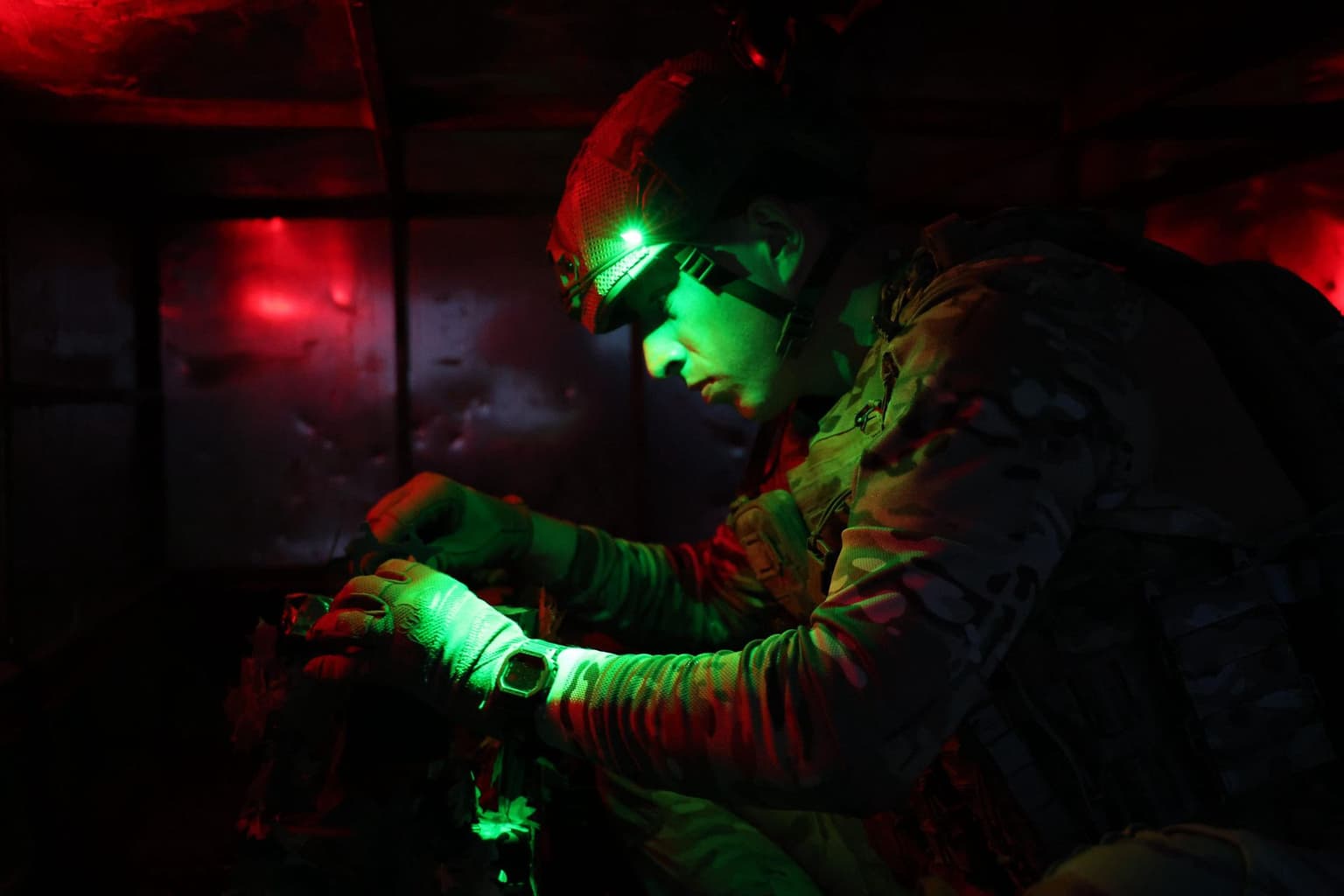
Preparation of an unmanned ground vehicle (UGV) for deployment. (NC13 Strike UGV Unit of the 3rd Separate Assault Brigade, 3rd Army Corps)
 on Google
Kateryna Lisunova
Ukrainian journalist
Imagine heavy drones flying 15 to 20 kilometers (approximately 9.3 to 12.4 miles) deep into enemy rear positions and then deploying unmanned ground vehicles, or UGVs (unmanned ground vehicles), essentially robots, that drive even deeper into the rear.
There, in areas the enemy considers relatively safe and calm, these robots can destroy Russian logistics, strike dugouts, eliminate military personnel, and sometimes even take prisoners of war. Russian soldiers can surrender directly to the robots, which then escort them toward Ukrainian positions under the watch of a small robotic weapons system.
And all of it happens live, with both video and audio. The video comes from the robots and drones. The audio comes from intercepted Russian communications, as soldiers panic and try to understand who or what is attacking them.
In one such intercepted conversation, Russian soldiers were even arguing that it was impossible for Ukrainian UGVs to have reached so far into the rear. They suspected that what they were seeing might actually be friendly fire from their own side.
And now imagine that you do not actually have to imagine any of this. This is a new military tactic being used in Ukraine today. The first successful operation took place in January 2026. By now, the unit has more than 100 successful operations under its belt.
This tactic is called Gryphon, in honor of a servicemember from the unit who went missing during a combat mission near the village of Andriivka in Donetsk Oblast, not far from Bakhmut. It is the same place from the Oscar-winning Ukrainian filmmaker Mstyslav Chernov's documentary "2000 Meters to Andriivka," which chronicles the Ukrainian counteroffensive in this area.
It sounds like science fiction: flying robots delivering ground robots that can perform tasks traditionally carried out by infantry, participate in assault operations, and help liberate Ukrainian territory while reducing the risks to Ukrainian soldiers.
These operations are being carried out by NC13, essentially the world's first strike UGV unit, which operates within Ukraine's Third Army Corps.

Today, the tactic is also part of Operation Vivaldi, a major Ukrainian counteroffensive that has restored Ukrainian control over 176 square kilometers (nearly 68 square miles) of territory.
According to President Volodymyr Zelensky's office, Russian forces suffered more than 5,000 killed and wounded during the first three phases of the operation, while Ukrainian forces captured another 250 Russian troops. The Third Army Corps separately reported 2,000 Russian personnel losses during the most recent phase alone.
Ground robotic systems carried out 80% of logistics and 90% of casualty evacuations during stages of Operation Vivaldi, according to NC13 Commander Mykola Zinkevych and reporting by UNITED24 Media.
Ukraine has spent more than four years fighting a technologically adaptive conventional war against Russia.
Its troops have accumulated experience in drones, electronic warfare, robotic systems, battlefield artificial intelligence, communications, and rapid-cycle weapons development under conditions no NATO military has experienced at a comparable scale, and this story matters beyond the front line — it is the expertise Ukrainian allies should finally recognize as invaluable to them as well.

This is the latest example of Ukraine's battlefield innovation that Western partners, unfortunately, cannot keep up with.
U.S. President Donald Trump, meanwhile, has been very explicit that his approach to diplomacy and support is transactional. He is more likely to provide aid to partners when he sees clear value in the investment and a benefit to the United States.
The missing piece in this equation is how to explain to the administration that Ukrainian military innovation is not only helping Ukraine survive, but it is also an investment in future global security and in America's own defense capabilities.
The challenge is that this is becoming harder to explain as the technology evolves faster and becomes more sophisticated almost every week.
At some point, descriptions of the modern Ukrainian battlefield begin to sound more like Sci-Fi movies than conventional warfare.

And this lack of understanding is not only an American problem. It is increasingly a challenge for the broader Western world.
"There is some understanding of what we're talking about when we describe what we're deploying, what we're using, and how it works. But they don't seem to fully grasp its importance and value on the battlefield, or the extent to which the battlefield itself has changed," says NC13 Commander Mykola "Makar" Zinkevycn, referring to the Western allies.
At the same time, Ukraine urgently needs additional air-defense capabilities, particularly Patriot interceptors, as Russia continues its missile attacks. Kyiv and Washington are currently working on plans related to Patriot interceptor production in Ukraine and additional air-defense support ahead of winter.
In a relationship where Washington increasingly asks what strategic value the United States receives in return, explaining the revolutionary nature of Ukraine's military innovation could become part of the argument for continued support.
The question, in other words, is whether the United States sees Ukraine primarily as a recipient of Western military technology, or also as a source of battlefield expertise that Western forces may increasingly need themselves.
The answer may determine not only how Washington understands this war, but how prepared it is for the next one. Failing to grasp the significance of the transformation unfolding on Ukraine's battlefields risks losing sight of an ally that is the first in modern warfare to deploy robots at such scale and speed in the largest war Europe has seen since the last century.
Editor's note: The opinions expressed in the op-ed section are those of the authors and do not purport to reflect the views of the Kyiv Independent.