Belarus tests a new path back to the West
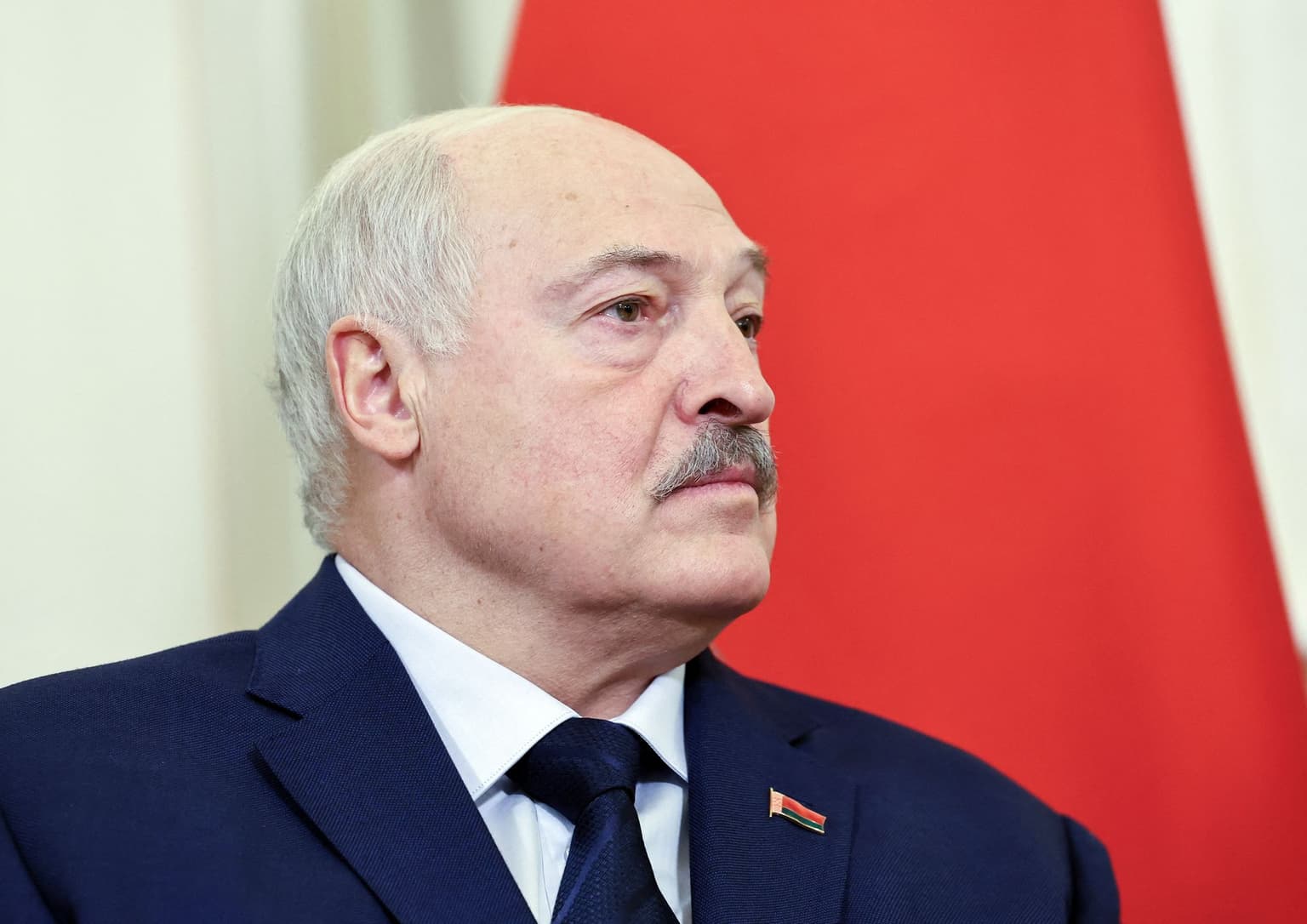
Belarusian dictator Alexander Lukashenko attends an event in St. Petersburg, Russia, on Dec. 21, 2025. (Alexander Kazakov / Pool / AFP / Getty Images)
 on Google
Belarusian dictator Alexander Lukashenko has worked his way out of Western isolation before. Now, he seems to be launching yet another attempt.
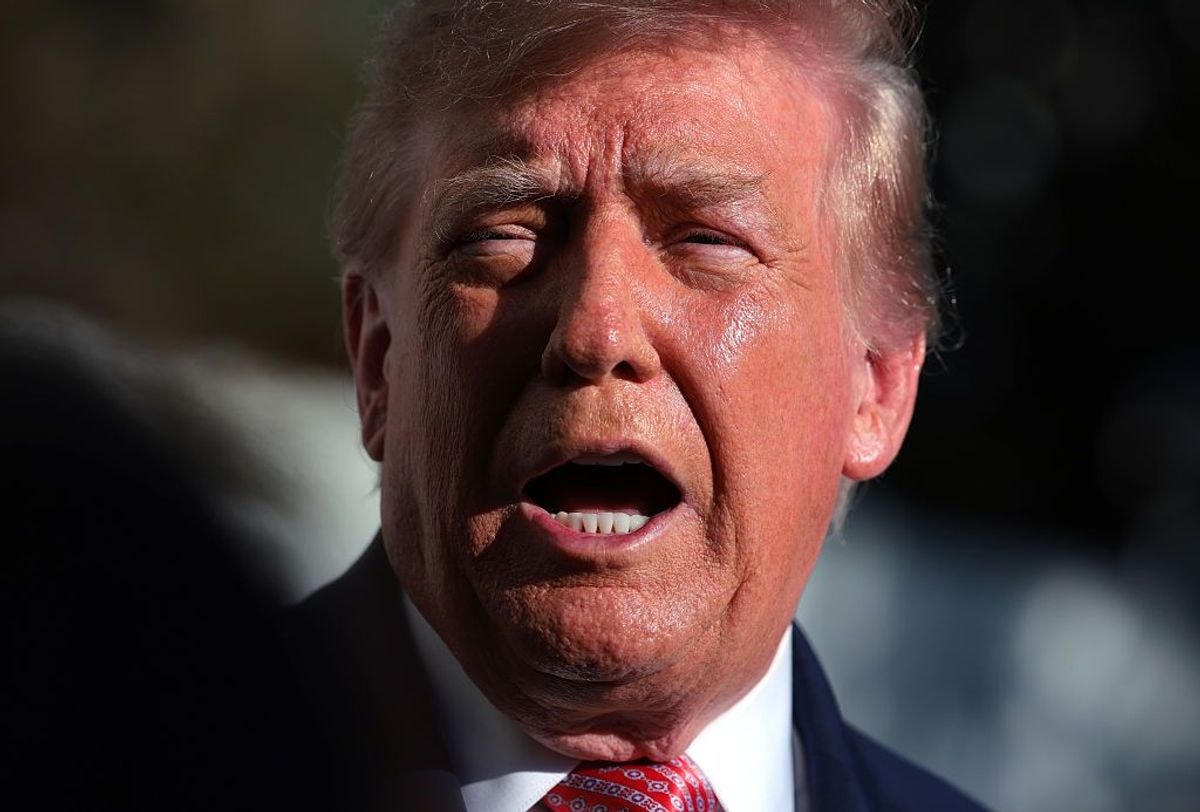
U.S. President Donald Trump on Sept. 21 announced a "massive" potash deal with Belarus, and only days later, Polish Foreign Minister Radoslaw Sikorski held talks with his Belarusian counterpart in the first ministerial meeting in seven years.
Belarus has faced international isolation since the heavily disputed 2020 presidential elections, which Lukashenko claimed to have won by a landslide before crushing any dissenting voices.
Sanctions and diplomatic ostracism only grew after the Lukashenko regime aided Russia's war against Ukraine by allowing Russian forces to use Belarusian territory for an assault against Kyiv in 2022.
Now, channels to the West seem to have opened up again. For those who have observed Belarus over the years, it is a familiar pattern. The regime shook off the fallout from the 2006 election by 2008, and from the 2010 crackdown by 2015.
But while the latest push is paying off with Washington, experts told the Kyiv Independent there is little sign yet that the strategy is working in Europe, where potash transit depends on EU sanctions due for renewal in February.
Massive potash deal
Trump's Sept. 21 announcement, promising U.S. farmers cheaper Belarusian potash instead of Canadian supplies, capped more than a year of U.S.-Belarus rapprochement.
It also came amid another round of Washington's trade war with its northern neighbor.
The reengagement with Belarus, which allegedly started as a backchannel to Russian President Vladimir Putin, has helped free around 500 Belarusian political prisoners in exchange for sanctions relief since January 2025, with potash restrictions among the main tools at hand for the U.S. side.
The U.S. lifted sanctions against the Belarusian potash sector in December 2025 in exchange for the release of over 100 political prisoners. In March, Washington also lifted restrictions imposed on Belarusian main potash producer, this time securing the release of 250 prisoners.
The first shipment of 30,000 metric tons of potash is due to arrive in New Orleans in October, according to the London-based energy and commodities market information agency Argus Media.
Before sanctions, Belarus supplied about 20% of the global potash market. After the international restrictions imposed in 2021-2022, Minsk had to reroute its potash through Russia, increasing logistical costs and forcing Belarus to sell at a discount to buyers wary of secondary sanctions.
"The deal with the Americans helps improve (Belarus') reputation and, from a financial standpoint, has a positive impact on both price and routing costs," Dzmitry Kruk, a senior researcher at the exiled Belarusian economic think tank BEROC, told the Kyiv Independent.

Belarus might consider the benefits of "cleansing its toxic reputation" worth the cost of even selling at a loss to the U.S., Kruk says.
Logistics make up a significant portion of the cost, giving Canada's potash a natural advantage over potash shipped across the ocean. For Washington, the deal might be leverage in its trade war with Canada rather than a real trade opportunity, many analysts agree.
The deal touted by Trump is unlikely to yield immediate results, as Lukashenko admitted that there is currently insufficient supply to meet U.S. demand, since most potash exports for this year have already been contracted.
But the main obstacle lies beyond bilateral relations, as European sanctions still block the transit of Belarusian potash via the cheapest routes — neighboring Lithuania's port city of Klaipeda.
There are "plenty of signs" that Washington would like Brussels to lift sanctions, writes Rikard Jozwiak, an editor at Radio Free Europe/Radio Liberty (RFE/RL). And Belarus' neighbors, who have the most hawkish stance on Belarus, are the ones to allow or prohibit its transit.
Poland notches its own gains with Minsk
Poland has maintained a hawkish stance on Belarus for years now. The relations between the two countries have been fraught, with Minsk engineering a migration crisis at the Polish border, aiding Russia in its war efforts in Ukraine, repressing the Polish minority in Belarus, and expelling Polish Catholic priests from the country.
Yet at the U.N. General Assembly in September, Sikorski met his Belarusian counterpart, Maxim Ryzhenkov, in the first ministerial-level meeting in seven years. The officials discussed border and regional security, Sikorski later told the press.
Kamil Klysinski, a Belarus analyst at the Warsaw-based Center for Eastern Studies (OSW), says he would not describe the meeting as a "breakthrough." The format — a brief exchange at a multilateral “neutral" platform — makes it the safest non-binding choice to hear what Belarus has to offer and probe its ability to act independently.
"The main question I would ask for this kind of meeting is how independent Minsk is right now,” what it can offer, and how much of any potential Belarusian offer is actually Belarusian, Klysinski says.
Katia Glod, the deputy head of foreign policy at the New Eurasian Strategies Center, sees the meeting as part of a series of small steps Poland and Belarus have each taken so far, leading only to marginal improvement.
"We are not really seeing any substantive engagement and any substantive change in the domestic politics in Belarus vis-a-vis the loosening of repression. Nor do we see Belarus agreeing to step away from Russia's war of aggression in Ukraine," she says.
However, Klysinski argues that "Belarus deserved a small, cautious, symbolic reaction after the de-escalation of the border.”
European officials have long accused Belarus and Russia of channeling irregular migration toward EU borders.
But in 2026, Poland saw a 96% drop in irregular migration pressure on its borders with Belarus, according to the Polish Interior Ministry. The country's border guards stopped 158 illegal border crossings in the first quarter of 2026, compared to 3,306 during the same period in 2022.

The reduction can be partly linked to bolstered defenses along the Polish border with Belarus, but also to a shift in irregular migration flows. As pressure on Poland faded, Latvia started sounding the alarm, at times recording 200 attempts to cross the border in a single day.
Belarus has also recently released Polish-Belarusian journalist Andrzej Poczobut and hinted it could allow a local Polish minority organization, liquidated at the height of the post-2020 crackdown, to restore its activities.
Poland has worked for years to secure Poczobut's release and succeeded this April with Washington's involvement: Trump's Special Envoy John Coale brokered a five-for-five exchange between Western countries on one side and Russia and Belarus on the other.
But Warsaw's public rhetoric has focused on the border issues.
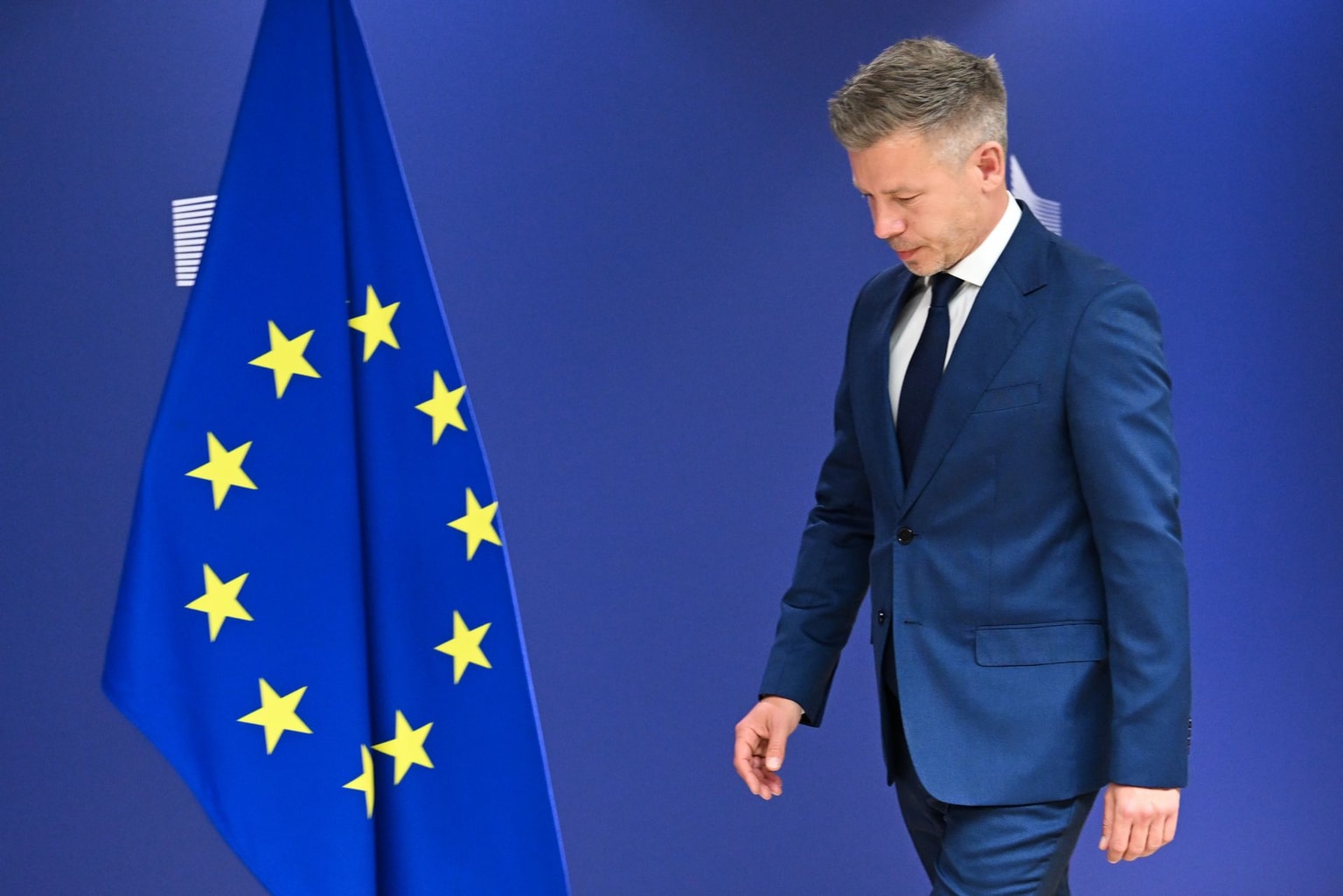
Polish Deputy Foreign Minister Marcin Bosacki said that his country has taken note of the "significant easing" of illegal migration pressure on Poland, presenting it as a starting point for the Warsaw-Minsk reengagement.
According to Bosacki, Poland would also expect Belarus to "completely stop its aggressive gestures" against all EU member states, not just Poland, to normalize relations.
Klysinski suggests what that might mean: an end to the migration crisis on every EU border, an end to smugglers' balloons — which he calls "an excuse" to violate airspace and keep tensions high — and Minsk exercising tighter control over its airspace, frequented by Russian drones.
"Minsk should provide at least one piece of evidence that it has autonomy and has agency,” Klysinski argues.
Security matters were central to the ministerial meeting. Speaking later at the Council on Foreign Relations in New York, Sikorski warned that Russia may be preparing large-scale military operations and that "the Belarusians are worried about possibly being drawn into the war."

With Belarus' geographical position, squeezed between Russia and the EU, it would be an obvious flashpoint, especially as Russian drone incursions and the migration crisis already involve Belarus' territory.
Glod is more skeptical. She sees the warnings about a Russian threat to NATO as largely playing into Russia's effort to pull Europe's attention away from Ukraine. She sees no particular connection to Belarus, but notes that while European politicians understand Lukashenko's dependence on Russia, they still try to make an effort.
"If Lukashenko says 'we want to talk,' then Poland can at least send across its message: if you want a more normal relationship, then why won't you step away from Russia, and at least not support, for example, its hybrid attacks?" Glod argues.
According to Giselle Bosse, a professor at Maastricht University and a fellow at the European Democracy Hub in Brussels, short-term security gains at this stage seem to take priority over long-term vision.
"(T)he apparent security gains from opening negotiation channels with Lukashenko seem to be becoming more important" than the security benefits of Belarus becoming "actually a democratic country," Bosse says.
“And I'm afraid that with all the security emphasis at this moment in time, this is slipping a little bit off the agenda."
Potash did not come up in the discussion between Sikorski and Ryzhenkov, at least publicly. But Poland might have used the U.N. meeting as a "low-cost signal" of alignment with the U.S., Bosse argues.
"It sends some kind of very symbolic public signal to the U.S. that they (Poland) want to be part of the conversation, that they are considering whatever the U.S. has been suggesting to them," Bosse says.
EU unmoved, for now
Europe remains the real obstacle to Belarus' fertilizer trade revival with the West.
European sanctions on Belarusian potash work on two levels. On the EU side, imports and transportation of Belarusian potash have been banned, and the Belarusian Potash Company and Belaruskali — the fertilizer's exporter and producer, respectively — are under sanctions.
At the national level, Lithuania — an EU country bordering Belarus — banned transit on national-security grounds.
In March, an unofficial U.S. letter to Lithuania, Poland, and Ukraine said Washington was interested in exploring potential routes for the transit of Belarusian potash. Lithuania refused.
"We have no reason today to lift sanctions on Belarus. This is the common position not only of Lithuania but also of the European Union," the Lithuanian parliament's Foreign Affairs Committee Chairman Remigijus Motuzas told the press on Sept. 21 after the announcement of Trump's major deal.
While Poland technically has the capacity to transit Belarusian potash to the Baltic Sea — the rail link between Salihorsk in Belarus and Poland's port city of Gdansk is unlikely to be used.

Poland uses a different rail gauge from Belarus, Lithuania, and Ukraine, requiring all cargo to be reloaded at the border before traveling about 550 kilometers (about 340 miles) by rail.
This makes shipment via Lithuania's port city of Klaipeda — with the same gauge, about half the distance to cover, and the port terminal designed to transship potash — by far the most effective option.
As sanctions are up for renewal in February 2027, Klysinski expects "quite an interesting discussion in the European Union."
The exiled Belarusian opposition remains torn over Western reengagement with the regime. Belarusian democratic leader Sviatlana Tsikhanouskaya cautioned against trading with the dictator.
"Our position is that it is not the time to trade with the regime while all the income from potash goes to repression, goes to support the Russian war machine. Any deal with the regime is very risky," Tsikhanouskaya told AFP.
Others in the movement disagree. Valer Kavaleuski, a former member of Tsikhanouskaya's cabinet who is now leading an organization advocating for the release of political prisoners, argues that leaving Belarus isolated does not make it a safer neighbor for the EU and Ukraine.
"Less Europe in Belarus opens space for Russia, China, and Iran," Kavaleuski wrote on X.
However, Bosse is skeptical that improved logistics and potash earnings would buy Lukashenko any room to maneuver away from Moscow.
Russia has not yet interfered in the negotiations between Washington and Belarus, aside from a warning from its Foreign Intelligence Service in February 2026 about the West allegedly preparing a "coup" in Belarus — a claim widely viewed as a political signal rather than an actual intelligence report.
Glod says Belarus' engagement with the West has not crossed Russia's red lines so far.
"I think it's quite a good testing ground for Moscow. And as long as Lukashenko is not getting away and is not sidelining the Russian military agenda, I think they are prepared to tolerate that," Glod says.
But if the Kremlin sees a deeper Belarusian reengagement with the West that could threaten Russia's interests, it might try to intervene, the expert adds.
For now, bilateral dealings with the U.S. are bringing some results. Belarus released hundreds of prisoners — but over 880 remain behind bars.
Trump's envoy Coale is expected to arrive again within weeks, and he has been nominated to become the Envoy on Hostage Affairs and expand his portfolio to Russian prisoners.
With Poland, the steps are small. Polish prisoners were released, Poczobut was allowed to visit Belarus and safely leave again, and Belarusian authorities are hinting at allowing the Polish diaspora to restore their organizations within the country.
Taming the migration crisis and preventing airspace violations could pave the way for further normalization with Poland.
The ball is now in Minsk's court, Klysinski says.