Ukraine war latest: Russia takes aim at key Kyiv bridge for second day
 on Google
Key developments on Oct. 2:
- Key Kyiv bridge hit by Russian drones fourth time in 2 days
- Ukraine aims to produce up to 400 interceptor drones as Russian jet-powered drone use grows, Zelensky says
- UK sanctions 7 Russians over deportation, indoctrination of Ukrainian children
- Russian Mi-8 helicopter reportedly shot down in friendly-fire incident over Voronezh Oblast
- Russian glide bombs strike Kharkiv, kill women, injure children
- Russia planning to increase "hybrid warfare" activity in Europe, Ukrainian intelligence warns
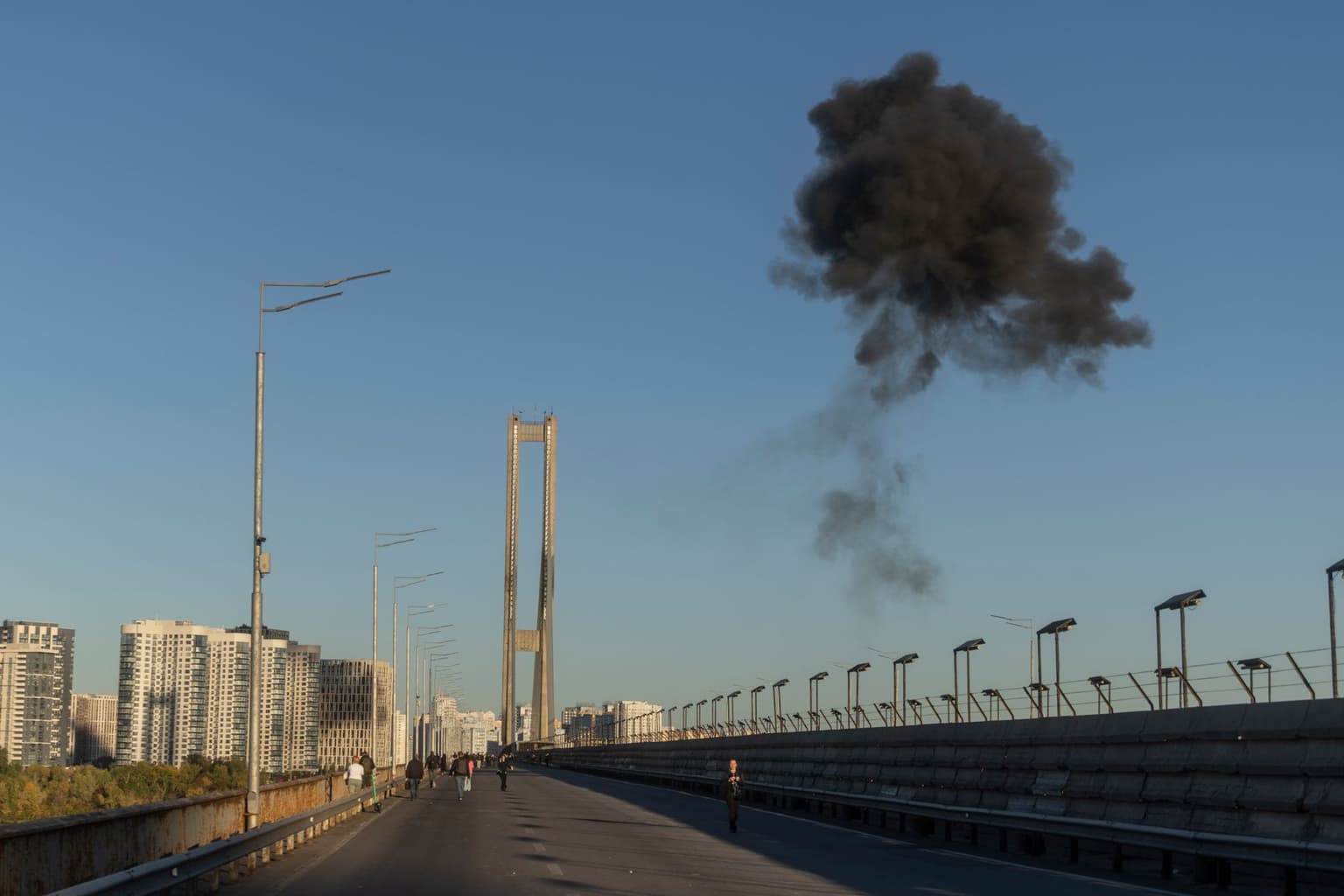
A Russian drone struck the Southern Bridge over the Dnipro River in Kyiv around 5:40 p.m. local time, as Russia takes aim at the bridge for two days straight.
At the time of the fourth drone strike, the bridge was still closed for traffic from an earlier attack in the morning, said Kyiv Mayor Vitali Klitschko. Black smoke could be seen rising over the bridge, while the damage to the structure is not yet determined.
The Russian attack coincided with Kyiv's evening rush hour, adding further stress to the already congested city. Kyiv's other main bridges across the Dnipro River, the Darnytskyi Bridge, Metro Bridge, and Podilskyi Bridge, have been changed to single direction traffic, according to the Kyiv City Military Administration (KMDA).
Kostiantyn Kryvolap, an aviation expert and former Antonov test engineer, told the Kyiv Independent that destruction of the bridge is most likely not the intent behind Russia's strikes.
"Destroying a bridge with a 50-kilogram explosive charge, even with a highly effective warhead designed to destroy steel bridge structures, is a major exaggeration. It is practically impossible. For a bridge like this, these strikes are more like mosquito bites," he said.
Instead, the idea behind the Russian strikes may rather be to halt traffic, interrupt logistics, and exert psychological pressure on Kyiv's population, according to him.
The Southern Bridge is one of the capital's main traffic arteries and connects important transport routes like the the M-05 Kyiv-Odesa, M-06 Kyiv-Chop, and M-03 Kyiv-Kharkiv-Izyum-Sloviansk highways. Every day, between 100,000 and 110,000 cars use the bridge, according to information from the Darnytskyi District administration from 2019.
Head of the Desnyanskyi district of Kyiv, Maksym Bakhmatov, told The Village in a 2020 interview that about 90% of transit traffic between the two banks passes through the Southern Bridge.
Hlib Vyshlinsky, executive director of the Center for Economic Strategy told the Kyiv Independent that the Southern Bridge is also crucial for the daily commute of the Pozniaky-Osokorky-Kharkivsky districts conglomeration that houses up to 500,000 people.
read also
Ukraine aims to produce up to 400 interceptor drones as Russian jet-powered drone use grows, Zelensky says
Ukraine will be able to produce up to 400 interceptor drones by the end of October to counter Russia's growing use of jet-powered attack drones, President Volodymyr Zelensky said in an interview with the Financial Times published on Oct. 2.
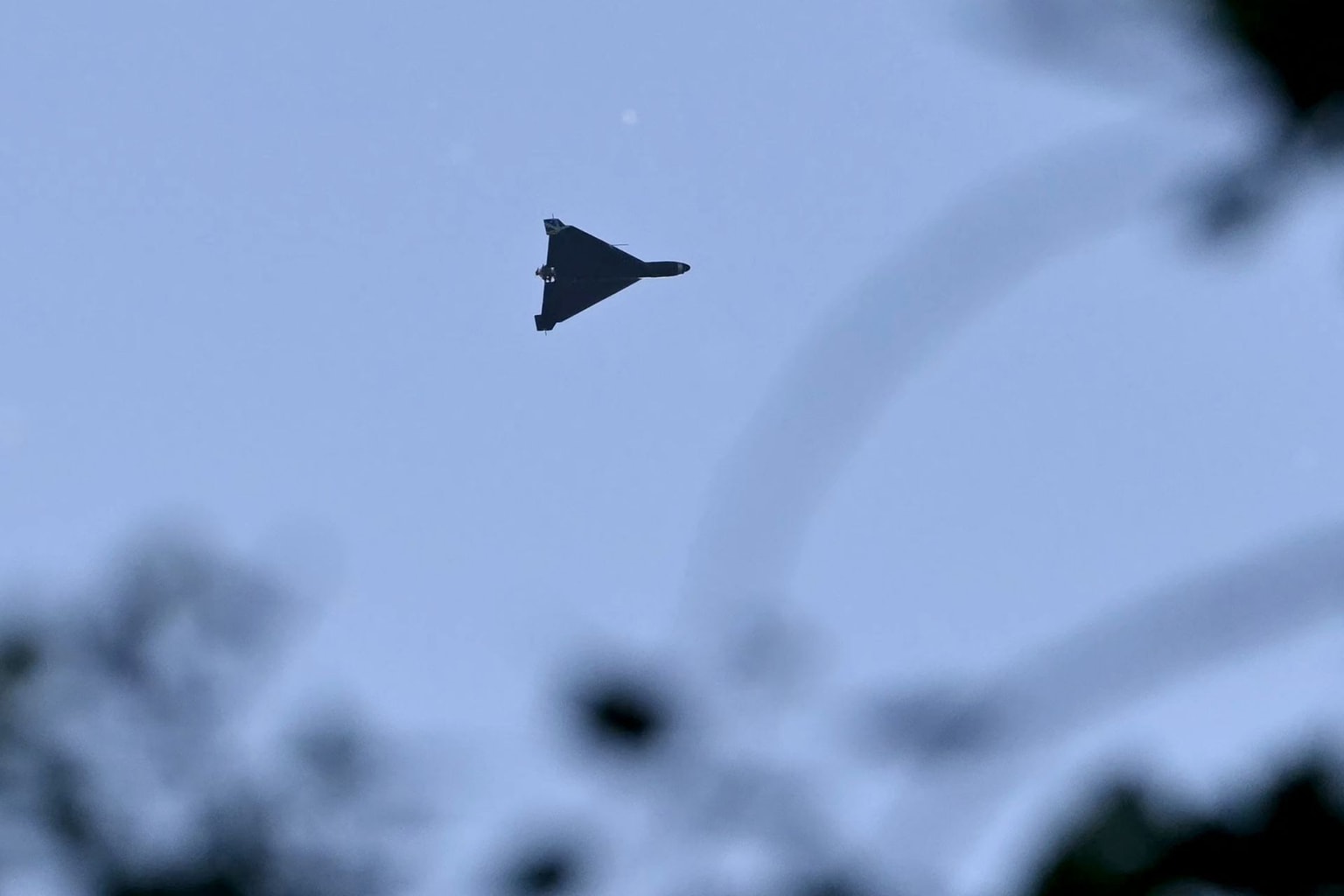
As Russia scales up production of its jet-powered drones — the Geran-4 and Geran-5 — Ukraine is struggling to shoot them down amid the hours-long attacks.
Russia launched around 500 drones against Ukraine over the past day, about half of which were jet-powered and significantly harder to intercept, Zelensky said.
Only 57% of jet-powered versions of Shahed-type drones are currently shot down by Ukraine, Zelensky said in his evening address on Sept. 28, a figure he described as "much less than necessary."
According to Zelensky, Ukraine is testing five types of high-speed interceptor drones designed to counter Russian weapons. One of the models is expected to reach production of around 400 units by the end of October, while the other four remain in the testing stage.
The development of the interceptors is being slowed by a shortage of engines. Ukraine imports most of the engines used for the drones, while domestic production remains insufficient, Zelensky said.
Russia's jet-powered drones target civilian infrastructure such as supermarkets, schools, shopping malls, telecommunications infrastructure, data centers, gas stations, and medical facilities.
Russia has increased its use of jet-powered drones while launching attacks on Kyiv in recent months. The onslaught began last month but has intensified over the past week.
UK sanctions 7 Russians over deportation, indoctrination of Ukrainian children
The U.K. sanctioned seven Russian individuals involved in the forced deportation and re-education of Ukrainian children from occupied territories on Oct. 1, the Ukrainian President's initiative, Bring Kids Back, said on Oct. 2.
Russia is militarizing Ukrainian children and youth in the occupied territories, removing their Ukrainian identity to "raise future soldiers" and involve them in the fight against their own people.
Russia has abducted tens of thousands of Ukrainian children since the start of the full-scale invasion. As of September 2026, Ukraine's Justice Ministry has officially confirmed 20,610 cases of deportation, though Ukrainian officials estimate the real total could number in the hundreds of thousands.
According to Bring Kids Back's press release, the sanctions target Artur Orlov, head of Russia's Movement of the First, a state-backed organization for children and young people, as well as five heads of its regional branches in occupied parts of Donetsk, Luhansk, Kherson, and Zaporizhzhia oblasts and Crimea.
The Movement of the First was established in 2022 at the initiative of Russian President Vladimir Putin and has more than 344,600 members in occupied Ukrainian territories, according to a report from an Organization for Security and Co-operation in Europe (OSCE) expert mission.
The sanctioned officials are Denis Chernobay, Ruyal Aliyev, Aleksey Lavrentyev, Viktoriya Kostromina, and Ekaterina Kozyr.
The list also includes Elena Milskaya, chair of the board of trustees of Russia's National Center for Assistance to Missing and Injured Children. Ukraine's military intelligence agency said Milskaya used the organization's volunteers in October 2022 to facilitate the mass abduction and unlawful deportation of Ukrainian children, including orphans, from occupied territories to Russia's Krasnodar Krai via occupied Crimea.
The sanctioned individuals face asset freezes and travel bans, as well as restrictions on trust services and director disqualification. At least three of the seven — Orlov, Chernobay, and Milskaya — have previously been sanctioned by Canada, while Milskaya has also been sanctioned by the European Union.
The U.K. announced the sanctions on Oct. 1 as part of a wider package targeting 31 individuals over Russia's war against Ukraine. The package also includes eight people accused of involvement in arbitrary detention, torture, and ill-treatment of civilians in Russian-occupied Ukrainian territories, including Kherson and Zaporizhzhia oblasts.
Russian Mi-8 helicopter reportedly shot down in friendly-fire incident over Voronezh Oblast
A Russian Su-35 fighter jet reportedly shot down a Russian Mi-8 military helicopter in a friendly-fire incident in Russia's Voronezh Oblast on Oct. 1, killing all three crew members, according to several Russian and Ukrainian Telegram channels.
The helicopter crashed in the Anninsky district of Voronezh Oblast, around 80 kilometers from the regional capital, while Russian forces were responding to a supposed Ukrainian drone attack, according to reports.
The Ukrainian Telegram channel Exilenova Plus said the Su-35 crew mistakenly identified the Mi-8 as a Ukrainian drone and opened fire. The helicopter's pilot, navigator, and onboard gunner were killed, according to the channel.
Another Ukrainian Telegram channel, Dossier of a Spy, also said that the Mi-8 was mistakenly shot down by a Su-35 during a drone attack.
Russian military blogger Ilya Tumanov, who runs the Fighterbomber Telegram channel, reported the loss of the helicopter without directly identifying the cause.
The reports have not been independently verified, and Russian authorities have not publicly confirmed that the Mi-8 was shot down by the fighter jet.
Russian glide bombs strike Kharkiv, kill women, injure children
At least two people were killed and 36 injured after Russian glide bombs struck two areas of the city of Kharkiv on the afternoon of Oct. 2.
"Three glide bombs were recorded hitting the Slobidskyi and Nemyshlyansky districts of the city," Oleh Syniehubov, head of the Kharkiv Regional State Administration, said in a statement on Telegram.
"Two women aged 66 and 80 died as a result of the strike by the Russian army. 32 people were injured," Syniehubov said.
The State Emergency Service (DSNS) in Kharkiv later raised the number of injured to 36. Three of the injured were children, according to DSNS.
One of the Russian glide bombs "completely destroyed" a residential building, Kharkiv Mayor Ihor Terekhov said in a statement.
Russia planning to increase "hybrid warfare" activity in Europe, Ukrainian intelligence warns
Russia's secret services have been tasked with increasing the number of attacks in Europe, Ukrainian military intelligence (HUR) warned in a statement on Oct. 2.
"The special services of the aggressor state of Russia have been tasked with increasing activity on the territory of the European Union and NATO states — this involves preparing for hybrid operations aimed at undermining aid to Ukraine and weakening the Alliance's capabilities," the statement says.
Acts of Russian "hybrid warfare" have included arson, assassinations, and a recent attempt to blow up Ukrainian Antonov cargo aircraft with modified FPV drones in Leipzig in August. On Sept. 1, Germany formally accused Russia of carrying out the attack.
"To carry out operations, including sabotage operations, the Kremlin plans to involve agents recruited by the General Staff of the Russian Armed Forces (GRU) and the FSB of the Russian Federation in Europe. The Russian special services are targeting military facilities, critical infrastructure, and communication systems," the statement says.
"Among the aggressor's likely targets are Starlink satellite internet receiving stations located in European countries," HUR said.
Starlink, manufactured and operated by Elon Musk's SpaceX, is widely used for communications by the Ukrainian military.
European governments are stepping up preparations for possible Russian hybrid attacks as officials across the continent warn that Moscow could increasingly use drones, missiles, sabotage, and cyberattacks to test NATO countries and pressure them over their support for Ukraine.
"The Ukrainian Defense Ministry's Directorate of Defense warned its partners about the criminal plans of the aggressor state of Russia," the statement says.