Leaked Kremlin reports predict rising dissatisfaction with Putin, Zelensky claims
 on Google
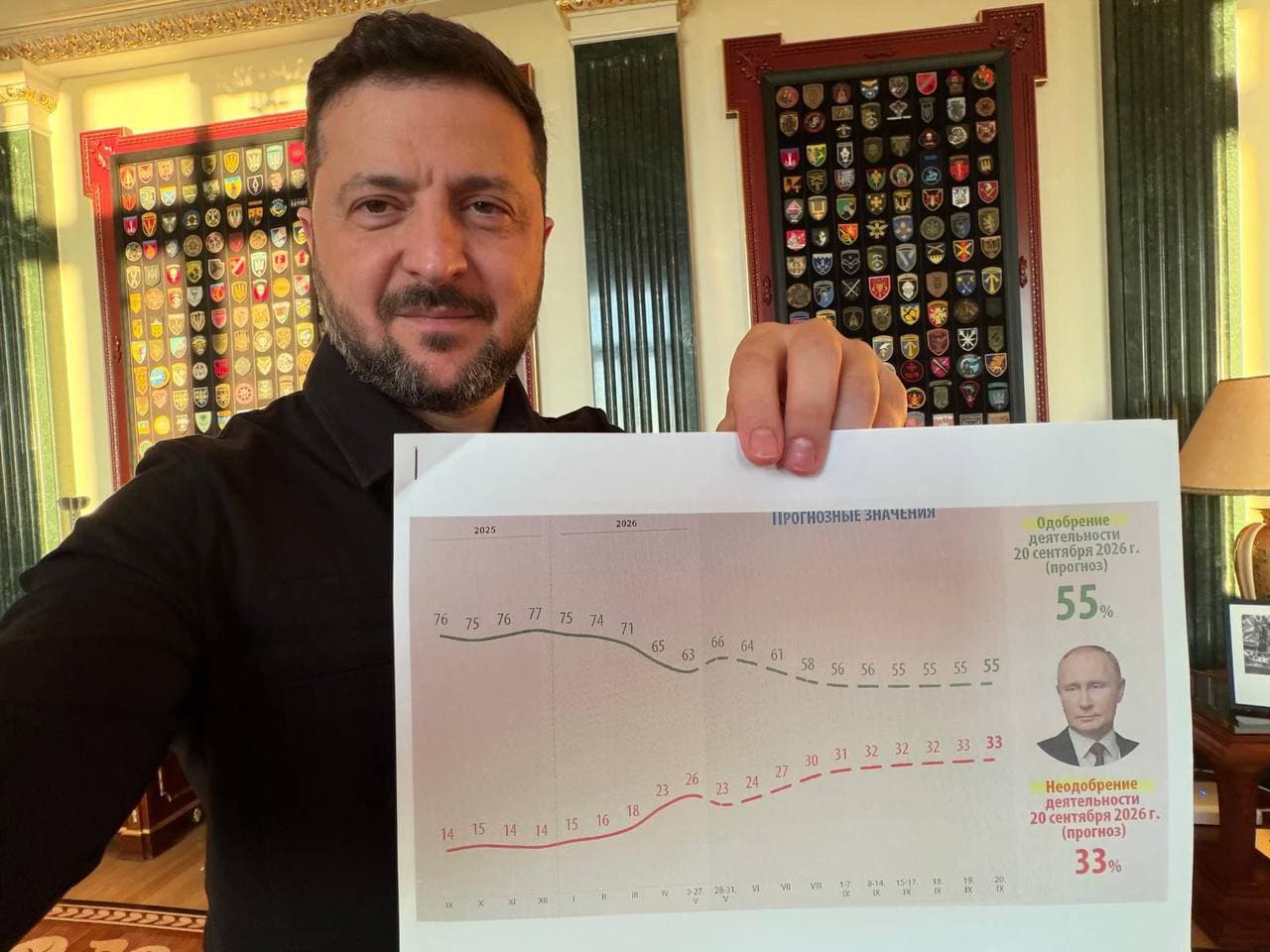
President Volodymyr Zelensky published photos of what he claimed were internal Kremlin documents obtained by Ukrainian intelligence, pointing to growing dissatisfaction with Russian President Vladimir Putin inside Russia.
Published on June 14, the documents contain forecasts of approval ratings for Putin and his ruling party, United Russia, over the next four months ahead of Russia's parliamentary elections scheduled for September, according to Zelensky.
The reports predict growing public dissatisfaction with Putin's rule and warn that "this indicator will not reach a plateau" before the vote, Zelensky wrote on Telegram.
Support for United Russia is also steadily declining, potentially requiring "significantly greater falsifications" to secure the desired election outcome, he claimed.
“Substantial growth in protest sentiment in Russian regions is also being reported,” the Ukrainian president added.
He argued that potential events in June, July, and August could further affect the situation in Russia.
Zelensky also pointed out that despite what he described as declining approval ratings, the Kremlin continues to reject "all public and non-public peace proposals" put forward by Ukraine.
"If these trends continue, an agreement may eventually have to be concluded with someone else from Russia — someone who will not shut themselves off from reality," he said.
Zelensky's statement comes days after media reports that the Russian Public Opinion Research Center (VCIOM), a state-controlled pollster, stopped publishing Putin's "open" trust rating after it reportedly fell to its lowest level since the start of the full-scale war.
On June 4, Zelensky sent an open letter to Putin, urging him to continue bilateral negotiations and proposing a meeting between the two leaders.
The proposal was later backed by the leaders of France, Germany, and the United Kingdom, who called for an immediate ceasefire and negotiations based on the current front line.
Moscow rejected the initiative, with Russian Foreign Minister Sergey Lavrov indicating that developments on the battlefield would determine the course of the war.