Is Wildberries a legitimate military target?
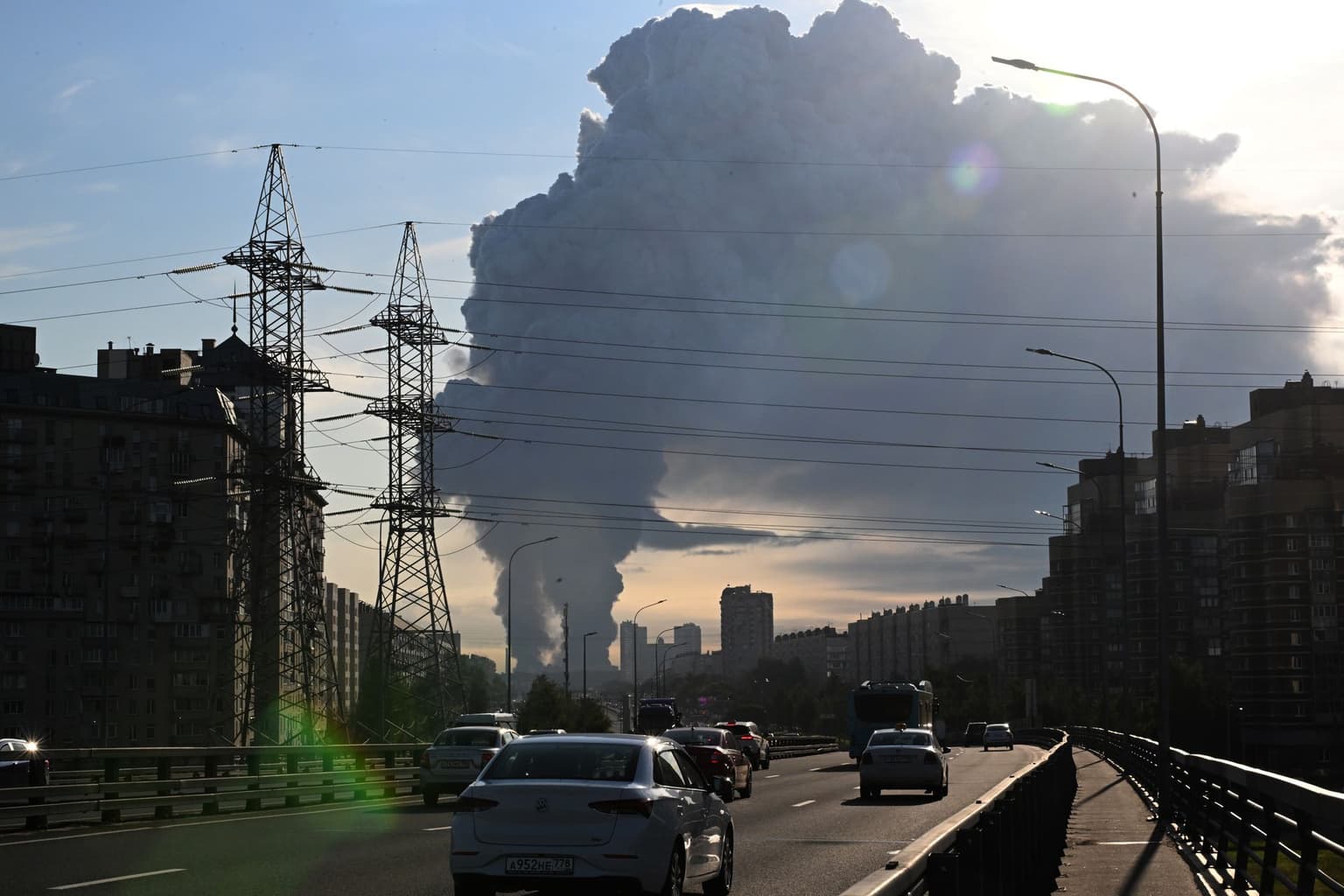
A large plume of smoke rises over Wildberries logistics facilities in St. Petersburg, Russia on July 24, 2026. (Stringer / Anadolu / Getty Images)
 on Google
Liubov Tsybulska
Director of Join Ukraine
For more than a year, Ukrainian drones have struck Russian oil refineries and military-industrial facilities with remarkable consistency. Yet nothing seems to have rattled ordinary Russians quite like drones hitting "Russian Amazon" — Wildberries, shattering the sanctuaries that housed their eagerly awaited online orders.
Beginning on July 18, Ukrainian forces launched a sustained campaign against the company's logistics network.
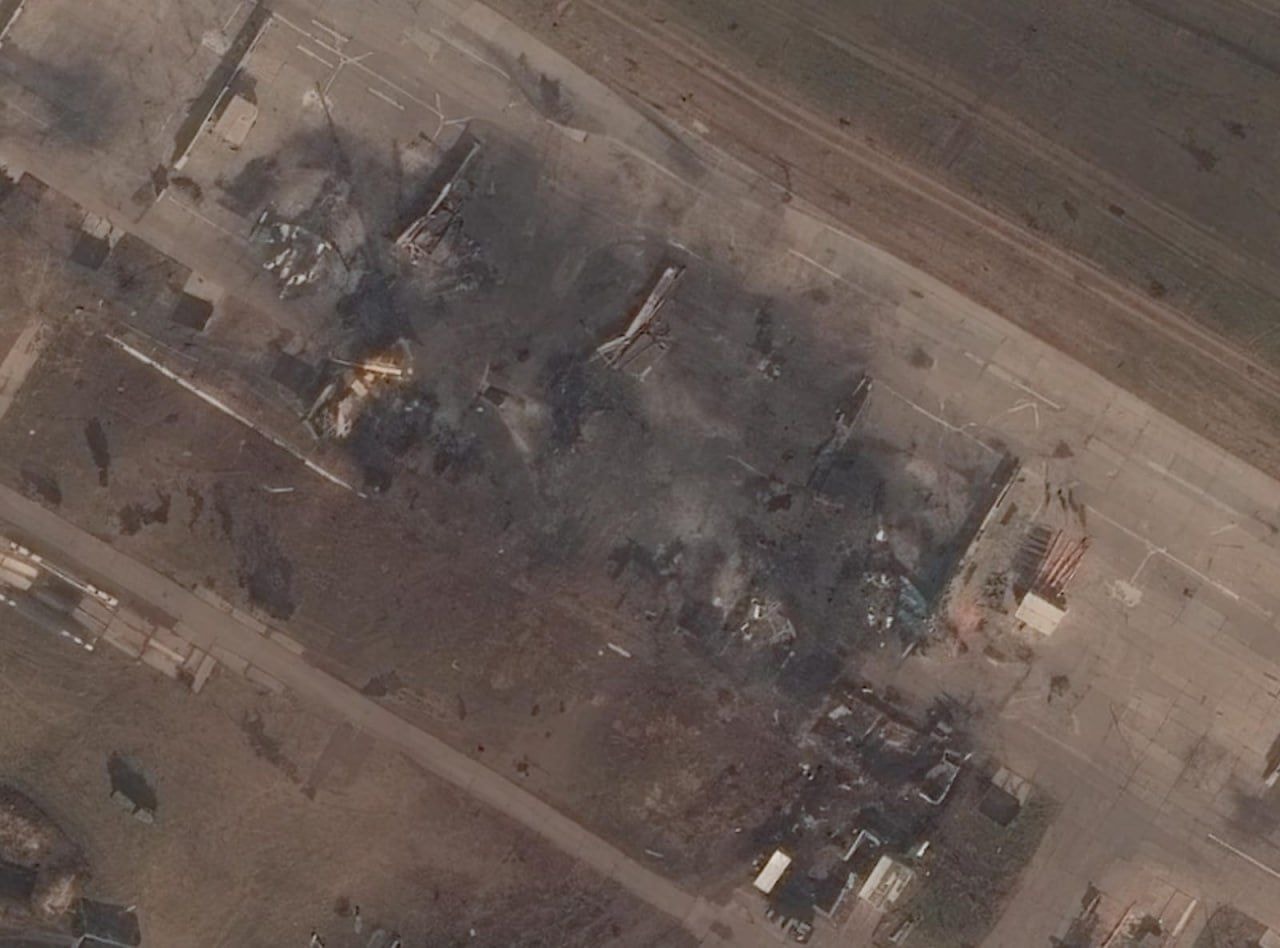
The first strikes hit distribution hubs in Elektrostal and Kotovsk, near Tambov. Two days later, drones reached Koledino outside Podolsk, followed by facilities in Krasnodar and Nevinnomyssk on July 22. The campaign then expanded to warehouses in Voronezh Oblast, Shushary and Utkina Zavod near St. Petersburg, as well as Simferopol in occupied Crimea, before moving on to Ryazan, Penza, Sarapul, Perm, Volgograd, Zelenodolsk, and Samara by early August.
According to UNITED24 Media's estimates, Ukrainian drones have disabled around 16 of Wildberries' 26 main logistics hubs — nearly two-thirds of the network. Among Russia's largest warehouse complexes, roughly half of the total floor space has reportedly been destroyed or damaged.
Wildberries is Russia's largest marketplace: it accounts for 52% of all online orders in the country; its founder, Tatyana Kim, is the richest woman in Russia.
Wildberries itself openly sells goods that can be used at the front: spools of fiber-optic cable for FPV drones, drop systems, body armor, and helmets, some of them labeled "tested in the Special Military Operation."
Measured against the company's total warehouse space, the estimates are more modest — 10–17%; but the largest nodes it is the largest nodes that hold the system together, so the effect is disproportionate to their share of the floor space.
Between July 18 and August 2, the Wildberries warehouses were mentioned 2,320 times in Russian groups we monitor in almost every Russian region. That is more than all of July's strikes on oil refineries combined, and 13 times more than the loudest of them.
Before July 18, Wildberries showed up in these feeds only as advertising — about 10 times a day; afterward, in the hundreds.
It was the strikes that caused this sharp spike in attention, and it has held for more than two weeks running. No oil strike produced a tail like that, because hitting an oil refinery is now someone else's problem in a neighboring region, whereas the marketplace means orders, a pickup point, and prices in every city in the country.
So, what is the logic and legal basis of striking a marketplace warehouse, which seemingly is not a classic military target?
First, there is symmetry. Russia systematically strikes civilian logistics — Nova Poshta in particular, one of Ukraine's largest shipping companies. Back in October 2023, a Russian missile killed six employees at a sorting depot near Kharkiv.
Over two months, from May to July 2026, Nova Poshta endured at least nine strikes on its terminals and branches: June saw the destruction of its most advanced innovation terminal in Kyiv, in early July, damage to its robotized terminal in Dnipro, and on July 31, Shahed drones destroyed the sorting terminal in Poltava.

Ukraine is responding with strikes on Russian commercial logistics. Volodymyr Zelensky has called the long-range campaign "long-range sanctions"; the strikes on Wildberries he has linked to logistics that work for the Russian army.
Second, these warehouses are not as civilian as they look.
Wildberries itself openly sells goods that can be used at the front: spools of fiber-optic cable for FPV drones, drop systems, body armor, and helmets, some of them labeled "tested in the Special Military Operation."
Tellingly, after the strikes, the company removed "military" goods from its search results. And the Ukrainian side sees a practical effect as well: Yurii Fedorenko, commander of the 429th Unmanned Systems Brigade, said that after the strikes on the warehouses, Russians began rationing the issue of cameras, propellers, and batteries for drones.
Interestingly, Russians themselves talk about the dual-use nature of these warehouses in the comments.
Third, these strikes have a side financial effect that works directly toward ending the war.
Tatyana Kim has already asked the government for help — specifically, support for sellers and tax breaks that would help settle accounts with the entrepreneurs who lost goods.
According to Reuters, the company's debt reached 830 billion rubles (about $10 million) at the end of 2025, and the state-owned VTB could play a central role in any support package, having planned to acquire 5% of the assets of the Wildberries & Russ group. Control over Wildberries has long been opaque: formally, the sole owner is Kim, but after the high-profile 2024 merger with the advertising operator Russ, which is linked to the circle around billionaire senator Suleiman Kerimov, the marketplace has effectively become a strategic asset woven into the Kremlin elite.
This means state money may well flow to Wildberries.
That would be less an ordinary favor to business than the state's rescue of a strategic private asset closely tied to its own interests. And the more of that money goes toward plugging those holes, the less is left for the war. Or, as the old Soviet joke goes: "Dad, if vodka goes up in price, will you drink less?" "No, son. It means you'll eat less."
Budget money is not unlimited, but Russians are well used to the state plugging some holes at the expense of others.
Strikes on marketplace warehouses are also a subject of legal and moral dispute.
International law has no formal category of "dual use" — there is only the test of a "military objective," and lawyers warn that too broad a reading of it erodes the protection of civilians.
At the same time, history knows plenty of cases in which a country defending itself deliberately destroyed the aggressor's economic infrastructure.
In World War II, the Allies deliberately bombed German industry, railways, and oil refining; the famous "transportation plan" of 1944, ahead of the Normandy landings, was exactly the systematic destruction of logistics that was civilian in form and military in function.
The difference is that Ukraine is fighting an adversary many times larger and stronger, one that imposes no rules at all — and to demand that the weaker side confine itself exclusively to "classic" targets is to demand that it lose.
Editor's note: The opinions expressed in the op-ed section are those of the authors and do not purport to reflect the views of the Kyiv Independent.