Cheaper than a missile, just as hard to down — Russia's Banderol munition adds strain to Ukraine's air defenses
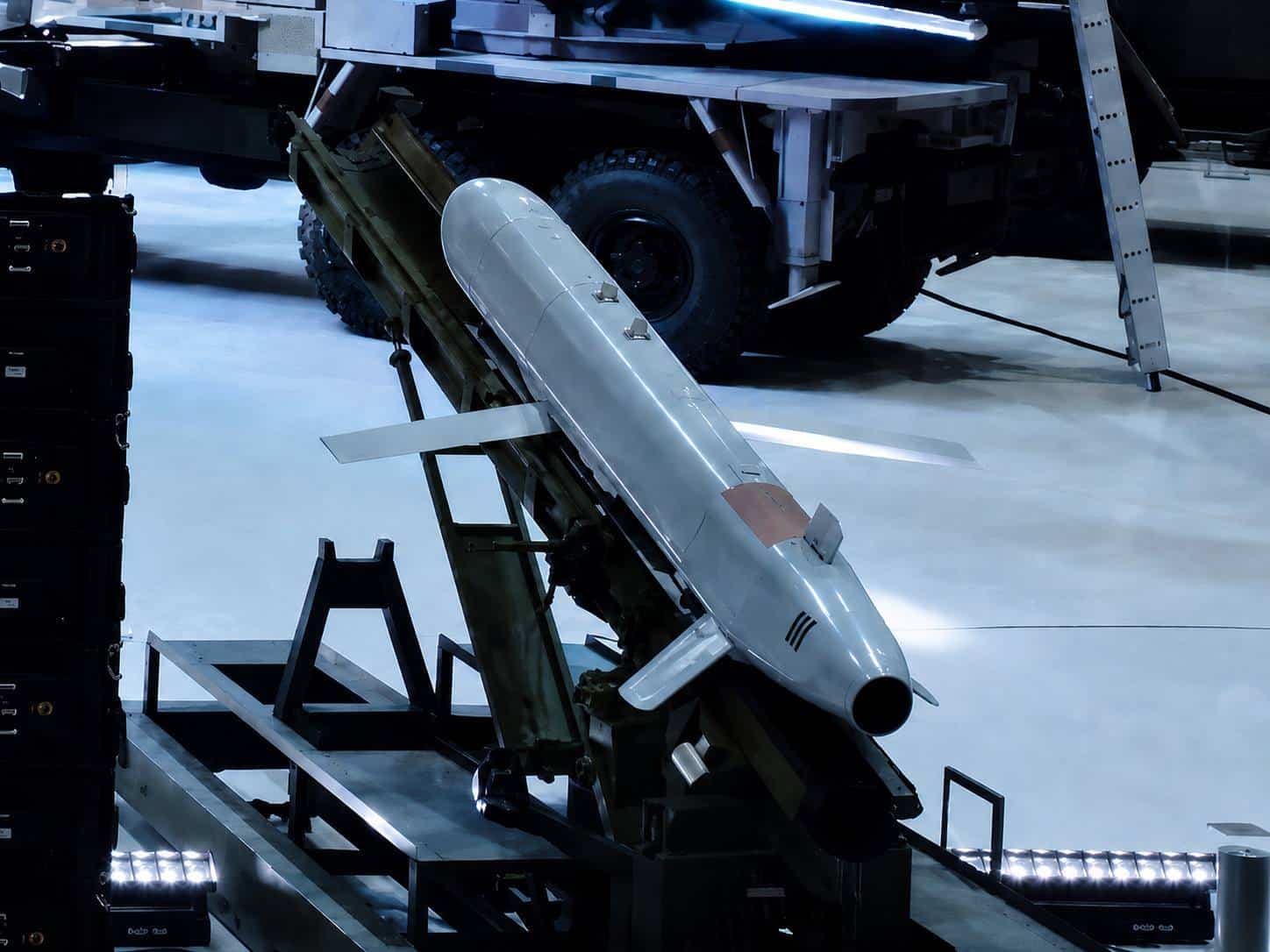
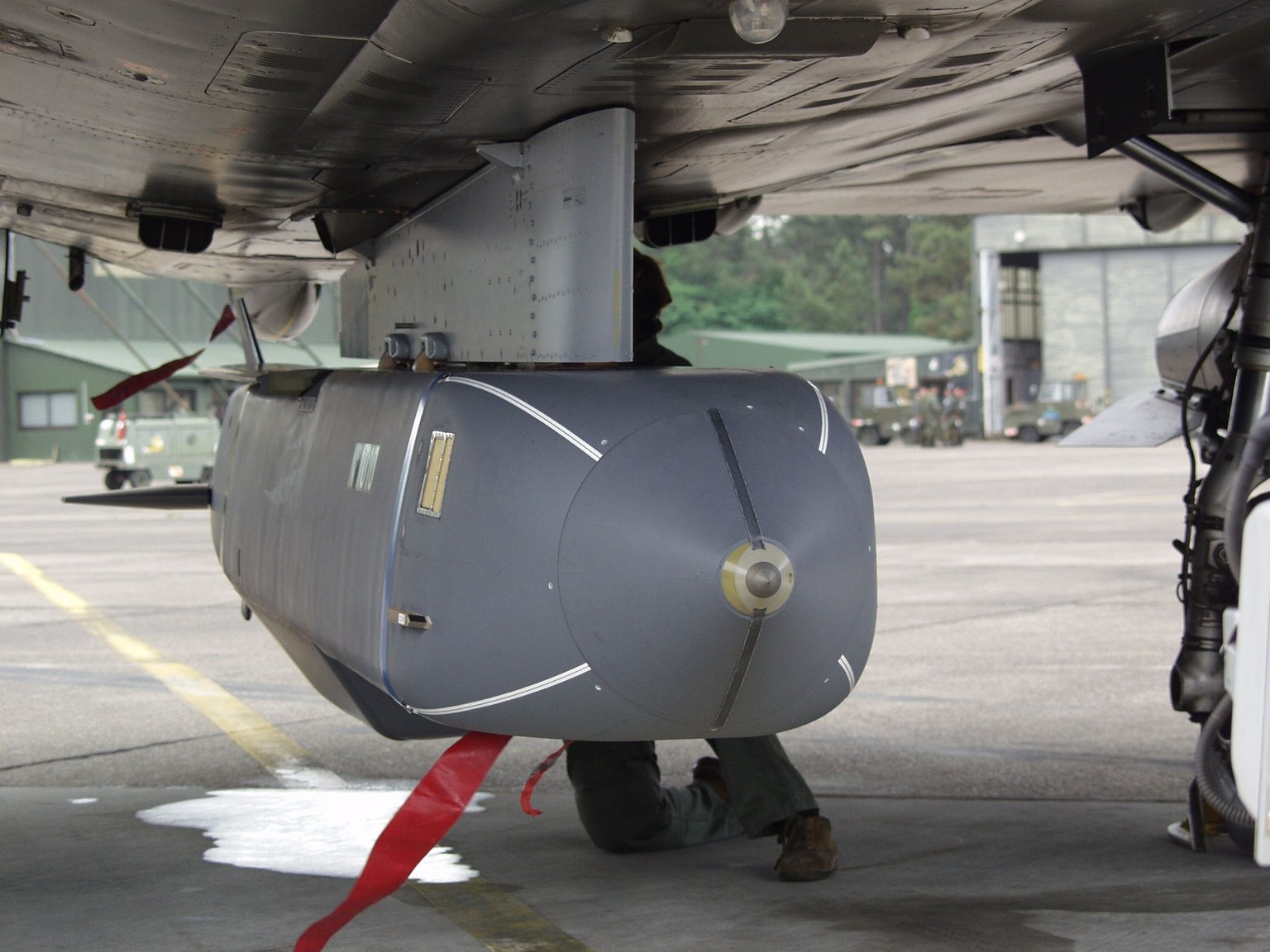
S8000 "Banderol" on a ground launcher in an undated photo. (militarnyi)
 on Google
Odesa, one of southern Ukraine's most popular domestic tourist destinations, has spent much of this summer listening not to the sounds of a beachside holiday, but to air raid alarms — sometimes nearly every hour.
"You don't hear the air raid siren because you're in a deep sleep," Yehven, 34, a resident of Odesa who asked to identified by first name only, told the Kyiv Independent. "You just wake up at some point to the sound of something with a jet engine flying overhead."
"That engine is the scariest part because it sounds like a cruise missile."
That noise is the sound of a Russian threat that has escalated drastically in recent months — the Banderol loitering munition, a hybrid weapon that combines features of a cruise missile and a jet-powered drone.
The first recorded use of Banderol being used in Ukraine was recorded as early as spring 2025. But Russian forces have begun using the weapon far more frequently this year, primarily against the country's southern oblasts.
About 80% of Russian attacks on Odesa's food infrastructure in June and July were carried out using Banderol, Ukraine's sanctions chief, Vladyslav Vlasiuk, said on July 29 during a press conference.
Although the Banderol is far from the deadliest weapon in Russia's arsenal, it can still be highly destructive. Because it requires the same air defense assets to intercept as cruise missiles, which can carry warheads about 10 times larger, it still costs roughly as much to shoot down. The weapon is also still relatively new, and Russia continues to modify and improve it.
"We must not underestimate the enemy. This is a modern weapon designed to be highly accurate," Yurii Ihnat, head of the Air Force communications department, said. "And the enemy is currently testing it in combat conditions."
Jet-powered shift
The Banderol, also known as the S8000, can fly at speeds exceeding 500 km/h (310 mph) and has a range of up to 500 kilometers (310 miles). It carries a 150-kilogram fragmentation warhead containing up to 50 kilograms of explosives, Serhii Beskrestnov, then an adviser to Ukraine's defense minister, said on his Telegram channel on July 14.
Despite sanctions imposed by Ukraine's allies, Russia has also continued to circumvent restrictions by sourcing foreign-made components for weapons such as the Banderol.
According to Ukraine's military intelligence (HUR), the munition uses a Chinese-made jet engine, a Japanese battery, and mostly U.S.-made electronic components.
The Banderol has a significantly smaller payload than Russian cruise missiles like the Kh-101 and Iskander-K, which can each carry warheads weighing roughly 400–500 kilograms.
The Banderol typically flies at an altitude of between 400 and 2,000 meters, but descends to around 200 meters before reaching its target. The munition is also capable of making sharp maneuvers in flight. In particular, it can reportedly make a U-turn within a radius of 2.5 kilometers, Beskrestnov said.
The munition relies on satellite navigation signals for guidance and can be disrupted by electronic warfare, but it is also equipped with an autonomous navigation system, Beskrestnov added.
The loitering munition is primarily launched from Orion reconnaissance drones, though photos circulated by Russian state-controlled media show it being test-launched from Mi-8 helicopters and ground-based launchers. But there is no confirmed evidence that either platform has been used to launch the munition in attacks against Ukraine.
Beskrestnov also said that, because the Orion is a relatively large and vulnerable target, Russia typically launches the munition from its own territory.

Banderol poses significant challenges for Ukraine's air defenses.
Unlike some cruise missiles, it does not require the use of strategic aircraft, the launching of which could give Ukrainian forces more time to prepare for an attack, Anatolii Khrapchynskyi, a Ukrainian aviation expert and former Ukrainian Air Force officer, told the Kyiv Independent.
"The enemy is getting a tool that has a profile similar to a cruise missile, but is several times cheaper and easier to use," Khrapchynskyi said.
Khrapchynskyi added that the domestic production cost of a Russian cruise missile can be around $800,000, excluding any additional export markup, while producing the Banderol costs an estimated $50,000–$150,000, depending on the components used.
That puts the Banderol in roughly the same price range as the Iranian-designed Shahed drone, one of the cheapest and most widely used weapons in Russia's arsenal for launching mass attacks on Ukraine.
Unlike Shahed-type drones, which Ukrainian forces primarily counter with relatively inexpensive drone interceptors, the Banderol requires more capable short- and medium-range air defenses designed to intercept cruise missiles, including man-portable air-defense systems (MANPADS) and fighter jets.

Khrapchynskyi suggested that Russia may be using the Banderol to tie up Ukrainian air defenses tasked with intercepting cruise missiles. Yet, Ihnat, head of the Air Force communications department, said it was still too early to speak of "overloading" Ukraine's air defenses, as the number of Banderol munitions launched each day remains far below the number of Shahed-type drones that Moscow primarily uses for this purpose.
"The use of Banderol munitions is not yet widespread," Ihnat said. "Previously, there were one or two launched per day, then three. We have now recorded cases of up to 11 being launched in a single day. But it is still too early to speak of exhausting Ukraine's air defenses."
According to Ihnat, the growing use of such weapons reflects a broader trend in the skies over Ukraine, as Russia increases its use of jet-powered weapons, further complicating Ukraine's efforts to defend its airspace.
"This weapon is still relatively new and, of course, it does pose certain challenges for us," he added.
New test for Ukraine's air defenses
While the highest number of Banderol attacks have been recorded in southern Ukraine, the weapon has also been used in the northern, central, and eastern oblasts of the country.
Russian forces have used the Banderol 60 times against Kharkiv Oblast since May, including 19 strikes on the regional capital, Kharkiv Oblast police chief Petro Tokar told Suspilne on Aug. 11, adding that the munition is particularly difficult to track because of its small size.
Beskrestnov said on July 14 that Russia aimed to produce 120 Banderol munitions per month in 2026, enough to launch an average of four per day.
As of August, Russia has reached a production rate of around 80 Banderol munitions per month, Ukrainian media outlet Militarnyi reported on Aug. 11, citing Ukraine's military intelligence agency (HUR).
Khrapchynskyi stressed that increased production would not necessarily translate directly into more launches against Ukraine, as Russian forces are likely to build up stockpiles and disperse them, reducing the impact of potential Ukrainian strikes on weapons storage sites.

Russia is already taking steps to make its weapons storage more secure as Ukraine's middle-strike campaign on Russian-occupied territories continues, Khrapchynskyi added.
"(The Russians) have already begun building underground storage facilities and various types of shelters to protect their launch sites," he said. "In any case, the enemy will distribute its stockpiles across different locations to protect them from Ukrainian strikes."
Experts who spoke to the Kyiv Independent also pointed to significant differences between the 2025 and 2026 versions of the Banderol, indicating that Russia continues to refine and experiment with the relatively new weapon.
"It will be upgraded in any case, because Russia needs to find ways to penetrate our air defenses. So there will be changes regardless," Khrapchynskyi said.