'Just a show for Putin' — Inside the 2026 St. Petersburg Economic Forum
Once billed as a rival to Davos, the forum now draws far-right influencers and conspiracy theorists.
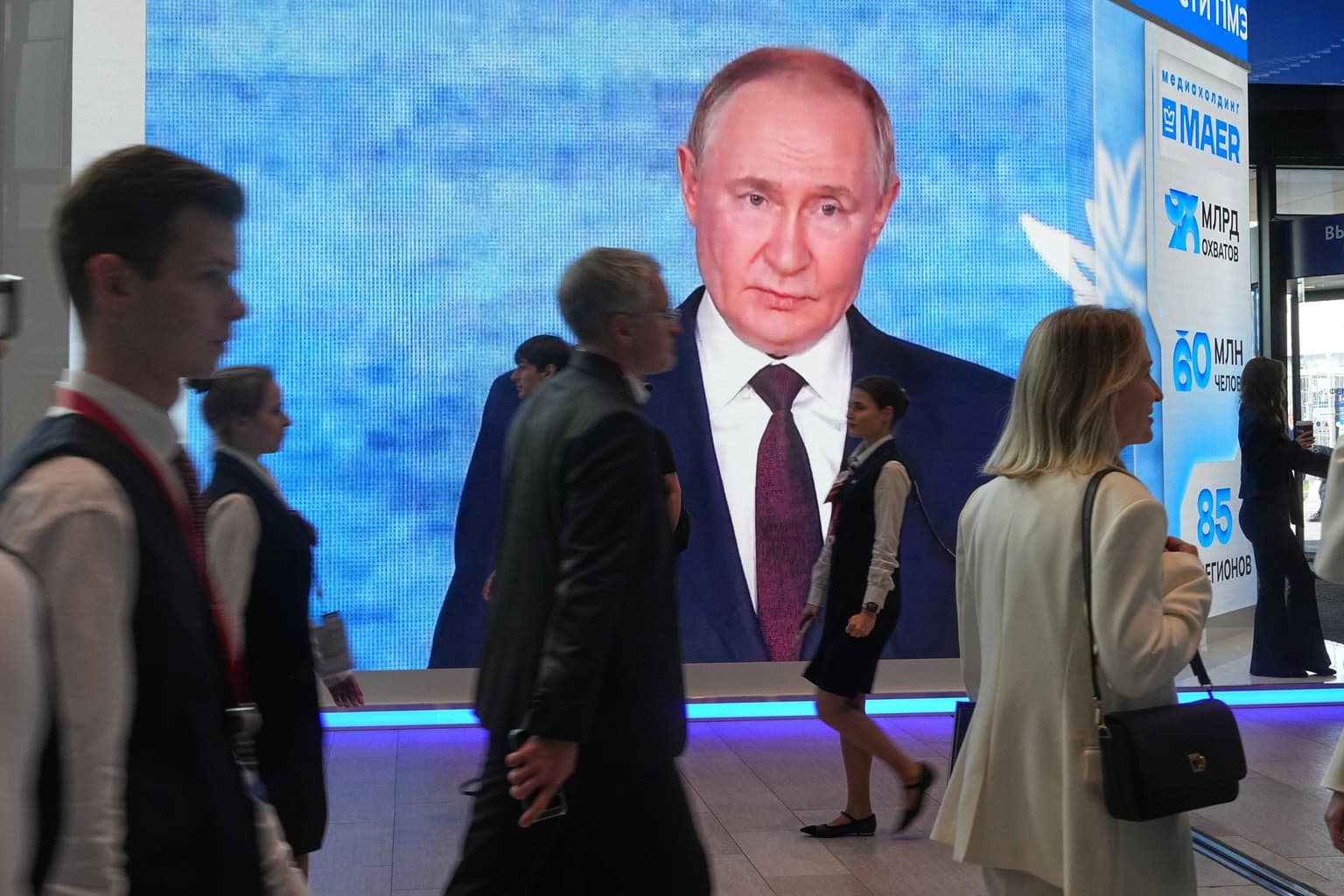
People walk past a screen displaying an image of Russian President Vladimir Putin at the St. Petersburg International Economic Forum in Saint Petersburg, Russia, on June 3, 2026. (Dmitri Lovetsky / AP)
 on Google
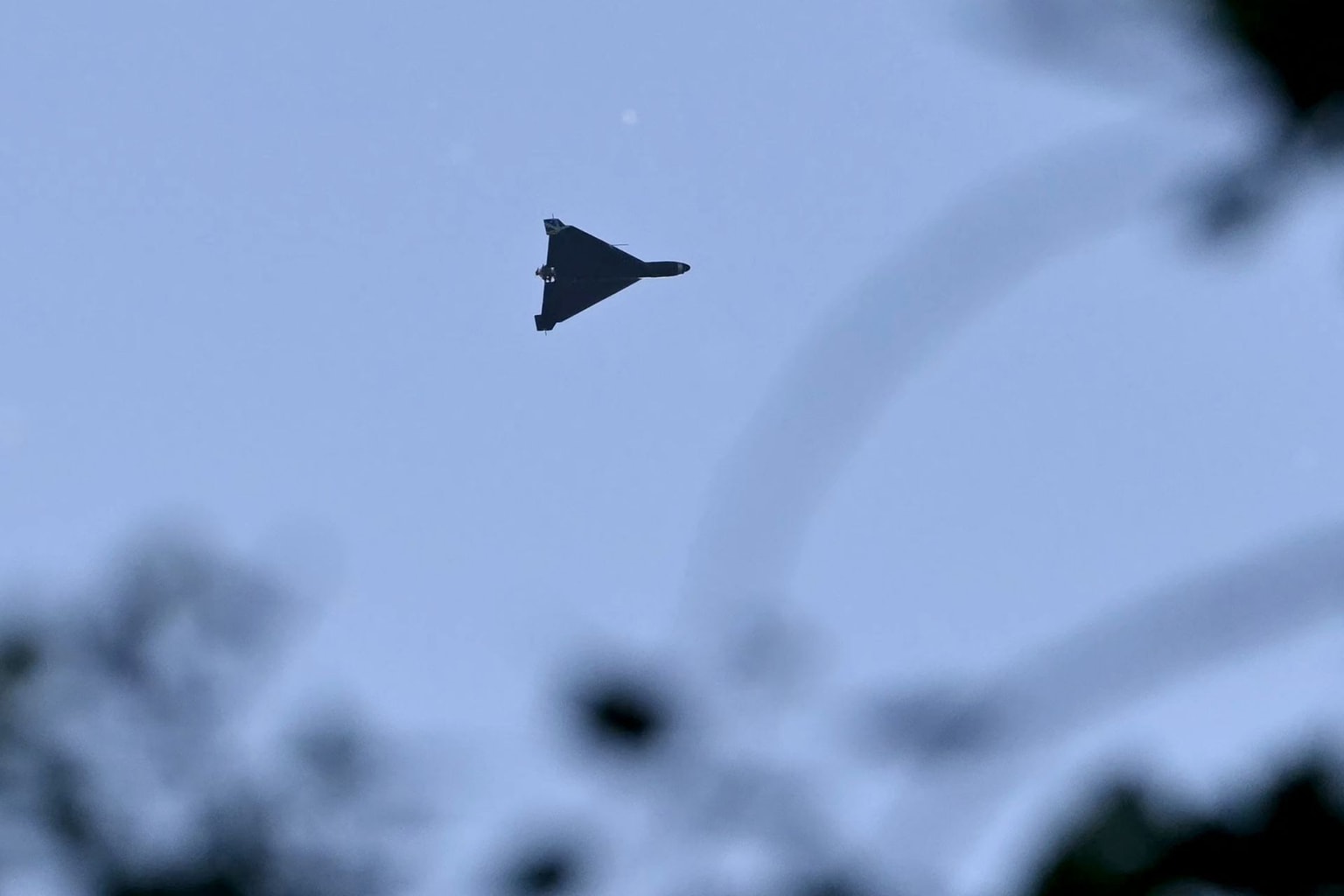
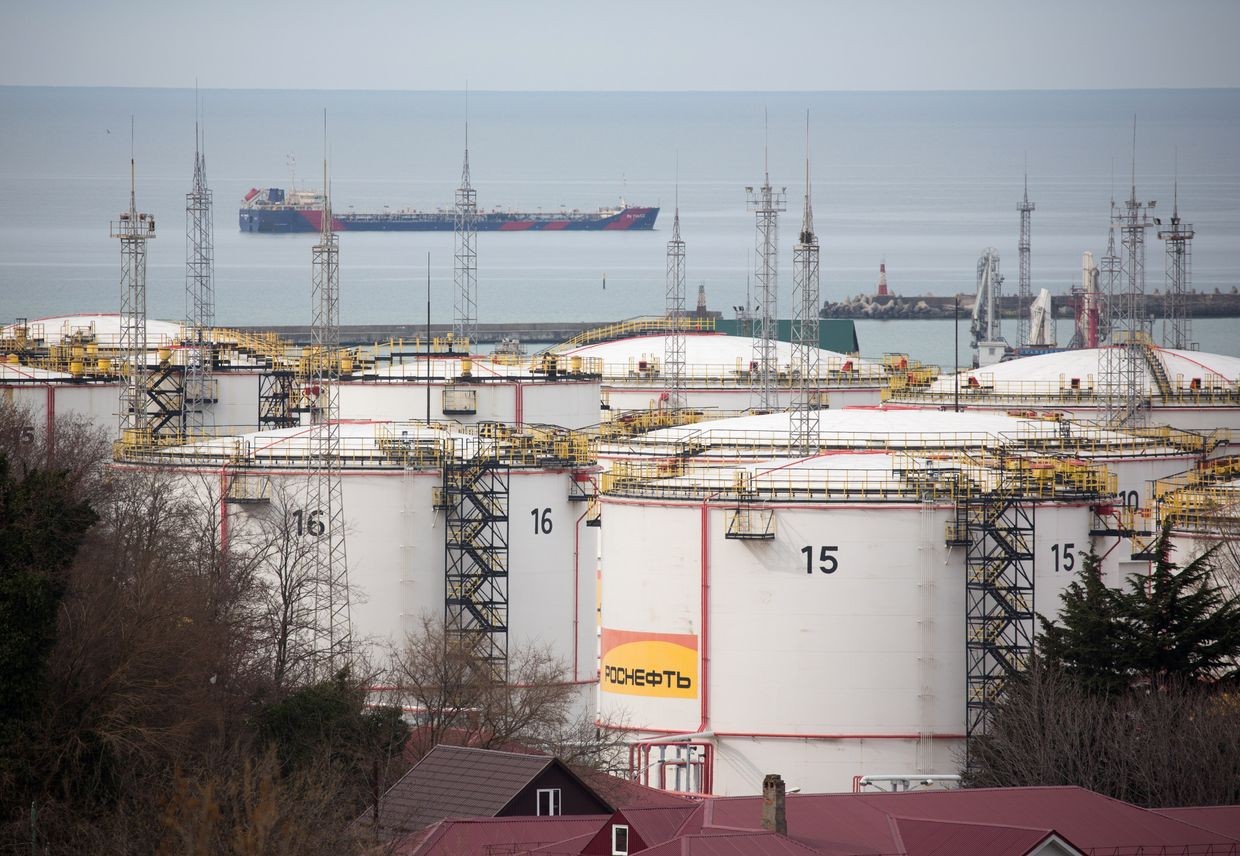
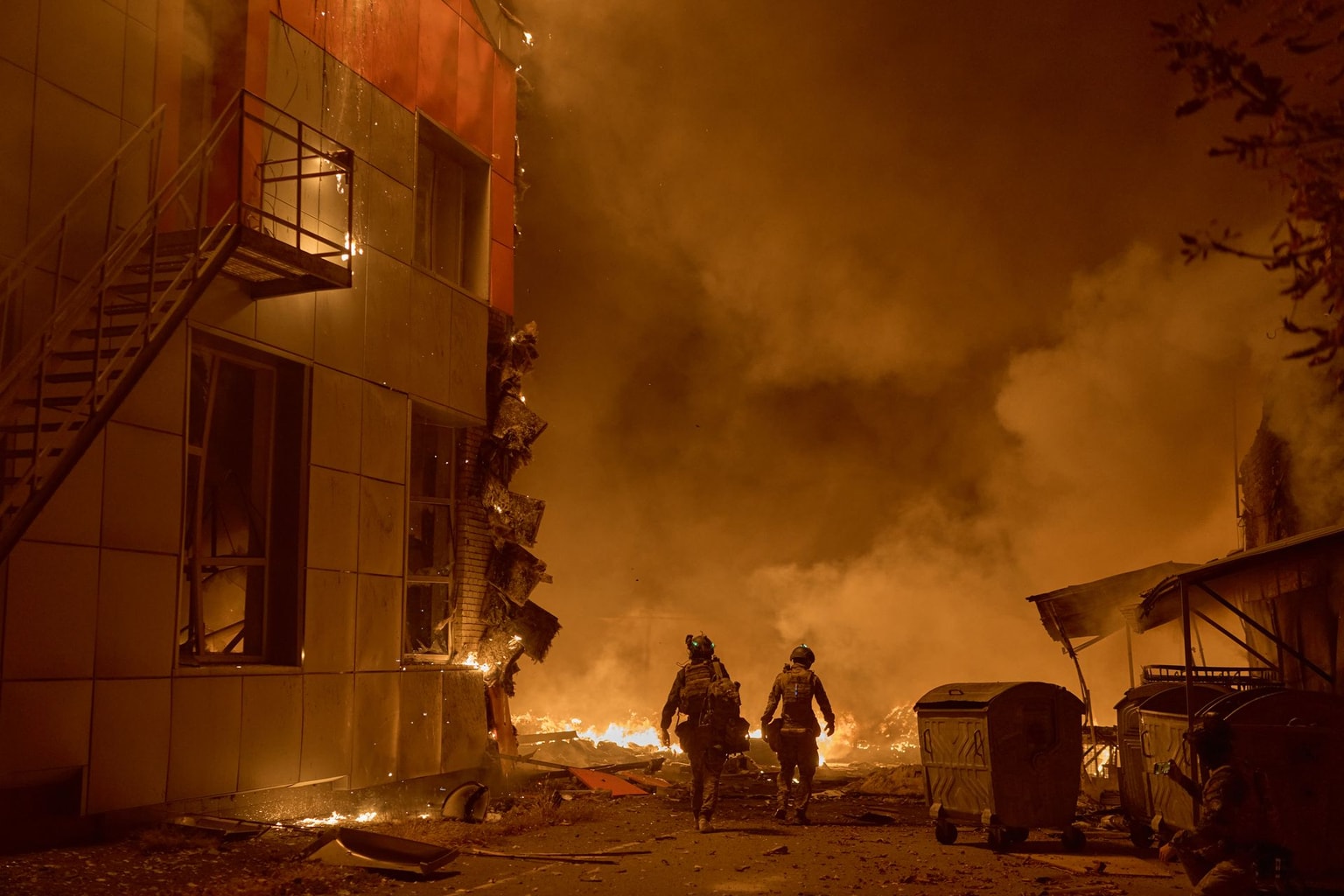
As Russia holds its annual international economic forum in St. Petersburg, Ukraine sent dozens of drones at the city, reportedly targeting a major oil terminal and military targets.
On the surface, participants seemed unaffected. Official images from the event showed columns of conference-goers walking to venues — even as black clouds of smoke from explosions billowed into the sky behind them.
Beneath that surface, however, a quick glance is enough to understand that this year's St. Petersburg International Economic Forum, held between June 3 and 6, has nothing to do with what it used to be.

Until 2022, the forum hosted high-level guests from Western countries and around the world: then-German Chancellor Angela Merkel was there in 2013, and Chinese President Xi Jinping in 2019.
By 2026, the event became no more than a smokescreen, barely hiding Russia's inability to meaningfully engage with any international partners, according to experts and participants of past editions of the forum who spoke to the Kyiv Independent.
What used to be a grand event in Russia's ‘northern capital’
Since 2005, the St. Petersburg forum has been presided over by Russian President Vladimir Putin, with organizers clearly trying to mirror the scale of the World Economic Forum in Davos.
Initially, this plan had some success, at least up until Russia's annexation of Crimea in 2014.
"When this forum became a big event, around 15 years ago, there was this idea that this would be a kind of a platform where Russia meets the world, and Putin meets world leaders," said Konstantin Sonin, an exiled Russian economist and speaker at past editions of the St. Petersburg forum.
The event produced some results, even if it was always "more of a show" than a place where important decisions were made, said Andrey Pertsev, a politics reporter at the exiled Russian outlet Meduza.

Still, over the years, many important contracts were signed in St. Petersburg: that on building the Nord and South Stream gas pipelines in 2010, on Shell exploiting Russian oil and gas reserves in 2008, or on Russia buying France's flagship Mistral helicopter carriers in 2011.
Since 2014, when Russia's aggression against Ukraine started, the scale of the business done in St. Petersburg has never been quite the same.
Nevertheless, leaders of democratic countries continued attending, including French President Emmanuel Macron and Japanese Prime Minister Shinzo Abe in 2018.
"Many years ago, even if this was always a propaganda event, the organizers really tried to represent different kinds of people, not just Putin supporters," Sonin said. "Not that there were actually Putin competitors or enemies there, but there were some independent experts and other figures."
Western leaders replaced by anti-vaxxers, conspiracy theorists
In 2026, not much is left of what the forum used to be. On the first day of the event, Putin aide Yuri Ushakov boasted about the arrival of the "first official American delegation at the St. Petersburg Economic Forum since 2017-2018."
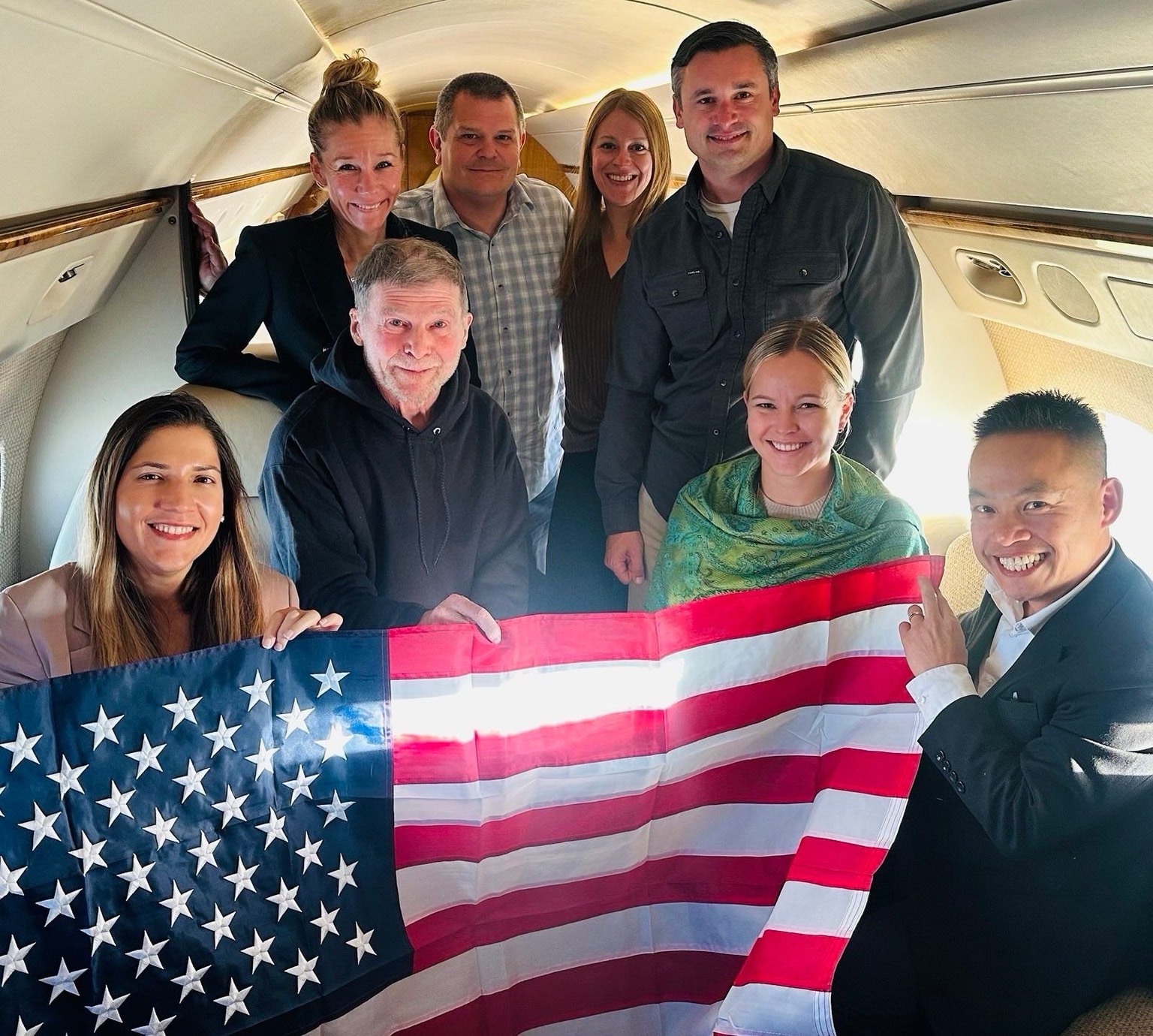
The American group is reportedly led by Rodney Mims Cook, the president of the U.S. Commission on Fine Arts, a little-known institution that advises the U.S. government on national heritage issues.
In public remarks on June 3, U.S. Secretary of State Marco Rubio said he knew nothing about this delegation, and that it was not "high-level" in any case. Markedly, no major political or business figures traveled to St. Petersburg from the U.S.
"They are still inviting some celebrities to the forum, but none of these are people who are going to change their mind about Russia by coming to St. Petersburg," Sonin said, referring to far-right personalities and conspiracy theorists who came to this year's forum.
The most famous American in St. Petersburg this year is alt-right influencer Candace Owens, who attracted widespread controversy by repeatedly claiming that Macron's wife is a transgender man.

The claims earned her a defamation lawsuit filed by France's presidential couple. Owens also believes that Neil Armstrong's moon landing was a hoax, that dinosaurs never existed, and that Covid-19 vaccines were harmful.
In St. Petersburg, she will lay out her thoughts at a panel on "traditional values."
Another American at the forum, former U.N. inspector in Iraq Scott Ritter, was sentenced for sexually harassing a minor in 2011, and has since become a regular guest of Russian propaganda outlet RT.
"People like Candace Owens obviously have a huge following," Sonin said. "But their posts from St. Petersburg will have no influence on their already convinced followers."
Other fringe figures this year include German politician Jorg Urban, known as a member of the radical wing of the Russia-friendly Alternative for Germany (AfD) party. The party's leader, Alice Weidel, previously disapproved of party members traveling to Russia for events.
The only announced foreign heads of state in St. Petersburg are the presidents of Uzbekistan and Tanzania, while only a handful of other countries sent high-level representatives.
Why is Russia still doing this?
While the St. Petersburg forum is no more than a shadow of what it used to be, it still serves a few distinct purposes, experts told the Kyiv Independent.
"Putin's people run this forum to convince themselves, and Putin, that Russia has an annual international forum," Sonin said. "So, this just developed into a kind of self-serving PR event."
The forum is also a pretext to hand lucrative contracts to Kremlin allies involved in organizing the event, the exiled Russian economist said.
"A lot of people in Russia make huge amounts of money on government contracts: when they invite Candace Owens, for instance, they pay her, but intermediaries in Russia cash in a percentage on that invitation."
Moreover, the St. Petersburg forum is simply an event that the Russian president personally likes, Pertsev explained.

"Putin got used to having this forum in his hometown; by now, this is more a kind of nostalgia for long-gone times (when the forum actually attracted important guests)."
In that sense, the politics reporter said, the St. Petersburg economic forum has become a kind of a show for one viewer: Putin.
"When I traveled to the forum in 2009, our group of leading Russian business journalists met with people like Alphabet (parent company of Google) CEO Eric Schmidt or News Corps CEO Robert Thomson," said Elizaveta Osetinskaya, the founder of exiled Russian business outlet The Bell.
Today, those seats are filled by delegates from the Taliban and North Korea, she added.
Editor's note: Got an opinion on anything you've read in the Kyiv Independent so far? Send it to letters@kyivindependent.com, and it may appear in our Letters section.