Ukraine war latest: 4 Russian warships damaged in strike on Black Sea Fleet port in Novorossiysk
 on Google
Key developments on Aug. 12:
- 4 Russian warships damaged in strike on Black Sea Fleet port
- Ukraine liberated 745 square kilometers in Oleksandrivka sector since January, Zelensky says
- Ukrainian unit reports shortages of food, water on front line, command promises evacuation when 'security situation allows'
- Ukraine's HUR reveals size of Russia's Geran attack drone stockpile
- Zelensky teases joint plan with allies to force Putin to stop war
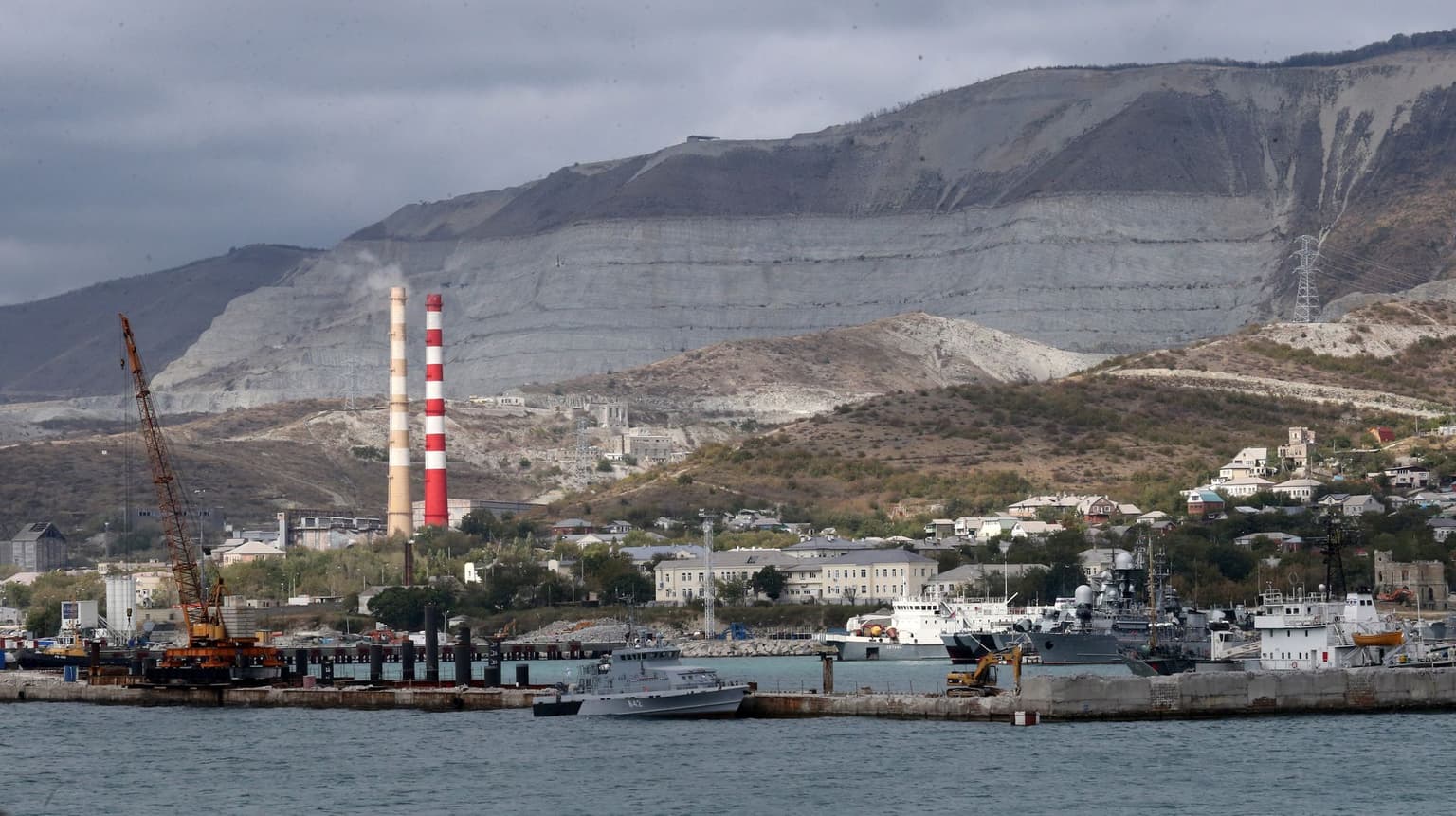
Four Russian warships were damaged in a Ukrainian strike on the Black Sea Fleet naval base in Novorossiysk overnight on Aug. 12, the General Staff said.
"According to preliminary information, four warships of the Russian aggressor suffered varying degrees of damage — two frigates of project 11356, Admiral Makarov and Admiral Essen, a small missile ship of project 21631 Buyan-M, and a patrol ship of project 22160 Vasil Bykov," the General Staff said in a post on social media.
It added that the full extent of the damage to the vessels was being clarified.
President Volodymyr Zelensky earlier said Ukrainian forces had carried out a "unique operation" targeting a naval base in Novorossiysk, more than 300 kilometers (185 miles) from the front line.
Novorossiysk, a major Russian port on the Black Sea, is home to a naval base used by Russia's Black Sea Fleet. Russia has relocated much of the fleet from occupied Crimea to Novorossiysk following repeated Ukrainian attacks on Russian warships and naval infrastructure on the peninsula.
According to Zelensky, Ukraine used Palianytsia jet-powered drones, Neptune anti-ship cruise missiles, and naval drones in the attack. Ukrainian forces struck Russian air defense positions, piers and port infrastructure, the president added.
"The occupation fleet and all the infrastructure supporting it will not be safe as long as Russian aggression continues," Zelensky said on X.
"We will shut down the Russian war machine — we will destroy infrastructure, the fleet, logistics, fuel and energy facilities, and enterprises that are working for the war against Ukraine," acting Defense Minister Yevheniy Khmara said following the strikes.
Residents in Novorossiysk reported repeated explosions as Russian air defenses attempted to repel an ongoing drone attack, according to independent monitoring channels.
An 8-year-old boy was killed in the attack on Novorossiysk, while eight people, including a child, were injured, regional Governor Veniamin Kondratyev said. The governor added that falling drone debris damaged 21 residential buildings and four businesses, but did not specify which businesses were affected.
Eyewitnesses reported fires raging across Novorossiysk, saying a grain terminal, the Sheskharis oil terminal and port infrastructure serving Russia's Black Sea Fleet were among the sites damaged, according to Exilenova Plus.
The grain terminal was damaged and temporarily suspended operations following the attack, Reuters reported later in the day.
read also
Ukraine liberated 745 square kilometers in Oleksandrivka sector since January, Zelensky says
Ukraine has liberated 745 square kilometers (288 square miles) in the Oleksandrivka sector and killed nearly 10,000 Russian soldiers since January, President Volodymyr Zelensky said on Aug. 12.
Ukraine launched a counteroffensive in late January in the Oleksandrivka sector, in the southeast, where Dnipropetrovsk, Zaporizhzhia, and Donetsk oblasts converge.
"During the operation, we managed to liberate a territory of 745 square kilometers. Twenty-six villages in the Dnipro, Donetsk and Zaporizhia regions were returned to the control of Ukraine," Zelensky said in a post on social media.
"Russian losses amounted to at least 9,550 people killed and more than 6,600 people wounded," he said, adding an unspecified number of Russian soldiers were captured.
In March, Ukraine reported liberating 470 square kilometers (180 square miles) of territory in the same counteroffensive.
Experts have previously cautioned against claims about territorial gains, as the situation in gray zones along the front line is difficult to assess and control of these areas is often unclear.
"It could be safer to say that the Russians don't exactly control that area now either, even though it was already at least partially in their rear just over two months ago," Emil Kastehelmi, a military analyst with the Finland-based Black Bird Group, told the Kyiv Independent in March.
Ukrainian unit reports shortages of food, water on front line, command promises evacuation when 'security situation allows'
Service members of Ukraine's 121st Territorial Defense Brigade in Zaporizhzhia Oblast said they had gone four months without rotation and faced persistent food and water shortages, while their command pledged to withdraw them when "the security situation allows."
The heavy presence of drones, which constantly monitor the battlefield, has made movement to and from positions one of the most dangerous aspects of infantry service. Under the constant threat of drone attacks, soldiers can be forced to remain in foxholes for months, waiting for a safe opportunity to leave their positions. While deployed there, they receive supplies exclusively by drone, as the positions are inaccessible to other troops.
The soldiers posted the appeal on Facebook on Aug. 9. Platoon Commander Anatolii Syshchuk said his unit arrived at the position in April to relieve troops who had been stationed there for eight months without rotation. Their deployment was initially expected to last one month, he said.
Syshchuk said the soldiers were facing shortages of food, drinking water, and medical supplies. Food deliveries could be delayed by three days to a week, while on one occasion, no food was delivered for 12 days, he added.
The unreliable supply chain left the soldiers in a "semi-conscious state," according to Syshchuk.
"I have decided that, under favorable conditions, my troops and I will withdraw from our positions without waiting for reinforcements. After all, we have neither the strength nor the means to remain in our positions," Syshchuk said.
"We are not refusing to serve, but we have no other choice. We are asking for safe passage out of the area and transportation for our evacuation. All the other authorities we have approached have failed to help us. You are our only hope," the commander added, addressing Commander-in-Chief Mykhailo Drapatyi.
The 121st Brigade responded on Aug. 10, saying that packages containing essential supplies are being delivered to hard-to-reach positions according to schedule. The brigade claimed that 27 packages, each weighing nine kilograms, had been delivered to Syshchuk's unit over the course of the month.
At the same time, adverse weather conditions and the actions of Russian forces meant that supplies could not always be delivered on time or in full, the statement said.
The brigade added that its commander was personally communicating with the service members about the situation and said the information presented in their video appeal "did not reflect all the circumstances."
Ukraine's HUR reveals size of Russia's Geran attack drone stockpile
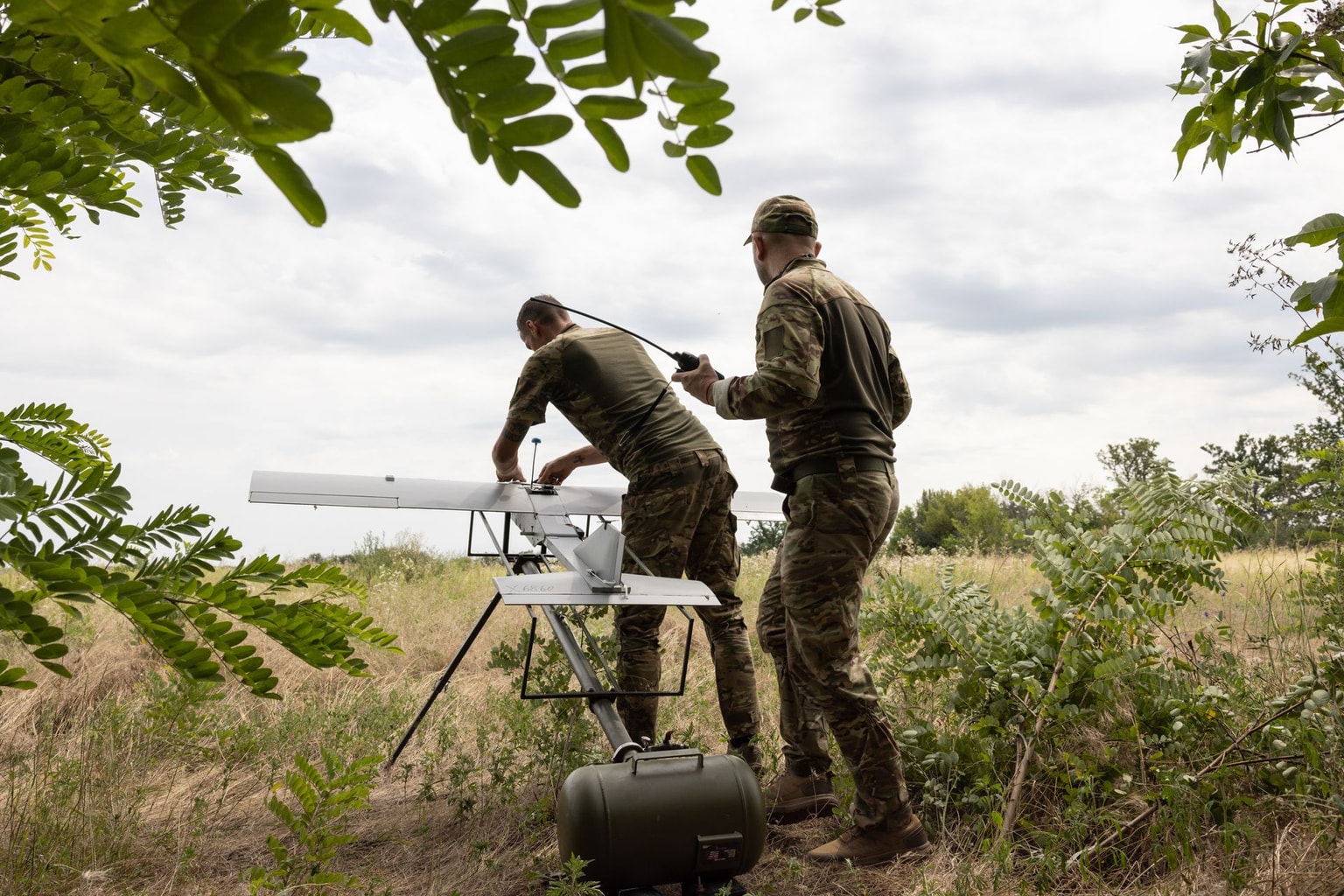
Russian forces have accumulated around 6,200 Geran kamikaze drones of various types as of August, Ukrainian media outlet Militarnyi reported on Aug. 12, citing Ukraine's military intelligence agency (HUR).
The Geran is a Russian-made long-range attack drone based on Iran's Shahed design. Russia initially received a steady supply of Shahed drones from Iran in its full-scale invasion of Ukraine, before establishing domestic production of the drones.
Russia typically builds up large drone stockpiles ahead of major attacks. At the same time, the number of long-range drones launched against Ukraine has declined significantly in recent months.

Russia's largest drone attacks can involve between 600 and 1,000 drones. During periods when Russian forces are replenishing their stockpiles, however, they typically launch around 150–200 drones per attack, with the number occasionally reaching 300, Militarnyi reported.
One of Russia's largest drone attacks against Ukraine in 2026 took place in May. Russian forces launched 1,560 drones at Ukraine over a 24-hour period on May 13 and May 14. Ukrainian forces intercepted 94% of them, according to President Volodymyr Zelensky.
According to daily reports from Ukraine's Air Force, Russian forces significantly increased their use of long-range drones in the spring. While Russia launched around 4,450 drones in January, the figure reached a record 8,150 in May.
At the same time, the number of launches has declined again over the summer, with Russian forces launching nearly 5,000 drones in July.
Since the start of the full-scale invasion, Russia has also significantly upgraded its long-range drones. The latest modification, the Geran-5, which Russia began using against Ukraine in 2026, carries a 90-kilogram warhead, has a range of around 950 kilometers (590 miles), and can reach speeds of up to 600 km/h (370 mph), according to HUR.
By comparison, the Geran-1, which is the Russian equivalent of the Shahed-131, carries a warhead of up to 20 kilograms, can reach speeds of up to 185 km/h (115 mph), and has a range of around 900 kilometers (560 miles).
Zelensky teases joint plan with allies to force Putin to stop war
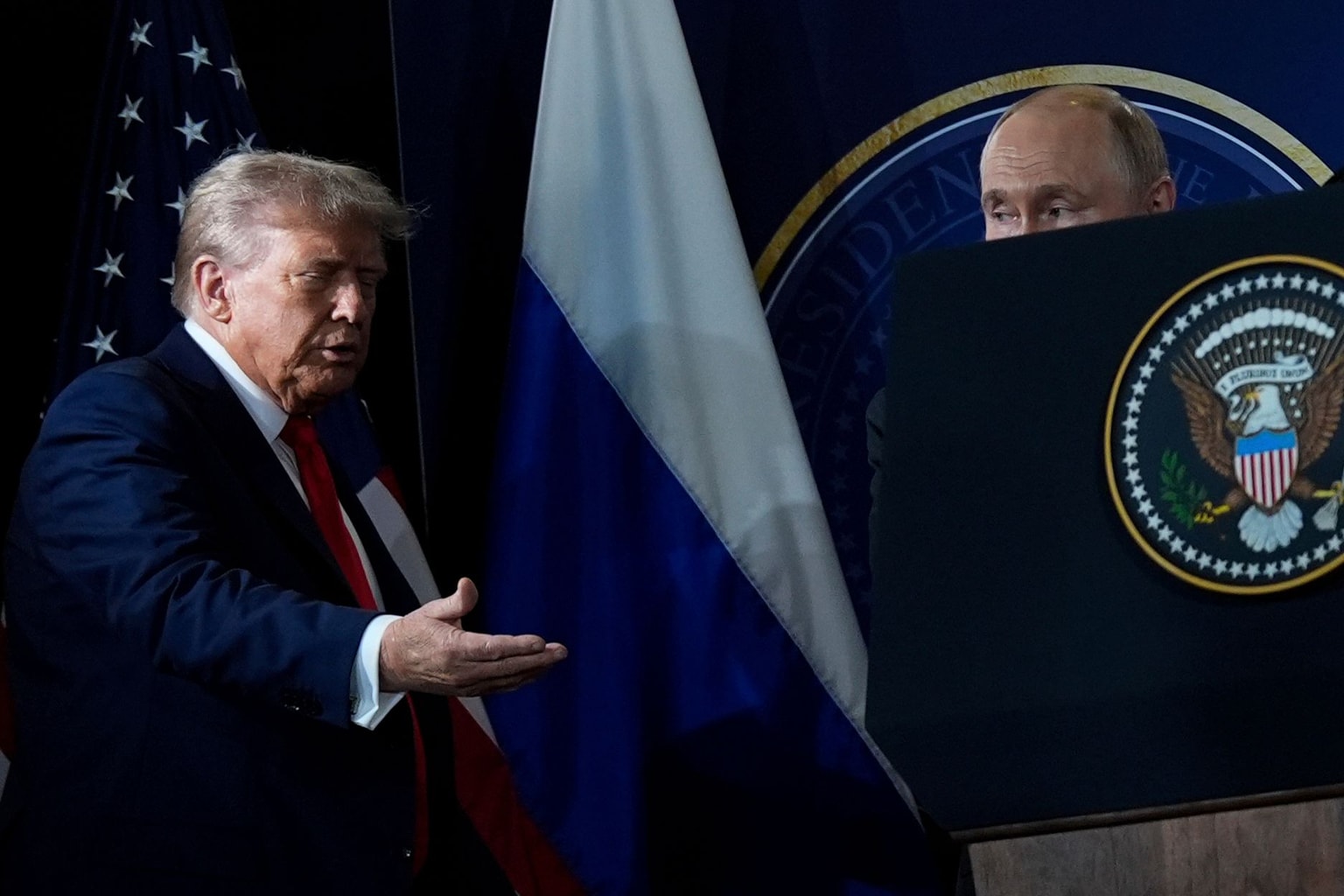
Kyiv and its international partners have a joint plan to force Moscow to end its war, President Volodymyr Zelensky said on Aug. 12 as peace talks stall and Russia continues strikes on Ukrainian cities.
"(Russian President Vladimir) Putin does not want to stop this war, but he will stop it. We have a plan," Zelensky said at the annual Ukrainian Youth Forum.
The strategy rests on joint pressure on the Russian leader, Zelensky said, without disclosing further details.
The president also underscored the necessity for the Ukrainian army to hold the defenses and continue strikes inside Russian territory, while noting that Kyiv's partners should work to boost the country's air defenses.
Zelensky said in his evening address on Aug. 11 that Ukrainian negotiators had passed their proposals to end the war to the U.S. side.
The comments come as Washington-led peace talks have been deadlocked for months, with both Kyiv and Moscow remaining far apart on territorial issues.