Why Zelensky's letter wasn't about Putin as Kremlin rejects meeting
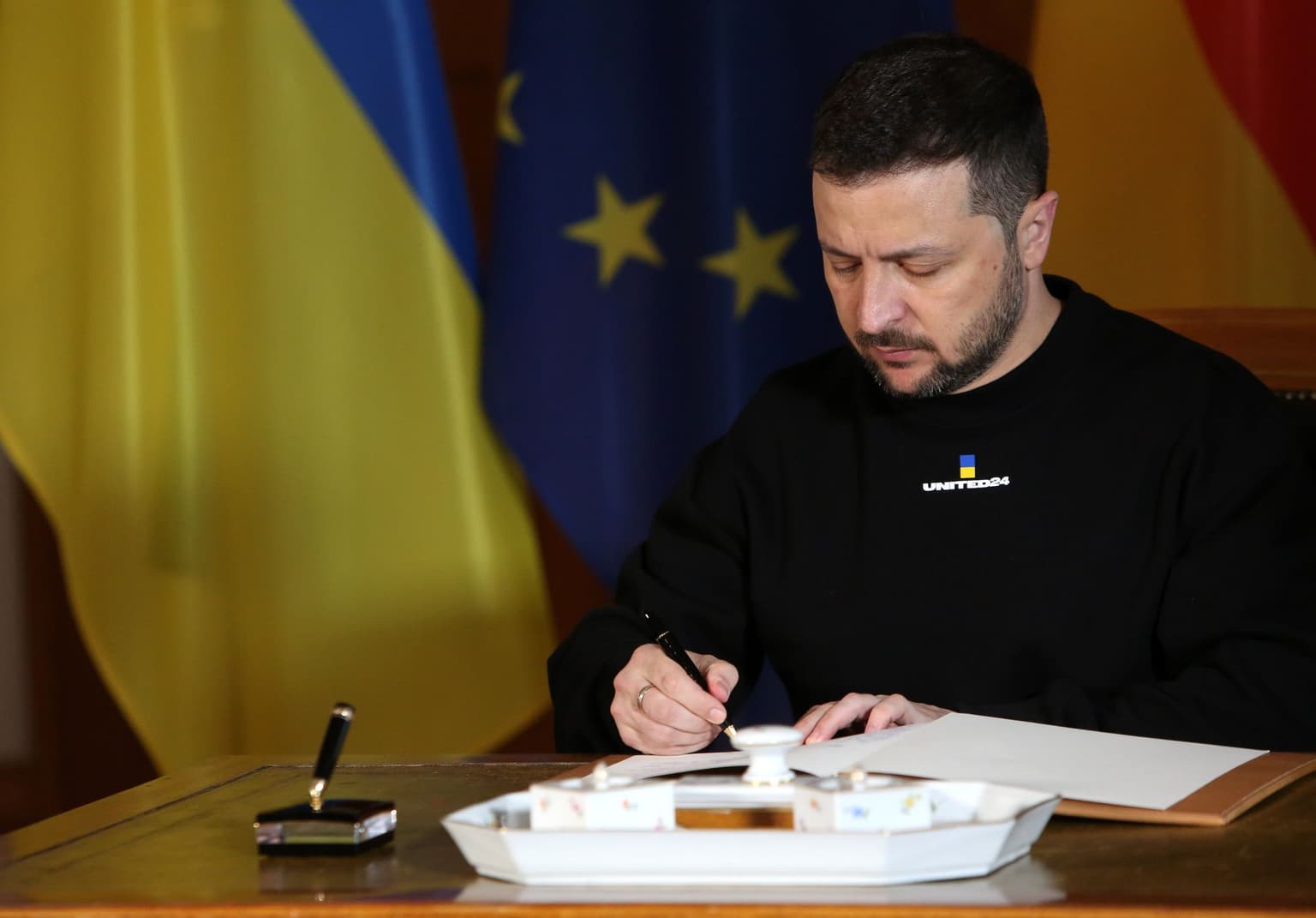
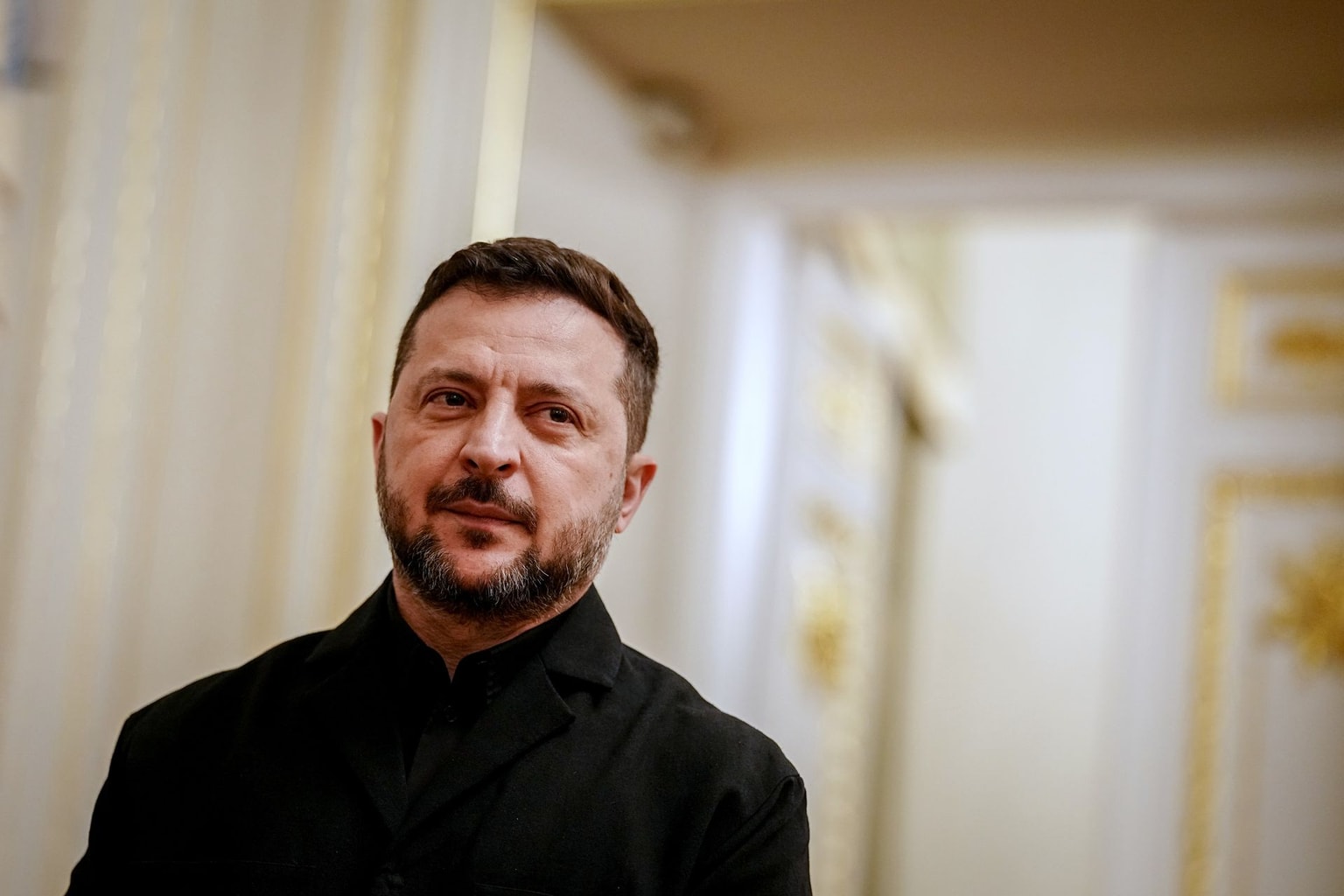
President Volodymyr Zelensky signs a guest book as he visits Berlin, Germany, on May 14, 2023. (Adam Berry/Getty Images)
 on Google
President Volodymyr Zelensky's letter to Russian President Vladimir Putin was never meant only for the man whose name was written at the top.
According to a senior Ukrainian official familiar with the planning, the message was aimed at a much wider audience, including Putin's inner circle, Russian elites increasingly weary of the war, and even ordinary Russian citizens.
The letter, sent on June 4, marked the first direct outreach from Zelensky to Putin since 2022. In it, the Ukrainian president proposed a face-to-face meeting to discuss ending more than four years of full-scale war.
The Russian president responded to the letter at the St. Petersburg International Economic Forum, saying he "sees no point in meeting with Zelensky."
"I was slipped this piece of paper. I skimmed through it," Putin said. "Kyiv decided it was appropriate to move to a public debate, and that is wrong."
Putin also claimed the letter contained "elements of rudeness."
On the surface, it was another failed attempt to revive stalled diplomacy. But Ukrainian officials describe it as something broader — an effort to demonstrate who is genuinely seeking a path toward peace and who is standing in the way.
"The letter is for a lot of people. For (Putin), for his inner circle, for various influence groups that are signaling to him that it's time to end this," the official said.
Russian public and elites
For years, Zelensky has argued that only Putin has the authority to stop Russia's war. Yet every attempt to arrange a direct meeting has run into the same obstacle.
The Kremlin has consistently avoided talks between the two leaders in a neutral country, instead insisting that Zelensky travel to Moscow — an invitation Kyiv sees less as a convenient way to avoid a meeting altogether.
Against that backdrop, the letter was carefully crafted.
Zelensky invited Putin to meet in a neutral country to negotiate the framework of a peace deal. He said Ukraine would be prepared to observe a full ceasefire during negotiations and begin talks with an all-for-all prisoner exchange.
The Ukrainian president also urged Putin to "set a clear date for the meeting" and argued that both the United States and Europe should participate in the process.
But Ukrainian officials say the proposal itself was only part of the objective.
Just as important was creating a public record that Kyiv had once again offered negotiations — and that any refusal would come from Moscow.

The letter, therefore, serves a dual purpose: extending an invitation while simultaneously placing responsibility for rejecting it on Putin.
Notably, Zelensky's letter places responsibility for the war directly on Putin himself, marking a subtle shift from earlier rhetoric that often emphasized the responsibility of the Russian state and society more broadly.
The calculation appears straightforward.
While no visible split has emerged within Russia's ruling elite, Kyiv believes some figures increasingly understand the costs of the war. Still, publicly, senior officials, business leaders, and security figures remain aligned behind the Kremlin.
And Russia is not the only audience Zelensky had in mind.
Europe enters the picture
The letter immediately sparked another debate: whether Kyiv was signaling frustration with U.S.-led mediation and searching for a different diplomatic format.
The timing naturally fueled such speculation.
U.S.-mediated peace talks have effectively been frozen since February. Since then, Washington has been consumed by its war with Iran, which both Ukrainian and U.S. officials say became the main reason talks lost momentum.
Rather than waiting for that process to restart, Zelensky suggested in his letter that Ukraine and Russia could continue pursuing direct contacts. At the same time, he said Europe should have a seat at the table if negotiations advance.
Yet bringing Europe into the process may prove almost as difficult as bringing Russia to it. One person familiar with the planning said European governments understand that if talks move into a decisive phase, they will need influence over the outcome.
The problem is that many capitals are already competing for that influence.
"They all understand that if things move toward an endgame, Europe somehow has to have influence... But they also all want to push each other off the ship."
"(French President Emmanuel) Macron doesn't want (Italian Prime Minister) Giorgia (Meloni). Everyone wants to get rid of (British Prime Minister Keir) Starmer," the person added. "The E3 (Germany, France, and the U.K.) doesn't want the Nordics. There are all sorts of nuances."
Even so, Brussels quickly welcomed Zelensky's initiative.
"Another demonstration of Ukraine's pursuit of genuine negotiations and unconditional ceasefire," European Commission foreign affairs spokesperson Anitta Hipper told the Kyiv Independent.
"From our side, we welcome Zelensky's call for direct negotiations and also the call for a ceasefire. Ukraine wants peace. Europe wants peace."
Ukrainian officials also reject suggestions that the letter shows declining faith in Washington. Instead, they describe it as a signal that Kyiv is continuing diplomatic efforts while the United States remains preoccupied elsewhere.
"This is a message to Americans that we hear you, we see you, we know you're busy right now, but we're doing our best too, and we understand that you have to be (engaged)," one senior Ukrainian official said.
A message beyond Moscow
Many Ukrainian lawmakers and analysts view the letter less as a direct appeal to Putin and more as a strategic message aimed at audiences beyond the Kremlin.
Political analyst Ihor Reiterovych argued that the document speaks simultaneously to Western capitals and Russian elites.
"It's telling the Westerners, 'we are ready for talks,' and to the Russians, 'Putin will devour you because he wants to wage war,'" he said.
Yaroslav Yurchyshyn, a lawmaker from the opposition Holos party, believes the primary audience is "first and foremost Western societies and elites."
The letter, in his view, is designed to make one point clear: who is trying to negotiate and who is preventing negotiations from moving forward.
While he does not expect an immediate breakthrough, Yurchyshyn said it helps demonstrate that "the problem is not with us, but with Putin's Russia."
Oleksandr Merezhko, chairman of parliament's foreign affairs committee and a member of Zelensky's Servant of the People party, expressed a similar view.
According to Merezhko, the letter was crafted to show "the world, the West, and maybe Trump" that Putin remains the principal obstacle to peace.

The message appears to have resonated in Washington.
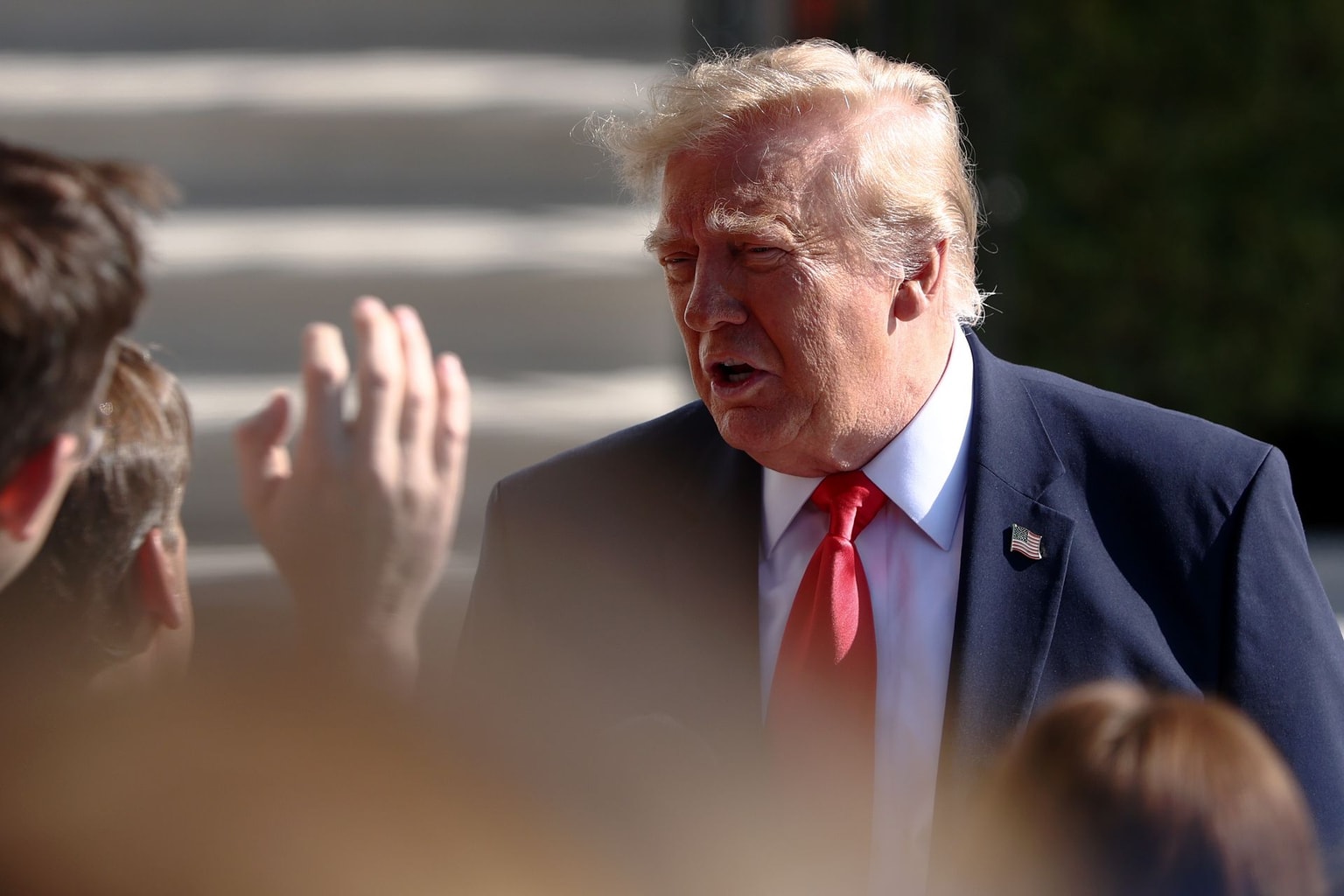
Asked about the proposal during a White House briefing on June 4, U.S. President Donald Trump said "it would be great" if the two leaders met.
"I think it would be great if they met. They should get it done," he said.
Merezhko argued that a refusal from the Kremlin would strengthen the case that Moscow is not serious about negotiations.
Volodymyr Ariev, a lawmaker from the opposition European Solidarity party, described the message as "more 'open' rather than directed (specifically) at Putin."
"The tone itself is more directed at the world at large," he said.
"In order that they, understanding the situation and when Putin predictably responds with a refusal, would begin to provide us with more assistance."
Note from the author:
Hi, this is Tim Zadorozhnyy, one of the authors of this article.
From our newsroom in Ukraine, we report on the issues that matter to a global audience, without outside influence. Independent journalism is only possible with reader support. If you value our work, please consider supporting us — it makes a real difference.