How Russia's shadow fleet forced Europe back to sea
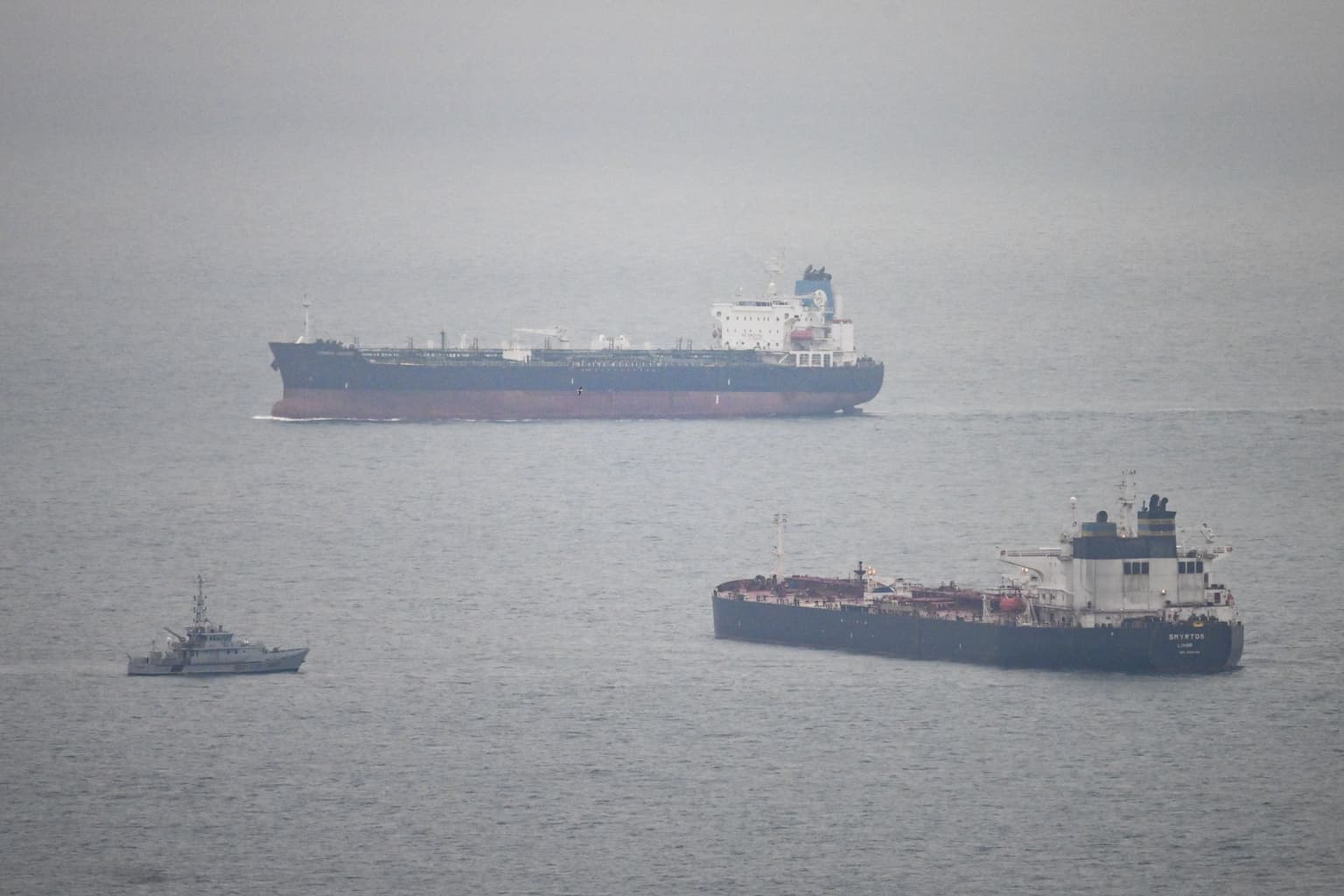
A tanker passes a border security vessel and the detained Smyrtos shadow fleet tanker outside the harbour in Portland, UK on June 15, 2026. (Finnbarr Webster / Getty Images)
 on Google
Europe's campaign to choke off Russia's ability to finance its war in Ukraine through oil revenues began with sanctions, legislation, and price caps. But as hundreds of ships helped Moscow evade those restrictions, Western governments increasingly backed those measures with aggressive maritime enforcement — deploying naval power and pirate-like tactics to disrupt the shadow fleet.
As of May 2026, a Ukrainian government register has identified 1,404 vessels belonging to Russia's so-called shadow fleet. Those ships are almost always dangerously old, uninsured, and registered in third countries where there are fewer laws to follow, so-called flags of convenience.
Moscow coordinates them to carry mostly oil, but also other sanctioned products like grain illegally taken from occupied territory in southern Ukraine, in a way that allows Russia to evade sanctions.
After Russia launched its full-scale invasion of Ukraine in February 2022, the EU banned Russian ships from accessing the bloc's ports as early as April and introduced its first price cap on Russian oil in December 2022.
Those two moves together led Moscow to seek alternative means to keep selling oil and keep the money flowing into state coffers.
However, it was only in June 2024 that the EU first issued sanctions directly against the shadow fleet: 27 tankers, "part of Putin's dark fleet," read an EU press release at the time.
Since then, the EU has added new ship listings in every subsequent sanctions package and quickly shifted its language from "dark fleet" to "shadow fleet," the more commonly used term for ships that aim to deceive and disregard the law.
By the time the EU adopted its 21st sanctions package in July 2026, 692 ships were on the EU's list, along with a range of individuals and companies involved in servicing shadow fleet ships and enabling the deception.
Those listings have been complemented by separate lists of sanctioned ships drawn up elsewhere.
The U.K.'s latest sanctions package against the shadow fleet on Aug. 6 brought the total number of ships listed to 659. The U.S has sanctioned 453 vessels, while Canada and Australia have sanctioned 731 and 262, respectively.
"The community is more confident in their legal position when they act."

And there are moves to increase cross-border coordination in adding ships to sanctions lists.
For example, a draft Shadow Fleet Sanctions Act has been introduced in the U.S. Senate that includes a chapter intended to align U.S. listings with those of the EU and the U.K. at least twice per year.
But listings alone do not stop Russia's shadow fleet from sailing. Countries need to enforce those sanctions.
"Coordination among European countries that border the Baltic and North Seas has been intense on shadow fleet monitoring over the past two years," said Tom Keatinge, director of the Center for Finance and Security at the Royal United Services Institute think tank.
Several multilateral organizations, including the G7, the Nordic-Baltic Eight, and the Joint Expeditionary Force, discussed the issue more often, but also shifted "from understanding the problem to action," Keatinge said.
"The result is that the community is more confident in their legal position when they act," he added.
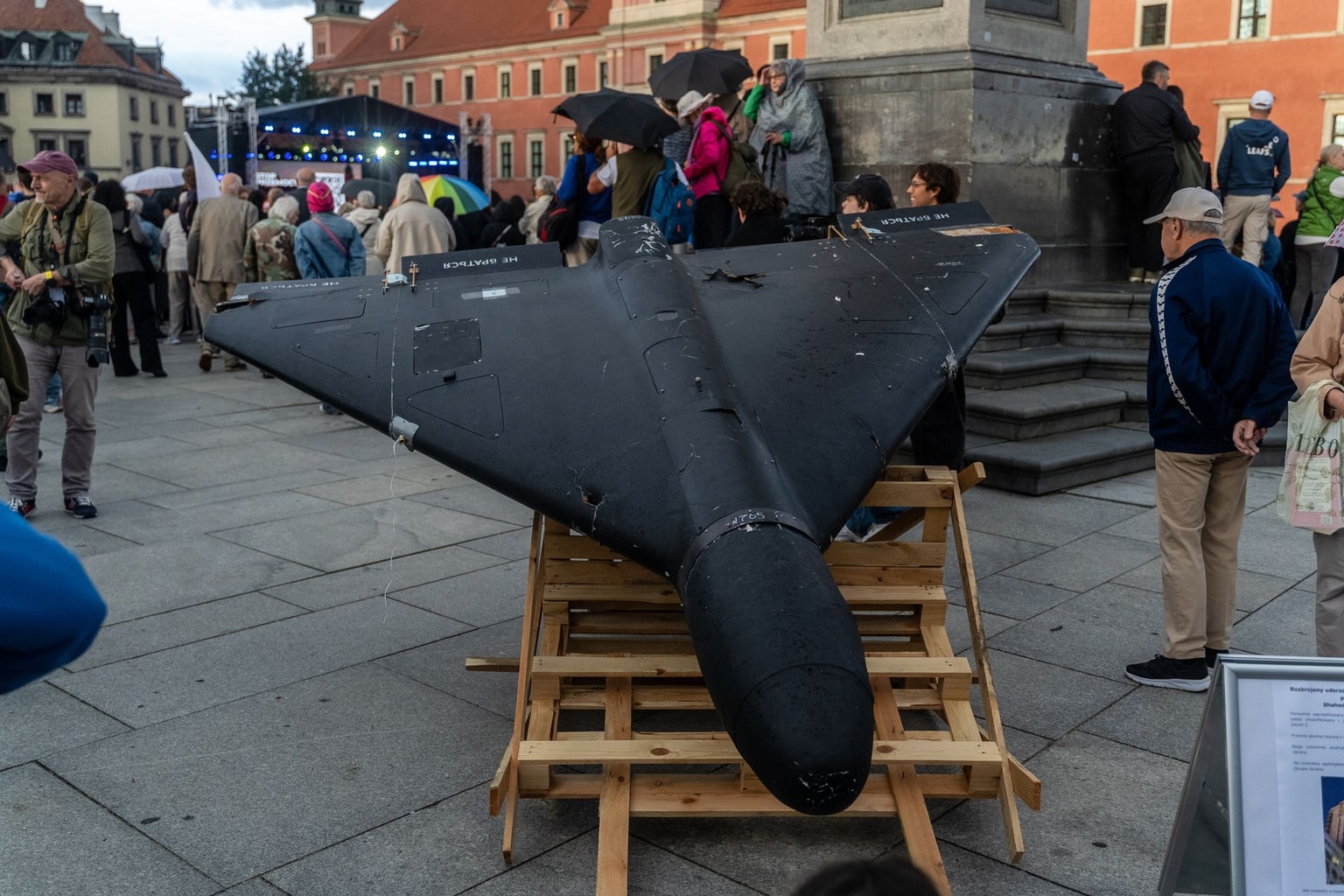
Days before an October 2025 summit of European leaders in Denmark, Copenhagen was threatened with Russian drone incursions, suspected to have been launched from a shadow fleet vessel.
European countries dispatched naval and air support to Denmark, French President Emmanuel Macron called for the Coalition of the Willing to double down on restrictions against the shadow fleet, and Paris boarded the ship suspected of being used to dispatch drones into Danish airspace.
But it was only in 2026 that boarding suspect ships became a more regular occurrence.
In March, Sweden began intercepting Russian shadow fleet vessels, and had already intervened against five ships by the beginning of May.
The first ship to be seized, the Caffa, was carrying grain taken illegally from Russian-occupied territory in southern Ukraine.
Courts in Stockholm have since agreed that the vessel and its cargo should be given to Kyiv.
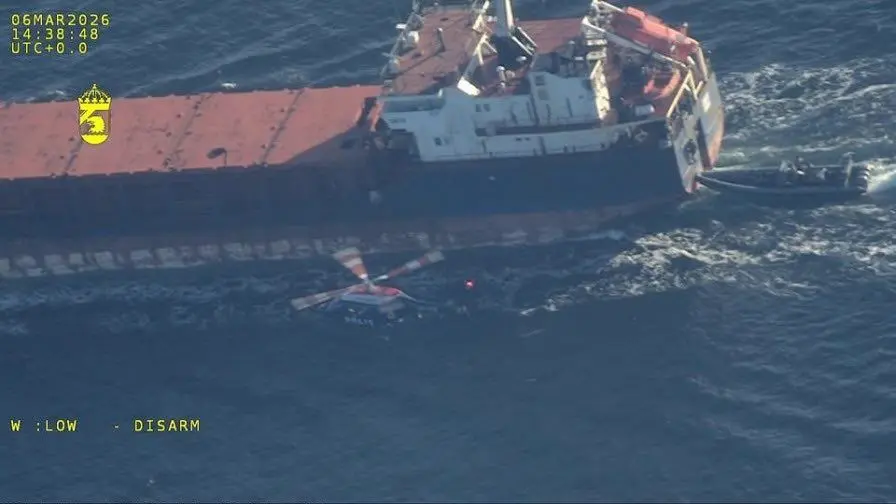
"Since March 1 2026, the Swedish Coast Guard has, through several different legislative amendments, been given increased opportunities to conduct effective intelligence work, which makes it easier to make decisions to intervene against vessels on Swedish territory," a coast guard spokesperson told the Kyiv Independent.
"If Swedish law is violated and the conditions for intervention in accordance with international regulations are met, we will intervene," they added.
Also in March, then-U.K. Prime Minister Keir Starmer gave the green light for the British military to board shadow fleet vessels entering the country's waters.
London intercepted its first shadow fleet vessel, the Smyrtos, in June.
France also stopped a shadow fleet boat in the Mediterranean in June.
And Belgian Defense Minister Theo Francken announced on March 1 that his country had seized a ship belonging to the Russian shadow fleet for the first time.
In addition to greater coordination among European countries, Keatinge highlights that the respective postures of Moscow and Washington have also facilitated the newly assertive approach.
The U.S seized a Russian-flagged oil tanker in the Atlantic Ocean on Jan. 7 for the first time in recent history, even after Moscow had reportedly dispatched a submarine to protect it.
"There is no doubt that this (the U.S. posture) has also encouraged European countries to act as they can anticipate non-objection from the U.S," Keatinge said.
Likewise, Keatinge noted that "Russia is not retaliating in any sort of meaningful way," leaving Europeans confident they can "take action without repercussions."
Russia threatened Europe in February, saying it would deploy its navy if Europe seized shadow fleet vessels, but that threat did not materialize.
Ukraine has also stepped up its campaign against the shadow fleet, announcing on July 1 that it would be treated as military targets, before carrying out attacks on at least seven different nights that month, striking no fewer than 78 ships in the Black Sea.
That same month, the EU agreed its Atalanta naval operation in the Indian Ocean could start intercepting ships suspected of belonging to Russia's shadow fleet. On Aug. 2, its operation IRINI boarded a sanctioned tanker in the Mediterranean.

On July 24, the bloc also agreed on its 21st sanctions package, which introduced a provision allowing member states to confiscate the assets of any shadow fleet vessels that they board.
"It sends a clear and unmistakable signal: the European Union is serious about countering the shadow fleet and closing every loophole Russia seeks to exploit to finance its war of aggression against Ukraine," a European Commission spokesperson told the Kyiv Independent.
"Shadow fleet vessels are a threat to the environment and neglect safety rules. We are showing now that such tactics will not go unanswered," they added.
But whether Europe's more assertive stance is having any effect on Russia remains to be seen.
Keatinge said the impact is "difficult to measure, particularly in an environment where the oil markets are highly volatile due to the U.S. war in the Middle East."
Instead, he pointed to the impact of Ukraine's attacks on Russia's energy production capacity, which have already led to sales restrictions and export curbs.