Fico did not pass messages from Zelensky to Putin during Moscow meeting, Kremlin claims
 on Google
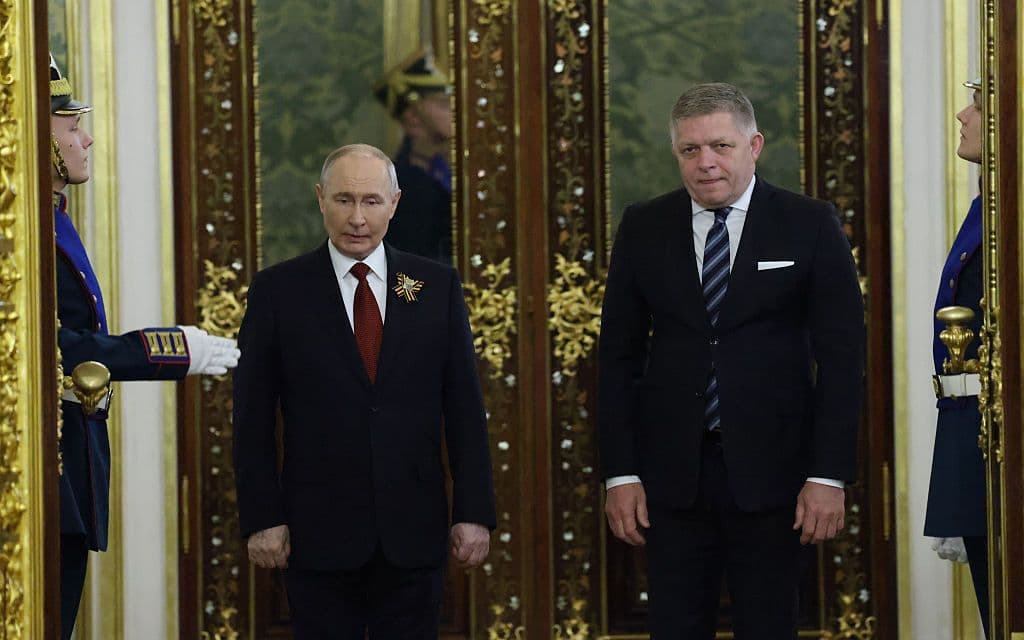
Slovak Prime Minister Robert Fico did not convey any "messages" from President Volodymyr Zelensky during his meeting with the Russian President Vladimr Putin in Moscow on May 9, Kremlin aide Yuri Ushakov told reporters.
Fico was the only European Union leader to visit Moscow for Russia's Victory Day celebrations, though he skipped the parade itself. Previously, a Slovak official said Fico could pass along messages from Zelensky to Putin during his meeting with the Russian leader.
Ushakov claimed this didn't happen — though he admitted Fico discussed his recent meetings with Zelensky during his talk with Putin.
"(T)he prime minister informed our president and our delegation that he had indeed met with Zelensky a few days ago," Ushakov said, according to the Russian news agency Interfax.
"Zelensky shared with him his assessment of the current situation in the Russian-Ukrainian context. But Zelensky did not convey any messages through him. It turned out that Fico simply provided a fairly detailed account of what he had discussed with Zelensky."
Ushakov said Fico and Putin discussed "the Ukrainian issue" as well as "many other topics."
The leaders reportedly discussed Russian-Slovakian relations, including energy supplies and resuming a bilateral intergovernmental commission on cooperation that has been dormant since 2021.
Fico told Putin that Russia and Slovakia "cannot limit (their) cooperation to (the energy sector) alone," the Russian state outlet RIA Novosti reported.
Fico's controversial visit to Moscow follows a series of talks with Zelensky, including a face-to-face meeting with the Ukrainian president in Yerevan on May 4. Those meetings, which came not long after the defeat of Kremlin ally Viktor Orban in Hungary, saw Fico take on a warmer tone toward Kyiv after months of mounting tensions.
Slovakia's Deputy Foreign Minister Rastislav Chovanec said on May 7 that Fico's Victory Day visit "is primarily focused on commemorating the end of the Second World War" and may provide an opportunity for Bratislava to liaise between Kyiv and Moscow.
"But yes, alongside this, he's also going to meet the Russian president, to whom he may convey messages from the Ukrainian president he met twice over the past week," Chovanec said. "The prime minister may also obtain valuable information from the Russian president on how Putin views efforts to end the war."
Fico's visit nonetheless drew criticism from European leaders and the Slovak opposition.
"(T)here is no normal, legitimate reason why Robert Fico should spend this day in Moscow," Slovak MP Michal Simecka said on May 9, according to the Slovak news outlet Aktuality.