Magyar sworn in as Hungary's prime minister as Kyiv eyes reset in ties
 on Google
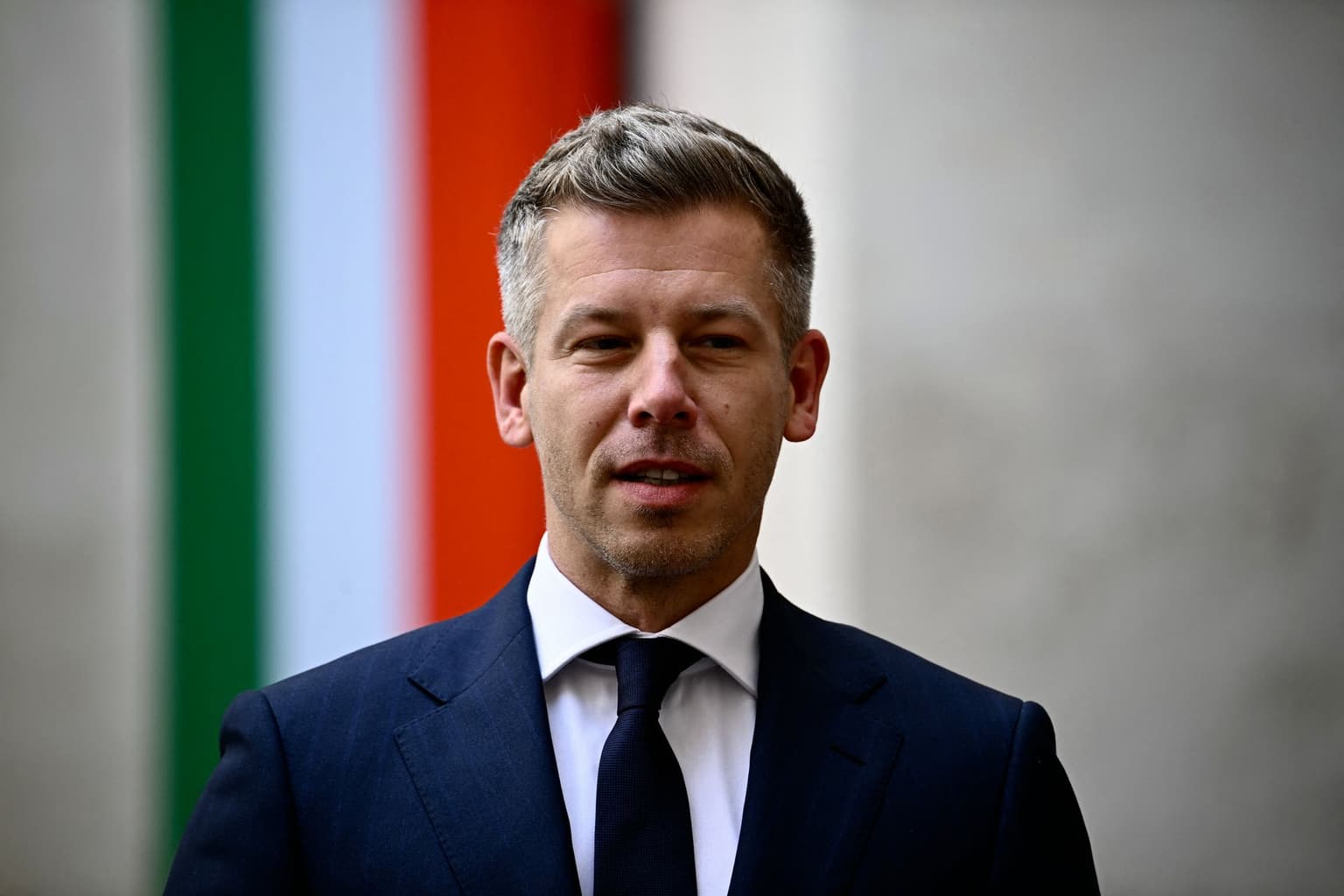
Peter Magyar took office as Hungary's new prime minister during the inaugural session of the new Hungarian parliament on May 9, ending Viktor Orban's 16-year rule.
Magyar's Tisza party resoundingly defeated Orban's Fidesz in the parliamentary elections on April 12, pledging a pivot away from Budapest's pro-Moscow direction and a mend in ties with the EU.
"Hungarian people have given us a mandate to put an end to decades of drifting," Magyar said, as cited by German media outlet Deutsche Welle.
"They have given us a mandate to open a new chapter in Hungary's history. Not only to change the government, but to change the system as well. To start again."
Magyar also called on Hungarian President Tamas Sulyok, who took office in 2024, to resign by the end of the month.
"Tamas Sulyok must not stand in the way of Hungary's democratic renewal and must resign no later than May 31," he said, accusing the president of covering up abuses of power by the Orban regime.
The EU flag was raised outside Hungary's Parliament building, where thousands gathered to hear Magyar's inaugural address.
President Volodymyr Zelensky congratulated Magyar, saying that it is "symbolic that this inauguration is taking place on Europe Day."
"Ukraine is ready to deepen cooperation with Hungary and build strong relations between our countries based on good neighborliness and respect for our people," Zelensky said in a post on X.
The electoral defeat of Orban, a Kremlin-friendly leader who has repeatedly obstructed EU aid to Kyiv and Ukraine's accession talks, raised hopes in Ukraine of a thaw in relations with its neighbor.
Magyar, a former Fidesz insider who split from Orban's party in 2024, won on a wave of voter anger over rising living costs, rampant corruption, and deteriorating public services.
Tisza winning 141 seats in the 199-member parliament — a supermajority — gives Magyar a powerful mandate to dismantle Fidesz's power structure, entrenched across the judiciary and government.
But while pledging to restore relations with Brussels to unblock 17 billion euros ($20 billion) in frozen EU funds and to end Hungary's energy dependence on Russia, Magyar has treaded cautiously on Ukraine.
Hungary-Ukraine reset
Hungary's new prime minister has denounced Russian aggression and affirmed Ukraine's territorial integrity — unlike his predecessor — but ruled out sending military aid to Kyiv or fast-tracking the country's EU accession.
Opinion toward Ukraine has soured in Hungary after years of an intensive anti-Ukrainian campaign by the Fidesz government, which escalated sharply before the elections amid a dispute over disruptions to the Druzhba oil pipeline.
Polls show that even Magyar's supporters remain skeptical of support for Ukraine.
The majority oppose both military and financial assistance and remain split on Kyiv's EU talks, according to a recent report by the European Council on Foreign Relations.
Ukraine was granted EU candidate status in 2022, but the opening of the accession clusters has been blocked by Orban's government for months.

Magyar's victory has fueled hopes in Brussels and Kyiv that the first cluster may be opened soon, ending the stalemate.
However, the new prime minister has so far avoided definite public statements on unblocking formal talks.
He has also stressed that the final decision on Ukraine's accession would be put to a future referendum in Hungary, where polling suggests most voters oppose Kyiv's bid.
Magyar further signaled that the reset of Ukrainian-Hungarian ties is contingent on Kyiv addressing the rights of its Hungarian minority, a topic often raised by the Orban government
The new prime minister suggested meeting Zelensky in Berehove — a mostly Hungarian-speaking town in western Ukraine — in early June to discuss what he framed as discrimination against the Hungarian minority: namely, through Ukraine's language laws.
Ukraine has yet to publicly respond to the invitation.
Kyiv has also repeatedly rejected allegations of discrimination against its Hungarians, saying that its language laws are intended to strengthen national identity and counter decades of Russification.
Pivot from Russia
Moving away from Orban's pro-Russia tilt has been a key part of Magyar's campaign.
Tisza supporters who spoke to the Kyiv Independent in the weeks leading up to the election expressed concern that another Orban term would draw Hungary further into Russia's sphere of influence.
The chant "Russians, go home!" — a reference to the 1956 Hungarian revolution crushed by Soviet tanks — has commonly accompanied Tisza rallies.
Under Orban, Hungary has deepened its reliance on Russian fossil fuels, even as most of the EU weaned itself off of Moscow after the outbreak of the all-out war in Ukraine.
Alongside Slovakia, Hungary is the only country still receiving Russian crude via the Druzhba pipeline, running through Ukrainian territory.
Between 2021 and 2025, the share of Russian gas in Hungary's imports rose from 60% to 90%, and crude from 61% to 93%, according to a 2026 report by the Center for the Study of Democracy (CSD), a Sofia-based European policy institute.
Moscow has reportedly attempted to help tilt the elections in Orban's favor, dispatching its operatives to deploy disinformation tactics previously used in Moldova. Even there, the method has proven unsuccessful.
Tisza has vowed to end reliance on Russian fossil fuels by 2035 and review the Paks II nuclear power plant project led by Russia's Rosatom.
Magyar has also tapped Anita Orban (no relation to the former prime minister), an energy expert who was long warned against reliance on Russian imports, as the next foreign minister.
But experts told the Kyiv Independent that Hungary has options to move away from Russian energy much sooner, as necessary infrastructure — such as Croatia's Adria oil pipeline — already exists.
Reliance on Russian energy has been deeply embedded in Orban's "political economy," Tsvetomir Nikolov, a CSD analyst, told the Kyiv Independent in April.
If Magyar leaves it intact, "it will continue to sustain the same governance mechanisms that have progressively eroded institutional resilience."