How Ukraine defends Kupiansk from Russian troops crawling through pipes

(Editor's note: the parts of the photos were blurred for security reasons.) A Ukrainian serviceman of Khartiia Brigade in front of a screen showing Russian soldiers at the exit of a gas pipeline, at a command post near Kupiansk, Kharkiv Oblast, Ukraine, April 1, 2026. (Patryk Jaracz / The Kyiv Independent)
 on Google
KHARKIV OBLAST — The longest a Russian soldier can hope to survive for after emerging from the underground pipeline is, according to those hunting them, one single hour.
"But it's usually 10 minutes, and that's it," "Tovsty," chief sergeant of a company in Ukraine's Khartiia Brigade, says at a command post in northeastern Kharkiv Oblast.
Tovsty is watching live drone footage showing a scene which has been repeating itself over and over again for months now — Russian soldiers emerging from disused pipelines in an effort to infiltrate Ukrainian lines.
In the new era of a drone-dominated battlefield, the Russian army is taking advantage of an extensive system of underground Soviet-era infrastructure, using it as a drone-proof route to push troops forward.
"You can't really walk on the ground now in the war of drones, so everything is done underground," Tovsty tells the Kyiv Independent.

But the safety of the pipelines can only take them so far.
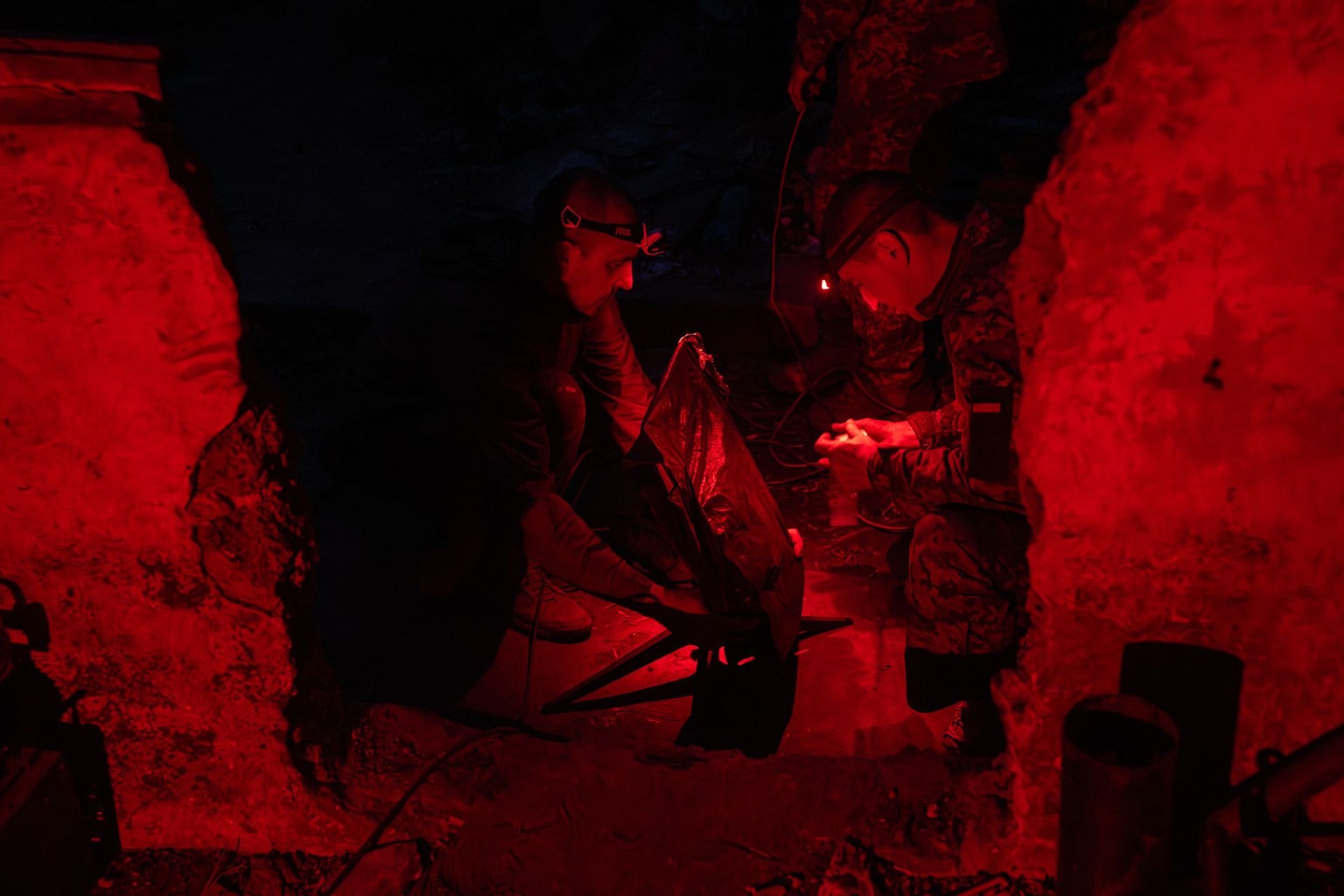
For months, Khartiia Brigade has been engaged in what commanders describe as an endless "whack-a-mole" style fight — monitoring the pipes for exit holes, taking out the Russians that emerge, filling in the holes, then searching for the next and newest exit point.
Despite huge losses and horrific conditions in the pipes themselves, Russia continues to push men through them.
'People die in there'
The Russian soldiers Tovsty is watching are headed for Kupiansk, a strategically important town in Kharkiv Oblast just 40 kilometers (25 miles) from the Russian border. Home to a highway and railway intersection, it was occupied by Russian forces during the opening days of the full-scale invasion in February 2022, before being liberated in September of the same year.
Russia has been trying to take it back ever since.
For the last year, Russian soldiers have been taking advantage of four abandoned gas pipelines that merge into two across the Oskil River. The Shebelinka-Ostrogozhsk gas pipeline, originally built under Soviet efforts to pump gas from Kharkiv Oblast to Russia, connects the Russian-occupied territory on the eastern bank to the Ukrainian rear in the Kupiansk area.

Russian troops have deployed the pipeline infiltration tactic across the front wherever it can, from Avdiivka in eastern Donetsk Oblast to northeastern Sumy Oblast, as well as in Russia's Kursk Oblast, where Ukraine launched a cross-border incursion in August 2024.
"(The pipelines) can be an effective strategy locally to cause confusion," Pasi Paroinen, an analyst with the Finland-based Black Bird Group, which closely follows the war through open-source footage, told the Kyiv Independent.
The pipes leading to Kupiansk are only 1 to 1.2 meters in diameter. Those inside must crawl 15 kilometers (9.3 miles) to reach the Ukrainian lines. According to Khartiia Brigade commanders, some spend months just waiting inside while they accumulate men and materiel inside.
"Dozens of soldiers suffocated, committed suicide, or died in panic and delirium."
"People die in there," the brigade's deputy commander, who goes by his callsign "Abat," tells the Kyiv Independent. Officers interviewed only shared their callsigns due to security concerns amid the ongoing war.
"They are just thrown out there, their weapons stuck to their backs (with duct tape) so they don't lose them."
Reports of the Russian tactic emerged last year when Ukrainian monitoring group DeepState reported Moscow's soldiers were using specially designed wheeled benches and electric scooters to maneuver inside the pipelines.
Russian independent media outlet Astra published a video of a soldier describing the chaos inside a pipe in Russia's Kursk Oblast, claiming "dozens of soldiers suffocated, committed suicide, or died in panic and delirium."
"People were going crazy there. One shot himself. One… pointed a machine gun at himself. The second one smashed his head in," he says in the video.


Despite this, the tactic worked at the time.
Russian troops managed to infiltrate the northern outskirts of Kupiansk in September 2025 through the pipelines and threatened the town, breaching it from the north.
A Ukrainian counterattack operation followed, pushing Russian forces back from parts of Kupiansk and liberating the villages on its northern outskirts. President Volodymyr Zelensky visited the contested town in December 2025, denying Moscow's earlier claims to have captured it.
Since then, Ukraine has learned to largely stabilize the pipeline threat, a small part of the wider Ukrainian successes in recent months that have begun to tip the scales in Kyiv's favor.
The threat from Russian infiltration through pipelines in the Kupiansk sector was "in fact uncontrollable," but Ukraine has since sealed off certain sections and better understands the routes, the commander of an unmanned systems company in Khartiia Brigade, who goes by his callsign "Druid," tells the Kyiv Independent.

Meanwhile, Russia has not changed its strategy and tries to do "the same old things," according to retired Australian Army Major-General Mick Ryan. Using an infantry-heavy tactic, including on the Kupiansk front, the Russian army has continued to rely on a costly strategy in an attempt to gradually exhaust the Ukrainian defense.
"Ukraine has developed more effective solutions to Russia's key advantages, which are greater manpower and greater industrial production, and that is starting to hurt Russia," Ryan, who has been analyzing the war in Ukraine since its start, told the Kyiv Independent.
"These are all little pieces of a jigsaw puzzle that indicate to me that we might be approaching a turning point if (Ukraine) keeps moving in this direction."
But retaining the advantage in the ongoing whack-a-mole battle is an intensive process.
read also
'Moving randomly'
Crawling out one by one from small openings, often without gear or equipment, Russian soldiers often appear intoxicated from inhaling chemical residues inside the pipelines, Tovsty says.
After emerging from their 15-kilometer crawl from the Russian rear on the other side of the Oskil River, the Russian soldiers "just move randomly" without any specific destination in mind, with only a Russian drone trying to guide them, he adds.
"For some reason, they keep trying to crawl forward again and again."
The time at which Russia sends troops through the pipelines varies each day, as does the number that crawl in. How many surface depends on the number accumulating inside and the weather conditions, making any accurate estimates difficult, according to Tovsty.
Russian soldiers could spend half a year or as short as a month or a day, depending on whether they are troops designated for pipeline work or assault soldiers, Abat said.

He adds that Russia is using specialized troops, known as "Veterans," likely from a mining background, for the pipeline operations to infiltrate Kupiansk and elsewhere.
After more than half a year of countering Russia's tactic, Tovsty says he and his men now know "100%" where to wait for the Russian soldiers to crawl out of the pipelines.
"The enemy knows this too, but for some reason, they keep trying to crawl forward again and again."
'A bone in my throat'
Russia also keeps sending troops across the narrow Oskil River either by boats or on foot via stretchable cables, an improvised version of pontoon bridges, according to Abat, Khartiia's deputy brigade commander. He said the ratio of Russian soldiers crawling through the pipes or crossing the river by other means is around 1:1.
About 95% of the Russian troops who try to cross the river, including through the pipelines, are killed or wounded, Abat claimed.
"No matter how many troops they lose, they will keep hitting head-on to the end for Kupiansk," he added, describing the situation as "a bone in my throat."
The main issue is that the pipeline is "almost impossible" to destroy, Abat says, despite previous Ukrainian claims of doing so.
He explains that even if a Ukrainian aerial bomb attack leaves a five-square-meter hole in the pipeline, Russian troops just dig around it to avoid crawling through the opening.

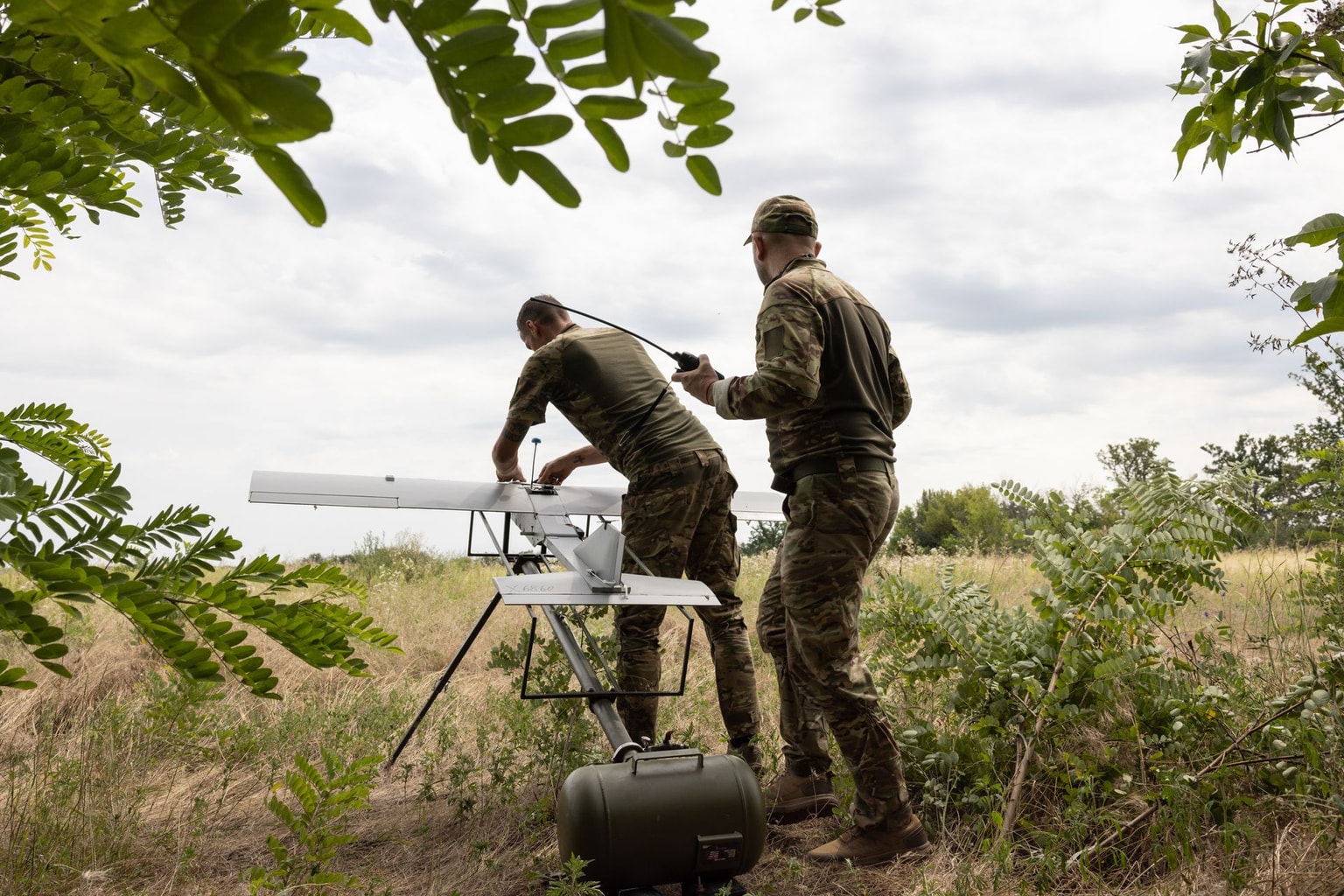
Artillery is not an option either because Ukrainian infantry positions are too close to the pipelines, leaving the job to lighter but more precise drones that lack the firepower to inflict damage beyond temporarily blocking some parts, according to Khartiia commanders.
"There is a hole — it is closed, filled in (with earth), and blown up. A hundred meters from it, another hole may appear, and after that, another one ten meters away," Druid, the commander of Khartiia's unmanned systems company, says.
"So we don't have the possibility to close (holes in the pipelines) permanently," he says, though Russian logistics appear to have more issues since the spring weather partially flooded the pipes.
With signs of the initiative in the war tilting in Ukraine's favor, there is now at least a possibility that Russia may be running out of steam, but it's also possible for Moscow's troops to rapidly advance through weak points in Ukrainian defenses on the battlefield, Paroinen, the Black Bird Group expert, said.
But Austria-based warfare expert Tom Cooper disputed the optimistic outlook, saying that the Ukrainian military should have long resolved the pipeline issue, taking measures such as installing sensors inside them to detect movement.
"(Ukrainian troops) have to watch over all the possible pipelines (despite the manpower shortage), also behind the front line, they need additional troops which they don't have to cover at depth as well," Cooper told the Kyiv Independent.
"I mean, it's a nightmare from their point of view."
A note from the author:
Hi, this is Asami, the author of this article. Thank you for reading it until the end. Certain developments on the battlefield, from the surprise counterattack in the southeast to the Ukrainian military developing solutions to long-standing issues, such as Russia's pipeline infiltration, help us feel cautiously optimistic about this year. But the reality on the front line is still as brutal as ever, with the high-tech drones making the war extremely deadly, particularly for the infantry. No matter what, we will keep on reporting on the war to shed light on the harsh reality.
Please consider supporting our reporting, which is available without a paywall thanks to the support of our members.