Reporter's Notebook: How constant drone attacks became a normal workday in Kyiv
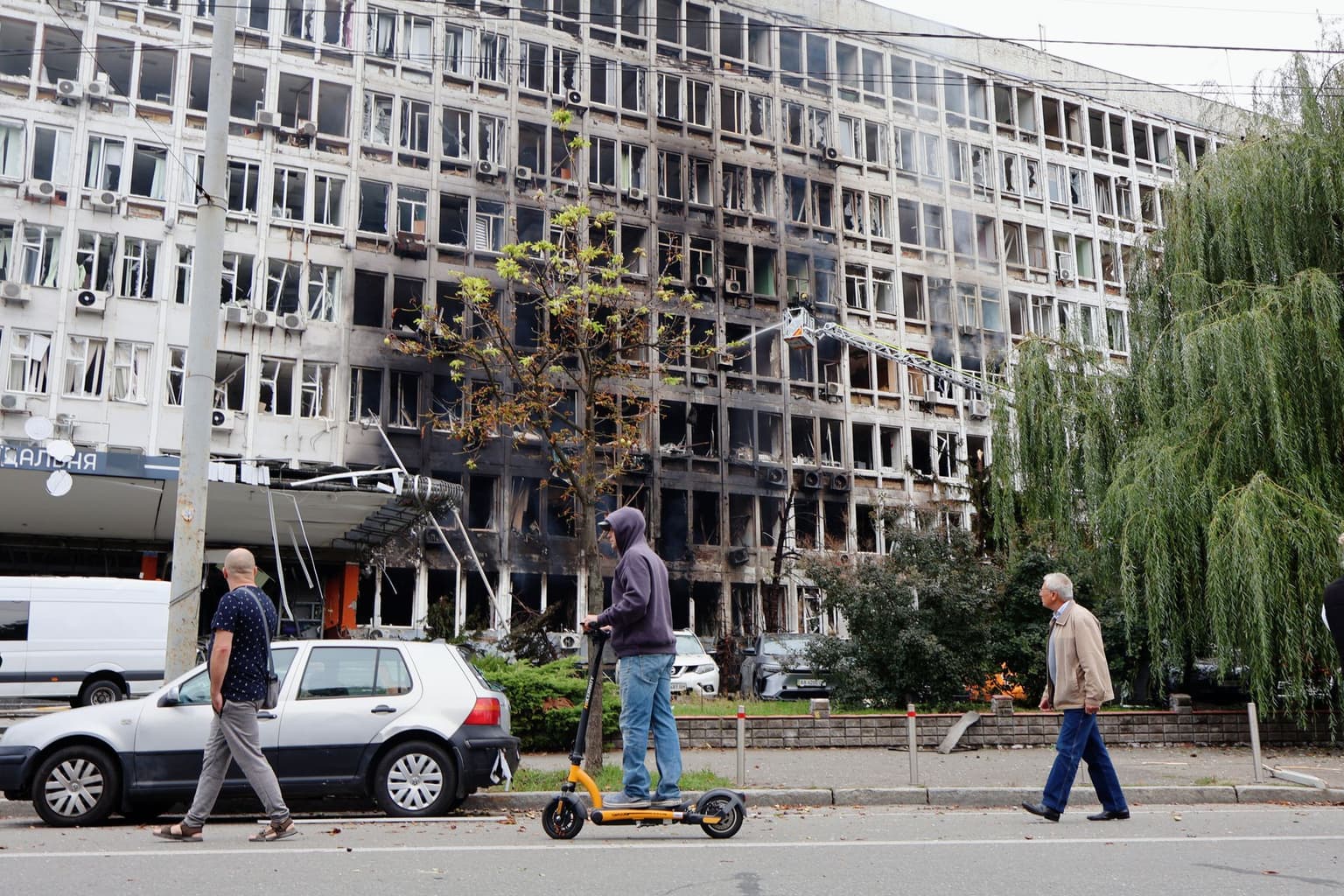
People walk past a building damaged by a Russian drone strike in Kyiv, Ukraine, on Sept. 23, 2026. (Andriy Zhyhaylo/Oboz.ua/Global Images Ukraine via Getty Images)
 on Google
Wednesday, Sept. 23, was supposed to be a normal office day for me, researching for an investigative story. But amid Russia's daily drone and missile barrages, the word "normal" has taken on a new meaning for Ukrainians.
Since August, Russian attacks on Kyiv and other cities have intensified, enabled by faster, jet-powered versions of Shahed drones that are more difficult to intercept.
Unlike the nightly drone and missile attacks Ukrainians had grown used to, these new attack waves stretch throughout the whole day. Russian drone strikes follow you into your commute, your office meeting, and your evening stroll, interrupting whatever you happen to be doing at any given moment.
Wednesday morning, a loud explosion outside around 6 a.m. first woke me up. A Russian jet-powered drone had hit somewhere in Kyiv. I reached for my phone and checked in which district the explosion had happened. As it was nowhere near me or my family's home, I went back to sleep.
By the time I woke up again and got ready for the office, our work chat was filling up with reports of isolated strikes across Kyiv and photos of distant smoke. I thought the strikes were somewhere far away.
Outside, the weather was sunny but a little chilly, so I threw on a sweatshirt over my dress and was about to head out when my roommate called. Her voice was tense.
"Linda, are you okay? I'm reading about live attacks in our area."
She told me to leave the house as quickly as I could. We both laughed nervously — the kind of confused laughter we have learned to use to release some of the stress.
A few minutes later, I heard a deafening strike that sounded close. My first instinct was to check my phone for more incoming drones and to photograph the rising smoke for our attack coverage.

As the reporter closest to the impact, I was assigned to cover the attack on the area surrounding Kyiv's central railway station. I had to stay put until the alert was over, then head there.
I had plenty on my mind already, as I needed to arrange an important appointment for a sick relative that day. I felt restless, and going for coffee down the block seemed like a way to regain some sense of an ordinary day before heading to the attack site.
The coffee shop was unexpectedly crowded. While Russian drones were still flying over the city, there was a line for coffee and desserts, despite it being the middle of a work day. I assumed most people worked nearby and, like me, had been told to shelter, but instead had come here.
Under the new tiered air-raid system, coffee shops can stay open during yellow alerts, which indicate an incoming drone, but must serve everything in takeout cups and containers.
I waited for my turn, watching a barista quickly pour a cappuccino with oat milk, followed by a double espresso. Then another blast sounded from outside. Then another. The street rumbled with the sounds of an attack, among them the familiar bursts of air defense fire.
Inside the cafe, people were talking to one another. The barista didn't even flinch and kept pouring coffee. I realized how quickly a scene like this had become unremarkable. With drones constantly overhead, the boundaries of everyday life keep stretching. I grabbed my coffee and headed to the basement shelter.

After the attack had finished, I set out to report from the impact site, following a trail of smoke across the sky.
About an eight-minute walk from Kyiv's central railway station, I saw rescue workers fighting a fire inside a historic market that Russia had struck. As I reached the scene, our video creator Nastia Kasinchuk joined me. We spoke to local residents and recorded a video about the attack for our social media coverage.
That morning, a series of deadly Russian drone strikes on Kyiv killed two people and injured at least 45 others, damaging railway infrastructure, business centers, and residential buildings.
As I was speaking on camera, another air-raid alert went off, meaning we had to stop recording and move to a shelter. The rescue workers also paused their work and moved to a safe distance in case of a repeat strike.
We finished our reporting with almost half the day still ahead of us.
At first, I felt fine. I thought this attack had taken less of an emotional toll on me than previous ones, when I had covered residential buildings with entire floors burned out. At least nobody lived in the historic market. But exhaustion would set in later.

After finishing the interviews and transcribing comments at a cafe, I tried to continue with my original assignment for the day. I had urgent messages to answer about the investigation, but whatever energy had carried me through the morning had disappeared. A strong headache forced me to spend most of the evening in bed.
This wasn't the first time an attack had affected me this way. I have learned that the exhaustion can sometimes come after the reporting is finished, when calm settles in.
The war affects everyone differently, but perhaps one thing we all share is the need for some sense of predictability. We establish new routines, adapt to alerts, and figure out when to shelter and when to go back to work safely.
Russia's constant drone attacks make even that more difficult, as the jet-powered drones are getting faster, circling the city for hours and striking repeatedly throughout the day. There is less and less to hold on to for understanding where the next attack might come from and when it might strike.
Still, the next morning, you wake up, check your phone, get dressed, go to work, grab a coffee. You learn to fit the war around your life's schedule — until the next explosion reminds you that it is always there.