Russia's faster Shaheds could rival ballistic missiles this winter
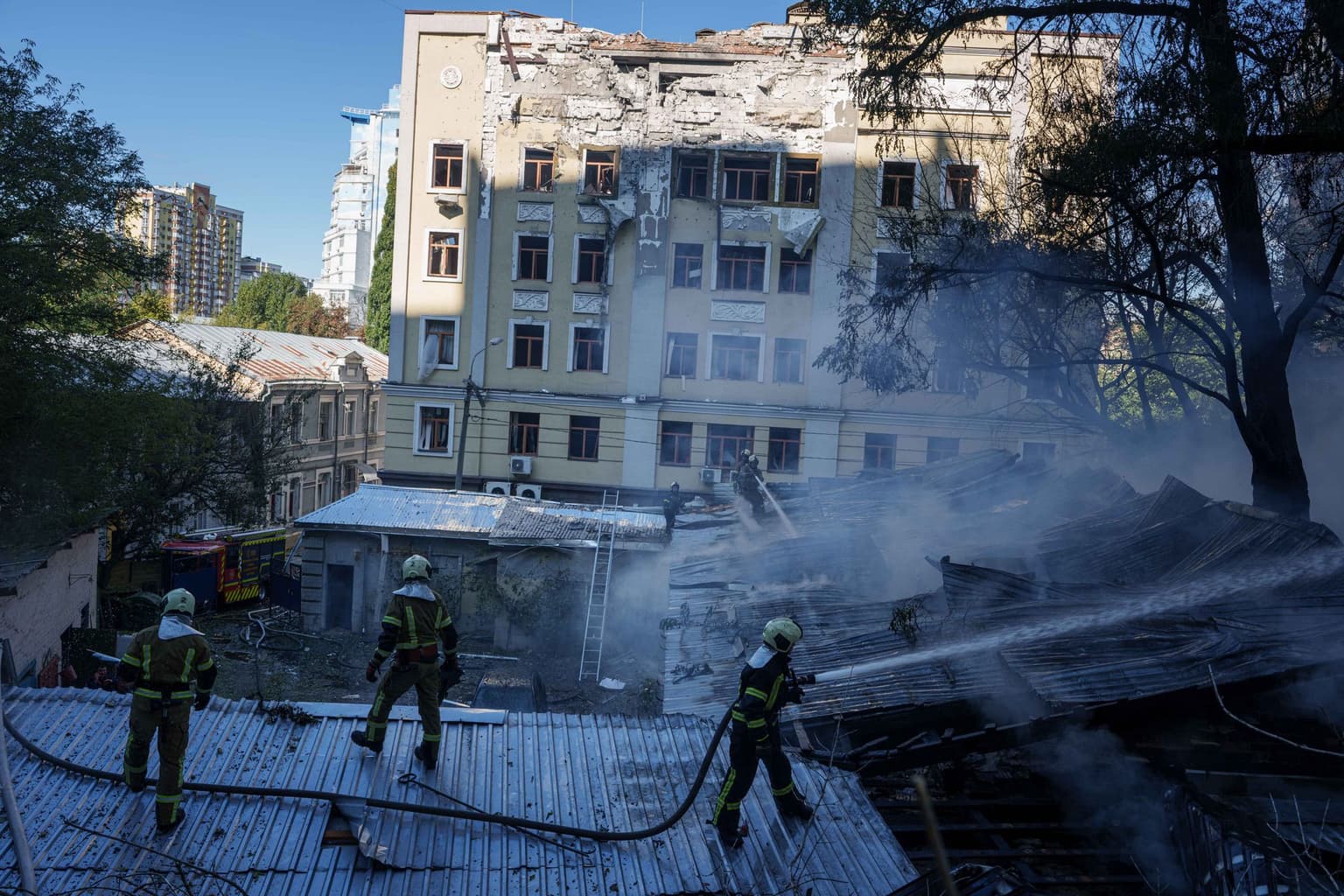
Rescue workers put out a fire at a building damaged in a Russian drone strike in Kyiv, Ukraine, on Sept. 25, 2026. (Evgeniy Maloletka / AP)
 on Google
Oleksiy Moskalenko
Senior Analyst at the Come Back Alive Initiatives Center
A few months ago, the only particularly serious threat to Kyiv and other Ukrainian cities came from Russian and North Korean ballistic missiles.
As the Ukrainian mil-tech industry and air defense units perfected their ability to intercept the common "Shahed" drones (now officially called Geran-2, although Ukrainians stick to the original Iranian name), raising the shoot-down rate to 90–95%, a shortage of anti-ballistic interceptor missiles seemed to be the main issue facing Ukraine in the upcoming winter.
However, in this constant arms race, it was Russia's turn to leapfrog, leaving Ukraine vulnerable to new threats while it tested out possible solutions.
August 2026 showed what the new, faster versions of Shahed can do in terms of damage, leaving ground forces' interceptor drone operators — good enough to catch the previous generation of "Shaheds" — without a job. Temporarily.
The new Shaheds are powered by airplane-like jet engines, which allow them to pass through otherwise densely packed air defense zones at speeds of more than 800 km/h (500 mph).
The older generation of attack drones flew at up to 200 km/h (125 mph), requiring the Ukrainian side to master technology that added just 30 km/h (19 mph) to that speed in order to catch up efficiently. Now Ukraine is forced to leap ahead of its current production capacities to build interceptors that can fly at least 450 km/h (280 mph), so the new drones can be taken down when they turn en route or slow down to save fuel.
Whether new interceptors can effectively catch up with jet engine technology is still unknown. We may be heading back to good old missiles as the key means of air defense.
The coming months will give us an answer. Meanwhile, Russia will keep using both old and new drones, as well as ballistic missiles, in an attempt to force Ukrainians to agree to its demands.
As the country braces for another wartime winter, much of the public conversation about Russian air attacks has centered on ballistic missiles and the shortage of Patriot interceptors needed to stop them. But officials and drone crews say that even a cheaper, more numerous threat of new and old Shaheds may end up doing just as much damage.
Over the summer, Russia noticeably scaled back its drone campaign. According to Ukraine's Air Force, the number of older versions of Shahed/Gerbera drones launched fell by a third in June and July compared to a record-setting May.
Yet Moscow has increasingly relied on jet-powered drones, launching nearly 800 of them in just four days in August 2026.
The main reason for this shift, drone unit members say, is that Ukraine has simply gotten better at shooting down the regular, slower drones.
The vast majority of these drones are intercepted by domestically built interceptors flown by dedicated crews stationed across the country. A radar team spots an incoming Shahed, an interceptor crew launches its own drone to locate and pursue the target, and the operator then has to visually acquire the Shahed through the interceptor's onboard camera, close in from behind, and either ram it or detonate nearby, usually knocking off a wing or engine.
For now, the threat from this previous generation of drones seems to have been rendered largely obsolete, but that appearance may be something of an illusion, since the system has one clear weakness: weather.
Strong wind makes the interceptor hard to control, rain can degrade electronics, radar performance, control link, and, crucially, operators still need to see the target through a camera, since radar can guide them to the right area but cannot perform the final identification and targeting itself; low cloud, fog, or rain make that visual search far harder.
It's telling, in this respect, that some interceptor unit command posts reportedly keep a dedicated screen just for tracking weather conditions.

Ukrainian citizens are gradually starting to associate rainy weather with cheaper, slower Shahed drones: "It is likely that today, as on the previous occasion, the adversary will seek to exploit the poor weather to attack areas west of Kyiv using 'conventional' gasoline-powered Shahed drones," said an adviser to the Defense Minister of Ukraine on a rainy evening.
Russian forces appear to be factoring this in already, according to Ukrainian crews, timing launches and routes for stretches when interceptors are least effective.
That is why the summer drop in slower, gasoline Shahed launches shouldn't be read as a lasting decline in the threat.
As fall brings more fog, lower cloud cover, and worse visibility, the conditions that favor Russian drones and hamper Ukrainian interceptors are set to return, giving Moscow an added reason to lean back on its cheapest, slower strike drones.
That, our respondents argue, is the overall conclusion of the current air war.
Each new stage of the technological race doesn't replace the one before it — it adds another layer to a system that has to be sustained with people, hardware, and infrastructure.
Mobile fire groups remain necessary alongside interceptor drones; slower piston-engine Shaheds will keep flying alongside faster jet-powered ones.
Russian forces regularly adapt their tactics and patterns of drone employment in an effort to improve their effectiveness, e.g., they are known to periodically re-test routes they've previously avoided after taking losses, checking whether Ukrainian defenses along that corridor have weakened — which means any capability Ukraine builds now has to be maintained, not shelved, once a newer one arrives.
For now, jet-powered Shaheds are hunted almost exclusively by scarce, expensive fighter jets and surface-to-air missiles, while dedicated faster interceptor drones are still working their way toward serial production.
While this technological gap remains, Ukraine and its partners need to keep investing in developing the skills and the infrastructure of the teams operating in the domain of air defense.
Editor's note: The opinions expressed in the op-ed section are those of the authors and do not purport to reflect the views of the Kyiv Independent.