Achievements and challenges ahead — Commander-in-Chief Drapatyi's 100 days in office
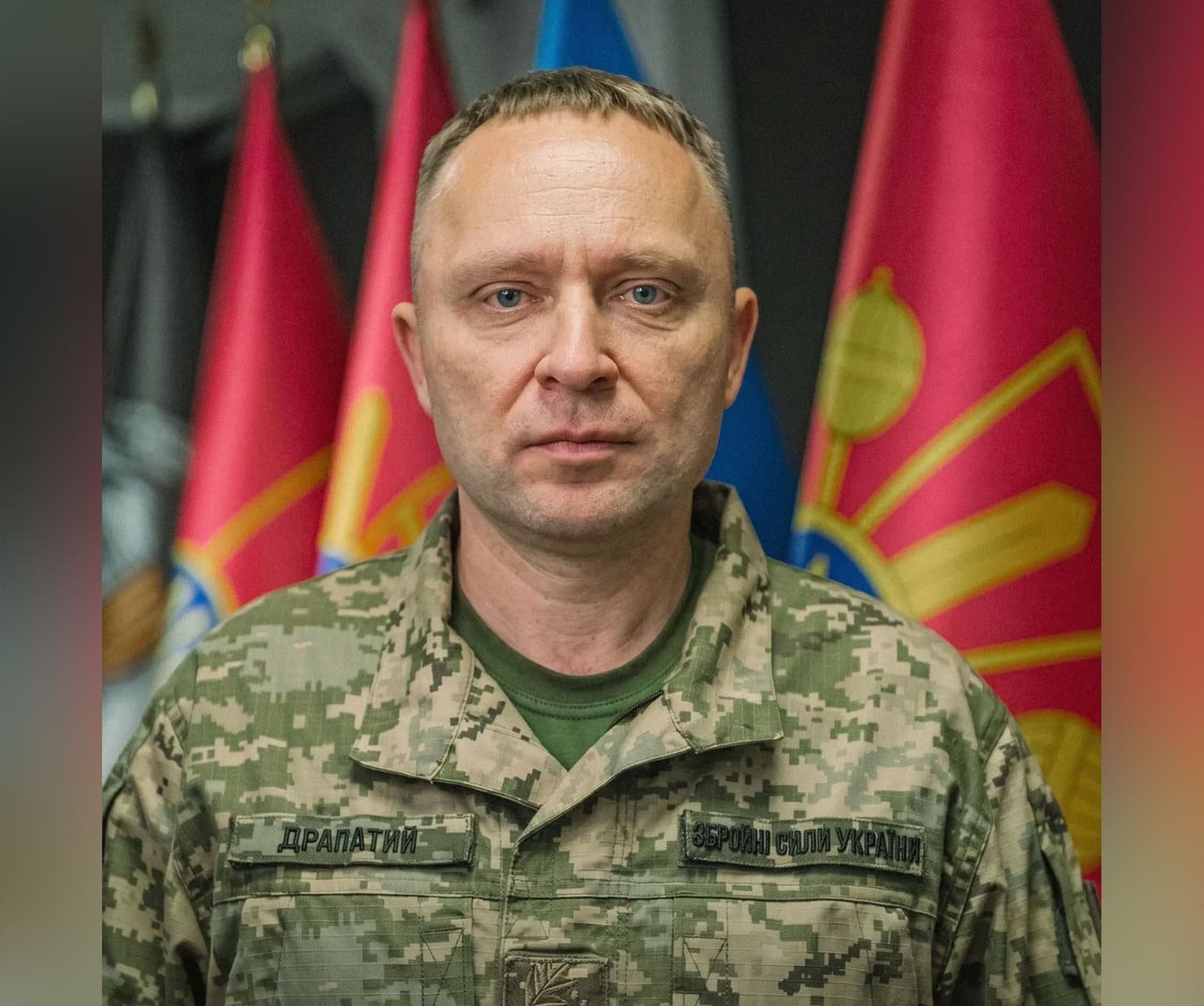
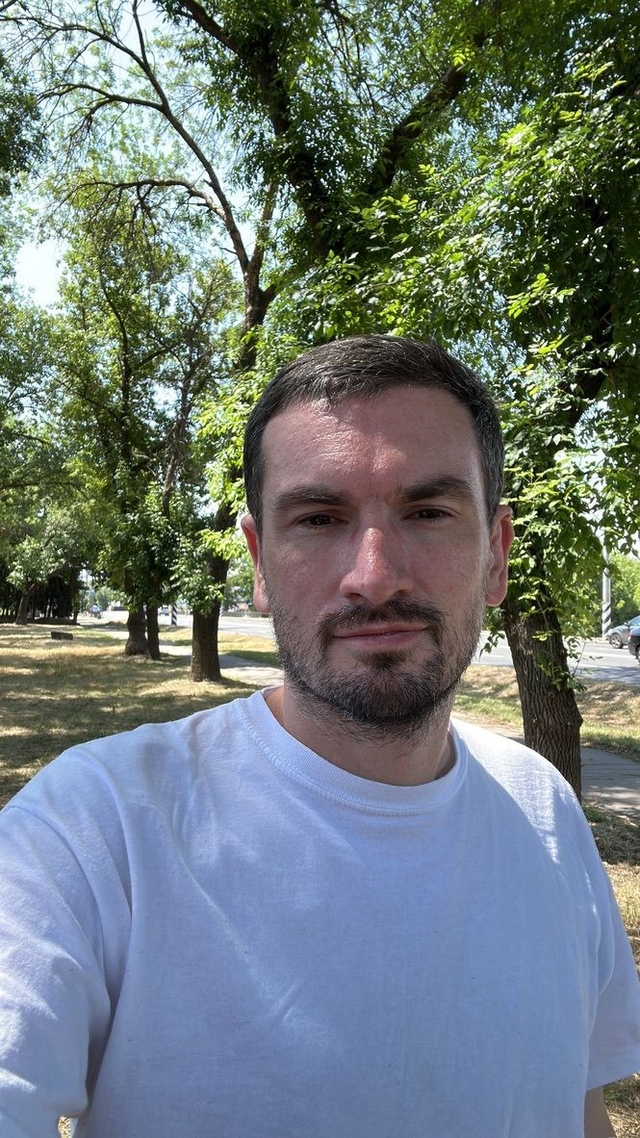
Major General Mykhailo Drapatyi, Commander-in-Chief of the Armed Forces of Ukraine in an undated photo. (Ministry of Defence of Ukraine)
 on Google
Major General Mykhailo Drapatyi marked 100 days as commander-in-chief of the Ukrainian Armed Forces in late October, as Ukraine regains ground in the northern part of Donetsk Oblast and seeks to improve defensive positions before winter.
Drapatyi, one of Ukraine's most popular generals, was appointed in July with high expectations that he would deliver much-needed reforms to the armed forces.
His promotion to commander-in-chief came after President Volodymyr Zelensky dismissed his unpopular predecessor, Oleksandr Syrskyi, amid mass protests in Kyiv. The protests demanded Syrskyi's removal and the reinstatement of former defense minister Mykhailo Fedorov, who had been dismissed earlier in a chaotic government reshuffle. As Zelensky dodged the Fedorov demand, the replacement of Syrskyi with Drapatyi was the main win of the protest.
Though Drapatyi had spent most of his military career outside the spotlight, long-serving top military commanders respect him as an effective leader ready to reflect and take responsibility.
The 43-year-old began his military career at 21 as a tank lieutenant and climbed the ranks by proving himself on Ukraine's front lines since 2014. Before becoming the commander-in-chief, he led the Joint Forces, a newly established command structure for the front line in and around northeastern Kharkiv Oblast.
Learning from military mistakes while avoiding an overtly punitive military culture has been a declared goal of Drapatyi. A top-down Soviet-era command culture has long plagued the army and often discouraged commanders from taking responsibility.
"An army where no one is responsible for a defeat is dying from within," he said after resigning as Ukraine's Ground Forces commander in June 2025, following a series of deadly Russian attacks on Ukrainian training grounds.
Since his appointment, the front line has become a bright spot for Ukraine's war effort, at a time when Russian total war against the country's economy and infrastructure has escalated, and relations with Washington have worsened.
The Kyiv Independent spoke with commanders and experts to assess Drapatyi's command style, his achievements thus far, and the challenges awaiting Ukraine's commander-in-chief in the coming year. With Drapatyi not providing any interviews to the press since the appointment, the Kyiv Independent put together commanders' and experts' analyses.
Inheriting a war
Drapatyi's appointment in July came when many felt that Ukraine's war effort was slowly starting to turn the tide in Kyiv's favor.
Not only had Russia's gains on the front line slowed significantly over 2026, but Ukraine's advances in both the middle- and deep-strike campaigns over spring exerted strategic offensive pressure on Moscow.

Yet, as Ukraine's Patriot stocks ran out over the summer and the global supply dwindled, Kyiv had no reliable solution to Russia's ballistic missile terror.
Meanwhile, Russia's summer offensive push in Donetsk Oblast started showing results, as Russian forces pushed deep into the city of Kostiantynivka and gradually made the remaining cities in Ukraine's "fortress belt" unlivable. The fortress belt is Ukraine's primary defensive line in Donetsk Oblast, centered on the four heavily fortified cities of Sloviansk, Kramatorsk, Druzhkivka, and Kostiantynivka.
But Ukraine's most pressing long-term challenge was manpower. Drapatyi inherited a military that was understrength and overstretched, with little to no strategic reserves.
Holes in the front line were often plugged with units of the Assault Forces. Set up and favored by Drapatyi's predecessor, Syrskyi, these units received and consistently lost far more soldiers per month than the average Ukrainian brigade.
The reputation of these units for abuse and misuse of their soldiers’ lives, especially the 425th and 225th assault regiments, only further damaged the trust that Ukrainian society had in the mobilization process and the armed forces, resulting in fewer recruits.

Almost immediately upon taking the job, Drapatyi announced an audit of Ukraine's use of personnel and paused further replenishments to the largest assault regiments until the audit was complete.
Rather than disbanding the assault regiments completely, Drapatyi assigned them to the command of some of Ukraine's strongest corps to conduct assault and rapid-reaction missions directly under corps-level oversight.
The 425th Assault Regiment, better known as Skelia, was assigned to the National Guard's 1st Azov Corps to help defend the area around Dobropillia in Donetsk Oblast, while the 225th Assault Regiment today fights under the Air Assault Forces' 7th Corps.

This came as Drapatyi reorganized Ukraine's defense of the fortress belt. Drapatyi assigned two of Ukraine's most capable and combat-proven military formations, the 3rd Army Corps and 1st Azov Corps, to anchor the defense of the northern and southern sectors of the front.
Since arriving at his new position, Drapatyi has brought new faces to key posts, despite early reports that the President's Office obstructed requests for personnel.
Fully reforming Syrskyi's General Staff required major personnel changes, as Drapatyi's predecessor had been known for valuing personal loyalty higher than battlefield effectiveness.
Drapatyi's new appointees include Serhii Sobko as his deputy commander-in-chief, Sviatoslav Zaiets as Ground Forces commander, and an ex-Unmanned Systems Forces commander, Colonel Vadym Sukharevskyi, as leader of the Marines.

Lt. Col. Bohdan Krotevych, the Azov Brigade's former chief of staff, told the Kyiv Independent that Drapatyi's achievements so far also include the strong relationship he has built with Zelensky and Defense Minister Yevhen Khmara. As politics often influences battlefield decisions, the army-politics relationship is crucial, both for the war effort and for pushing through reform in the military.
A new command style
Central to Drapatyi's approach is a new command style.
Over the last three months, Drapatyi has built a command structure that combines centralized and decentralized management, according to Krotevych, who has often criticized Syrskyi's leadership. Drapatyi has taken steps to decentralize the army more, such as by giving more autonomy to commanders on the ground.
"Drapatyi is not afraid of competition; on the contrary, he allows his subordinate teams to flourish, which is a good thing," Krotevych said.

In a manifesto on his command style published in September, Drapatyi said that he "will not command every individual battle or operation."
"I will exercise command through intent, delegate authority where appropriate, demand accountability at every level, and expect every commander to show initiative," Drapatyi said.
Drapatyi empowers his subordinates and allows them to make decisions, reducing the "garrison-style inspections for brigades holding the front line," according to Rob Lee, a senior fellow at the Foreign Policy Research Institute who frequently visits the front lines. Drapatyi instead focuses on mission command and decentralized execution, which is "a welcome change," Lee said, citing several brigade commanders he spoke with.
Drapatyi has given the commanders more autonomy on how to maintain the defense of their areas and whether and when to launch counterattacks, the analyst said.
"Previously, commanders, even at the corps level, were highly constrained. Corps commanders could not authorize falling back from positions of questionable value," Lee told the Kyiv Independent.

"Before (under Syrskyi), officers were arriving with the understanding they wouldn't last two weeks before being dismissed," a deputy brigade commander fighting in Donetsk Oblast told the Kyiv Independent on condition of anonymity due to security concerns.
Impossible or suicidal orders were often handed down to the brigade and battalion levels, incentivizing local commanders to lie about the tactical situation, he said, but within weeks of Drapatyi's appointment, commanders in the field were sent a communique saying no such orders would come with the threat of dismissal if the unit deemed it impossible, inappropriate, or too costly to carry out.
Yet some units on the front have not yet felt the impact of Drapatyi's changes.
A senior officer in a corps deployed in Kharkiv Oblast, who spoke on the condition of anonymity due to security concerns, said that "not much has changed" since Drapatyi's appointment. The lack is felt as no grouping of forces has been created in Kharkiv Oblast, unlike in the Donbas, he said.
"I don't think we are feeling any impact so far," the senior officer told the Kyiv Independent.
Oleh Romanov, the commander of the 21st Separate Unmanned Systems Regiment Kraken, appreciates the new leadership style and stressed that he is trying to implement the same culture in his unit. He said Drapatyi makes himself approachable to those in the army who may have questions or would like to seek advice, something Romanov considers a crucial trait in leadership.

When Drapatyi commanded the Ground Forces from November 2024 to June 2025, he always found time to visit the 3rd Army Corps, which Romanov's unit currently falls under, and support operations, he said.
"A person who communicates with the personnel not from the top. He stays involved," Romanov said of Drapatyi. "You can, relatively speaking, call him, and he will find time for you."
"I really like this aspect of him. He remains humane and understands that the most important thing is preserving the troops."
His next challenges
On the battlefield, the key challenge Drapatyi faces in the coming year will be a renewed Russian offensive on those areas of Donetsk Oblast that remain under Ukrainian control — the fortress belt, including the heavily fortified garrison cities of Sloviansk and Kramatorsk.
Drapatyi must also face a second key challenge: diminishing new pressure points the Trump administration might exert on the Ukrainian military, given the unreliability of the current U.S. administration. Drapatyi will have to plan for continued disruptions in supplies of air defense interceptors, as well as potentially more unexplained "malfunctions" of Ukraine's Starlink and Starshield satellite internet terminals.
A third challenge will be to continue transforming the Ukrainian military and moving it away from a Soviet-style culture in which commanders evade responsibility and blame subordinates for defeats, Krotevych told the Kyiv Independent, who previously had described a "culture of lying" that had taken root in the Ukrainian military.

"Leaders of the Armed Forces of Ukraine tell the truth," Drapatyi said himself, adding that they "accept calculated risks and take responsibility for their decisions."
Ongoing military reforms and more NATO-standard practices, particularly regarding training and after-action reviews, will be necessary. Ukraine's regional training centers have long been considered to provide subpar training for recruits, and many of Ukraine's best military formations bypass them entirely, running their own training courses instead.
Finally, one of Drapatyi's most significant challenges will be navigating the delicate relationship with Zelensky and the President's Office.
If Drapatyi continues to grow in popularity among the military and the general populace, he risks being perceived as a potential political rival by the President's Office, similarly to Ukraine's former commander-in-chief, Valerii Zaluzhnyi.

Multiple Ukrainian government sources previously told the Kyiv Independent that Zaluzhnyi was sidelined after he became increasingly popular and was considered a potential competitor for Zelensky in a future presidential election.
Currently serving as Ukraine's ambassador to London, Zaluzhnyi is widely viewed as Zelensky's key rival in a potential election.