Ukraine's army chief Drapatyi on his vision for Ukraine's military
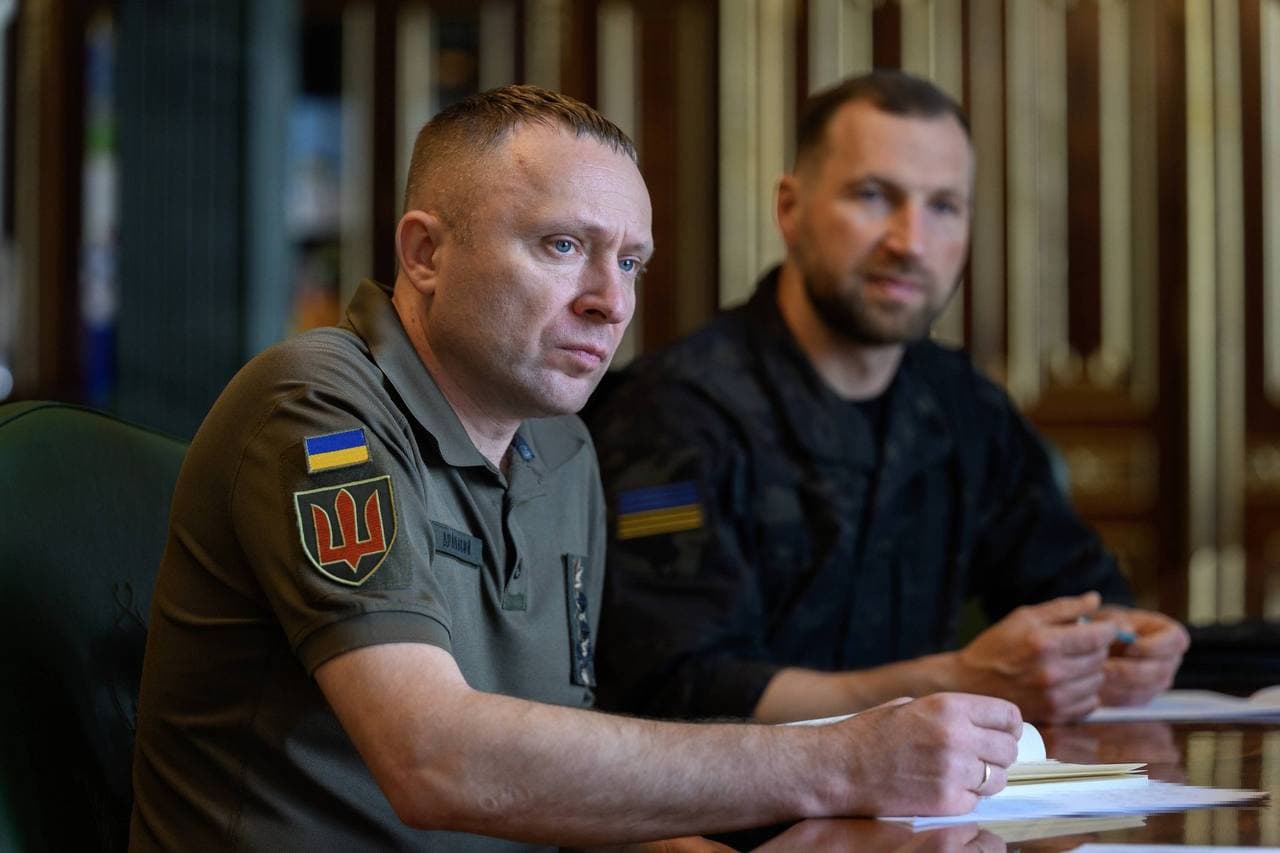
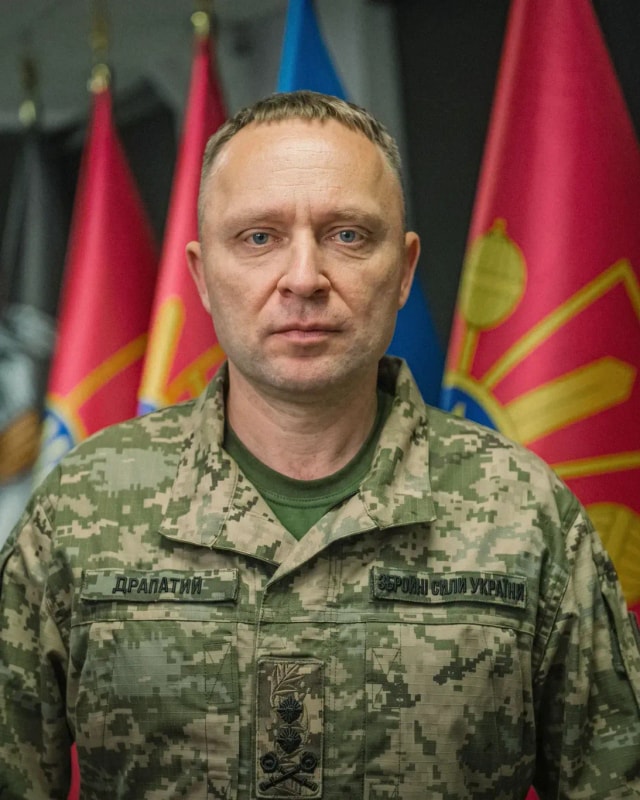
Commander-in-Chief of Ukraine's Armed Forces Mykhailo Drapatyi during his meeting with President Volodymyr Zelensky in Kyiv, Ukraine, on July 24, 2026. (Volodymyr Zelensky / Telegram)
 on Google
Mykhailo Drapatyi
Commander-in-Chief of the Armed Forces of Ukraine
The Supreme Commander-in-Chief of the Armed Forces — the President of Ukraine — and the Minister of Defense have entrusted me with command of Ukraine's military, the Armed Forces. I assume this duty with the understanding that the next stage of this war requires more from us: to command the Armed Forces in the war today while ensuring that they emerge from it stronger.
We must both fight and become better every day, adapt, and thereby ensure our advantage.
Every decision taken jointly with the Defense Minister must strengthen the armed forces, and every change we make must increase our effectiveness in the war already today.
These are my principles of leadership and development of the Armed Forces in wartime. They explain how I intend to lead the military. They set out the intent, priorities, and expectations that will guide my actions.
They don't replace existing strategic and operational plans, but define my vision, priorities, and principles of leadership as Commander-in-Chief of the Armed Forces.
My intent is to lead an Armed Forces capable of winning today's battles while at the same time building the military of tomorrow.
We cannot choose between conducting the war today and preparing for the war of the future. To achieve success, we must do both.
My first and foremost duty is to stabilize the front, integrate new combat capabilities, and provide commanders with the necessary resources and freedom of action they need to defeat the enemy.
At the same time, we must build, train, and retain our human capital, provide the troops with the necessary and high-quality weapons and equipment, while developing the defense-industrial capabilities required to wage a protracted war not only today, but also in the future.
My duty as Commander-in-Chief is to implement the strategic direction defined by the Supreme Commander-in-Chief — the President of Ukraine, to make decisions that can only be made by the Commander-in-Chief, and to create the conditions for subordinate commanders and leaders to succeed.

I will not command every individual battle or operation. I will exercise command through the intent, delegate authority where appropriate, demand accountability at every level, and expect every commander to show initiative.
My priorities are clear. Every decision I make and every resource I allocate will be directed towards achieving one or more of the following objectives.
The first one is to stabilize the front, while maintaining existing combat capabilities and integrating new ones. The goal is to seize the initiative where possible, deny the enemy its operational objectives, and better protect our people, our cities, villages, and critical infrastructure from enemy strikes.
The second objective is to create a balanced system for the formation and management of the Armed Forces' human capital. We should change and develop the system of recruitment, training, service, rotation, retention, and discharge of military personnel, which ensures the necessary strength and combat readiness of the armed forces while simultaneously taking into account the needs of service members and society.
This goal involves the development of leadership, the systems of training, management, and employment of human capital. Our task is to ensure conditions under which military service is predictable, fair, and professional, while personnel decisions are based on the needs of the military, competencies, and performance in service.
We should strengthen public trust in the Armed Forces and take into account the lessons of the past when shaping policies for recruitment, service, and end of service.

Thirdly, the objective is to ensure the unity of effort.
Make the Armed Forces the center for developing the military intent and coordinating the employment of military capabilities. Unite actions on land, in the air, at sea, in cyberspace, and in the cognitive domain under a single intent, synchronized in time, space, and resources, and directed towards achieving a common result. No service, branch, or structure may place its own interests above the overall operational and defense force outcome.
Leadership begins with genuine care for those entrusted to them.
The Armed Forces cannot achieve this alone. We must work closely with the Ministry of Defense, the Ministry for Veterans Affairs, other state authorities, local self-government bodies, volunteer organizations, and civil society.
The fourth objective is to accelerate adaptation and the implementation of innovations. Learn faster than the enemy by rapidly implementing the lessons of war, new technologies, and more effective ways of conducting combat operations.
The fifth objective is to transform the Armed Forces.
While conducting the war, jointly with the Minister of Defense, ensure the modernization of the military — its command and control system, organizational structure, doctrine, professional military education, training, personnel management, digital and unmanned capabilities, autonomy, logistics, Lessons Learned system, command culture, and other areas that determine the ability of the Armed Forces to fight effectively today and be stronger tomorrow.
Building a stronger Armed Forces is a vital necessity, not a task for the post-war period.
The sixth objective is to implement the principles of Mission Command and integrate the capabilities of all components of the Armed Forces. Provide subordinate commanders with the necessary authority, delegate responsibility, and integrate capabilities across all domains of combat operations to increase the speed and effectiveness of our operations.
The seventh objective is to care for our personnel, their families, and veterans, and honor the memory of the fallen with dignity.

Combat effectiveness depends on the resilience of people. Every commander must care for those entrusted to them. The most valuable combat capability of the Armed Forces is our people, and we are responsible for protecting them.
This begins with properly preparing military personnel for combat, protecting them from unjustified risk, caring for the wounded, honoring the memory of the fallen, and supporting the families who bear the burden of military service.
Caring for our people is not separate from combat effectiveness — it is its foundation. However, our responsibility does not end with the end of service. Together, we must ensure that those who defended Ukraine receive the proper assistance, rehabilitation, recognition, and opportunities they deserve.
The eighth objective is to preserve the trust of the Ukrainian people and our international partners. Earn and maintain trust through professional leadership, accountability, responsible stewardship, and close cooperation with those who support Ukraine. The trust of our people and international partners in our military is one of Ukraine's greatest strategic advantages.
I also have expectations for the leaders of the Armed Forces. Leadership in war is the ability to lead people to a result under conditions of uncertainty, risk, and limited resources.
Every commander, regardless of military rank or position, is responsible for the lives of service members and shapes the Ukrainian people's trust in the Armed Forces.
That is why I expect every leader to adhere to certain principles. These expectations are non-negotiable and apply equally to officers, non-commissioned officers, and civilians entrusted with leadership responsibilities.
Leaders of the Armed Forces of Ukraine tell the truth. They provide honest assessments, challenge established assumptions, and never allow optimism, fear, or personal ambitions to distort reality. Healthy professional debate strengthens decisions; silence weakens them.
They understand the commander's intent — not only their own task, but also the broader intent of the battle or operation — and act accordingly.
They act decisively within their commander's intent, use their own capabilities, exploit the enemy's vulnerabilities, and make timely decisions without waiting for permission when the situation requires it.
They accept calculated risk and take responsibility for their decisions, understanding that war requires decisiveness, but never recklessness.
Leaders preserve combat capabilities while accomplishing their missions, protecting the personnel, weapons, equipment, and capabilities entrusted to them. They make force protection a permanent part of their activities and do not allow complacency or unjustified risk. They care for their service members, their families, and veterans, know their people, support their families, care for the wounded, and honor the memory of the fallen with dignity.
Leadership begins with genuine care for those entrusted to them.
They develop the next generation of leaders by mentoring and developing subordinates, delegating authority, encouraging independent thinking, and preparing others to undertake more responsible tasks.
They learn faster than the enemy, conduct honest analysis of mission outcomes, and openly share lessons learned. They innovate, encourage experimentation, integrate new technologies, and create an environment in which good ideas can come from any service member, regardless of military rank or position.
They fight together, integrating capabilities across all domains of combat operations and seeking cooperation rather than defending only the interests of their own service, branch, or unit.
No individual service, branch, or brigade can win on its own. They communicate simply and clearly, issuing short and clear orders, defining the task, intent, and expected outcome while giving subordinates freedom in choosing how to accomplish them.
They reduce unnecessary bureaucracy and ensure that every service member understands the task, the commander's intent, and their role in its execution.
Finally, they build disciplined and professional teams and uphold the highest standards of conduct. There is no place in the Armed Forces for corruption, abuse of power, harassment, discrimination, or injustice.
They preserve the trust of the Ukrainian people, understanding that every action of the Armed Forces reflects on our state.

They use state resources responsibly, comply with the laws and customs of war, and preserve the trust of the Ukrainian people and international partners who support our defense.
Every headquarters exists for one purpose: to help commanders at the front achieve success.
Headquarters support commanders, integrate capabilities, solve problems, and accelerate decision-making — they must not create unnecessary work for those who are waging the war.
Every staff member, regardless of their level, must constantly ask themselves one question: "Does this decision increase our ability to fight and achieve success?"
If the answer is no, it must be stopped.
The headquarters of the Armed Forces of Ukraine exists to serve the forces. Their success is measured by the effectiveness of the military formations they support, not by the volume of work they perform.
They must continuously reduce bureaucracy: every report, briefing, meeting, and staff process must have a clear purpose. They must make decisions faster than the enemy, shorten decision-making cycles, simplify processes, and empower subordinate commanders with the necessary authority.
Staff officers must provide their best professional assessment.
Headquarters must continuously learn and adapt, rapidly consolidating operational lessons learned and implementing them in military doctrine, training, capability development, procurement, and the employment of forces.
They must anticipate rather than react, identify emerging risks and opportunities in advance, and provide commanders with courses of action before problems become crises.
Authority should be delegated to the lowest appropriate level. Decisions should be made by the leader who best understands the situation.
Headquarters must ensure that the Armed Forces develop while the war is being fought. Every stage of the war must leave the Armed Forces stronger — improving how we think, organize, equip, learn, and fight.
The standard for every staff is simple: be smaller where possible, faster where necessary, and more useful every day.
My staff will be organized in such a way as to ensure the continuous development and strengthening of the Armed Forces. This work will be carried out in close cooperation with the Ministry of Defense, combat commanders, the defense industry, the scientific community, and international partners.
The Armed Forces of Ukraine have earned respect through their courage, sacrifice, and dedication to the defense of the state. This legacy is our responsibility.
We must preserve what has made us strong, honestly identify what needs to change, and continuously adapt to the character of war. Every soldier, sergeant, officer, and civilian employee of the Armed Forces contributes to the combat capability, resilience, and authority of the military.
War does not happen without mistakes. A good-faith decision made under conditions of uncertainty is part of war. Negligence and concealment of the truth are unacceptable. The price of a mistake is the lives of our people, therefore every mistake must be honestly acknowledged, investigated, analyzed, and taken into account so that it is not repeated.
As Commander-in-Chief, I will demand this from commanders and staff at every level.
We must tell the truth, trust one another, continuously learn, and take responsibility for our service.
In this way, we will preserve the legacy of those who came before us, remain worthy of the trust of the Ukrainian people and our partners, and pass stronger Armed Forces on to the next generation.
We must achieve a lasting and just peace and build such a military that, in the future, no aggressor will have grounds to consider an attack on Ukraine an acceptable means of achieving its objectives.
Editor's note: The opinions expressed in the op-ed section are those of the authors and do not purport to reflect the views of the Kyiv Independent.