Analysis: Russia breaks into Kostiantynivka, opening battle for Donbas fortress belt
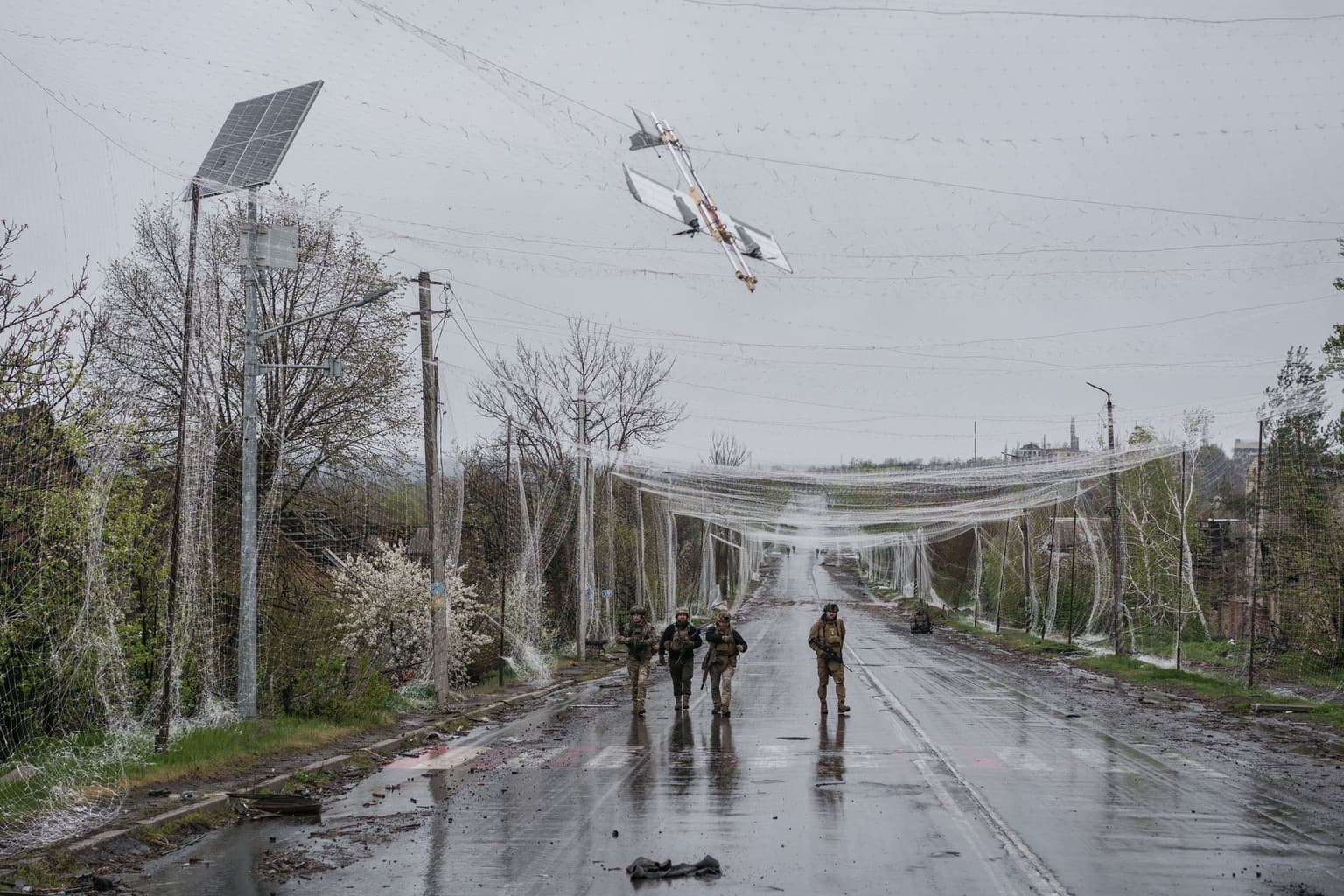
Members of the 24th Brigade of the Armed Forces of Ukraine walk along a road covered by anti-drone netting with a drone stuck in it while hunting Russian drones between Druzhkivka and Olexiivo-Druzhkivka, Donetsk Oblast, Ukraine, on April 24, 2026. (Serhii Korovayny/The Kyiv Independent)
 on Google
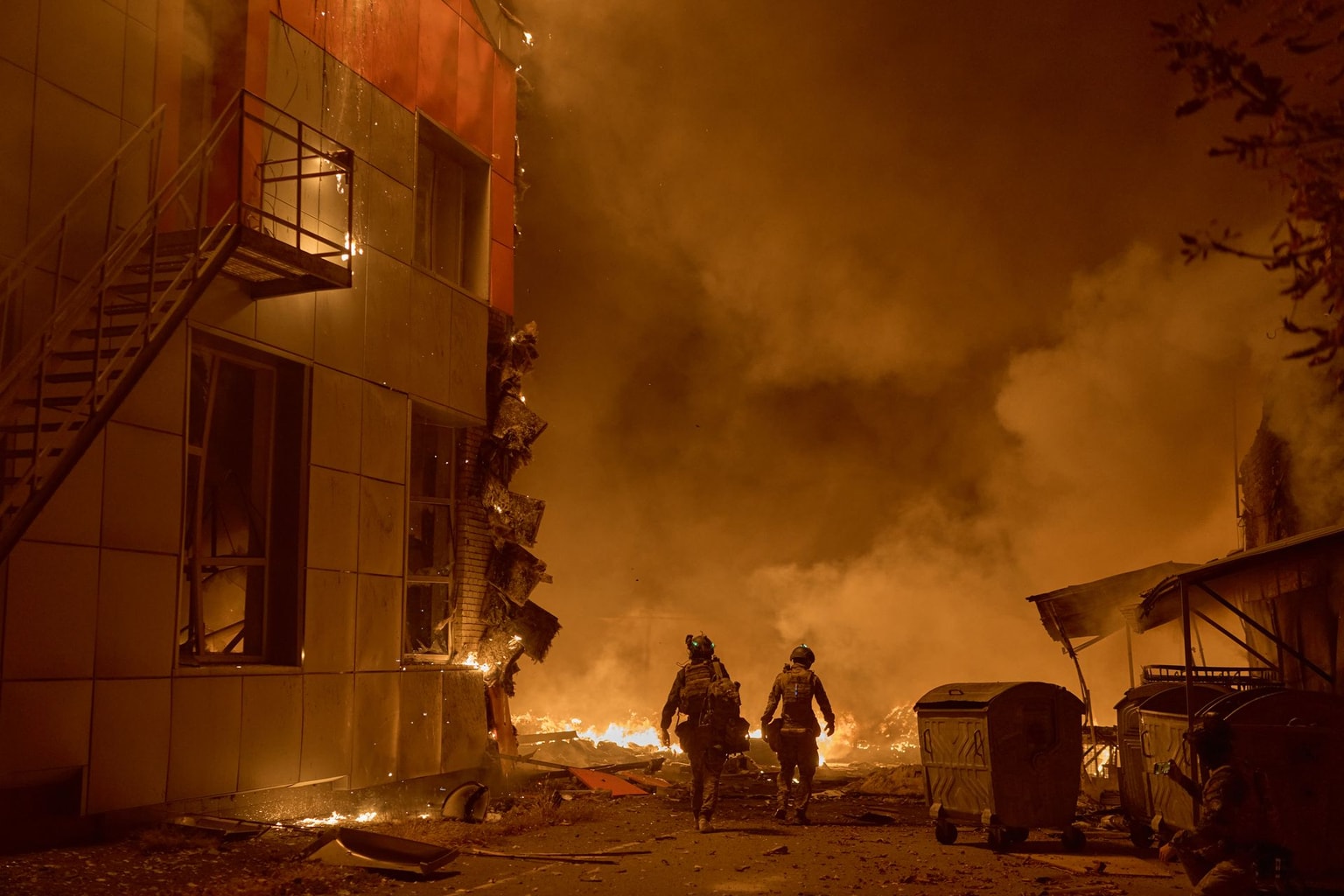
Amid a wave of positive headlines about Russian refineries in flames and logistics crippled, the battle for the legendary "fortress belt" of Ukraine's Donbas region has begun in earnest, with Russian forces breaking into the city of Kostiantynivka in Donetsk Oblast and steadily overrunning the urban area.
As the summer campaign opens up, Russian forces are bucking the trend of offensive stagnation across the rest of the front line and making real headway into the heart of Ukrainian-controlled Donbas.
Connected by one long road that has for years now been the backbone of Ukraine's defense of the area, the so-called Kramatorsk agglomeration, from Sloviansk to the north, then Kramatorsk, Druzhkivka, and finally Kostiantynivka, remains the main barrier to Moscow's long-held ambitions of conquering all of Donbas.
Throughout the full-scale war, despite their best efforts to attack from the east, north, and south, Russian forces have been held back on the approaches to these cities, until now.
For Ukraine, despite gaining the upper hand in many aspects of the drone war, the acute manpower crisis and the difficulty of front line logistics in a drone-saturated environment is being felt as painfully as ever in Kostiantynivka.
The battle is only the latest in a long string of intense urban engagements that have served as markers of the course of the full-scale war, each playing out amid the constantly changing tactical and technological conditions of the fighting.
Now, as the fighting swiftly reaches its climax, Ukraine's response to the challenge of Kostiantynivka could be crucial in deciding whether this industrial city will be known as the last great fortress Russia took, or as the beginning of the end for Ukrainian-held Donbas.
Hub of war
Once home to a population of over 100,000, Kostiantynivka has been a forward hub for Ukraine's war effort all the way back since 2014, when the nearby cities of Toretsk and Horlivka marked the contact line with Russia's proxy occupation forces.
In the first years of the full-scale war, the city gained extra importance for Ukraine as the intense attritional fighting raged in the nearby city of Bakhmut.
Over 2024, the front line drew closer on two sides as Russian forces pushed into Toretsk in the southeast and Chasiv Yar in the northeast, where both sides were deadlocked in brutal urban fighting.
Throughout this time, Kostiantynivka and its people continued an increasingly perilous existence, with the OKKO gas station at the city's entrance becoming a legendary meeting point for soldiers, volunteers, and journalists alike.


In 2025, the situation slowly deteriorated as Russian forces completed the capture of Toretsk while also crossing the Siverskyi Donets-Donbas Canal east of Kostiantynivka, which had for years formed a favourable natural line of defense for Ukraine.
Meanwhile, the intense fighting in other parts of the front line saw Kostiantynivka steadily deprioritized by the Ukrainian command, with the elite Azov Brigade and its new umbrella corps command redeployed to address the Russian offensive on Dobropillia to the west.
Just as with the city of Pokrovsk, 2025 was also defined by a drastic worsening of Ukrainian front line logistics, mostly thanks to elite Russian drone unit Rubicon, which was deployed to the area in April last year.
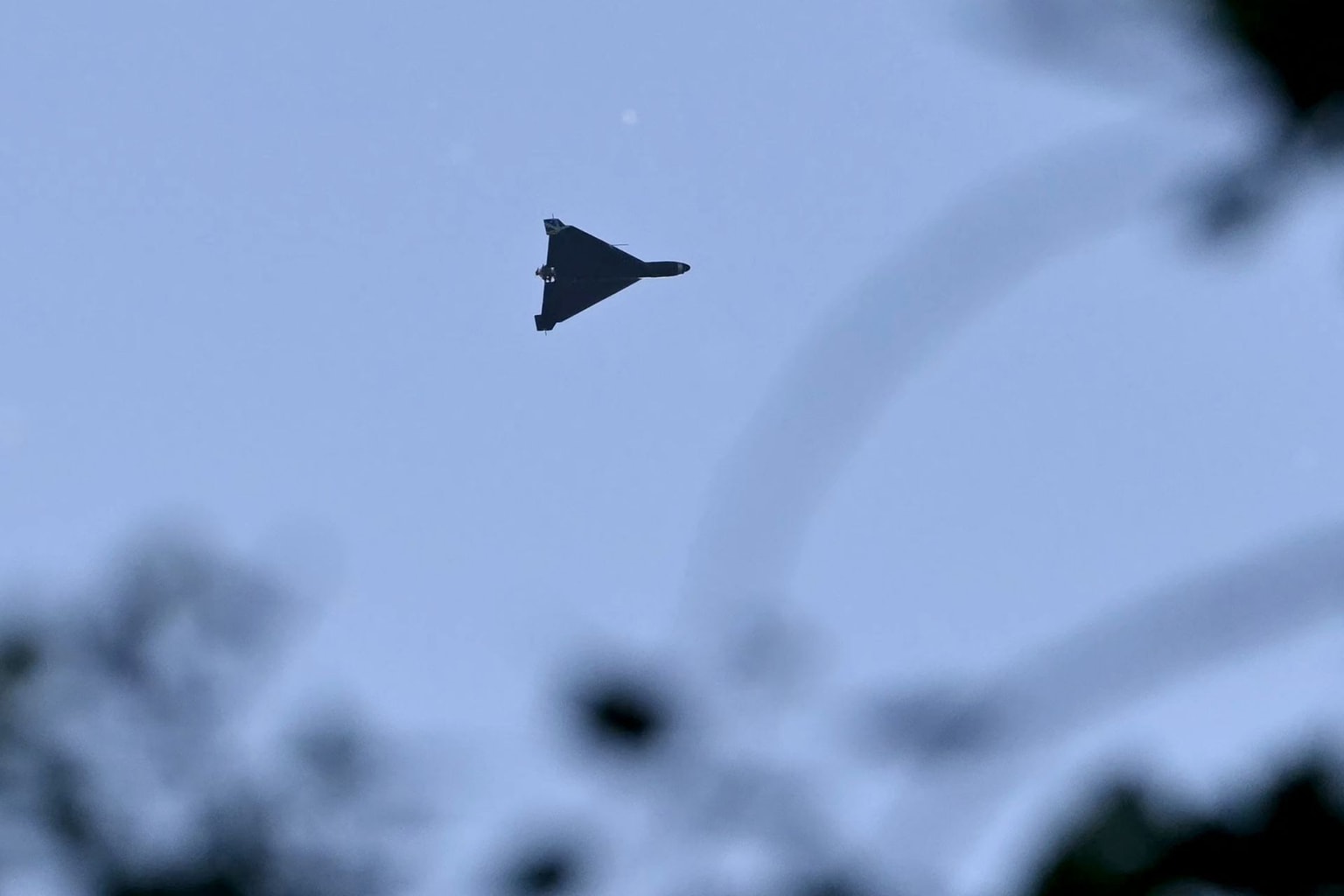
That same month, the first fibre-optic first-person-view (FPV) drones began flying into the city, in a scene that soon became familiar across the front line. A month later, the gas station was destroyed, as the city was quickly shrouded in the advancing and deepening "kill zone" of Russian drones.

Over the rest of that year, the logistics situation continued to deteriorate, and by winter, as soldiers fighting in the area told me, almost no vehicles and very few unmanned ground vehicles (UGVs) could drive in and out of the city unscathed.
At that point, Ukrainian infantry still held positions on the city's eastern and southern outskirts, but as with hotspots of the fighting across the front line, many of them were isolated to the point of being practically doomed.
Rotation by vehicle had become impossible, as had casualty evacuation, while even the heavy bomber drones used by Ukraine to resupply its zero-line infantry were also getting intercepted more and more often by Rubicon teams.
Infiltrate and overrun
Over the winter, while Ukraine's defense of the rest of the front line gradually stabilized, the first Russian infiltration teams began to break into the low-density residential neighbourhoods on the edges of Kostiantynivka.
Making good use of bad weather and the increasingly wide gaps between Ukrainian positions, Russian soldiers hunkered down in the basements of Ukrainian houses in an attempt to gather and move further forward.
But still, for a long time, the situation was under control, with most of the infiltrators being quickly spotted and targeted by Ukrainian drone teams.
Over spring, the situation steadily deteriorated further.
By May, when videographer Olena Zashko and I made the 10-kilometre hike from Druzhkivka almost to the city's outskirts, the fortress of Kostiantynivka had already been breached.

Taking advantage of weaker Ukrainian brigades, such as the recently formed 156th Mechanized Brigade, Russian infiltrating groups turned from a constant set of fires that needed to be fought into a tide that was getting difficult to stop.
Flowing through the sector of the 156th Brigade, as reported by Ukrainian media outlet Hromadske, Russian soldiers streamed through the western half of the city, approaching the northern entrance on the very same highway we had walked down.
A similarly large-scale infiltration was recorded and mapped by open-source intelligence groups, including the highly respected DeepState mapping group, in the eastern half of the city.

By early June, the command of the 19th Army Corps in charge of the defense of the city admitted that over a hundred Russian soldiers were inside the urban area of Kostiantynivka, repeating the tired phrase that the situation was tough but under control.
Now, Ukrainian infantry and some drone teams continue to hold positions across the city, but geolocated footage emerging online shows more and more Russians as well.
Here, it's useful to compare Kostiantynivka to the very similar way in which the last act of the battle of Pokrovsk played out.
When one group of around 50 Russian soldiers first infiltrated into the city in summer 2025, it was difficult but still possible, with the help of assault units and Special Forces, to clear the breach and restore a cohesive perimeter of defense.
But when, a few months later, Russian forces broke through again, now numbering over a hundred, the infiltration gained a critical mass and turned into the steady overrunning of the city's built-up area.
This now looks to be what is happening in Kostiantynivka, and it may be a warning for the future of urban tactics on Ukraine's increasingly drone-saturated battlefield.


Over 2026, Ukraine — and specifically the drone component of its force — has become increasingly effective at stopping even the smallest of Russia's infiltration teams, sometimes made up of just one or two men, creeping forward through fields, tree lines, and villages.
But in cities, with endless options for cover from view and from fire, increasingly depopulated and increasingly without a proper front line manned by Ukrainian infantry, infiltration, gathering, and moving further in is relatively much easier.
read also
Issues laid bare
Kostiantynivka is also a reminder that despite Ukraine's increasing success with drones from the tactical level through to middle strike range and into strategic depth, the run-of-the-mill manoeuvre brigades tasked with actually holding the physical front line are still incredibly overstretched.
While stronger brigades under respected, well-resourced corps commands, like the Azov Corps, 3rd Army Corps, or the 7th Corps of the Air Assault Forces in Pokrovsk, can do effective work holding key sections of the front line, they cannot cover it all.
Struggling as it might be, the Russian military is still effective at probing for weak spots in Ukrainian defenses.

Meanwhile, although limited by the cutoff of Starlink, Russia's drone component — and the kill zone it creates in areas of the front line it chooses to concentrate on — still has the ability to make life for Ukrainian defenders extremely difficult.
Luckily, the fact that so much of Ukraine's tactical firepower comes from elite drone units, especially those of the Unmanned Systems Forces, means Kyiv still has some flexibility to strengthen the defense of the Kostiantynivka area by redeploying top drone units from other, more stable parts of the front line.
Looming climax
Unless Ukraine can magically move in and clear the Russian breach into Kostiantynivka in the very near future, the fate of the battle for the city is likely already decided, and will unfold over the rest of summer and perhaps early autumn.
Russian attempts to cut off the entrances into the city from both sides are highly concerning, but in the current depopulated and drone-saturated tactical conditions, a true encirclement will be difficult to achieve.
Even if it might appear that way on some maps, as the battles of the last year have shown, the territory marked as controlled by one side or another is increasingly more of a rough approximation than a precise reflection of reality on the ground.
What we are likely to see instead of a clean encirclement are stories of difficult, dangerous withdrawals through contested terrain under a sky saturated with drones, similar to what was seen in Pokrovsk and Myrnohrad half a year earlier.
On our own hike towards Kostiantynivka, we already started meeting Ukrainian infantrymen on their way out with similar stories, including the haggard, bearded face of Serhii, who made it out after a 93-day rotation that began back on Valentine's Day in the deep freeze of winter.


Beyond Kostiantynivka, Russian forces will almost certainly quickly set their sights on the next city in Ukraine's fortress belt, Druzhkivka, also located in the valley and with an almost continuous residential area connecting the two cities.
The route for making the next major infiltration is clear and relatively straightforward, and here, unlike cities further back in the rear, this territory has been too close to the front line for Ukraine to fortify as thoroughly as areas deeper in the rear.
Druzhkivka is surrounded on both sides by the same strategic heights that flank Kostiantynivka, and the fighting for them will be crucial in deciding the timeline along which the battle for Druzhkivka will likely unfold.
Beyond that comes Sloviansk and Kramatorsk, two even larger cities that have been the heart of free Ukrainian Donetsk Oblast since 2014.
The defense of these large cities has been prepared for years, and although Russia will attempt to make logistics routes in and out of them extremely difficult, they will face a challenge unlike anything they have managed during the full-scale war.
This is why Ukraine's leadership, military, and population understand that giving up the rest of Donetsk Oblast in exchange for a promise of peace from Moscow would be strategically unacceptable.
Instead, the defense of these cities — and the cost Russia must pay in ammunition, equipment, and especially manpower to take them — is what may ultimately break Russia’s ability and conviction that it can overcome independent Ukraine.

Author's note:
This is Francis Farrell, the author of this article. The battle of Kostiantynivka is a personal one for me, as this was a city that for years used to be the meeting point with soldiers before heading to the front line, and the first island of safety after returning. What is happening to it now is a reminder that despite a positive shift in the headlines, the titanic effort made — and the human price paid — in holding Russia back on the front line has not gone anywhere. If you appreciate what we do in trying to continue the battlefield like nobody else is doing at the moment, please consider supporting our journalism.