Analysis: Ukraine, Russia set stage for climax of Battle of Donbas
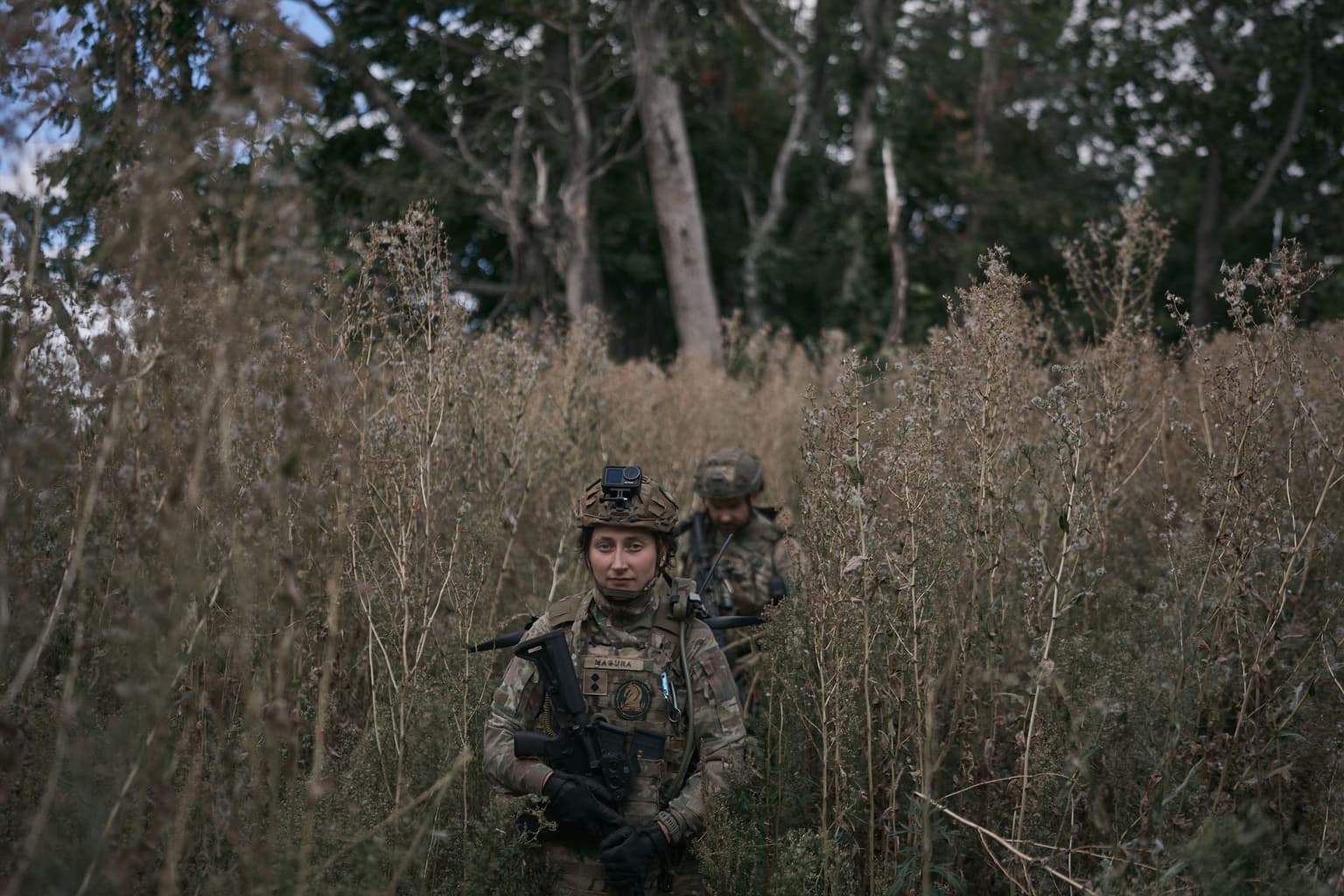
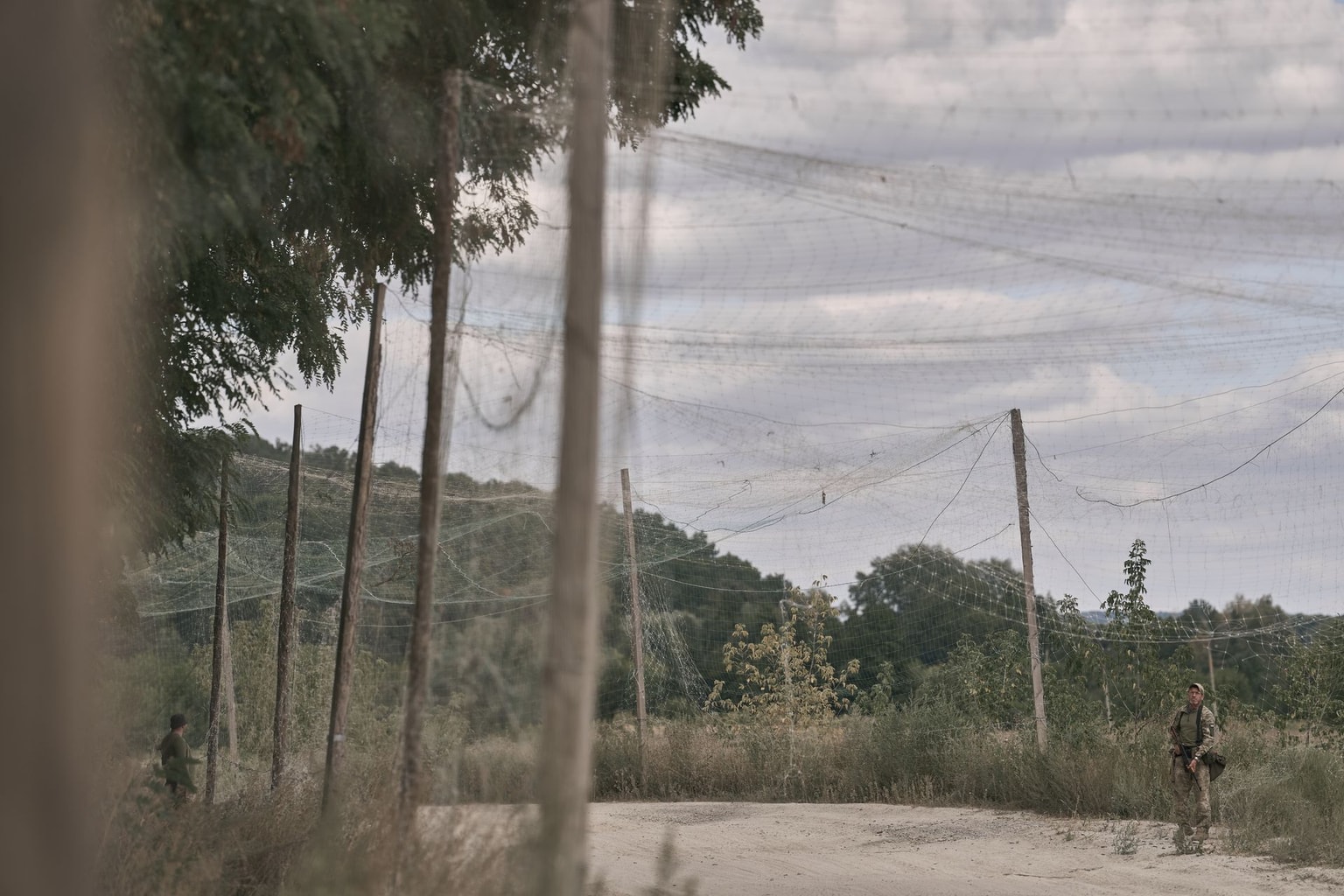
Ukrainian soldiers "Mahura" and "Hrek" of the 47th Separate Mechanized Brigade return to their battalion command post after visiting forward infantry positions near the Russian border in Sumy Oblast, Ukraine, on Aug. 28, 2026. (Kostiantyn Liberov/Libkos/Getty Images)
 on Google
This autumn, as Russia escalated its total-war-style strike campaign against Ukraine’s critical infrastructure and economy, and relations between Kyiv and Washington hit an all-time low, the daily battles along Ukraine’s vast battlefield have faded into the background of the information space.
Despite the reduced attention in international media — often spawning misleading perceptions that both sides are bogged down in some kind of stalemate — the attritional fighting in Ukraine’s east remains as intense and brutal as ever, with both sides looking to establish a clear upper hand going into winter.
In simple terms of territory taken and lost, 2026 has been a year of relative success for Kyiv on the front line.
Net Russian territorial gains have largely flatlined despite consistently heavy casualties, while Ukrainian forces also managed to conduct two successful counterattacking operations, each carrying strategic importance.
Though other parts of the front line have largely stabilized, Russia’s main goal continues to be the capture of the remainder of Donetsk Oblast.
Slowly but surely, Russian forces inched closer to the gates of the last remaining Ukrainian cities in the region, largely driving out what was left of any normal civilian life in the area.

Meanwhile, Ukraine’s defending forces, reorganized under a new command structure, have looked to create the conditions to grind down and stop whatever offensive power Russia can muster in its tracks.
With the Trump administration tightening the screws on Kyiv, while Moscow refuses to budge on its demand that Ukraine hand over the rest of Donetsk Oblast as a bare minimum for ceasefire discussions, the strategic and political weight of this slowly shrinking and increasingly ruined patch of land is as great as ever.
read also
Command and control
Since the full-scale invasion, the backbone of Ukraine’s defense of Donetsk Oblast has been the so-called fortress belt, made up of four industrial cities running north to south: Sloviansk, Kramatorsk, Druzhkivka, and Kostiantynivka.
For about a year, all of these cities have been within range of Russian first-person-view (FPV) drones.
But over 2026, incremental advances on the ground, combined with improved technology extending the range of these drones, have made Ukrainian logistics anywhere in the area noticeably more difficult while also driving many of the remaining civilians out from their homes.
Since the Ukrainian army’s corps reform last year, the direct approach to the fortress belt has been defended by two army corps: the 11th and 19th.
Over May and June, while Ukraine was riding the high of successive positive developments in the war, Russian forces entered and overran much of Kostiantynivka, following a model of mass infiltration backed by heavy support from drones, artillery, and glide bombs that was used to take Pokrovsk last year.

Simultaneously to their frontal attacks, Russian forces have attempted to achieve a double envelopment of the fortress belt, with two large pincers pushing north and south of the fortress belt, respectively.
The northern pincer, bearing down on the liberated city of Lyman, was famously the site of Ukraine’s Operation Vivaldi: a slow but ingenious series of counterattacks conducted by the country’s 3rd Army Corps under commander Andrii Biletskyi.
On the southern flank, Russia has concentrated immense offensive pressure for over a year on the mining city of Dobropillia.
After a mass infiltration of Russian soldiers in August 2025 pushed up to 20 kilometers deep behind Ukrainian lines, Kyiv redeployed the 1st Azov Corps of the National Guard, commanded by Denys Prokopenko, leader of the Mariupol garrison, to the area, where it stands to this day.

After years of brutal fighting across the front line, the defense of any area is often only as good as its weakest point.
With Russian forces learning to aggressively target potential weak links in Ukraine’s overstretched defense, raising the base level of Ukraine’s brigades has been just as important as the placement of more elite units.
While the 1st and 3rd Corps were able to gather their units in a coherent sector and lead the fight as a truly unified formation, other corps like the 11th and 19th, commanding a mixed bag of exhausted and inexperienced brigades without extra resources and assigned units, struggled.
To rectify this, in August, under new Commander-in-Chief Mykhailo Drapatyi, Kyiv decided to divide the defense of Donbas between two newly formed task forces, built up by Biletskyi and Prokopenko from the staff of their respective corps.
Task Force Azov would expand west, covering the frontage recently vacated by the Seventh Air Assault Corps, while Biletskyi took the 11th and 19th Corps, and with them most of the fortress belt, under his wing with a new Task Force Center.
The most strategically important part of the front line was now being led directly by the military’s two most high-profile field commanders.
New challenges
Operation Vivaldi was already well underway when Andrii Biletskyi was given command of the defense of the fortress belt.
His 3rd Corps was probably the best example of success in Ukraine’s corps reform, bringing up other mechanized brigades to elite standards of training and command, despite a dire manpower shortage.
Now, the general has been given the challenge of doing something similar with the brigades of the 11th and 19th Corps, some of which have been fighting high-intensity battles in their sector for years without rotation.

Over autumn, Russia’s attempts to push and probe through the hilly terrain immediately east of the fortress belt have gotten bogged down, while even Kostiantynivka — which looked likely to fall by the end of summer — is still hanging on.
The brigades fighting in this area have their work cut out for them, facing daily Russian infiltrations, a kill zone that only gets deeper and deadlier with time, and very thin, if not empty, infantry ranks.
But none of these are new problems, and over time, even with limited resources, the brigades have adapted.
All logistics to infantry positions in this area are handled by heavy bomber drones, while the revolution in unmanned ground vehicles has been key to keeping Ukrainian drone teams supplied.
Inside Kostiantynivka, the difficulty that Ukraine has had over the past year defending cities against Russian infiltrators has been turned on its head, thanks to the dogged heroism of Ukrainian infantrymen still in the city.

By now, control of one neighbourhood or another is almost impossible to accurately portray, as the positions of Ukrainian and Russian soldiers in the residential and industrial areas of Kostiantynivka heavily overlap.
While Russian forces try to push onwards towards Druzhkivka, Ukrainian troops remain entrenched in the city center and even on the eastern flank of Kostiantynivka, occasionally moving around and making it difficult for Russia to deploy its drone teams in the city.
Many of these men have been inside the city for the better part of this year and have little prospect of being evacuated if wounded.
But nonetheless, they hold on, buying Ukraine precious time to prepare the defense of the next fortress.
Endless onslaught
It is on the southwestern flank of the fortress belt, around the city of Dobropillia, where Russia’s most intense offensive continues.
Unlike the north of Donetsk Oblast, where the Siverskyi Donets River provides a natural defensive barrier, advancing in the Dobropillia area would give Russian forces a direct back door into the fortress belt.
According to Prokopenko, Russia enjoys a six to one personnel advantage in the Dobropillia area, and has deployed a third of its elite Rubicon drone unit — around 400 teams — in the narrow sector.

For the past year, the mining city of Dobropillia has provided shelter for much of the First Corps’ work, including many of the drone teams stopping Russian forces approaching the outskirts of the city.
But this convenience has also made Dobropillia a particular target for Russian glide bombs, launched in groups of three or four indiscriminately, but with a real chance of burying a Ukrainian drone team with every direct hit on a building.
On the ground, although a spectacular and well-coordinated attempt at a mechanized assault in summer failed, Russian forces, through sheer strength of numbers, have been slowly saturating the area around Dobropillia with small infiltration groups.

This process gained pace over autumn, and in the last few months, more videos have emerged of Russian soldiers raising flags in the city, though they are often quickly eliminated and do not indicate any certainty of territorial control.
But that nuance clearly hasn’t reached Moscow, as the Russian defense ministry claimed in October that the city had already been captured completely, a statement quickly denied by Kyiv.
A video released on October 21 by the Azov Corps argues that Russia’s increasingly outlandish claims about capturing Dobropillia are a direct result of the same culture of lies in the Russian high command chain — much the same as what helped facilitate the success of Operation Vivaldi for the Third Corps.
Winter prospects
As well as Ukraine can organize its defense of Donbas, much in the coming half-year will depend on Russian plans and resources.
The coming weeks and autumn weather are likely to provide the last favorable conditions for Russian infiltration for the rest of the year.
And if they can entrench themselves in and around Dobropillia before winter, Ukraine will have a lot more trouble rooting them out.
Another challenge is the looming prospect of Russian forced mobilization, which some Ukrainian commanders have argued has already started, just without a public announcement.
With a new flow of hundreds of thousands of bodies to augment those already voluntarily signing contracts, Russia could have more options, whether that means further increasing the intensity of its offensive in Donbas or attacking somewhere else and creating major strategic dilemmas for the Ukrainian defense.

Crucial could also prove to be the future of Ukraine’s ability to use Starlink, something now in the hands of Elon Musk and Donald Trump, two men who have shown consistent contempt for Ukraine’s fight for survival.
Both the 1st and 3rd Corps have made extensive use of middle-strike capabilities in offensive and defensive operations over the last year, not to mention the work of top brigades of the Unmanned Systems Forces in the area.
If Starlink is further restricted in one way or another, Ukraine’s forces and their drone-based defense could be severely hampered in their ability to spot and destroy advancing Russian troops in good time.
With that, Ukraine’s strongest card, a solid defense along the front line and a strong military uninterested in capitulation, could itself be further undermined by those who believe Ukraine has no cards.