What it takes to survive as a Ukrainian reconnaissance soldier under a sky of drones
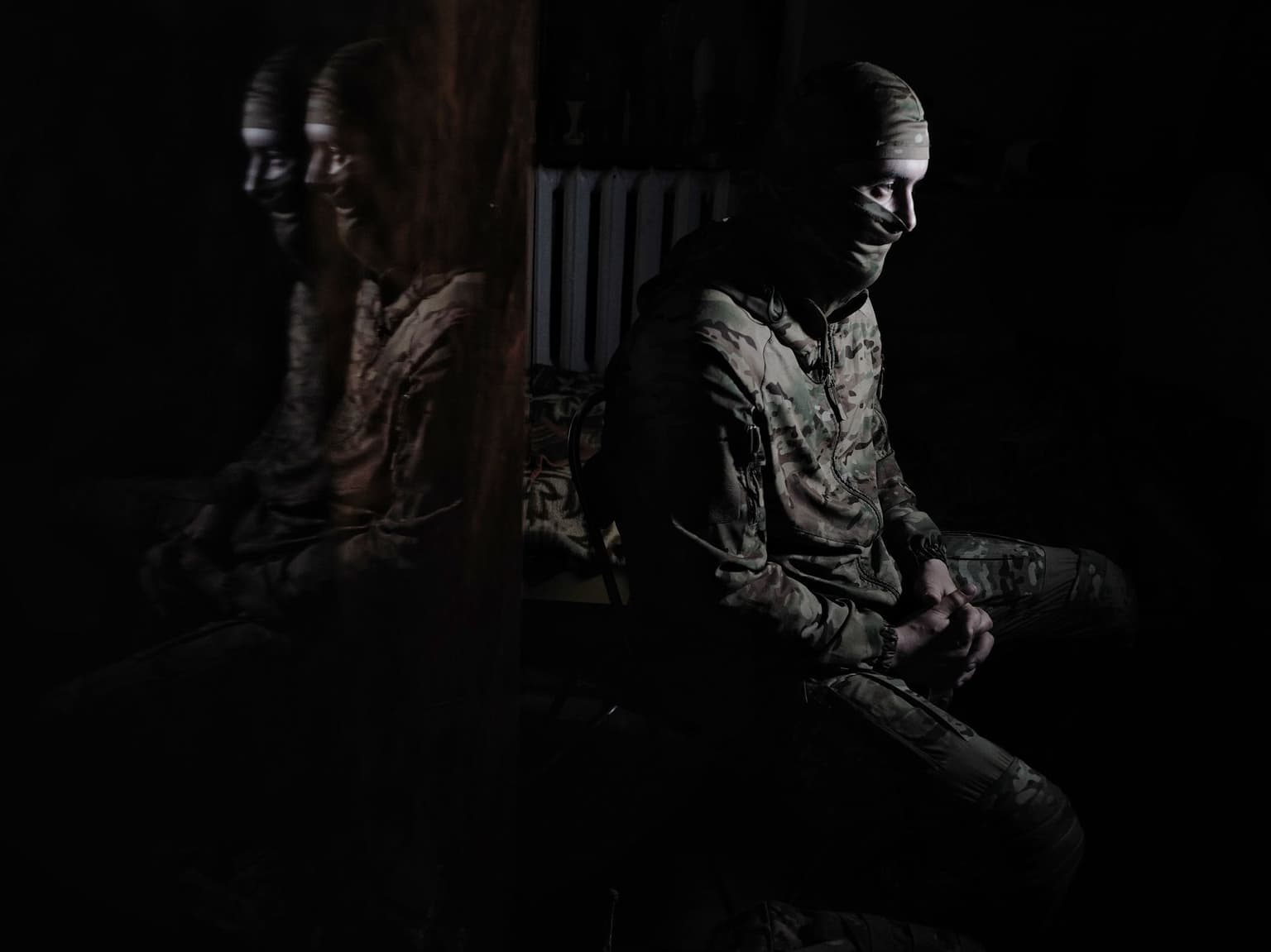
A reconnaissance soldier of the 60th Mechanized Brigade, who goes by the call sign "Red" and took part in Operation Vivaldi, in Kharkiv Oblast, Ukraine, on Oct. 6, 2026. (Lisa Bukreyeva / The Kyiv Independent)
 on Google
KHARKIV OBLAST — On a summer day in an abandoned village in eastern Ukraine, drones had just zeroed in on a house when a Russian soldier, claiming to surrender, walked out. Instead, he pulled out a grenade. Seconds later, a Ukrainian reconnaissance team opened fire and killed him, said one of its soldiers, call sign "Psycho."
"It's a very big risk for our team," Psycho said. "You understand that he has a grenade in his hands, and he can throw it at any moment."
Working in teams of two, soldiers in his reconnaissance company with the 60th Mechanized Brigade cleared house by house under constant Russian drone surveillance. The village had long been destroyed by years of fighting, but Russian troops could still be hiding in basements, Psycho said.
Clearing a house usually took about 20 minutes, as the soldiers thoroughly checked sofas and the floors with a flashlight, Psycho said. Russian first-person-view (FPV) drones frequently interrupted their work, forcing them to take cover for hours at a time until the sky was clear.
Reconnaissance soldiers must always stay alert, he added, stressing that one brief moment of hesitation can cost the team its survival.
"You need to make decisions as quickly as possible, there is no time to think," Psycho said.
"The first days I couldn't believe that I had survived the mission."

Since highly maneuverable, low-cost FPV drones started dominating the battlefield in 2023, the role of reconnaissance soldiers has significantly changed.
Where it was previously common for reconnaissance soldiers to wait for hours, sometimes days, just steps away from Russian positions to collect information, such as ammunition delivery schedules. Today, their work includes ambushing the enemy, countering Russian infiltrators, and clearing out Russian positions, according to the company's commander, call sign "Hootor."
His reconnaissance company had been clearing houses and treelines in the northern part of Donetsk Oblast as part of Operation Vivaldi since spring, months before Ukraine officially unveiled it in September.

The 3rd Army Corps spearheading the operation reported liberating 277 square kilometers (107 square miles) of Ukrainian territory, including 16 villages, in the Lyman sector by mid-October.
Commanders involved in the operation said the priority was for FPV drones to do the majority of the work, zeroing in on target Russian positions, whether it be a basement or a dugout. But even after FPV drone strikes, encountering Russian soldiers and engaging in a firefight was not uncommon, Psycho said, as drones could not always reach Russian positions, especially deep underground.
In those cases, it would be up to Ukrainian reconnaissance soldiers to go into the field and clear the positions, ensuring that there were no combatants left.
"We must destroy the enemy as quickly as possible so they don't have time to pass on information," Hootor said.

Drone-adjusted roles
In the era of constant drone surveillance, both sides increasingly rely on infiltration to advance forward, sending a small group of soldiers one by one until they eventually accumulate, especially under bad weather conditions. Figuring out where Russian troops are infiltrating from is part of the reconnaissance soldiers' work to guard their area of responsibility, Hootor said.
"Out of ten (Russian) infiltration attempts, one will be successful," Hootor estimated. "But that one must also be countered, because it poses a threat to a specific section of the front."

The reconnaissance soldiers on the ground combine pieces of information left behind by Russian forces in phones, maps, and radio to help identify enemy units and understand how best to counter Russian infiltration efforts, he said.
The ideal situation is if a Russian soldier surrenders, allowing them to question him, Hootor said. However, Russian captives frequently make up information, lying about their positions' location and the number of remaining soldiers there, according to Psycho.
Once they have located a Russian position, reconnaissance soldiers sneak up to it, sometimes as close as a meter and a half.
"We try to get as close as possible," Psycho said.
"In these moments, even a small mistake can be fatal," the unit's platoon commander, call sign "Bonus," said. "The key is to pull yourself together."

He stressed that it is especially crucial for reconnaissance soldiers to be highly trained and conduct repeated drills, as the brain "shuts off" in these nerve-wracking situations, forcing the soldiers to rely on muscle memory instead.
Even among experienced reconnaissance soldiers, human factors can take over. Bonus recalled an incident in spring where he was approaching a Russian position when his partner suddenly fell into panic. Knowing that it would be a higher risk to retreat with his back turned toward the position, especially since he might already have been spotted, he decided to clear the position on his own.
"Sometimes you just need to do it quickly, rather than wait for the right moment," Bonus said.
"In nine years, I've lost a lot of friends."

When reconnaissance soldiers eventually reach the Russian position, they usually throw a grenade inside. If a position is difficult to clear, FPV drone strikes follow before the reconnaissance soldiers storm the position and deal with surviving Russian troops.
"The factor of unexpectedness also works well," Bonus said.
Psycho believes that it is "unrealistic" to avoid being spotted by Russian drones, no matter how quietly and carefully the reconnaissance soldiers approach the enemy position. He thinks it is likely that the Russian soldiers inside are warned about a Ukrainian group approaching, making it imperative to start engaging the Russian troops within 15 minutes.

High-risk work
Being spotted is especially risky for reconnaissance soldiers, who are a priority target for Russian troops due to their experience and skill, Bonus said.
"(Russian troops) use every means at their disposal to destroy us. It's like a bone in the throat for them," he added. "When they find us, they just try to destroy as much as they can..."
Bonus recalled walking about 80 kilometers (about 50 miles) in a week under intense Russian drone and artillery fire, all while carrying ammunition and short on water.
During a days-long mission in spring, incessant Russian attacks going off every 30 to 40 seconds trapped Bonus' team in a house. Realizing that they had likely been spotted, his team — including three concussed soldiers — helped each other to crawl out of the building during the short time window between attacks, escaping a direct artillery strike by mere seconds.

While they survived this close call, not all of Bonus' comrades came back from their mission. A reconnaissance soldier, call sign "Zhora," was killed in what was likely an FPV strike on a house. Another soldier with him survived, but suffered a permanent eye injury.
Defying the order not to rush into the attack site due to the potentially fatal risks, Bonus said he tried to retrieve Zhora from the burned-out house.
"I wanted to retrieve something (his body or part of his body) but… unfortunately my hands only picked up ashes," Bonus said, struggling to finish the sentence.
The house had completely burned down and collapsed into the basement after the drone strike, leaving nothing to be retrieved, especially in the short time before the next strike. Like thousands of other soldiers in Ukraine, Zhora is classified as missing in action until the body or a part of it is recovered for DNA confirmation.
A respected member of the company in his 40s, Zhora was always cheerful and ready to help, thoughtful, and prepared even at difficult times, his comrades recalled. Hootor said that other team members used to follow Zhora's guidance.
"In nine years, I've lost a lot of friends," Bonus said. "It's easier for me now, because I've gotten used to it. I got used to dealing with it. That's the reality."
For Psycho, the realization that he had returned from his mission did not set in immediately.
"The first days I couldn't believe that I had survived the mission," Psycho said at his base in Kharkiv Oblast in October.
Survival is defined 60% by luck, 30% by skills, and 10% by alertness and patience.

"Red," a 24-year-old reconnaissance soldier in the company, sees death as an inevitable factor. He believes that survival is defined 60% by luck, 30% by skills, and 10% by alertness and patience.
"I believe that somewhere up there, in God's office, our lives are already written out, and wherever you are, if you're meant to live 24 years, or more, or…" Red said. "You can't run from it, whether you're at war, or here, or even deep in the rear as a civilian."
Even as the job became more dangerous, the reconnaissance soldiers with the 60th Mechanized Brigade said they would continue to do their work as long as they could. There is only so much that the drones can see from above, compared to the reconnaissance soldiers on the ground, who identify which routes are safe for infantry to take and mark suitable dugouts or shelters.
"I don't really think about it (the risks). This is my job," Red said. "My country was attacked. I have to destroy the enemy. That's what I focus on. Whether I survive or not, that's just a bonus, if it happens.”

A note from the author:
Hi, this is Asami, the author of this article. Thank you for reading it until the end. While reporting on an ongoing operation such as this one is difficult due to OPSEC concerns, what allows us, as local reporters, to tell their story in depth is gaining the commanders' and soldiers' trust. My goal has always been to shed light on the reality on the ground and to tell the stories as humanly as possible, because assaulting in the current drone-dominated phase of the war can be extremely deadly. It was an honor to meet this group of reconnaissance soldiers twice in the past few months and spend some time with them.
No matter how difficult the situation gets in Ukraine, we will continue to do our best to report from these front-line regions and provide a reliable window into the war. Please consider supporting our reporting, which is available without a paywall thanks to the support of our members.