Ukraine war latest: Ukraine struck oil refineries in Russia's Krasnodar Krai and Yaroslavl Oblast, Zelensky says
 on Google
Key developments on June 27-28:
- Ukraine struck oil refineries in Russia's Krasnodar Krai and Yaroslavl Oblast, Zelensky says
- Ukraine says 'Spirit of Anchorage' is 'dead,' Russia must face reality in peace talks
- Explosions, fires reported in Kyiv amid Russian missile attack
- Ukraine strikes Russian oil hub supplying Moscow for 2nd time this month, military says
Ukraine struck oil refineries in Russia's Krasnodar Krai and Yaroslavl Oblast overnight on June 28, President Volodymyr Zelensky said, as Kyiv continued its campaign against Moscow's oil infrastructure.
"We will continue our operations that weaken Russia's ability to wage this war. Every long-range sanction reduces the resources fueling Russia's war machine and brings us one step closer to peace," Zelensky said.
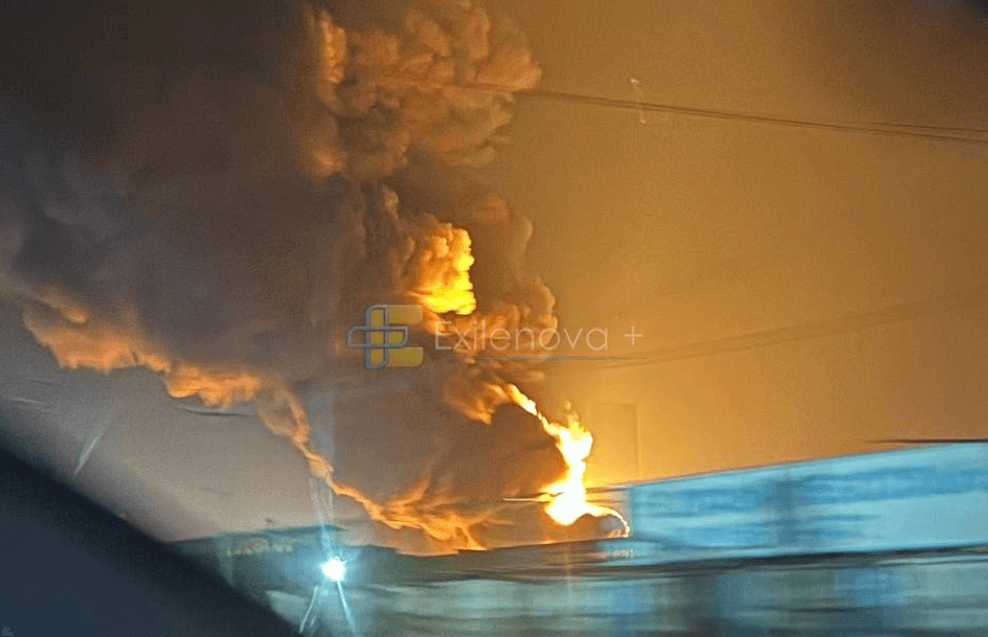
According to the president, Ukrainian forces struck the Slavyansk oil refinery in Russia's Krasnodar Krai, around 300 kilometers (186 miles) from the front line, as well as an oil refinery in Yaroslavl Oblast, approximately 700 kilometers (435 miles) from Ukraine's border.
Russian authorities claimed one person was killed and another injured during the strike in Krasnodar Krai.
Photos and videos posted to social media purport to show large flames and plumes of smoke emanating from what appears to be storage tanks at the Slavyansk refinery.
The facility is considered a key fuel supplier for Russian-occupied Crimea, whose fuel reserves have effectively been paralyzed in recent weeks as Ukraine attempts to isolate the peninsula.
The Krasnodar Krai regional operational headquarters later reported that the fire at the oil refinery was caused by falling debris.
The extent of the damage caused was not immediately clear.
Elsewhere in Russia, smoke was seen rising from the area of the Yaroslavl oil refinery, located approximately 250 kilometers (150 miles) northeast of Moscow.
Yaroslavl Oblast Governor Mikhail Yevrayev said on Telegram that Ukrainian drones were targeting the region.
Ukraine's General Staff later confirmed that the overnight operation also targeted a railway bridge near Ichky in occupied Crimea, which Russian forces use to transport troops and military supplies, as well as an ammunition depot near the occupied town of Amvrosiivka in Donetsk Oblast.
The General Staff also said Ukrainian missiles struck three workshops at the Titan-Barrikady industrial complex in Volgograd, causing fires and partially damaging two of them.
Titan-Barrikady is a major Russian defense industry enterprise that manufactures missile launchers, artillery systems, and other military equipment.
The full extent of the damage to the oil refineries, railway bridge, ammunition depot, and defense facility is still being assessed.
Russia's Defense Ministry claimed its air defenses shot down 213 drones over 13 regions, annexed Crimea, and the waters of the Azov and Black seas. The Kyiv Independent cannot immediately verify the reports.
Amid the strikes, Russia has been facing a growing fuel shortage exacerbated by Ukrainian drone attacks on oil refineries. Over 20 Russian regions have imposed restrictions on fuel sales. Many Russians have taken to social media to report hours-long wait times to refuel at service stations.
The reported attack comes as Kyiv continues to escalate its campaign against Russian oil and gas infrastructure, a key source of Moscow's revenues helping to fuel its all-out invasion of Ukraine.
The latest strike comes days after Ukrainian drones struck two oil refineries in Russia's Republic of Bashkortostan on June 25.
A June 19 strike on the Moscow Oil Refinery halted operations at the facility — one of the largest in Russia, responsible for 40% of the Moscow fuel market and the majority of the region's gasoline. Days later, the Lukoil-Nizhegorodorgsintez refinery in Kstovo, Nizhny Novgorod Oblast, Russia's fourth-largest refinery, ceased operations following a Ukrainian drone strike, Reuters reported.
Ukraine says 'Spirit of Anchorage' is 'dead,' Russia must face reality in peace talks
Foreign Minister Andrii Sybiha on June 28 said Russia's belief in "understandings" reached with the U.S. during last year's Alaska summit has been proven wrong.
"The reality makes one thing clear: if the 'Spirit of Anchorage' even existed, it is certainly dead now," Sybiha said, mocking Russia's talking point about supposed agreements reached between U.S. President Donald Trump and Russian President Vladimir Putin in August 2025.
The comments come shortly after U.S. Secretary of State Marco Rubio said that no deals have been concluded in Anchorage, contradicting Moscow's version of the events.
"For Russia, the lesson of Anchorage is that any peace plan developed without Ukraine is doomed to become a spirit and disappear," Sybiha said.
Moscow should stop "believing in spirits" and sit down for serious talks, or face deteriorating position in the war, Ukraine's chief diplomat added.
The so-called "Alaska understanding" refers to Moscow's request that Washington to pressure Ukraine to withdraw completely from Donbas, one person familiar with the Alaska discussions previously told the Kyiv Independent.
The demand — which would involve Ukrainian forces giving up territory it currently controls — is a non-starter for Kyiv.
During a G7 summit earlier this month, Trump expressed mounting frustration with Putin and said he may walk back the "Alaska understandings," Axios reported, citing undisclosed official sources.
Trump also recently said Zelensky was "doing pretty well" in the war, noting Ukraine's recent large-scale drone attacks against Moscow.
His remarks came shortly after a senior Ukrainian official told the Kyiv Independent that Trump privately prompted Zelensky to act "more boldly" toward Russia.
While Russian officials have denied this, they have also lashed out at Washington for not following through on the alleged promises made in Alaska, reflecting Moscow's growing unease with the U.S. position on the war.
Explosions, fires reported in Kyiv amid Russian missile attack
Russia once again unleashed a barrage of ballistic missile strikes on Kyiv overnight on June 28, damaging several sites in the city and injuring at least two people, officials said.
Explosions were first reported in Kyiv just before 2 a.m. local time, according to a Kyiv Independent journalist on the ground, and then again around 2:35 a.m. amid another wave of missiles.
Tymur Tkachenko, the head of the Kyiv City Military Administration, said that at least two people were injured in the Darnytskyi district of the city amid the attack.
Fires were also reported in the neighborhood, including near a residential building and at a service station and an unspecified "non-residential building."
A garage unit and vehicles in an open area were engulfed in a fire covering 300 square meters, the State Emergency Service later reported. The fire had been extinguished.
Ukraine's Air Force warned of the threat of several Russian missiles flying towards the capital. Air raid alerts were activated in the central and eastern regions of the country.
Local officials said air defenses were active over Kyiv. Photos and videos posted to social media purport to show several missiles being intercepted over the capital.
Elsewhere across the country, explosions were heard in the cities of Sumy and Kharkiv, public broadcaster Suspilne reported.
Days earlier, on June 25, Russian forces launched a limited missile attack against Kyiv, injuring two people.
Russia's most recent large-scale attack on Kyiv came on June 15, when a massive combined attack killed five people and left the historic Kyiv Pechersk Lavra in flames.
Kyiv responded with unprecedented attacks on Moscow, hitting the Russian capital and its main oil refinery with waves of drones on June 16 and 18. The June 18 strike was the largest drone attack on Moscow during the full-scale war.
As Russian troops' gains on the front line have stalled, Moscow has increasingly relied on ballistic missiles to inflict maximum damage in large-scale aerial strikes on Ukrainian cities.
Ukraine's ability to protect its cities from Russian ballistic missiles depends heavily on its dwindling supply of Patriot interceptors — ammunition for the U.S.-made air defense system that remains the only weapon to have proven effective against ballistic threats.
Ukraine strikes Russian oil hub supplying Moscow for 2nd time this month, military says
Ukrainian forces struck the Vtorovo oil pumping station in Russia's Vladimir Oblast for the second time this month, Ukraine's Security Service (SBU) said on June 27.
The strike is part of a 40-day campaign approved by Zelensky on June 25, which he said is aimed at "compelling" Russia to end the war.
The Vtorovo oil pumping and dispatching station, located around 230 kilometers (140 miles) east of Moscow, is a strategic energy infrastructure hub that supplies fuel to Moscow Oblast.
According to the SBU, drones of the Alpha special forces unit hit technical buildings at the facility, causing explosions. Previously, the SBU hit the same facility on June 10.
Operated by Transneft, Russia's state-owned oil pipeline monopoly, the Vtorovo station pumps raw materials from refineries in central Russia to export terminals and domestic consumers.
The facility also supplies fuel to major Russian airports, including Sheremetyevo, Domodedovo, and Vnukovo near Moscow.
Vladimir Oblast Governor Alexandr Avdeev didn't report on the attack at the time of the publication.
The Vtorovo station is located about 700 kilometers (435 miles) from Ukraine's eastern border.
Ukraine regularly attacks Russian oil assets and military facilities with its domestically produced long-range weapons. As Ukraine's homegrown drone production has expanded and improved, so has its ability to disrupt Russian fuel production, aviation operations, and exports.
In a separate strike on June 27, Ukrainian-made long-range Flamingo FP-5 missiles "successfully struck" a key Russian military-industrial facility in the city of Volgograd.
Note from the author:
Ukraine War Latest is put together by the Kyiv Independent news desk team, who keep you informed 24 hours a day, seven days a week. If you value our work and want to ensure we have the resources to continue, join the Kyiv Independent community.