As Patriot missiles run low, Ukraine scrambles for alternatives
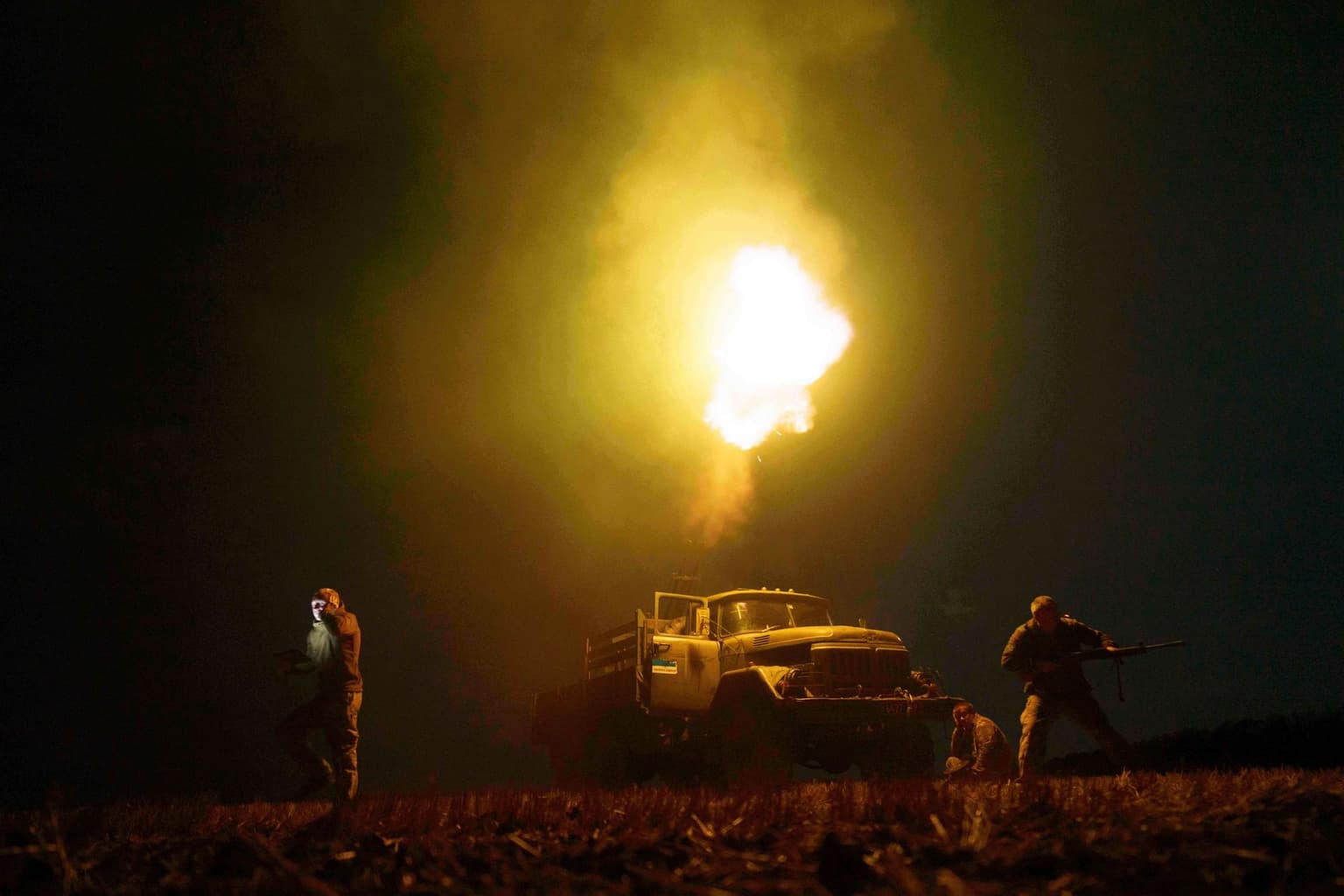
Ukrainian soldiers from the air defense unit of the 59th brigade fire at Russian drones in an undisclosed location, Dnipropetrovsk Oblast, Ukraine, on Aug. 10, 2025. (AP Photo/Evgeniy Maloletka)
 on Google
Russia's battlefield offensive has slowed. But far from the front lines, the war is becoming deadlier.
Russian forces launched 70 missiles and over 600 drones at Ukraine in a mass overnight assault on June 15. Of the 34 ballistic missiles fired, 19 were aimed at the capital. Kyiv's beleaguered Patriot batteries did a valiant job, intercepting 15 of them, along with five of the six 3M22 Zircon hypersonic cruise missiles launched in the attack.
Still, even layered defenses were stretched beyond the limit. Five people were killed, and 35 were injured in Kyiv, while a Russian drone strike damaged the Kyiv Pechersk Lavra, one of Eastern Orthodoxy's most important religious sites.
Ballistic missiles — incredibly difficult to intercept due to their sheer speed — remain the toughest challenge for Ukraine's air defenses. As Russia shows no sign of easing its strikes, Ukraine faces a critical shortage of U.S.-made Patriot interceptors, the only proven system in its arsenal against ballistic threats. That shortfall has deepened amid rising global demand since the war in the Persian Gulf began.

The growing scarcity has prompted efforts to replenish supplies, including securing licenses to produce Patriot missiles domestically, acquiring older PAC-3 and PAC-2 interceptors nearing the end of their service life, and pursuing one of the most ambitious goals — developing a domestic anti-ballistic missile system.
Fire Point, the Ukrainian defense company, released a video on June 3 showing a test launch of its FP-7.X missile, intended as the basis for an anti-ballistic interceptor within the "Freya" system. Co-owner and chief designer Denys Shtilierman said in late May that the first in-flight interception could take place by the end of 2026.
"If this happens, it would truly be a breakthrough," an Air Force officer told the Kyiv Independent on the condition of anonymity.
But the project remains shrouded in limited disclosure and met with skepticism from observers, with doubts lingering over whether it can ever become a real source of protection for Ukraine against Russian attacks.
read also
Battling Supply Constraints
Beyond 15 ballistic missiles, during the June 15 attack, Ukraine's air defenses intercepted 100% of incoming conventional cruise missiles — 30 out of 30 — not including Zircon hypersonic variants, as well as 95% of the 611 one-way attack drones, underscoring the effectiveness of Ukraine's air-defense network against Russia's slower-moving munitions.

Yet ballistic interceptions could have been significantly lower, with potentially far deadlier consequences. A shipment of critically needed Patriot interceptor missiles had arrived in Ukraine only recently, supplied by Western allies.
"We had a package of missiles for Patriot," President Volodymyr Zelensky told a Kyiv Independent journalist in the Kyiv Pechersk Lavra compound, as firefighters continued to douse the still-smoldering roof of the Dormition Cathedral. "It was recently delivered to Ukraine; thank God."
American defense manufacturer Lockheed Martin currently only manufactures 650 PAC-3 interceptors per year, which the company plans to boost to 2,000 by 2033. However, even if the entire production line was dedicated to producing interceptors solely for Ukraine, it still wouldn't be sufficient. Ukrainian intelligence assesses Russia can manufacture "about 120 ballistic missiles per month," Zelensky told the NATO-Ukraine Council meeting in Kyiv on June 3 — a production rate of 1,440 per year.'
"Russian forces are increasingly using ballistic missiles because they see this as our weakness."
"As long as Putin still has even one meaningful advantage in conventional weapons, he will avoid conventional diplomacy. Today, his ballistic missiles remain exactly that — his last major advantage on the battlefield," Zelensky wrote in a May letter to U.S. President Donald Trump, appealing for extra supplies of air defense interceptors in the wake of renewed Russian missile assaults.
This advantage is increasingly being pressed, with the Russian attack on June 15 marking the fourth mass missile and drone barrage in the past 30 days.
"Interceptor missiles are desperately needed during such massive strikes, as Russian forces are increasingly using ballistic missiles because they see this as our weakness," Colonel Yurii Ihnat, head of the Communications Department of the Ukrainian Air Force, told the Kyiv Independent.
The Patriot system is the only Western-provided air defense system that Ukraine can use to shoot down ballistic missiles, according to public statements previously made by Ihnat.
Speaking to Ukrainian outlet Radio NV, Ihnat said that the version of the Franco-Italian SAMP/T system Ukraine has been provided with, although a capable system against other aerial threats, was not currently able to shoot down ballistic missiles.
"SAMP/T systems have been in Ukraine for a long time and have even shot down Russian aircraft. But we must hope for the modification that will be able to protect us from ballistic missiles today," Ihnat said.

"The MIM-104 Patriot has proven itself," he continued. "The version of SAMP/T currently in our possession has not yet been used against ballistic missiles."
Ihnat confirmed to the Kyiv Independent in mid-June that Ukraine has not attempted to use its SAMP/T batteries to engage ballistic missiles.
Homegrown Defense
With only one proven system in its arsenal that can engage incoming ballistic and hypersonic missiles, Ukraine has been exploring every possible source of interceptors for its Patriot launchers.
Ukraine's Foreign Ministry spokesperson Heorhii Tykhyi told journalists in a press briefing on June 10 that Ukraine had identified several PAC-2 and PAC-3 interceptors that were approaching the end of their service life and had opened talks to acquire them.

"We are currently engaged in active negotiations to obtain them, because what is the point of returning missiles to the manufacturer or disposing of them once they have reached the end of their service life?" Tykhyi said.
Ukraine has also been keen to leverage its expertise in countering Iranian-designed Shahed one-way-attack drones, which Russia first purchased from Iran but now produces in huge numbers. Iran's own Shahed drones inflicted significant damage to American military targets in the Persian Gulf during the Israeli-American war with Iran.
Noting that the U.S. and other countries have stockpiles of Patriot interceptor missiles, which are uneconomical to use against cheap Iranian drones, Zelensky offered to provide Ukrainian FPV interceptors in exchange for Patriot missiles. "If they give (PAC-3 missiles) to us, we will give them interceptors. It is an equal exchange," the president said on March 3 at a press briefing attended by the Kyiv Independent.
In the absence of sufficient stocks of Patriot interceptors — and a European system apparently not capable of intercepting ballistic missiles — Ukraine is also attempting to build its own "Freya" anti-ballistic missile air defense system.

Fire Point, the company behind the FP-1 and FP-2 long-range drones and the FP-5 Flamingo cruise missile, has tested the FP-7.X anti-ballistic interceptor, the missile component of its Freya air-defense system, with Shtilierman describing the trial as "pretty successful."
Shtilierman told the Financial Times that mass production could begin in August, depending on support from European partners. "Finishing this depends on the speed of our Western partners and when they start moving," he said.
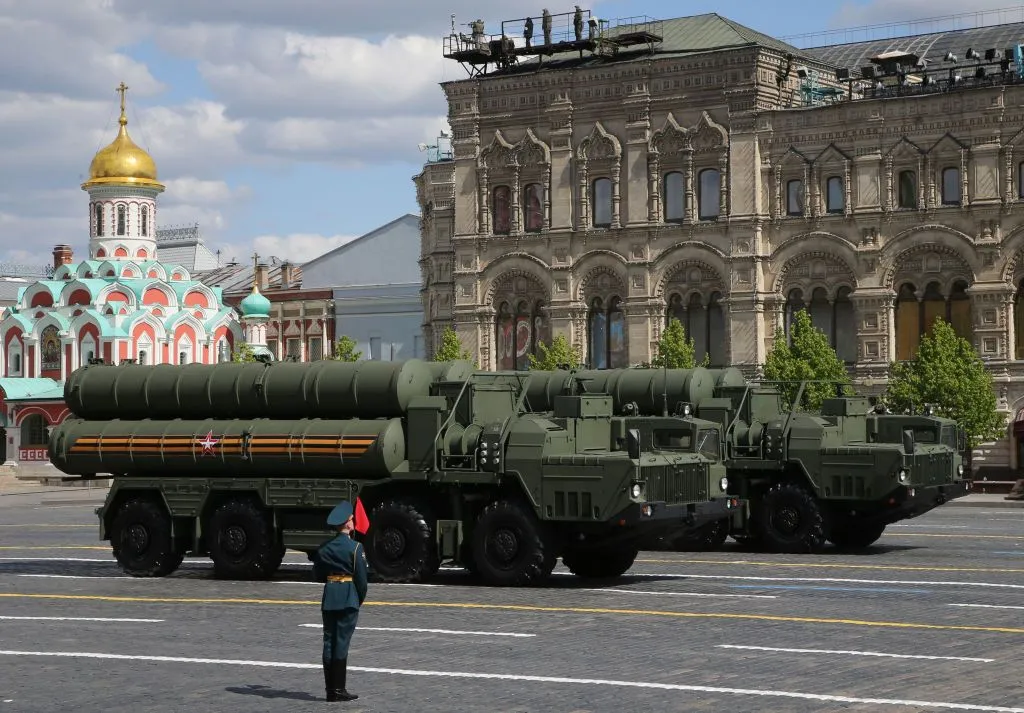
Fire Point isn't starting from scratch. The FP-7.X is a reverse-engineered design modelled on the S-400 missile, which first began development in the 1980s in the Soviet Union.
"We created a clone of the S-400, which we named the FP-7. It's made of carbon fiber, so it's lighter; therefore, it will likely fly even further and be more maneuverable than the S-400," he said. Other components of the Freya system, such as the radars and command centers, Fire Point plans to source from Europe, according to Shtilierman.
Despite the apparently successful test, independent experts aren't convinced. Fabian Hoffman, a senior research fellow at the Norwegian Institute for Defence Studies, told the Kyiv Independent he was "very skeptical" that Fire Point could create an effective ballistic missile defense system that could rival the Patriot for effectiveness, especially on such an ambitious timescale.
"MBDA has decades of experience with SAMP/T, and we see that the performance is nowhere close to Patriot. If you are telling me that a new manufacturer with no air defense experience at all is going to develop a ballistic missile defense system within a very short time that approaches Patriot in effectiveness, you have to explain to me how you are going to do it," Hoffman told the Kyiv Independent.
A senior Ukrainian Air Force officer, speaking to the Kyiv Independent on condition of anonymity, shared Hoffman's scepticism. "Building a missile capable of intercepting ballistic missiles is extremely difficult," the officer said, adding that they found it "hard to believe" that Ukraine could develop such a system within a reasonable timescale.
Fire Point did not respond to a request for comment.
Despite the skepticism, both the Ukrainian Air Force officer and Hoffman believe Fire Point's decision to collaborate with other European defense concerns is a smart move.
"Fire Point's decision to cooperate with outside partners is a point in their favor," Hoffman said.
Editor's note: An incomplete draft of this article was inadvertently published on June 15. It was removed shortly thereafter, revised by editors, and republished in its final form.
Note from an author
This is Jimmy Rushton, the author of this piece. Like me, the majority of The Kyiv Independent's journalists live in Ukraine, in cities that are routinely targeted by large-scale Russian missile bombardments. To support our journalism, please consider becoming a member of our community.