'They attack with everything at once' — How Russia exploits Ukraine's vulnerability to ballistic missiles
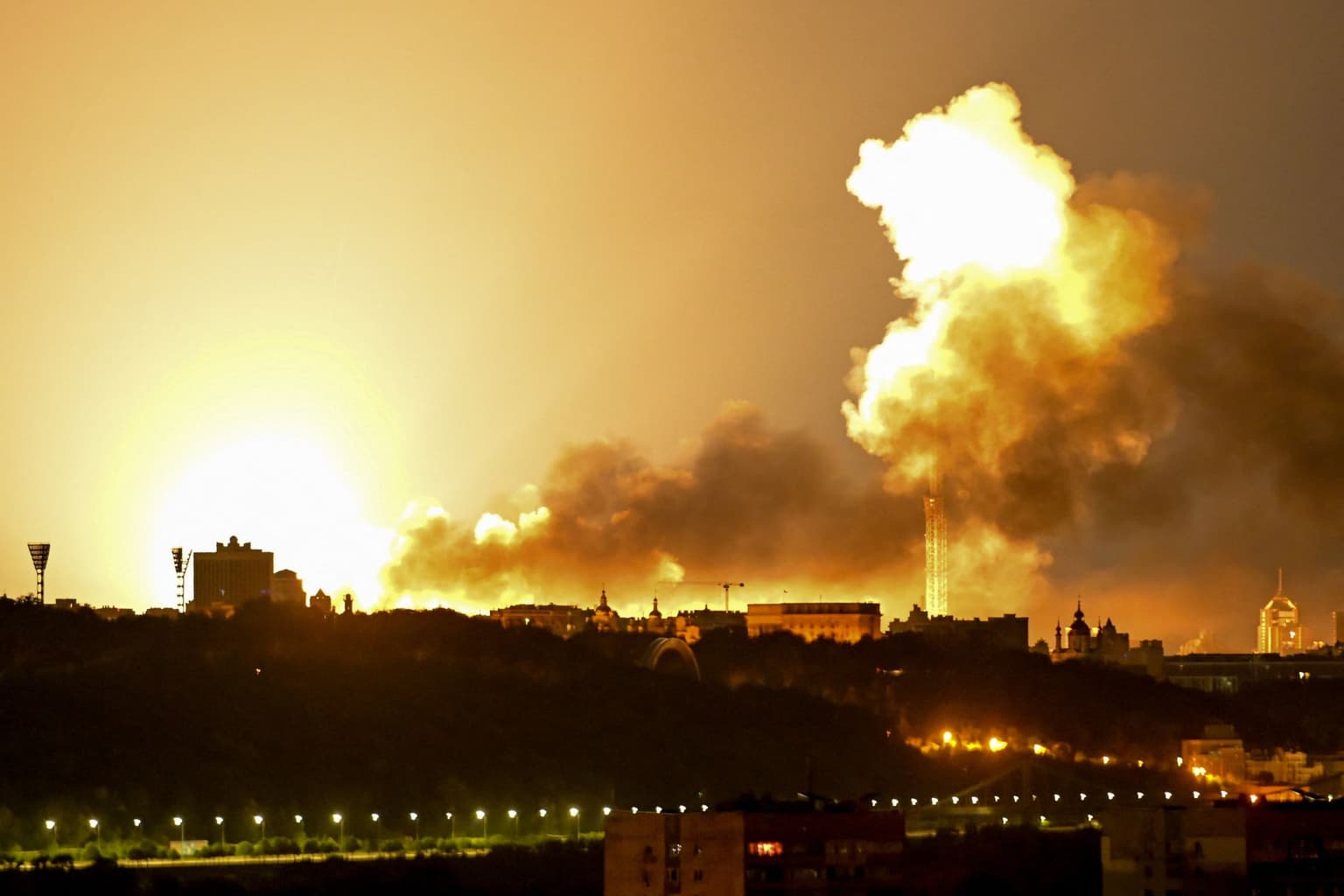
An explosion lights up the sky during a Russian drone and missile attack in Kyiv, Ukraine, on June 2, 2026. (Eugene Kotenko / AFP / Getty Images)
 on Google
On June 2, Russia carried out its largest ballistic and hypersonic missile attack of the year. On June 15, it nearly surpassed that record.
The attacks point to a disturbing change in tactics: The Kremlin may be refining a new model of strikes on Ukrainian cities, relying on concentrated salvos of ballistic and hypersonic missiles to inflict maximum damage as Ukraine faces a growing shortage of Patriot interceptors.
The two mass strikes in June followed a similar pattern. Russia launched more than 600 drones and around 70 missiles. Both attacks relied heavily on ballistic and hypersonic missiles and were directed primarily at Kyiv.
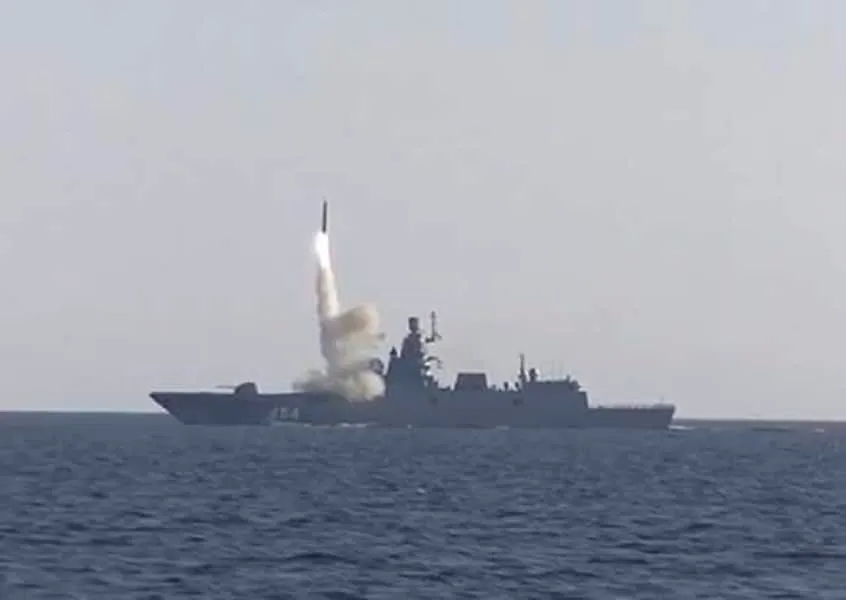
The June 2 strike also marked the largest simultaneous use of Zircon missiles during the full-scale war, with eight launched in a single attack. Two weeks later, Russia again aimed every Zircon missile used in the attack at the Ukrainian capital, alongside up to 19 ballistic missiles.
Both the types of weapons deployed and the chosen targets reflect Russia's changing approach.
"In 2022, cruise missiles made up roughly 70-80% of Russia's missile attacks, while ballistic missiles played a much smaller role," aviation expert Kostiantyn Kryvolap told the Kyiv Independent. "Now this has changed, and Russia is placing all its bets on ballistic missiles. And cruise missiles have transformed from a means of delivering strikes into a tool for exhausting air defense."
Colonel Yurii Ihnat, head of the Communications Department of the Ukrainian Air Force, said the latest attacks also stood out for their concentration of different weapons against a single target.
"They choose one target — Kyiv, Odesa, Dnipro, or a city in western Ukraine — and attack it with every available weapon at once," Ihnat told the Kyiv Independent.
According to Ihnat, Russia increasingly combines Shahed drones, including jet-powered variants, as well as Gerbera and Parodiya decoys, alongside ballistic and cruise missiles, anti-ship missiles, and other aerial threats.
"They all fly at different speeds and altitudes. When all these means are directed at one location at one time, it significantly complicates decision-making," he said.
read also
Has Russia increased ballistic missile production?
The increased use of ballistic missiles in recent attacks has raised a new question: Has Russia expanded its missile production?
Russia's production of Iskander-M ballistic missiles has remained relatively stable at around 55-60 missiles per month. In 2026, Moscow plans to produce up to 700 9M723 Iskander-M ballistic missiles, roughly the same number as last year, Ukrainska Pravda reported on June 4, citing Ukraine's military intelligence agency (HUR).

Kryvolap said Russia produced only around 20-30 Iskander-M missiles per month in 2022. Over the course of the full-scale war, output grew to around 60 missiles per month.
According to Kryvolap, Ukrainian strikes on Russia's missile production infrastructure temporarily reduced output by between 25% and 40%, though Moscow later partially restored production by redistributing the manufacture of certain components to other enterprises.
"Now they appear to have returned to around 55 missiles per month. I think this is their maximum capacity. The fact that they are launching more than they produce means they have some stockpile," he said.
Why is Russia using more ballistic missiles?
Ihnat argues that the surge in ballistic missile use reflects another development: Ukraine has become more effective at countering Russia's primary weapon of aerial terror — attack drones.
According to the Defense Ministry, Ukraine's drone interception rate is now close to 90% and has reached 92-95% on some days. On April 1, for example, Russia launched 700 drones in a single day, and nearly 92% were intercepted or suppressed. Meanwhile, Ukraine's interception rate for Shahed-type and other drones remained at nearly 91% throughout May.
Missile interception rates, however, are much lower. In April, Ukraine intercepted more than 63% of cruise and ballistic missiles. In May, that figure dropped to just over 53%, the Defense Ministry said.
"The Russians see that we have adapted to drones, so they are adapting too. The strategy remains the same — to overload Ukrainian air defenses using different means of attack and increase the chances that some of them reach their targets," Ihnat said.
Still, Ihnat stressed that drones remain Russia's primary strike weapon.
"If they had unlimited capabilities, they would launch 20 Zircons at once. But they have limitations too," he added.
Can Ukraine stop ballistic missile attacks?
Ballistic missiles are especially difficult for Ukraine's air defenses to counter. Unlike drones and most cruise missiles, they can only reliably be intercepted by U.S.-made Patriot systems.
Ukraine has acknowledged a serious shortage of anti-ballistic missile interceptors and remains heavily dependent on Western supplies. The shortage has become a global problem as demand for Patriot missiles has surged amid conflicts in Ukraine and the Middle East.
"After every mass attack, we immediately have to look to our partners for the next batch of missiles to repel the next strike," Ihnat said.

President Volodymyr Zelensky made a similar point after Russia's June 15 attack, revealing that Ukraine had already used a recently delivered batch of Patriot interceptors: "Now, after we have used them, I can talk about it."
"Ukraine has adapted by dispersing air-defense assets, redeploying and repairing Patriot systems, using decoys to improve their survivability, and increasingly relying on electronic warfare, mobile fire groups, helicopters, and drone-based air defenses. But without interceptor missiles, even the best defensive tactics have their limits," Ihnat said.
Intercepting ballistic missiles has become "extremely difficult" due to shortages of Patriot interceptors, an Air Force pilot involved in Kyiv's layered air defense told the Kyiv Independent on condition of anonymity.
According to the pilot, there is an alternative approach that relies on electronic warfare to disrupt a missile's guidance and cause it to miss its intended target. However, the missile still has to come down somewhere.
"They won't hit their original targets, but it comes at a cost because they will fall over cities, so it is not a proper solution," he said.
'For their own people'
The particular sites damaged during the June attacks have further fueled questions about Russia's objectives.
Among the damaged sites were the Kyiv Pechersk Lavra, the Dovzhenko Film Studio in Kyiv, the House of Organ and Chamber Music in Dnipro, and the Kharkiv Art Museum. Nova Poshta facilities in several cities have also been repeatedly attacked.


Kryvolap noted that military targets are usually struck separately, with one or two unexpected missile launches, rather than in mass attacks on cities. He believes Russia's strikes on cultural sites were aimed at creating highly visible damage for one specific audience.
"I don't think the latest attack was even for Kyiv or for Ukrainians. I think it was for their own people — to show that Putin is still capable of something, considering the interesting political processes unfolding inside Russia," Kryvolap said.
Indeed, speaking on June 19, Kremlin spokesperson Dmitry Peskov urged Russians to watch footage of Russian strikes on Ukraine, describing the videos as "impressive."
"Look for more footage from various Ukrainian cities. The footage is impressive in terms of the results of our armed forces' strikes. These strikes will continue," Peskov said.
Peskov's words hint at the paranoia beneath Moscow's boasting. While the Kremlin's maximalist goals for ending the war remain unchanged, the war itself is changing. Ukrainian long-range strikes are bringing the war home to Russia, and Putin's ratings are falling. Against this backdrop, Putin has appeared in public more often and commented more frequently on the war, trying to project an image of control.
"With this strike, he is showing that Russia is still capable of something," Kryvolap said. "And perhaps also sending another message: if we can't make the Lavra ours, then it won't be Ukrainian either."