Ukraine war latest: Russia strikes Dnipro railway station again, day after attack killed 15
 on Google

Key developments on Oct. 30:
- Russia strikes Dnipro railway station again, day after attack killed 15
- Evacuation convoys from Russian-occupied Oleshky split toward Ukraine and Russia, officials say
- Ukraine destroys Iskander-M missile launcher in Russia's Kursk Oblast, General Staff says
- Russia has damaged more than 800 Ukrainian energy assets since September
- Russian deputy PM confirms strikes on 3 refineries, gas-chemical complex
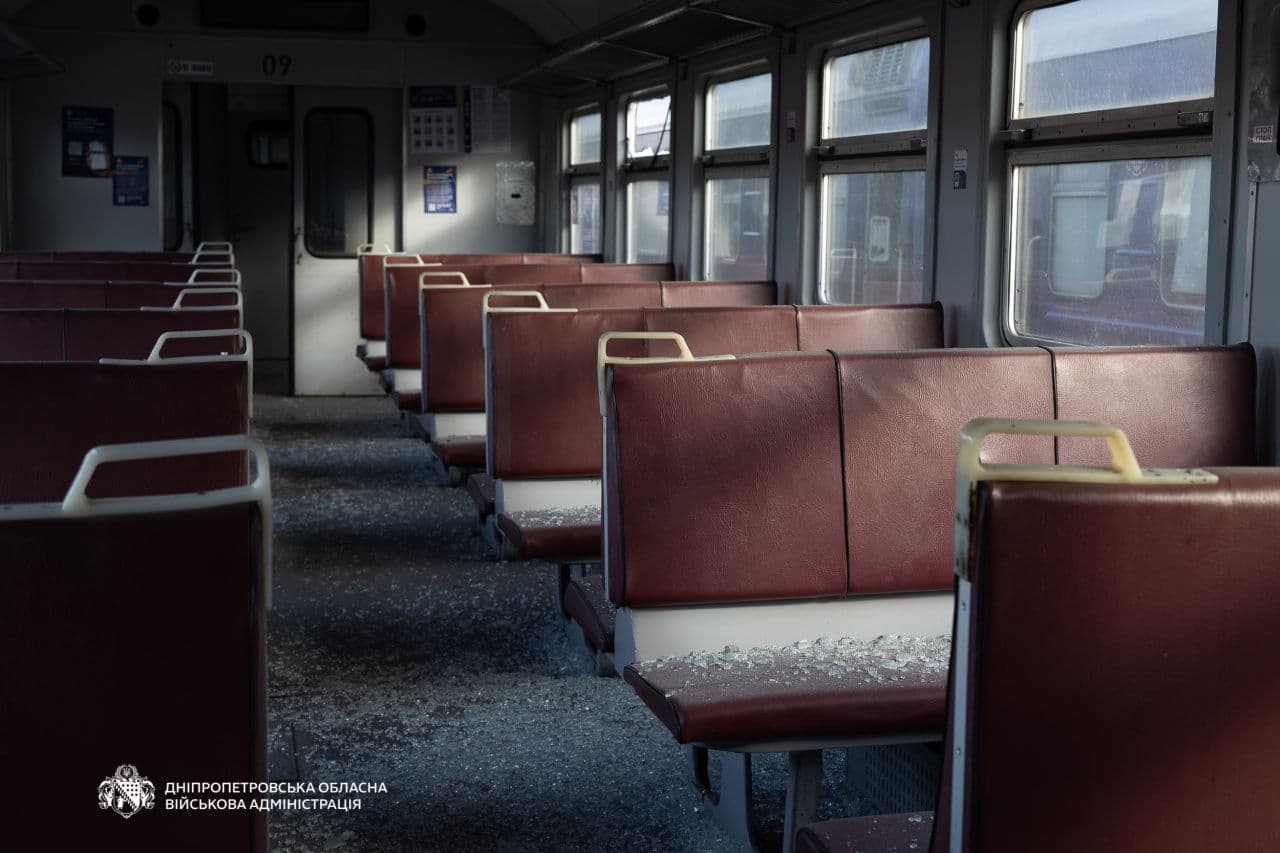
Russian forces launched new strikes on the railway station in Dnipro on Oct. 30, Ukrainian Railways (Ukrzaliznytsia) reported.
Dnipropetrovsk Oblast Governor Oleksandr Hanzha said that a fire had broken out at the station and that a woman had been injured.
The station came under attack for the second day in a row, after a Russian drone strike on Oct. 29 killed 15 people and injured 14 others.
Ukrzaliznytsia said an evacuation had been announced ahead of the strikes. The company added that areas for extended stays had been set up in the station's underground facilities to accommodate passengers sheltering from the attacks.
Ukrzaliznytsia warned that trains arriving in and departing from Dnipro could face significant delays due to repeated Russian attacks on the station and locomotives.
Evacuation convoys from Russian-occupied Oleshky split toward Ukraine and Russia, officials say
Evacuation convoys carrying residents of Russian-occupied Oleshky in Kherson Oblast have separated, with some heading toward Ukrainian-controlled territory and others toward Russia, Ukrainian and Russian officials said on Oct. 30.
Ukraine's Human Rights Ombudsman Dmytro Lubinets said he was continuing to personally coordinate the humanitarian mission and was heading back to Ukrainian-controlled territory.
Earlier, Russia's Commissioner for Human Rights Yana Lantratova said that buses carrying evacuees had reached Armiansk in Russian-occupied Crimea, where they were to split into two convoys.
The Ukrainian delegation had traveled to Oleshky via Anapa in Russia's Krasnodar Krai, from where they reportedly flew to Belarus before continuing by bus to Ukrainian-controlled territory, David Arakhamia, head of President Volodymyr Zelensky's parliamentary faction, said earlier on Oct. 30.
Oleshky has been under Russian occupation since the early days of Russia's full-scale invasion. Located across the Dnipro River from Kherson, the city has been effectively blockaded by Russian forces, which have prevented humanitarian aid from reaching residents.
Residents have faced severe shortages of food, water, and electricity. Mined roads and constant drone attacks have made safe evacuation virtually impossible, and civilians trying to flee on the only roads in and out of the city have frequently been targeted by drones.
Despite efforts by the United Nations, the International Committee of the Red Cross (ICRC), and even Pope Leo XIV, a ceasefire agreement has only come about since the intervention of Melania Trump.
Twenty-five buses with a combined capacity of 750 passengers, along with ambulances for people with limited mobility, had been prepared to evacuate residents from Russian-occupied Oleshky in Kherson Oblast, Lubinets said.
Lubinets's statement came amid reports that Russia had begun evacuating residents ahead of the agreed date.
"Everyone who wishes to leave Oleshky will be given the opportunity to leave safely. At the same time, those who have decided to stay can stay and will receive all the necessary humanitarian support," Lubinets said.
Lubinets and Russia's Commissioner for Human Rights Yana Lantratova held a joint press briefing in Armiansk, Russian-occupied Crimea, ahead of the evacuation from Oleshky.
Lubinets said the Ukrainian and Russian delegations were accompanied by media representatives from three countries. However, photos published by Ukraine's Ombudsman's Office show predominantly Russian media outlets.
Around 11:30 a.m. Kyiv time, the Ukrainian delegation had safely reached Oleshky, and the ceasefire had been in effect for 80 hours and was still holding, Lubinets said.
Lubinets added that he was speaking with local residents to hear about their needs and understand what kind of assistance they required most.
Arakhamia said around noon that humanitarian aid had been delivered to Oleshky and that "technical support" was being provided to those wishing to evacuate.
Lantratova also confirmed on social media that the evacuation from Oleshky had begun, with people gradually boarding buses. She added that some residents wanted to travel to Russia, while others wished to go to Ukrainian-controlled territory, without specifying how many people were in each group.
Following the separation of the convoys, Lubinets proposed making humanitarian missions coordinated by U.S. First Lady Melania Trump a regular initiative, saying the operation in Oleshky demonstrated that such agreements could help civilians.
Ukraine destroys Iskander-M missile launcher in Russia's Kursk Oblast, General Staff says
Ukrainian forces struck an Iskander-M missile launcher in Russia's Kursk Oblast, along with several ammunition depots and repair facilities in Russian-occupied Ukrainian territories between Oct. 29 and Oct. 30, the General Staff said.
Ukraine struck the missile launcher near the town of Fatezh, at a site used to reload ballistic missiles, the General Staff said.
The Iskander-M is a short-range ballistic missile system that Russia uses to attack Ukrainian cities. During its overnight attack on Oct. 30, Russia launched ballistic missiles from Voronezh, Kursk, and Bryansk oblasts as part of a combined assault that mainly targeted Kyiv, Poltava, and Dnipropetrovsk oblasts, Ukraine's Air Force said.
President Volodymyr Zelensky said on Aug. 5 that Ukrainian forces would prioritize strikes on Russian missile launchers as Moscow steps up its use of ballistic missiles. Zelensky also said international deliveries of air-defense interceptors to Ukraine had fallen threefold from 2025 levels.
Ukraine's military also reported strikes on Russian ammunition depots in the occupied parts of Donetsk, Kharkiv, and Luhansk oblasts.
Ukrainian forces hit several other Russian military targets in occupied Luhansk Oblast, including a logistics depot near Bilovodsk, a repair unit near Rubizhne, and a repair and recovery base near Pysarivka, the General Staff said on Oct. 30.
The General Staff did not specify which weapons were used in the strikes.
The Kyiv Independent could not independently verify the extent of the damage.
Zelensky said on Oct. 29 that Ukraine had carried out two missile strikes, destroying an Iskander-M missile launcher and two Russian Su-34 fighter-bomber jets.
On Oct. 29, Ukraine's Navy also struck two Russian Su-34 fighter-bomber jets at the Marinovka military airfield in Russia's Volgograd Oblast using domestically produced Neptune missiles, the Navy reported.
Russia has damaged more than 800 Ukrainian energy assets since September
Russia has carried out more than 350 attacks on Ukraine’s energy infrastructure since September, damaging more than 800 pieces of equipment, Energy Minister Denys Shmyhal said on Friday.
The strikes are increasing pressure on the country’s power system as the heating season approaches. Ukraine is stepping up efforts to protect energy facilities while expanding generation capacity to reduce the impact of further attacks on an already crippled system after years of Russian missile and drone attacks.
Speaking during a question-and-answer session with the government in parliament, Shmyhal said the damaged equipment included facilities at substations and power generation sites.
He said a second level of physical protection had been built for 235 transformers. According to the minister, only one piece of protected equipment had been hit by a ballistic missile over the past six months.
"Without this protection, restoring energy facilities under the current intensity of Russian attacks would take months," Shmyhal said.
Alongside protecting existing infrastructure, Ukraine is working to expand its electricity generation capacity through smaller, decentralized power plants.
On Oct. 29, the government approved the mechanism and terms for providing almost Hr 939 million ($20 million) in loan financing from the Finnish-Ukrainian Investment Fund to state-owned energy company Ukrnafta.
The funding will support four projects to install gas-engine power plants in the western Ivano-Frankivsk and Lviv oblasts, adding around 60 megawatts of capacity to Ukraine’s power system, Shmyhal reported.
The money will cover the purchase of the power plants and related equipment, as well as installation, testing and commissioning. The loans were raised for Ukraine’s state budget under a framework agreement between the Ukrainian and Finnish governments signed in November 2024.
The projects are part of broader efforts to develop distributed generation, spreading electricity production across multiple locations rather than relying solely on large power plants.
Russian deputy PM confirms strikes on 3 refineries, gas-chemical complex
Russian Deputy Prime Minister Alexander Novak said Ukraine had attacked three Russian oil refineries and a gas-chemical complex on Oct. 30, Russian state news agency TASS reported.
"Today, there was another attack on Russian refineries, four processing plants. More precisely, three refineries and one gas-chemical complex. There was minor damage at one plant, but overall, our defense system, the air defense system, worked," Novak said, without specifying the locations of the facilities.
"We had a brief pause, but today, attacks on refineries have resumed, and our facilities are working to protect themselves," he added.
Kyiv had not commented on the reported strike at the time of publication.
The Kyiv Independent could not independently verify the footage or establish the extent of the damage.
Earlier, a fire broke out at the Novokuybyshevsk Oil Refinery in Russia's Samara Oblast overnight on Oct. 30.
The Ukrainian monitoring channel Exilenova+ published photos and videos submitted by local residents that appear to show fires burning in the area around the refinery, alongside reports of drones flying overhead.
Ukrainian defense company Fire Point said Ukrainian forces used its FP-1 drones to strike the Novokuybyshevsk refinery, with multiple hits reported across the facility, including its diesel hydrotreating unit.
Schemes, an investigative journalism project by Radio Free Europe's Ukrainian service, shared a satellite image of the Novokuybyshevsk refinery taken on Oct. 30. The image shows a large fire still burning at the facility, with thick black smoke covering much of the surrounding area.
"We are repelling an attack by the Ukrainian Armed Forces on our territory. Air defense and mobile fire teams are operating. Remain calm and remain in a safe place," Samara Oblast Governor Vyacheslav Fedorishchev said.
The governor did not specify which facilities in the city were targeted.
Fedorishchev later said that two people died in Samara Oblast while clearing up the aftermath of the drone attack.
Monitoring channels have described the reported attack as a "resumption of strikes," as it appears to be the first such attack following an unofficial pause in Ukraine's campaign against Russian oil refineries that began in mid-October.