The foreign influencers helping Russia sell its occupation
Invited on an all-expenses-paid trip to occupied Ukraine, young visitors were given a carefully curated view of life under Russian rule — and encouraged to share it with the world.
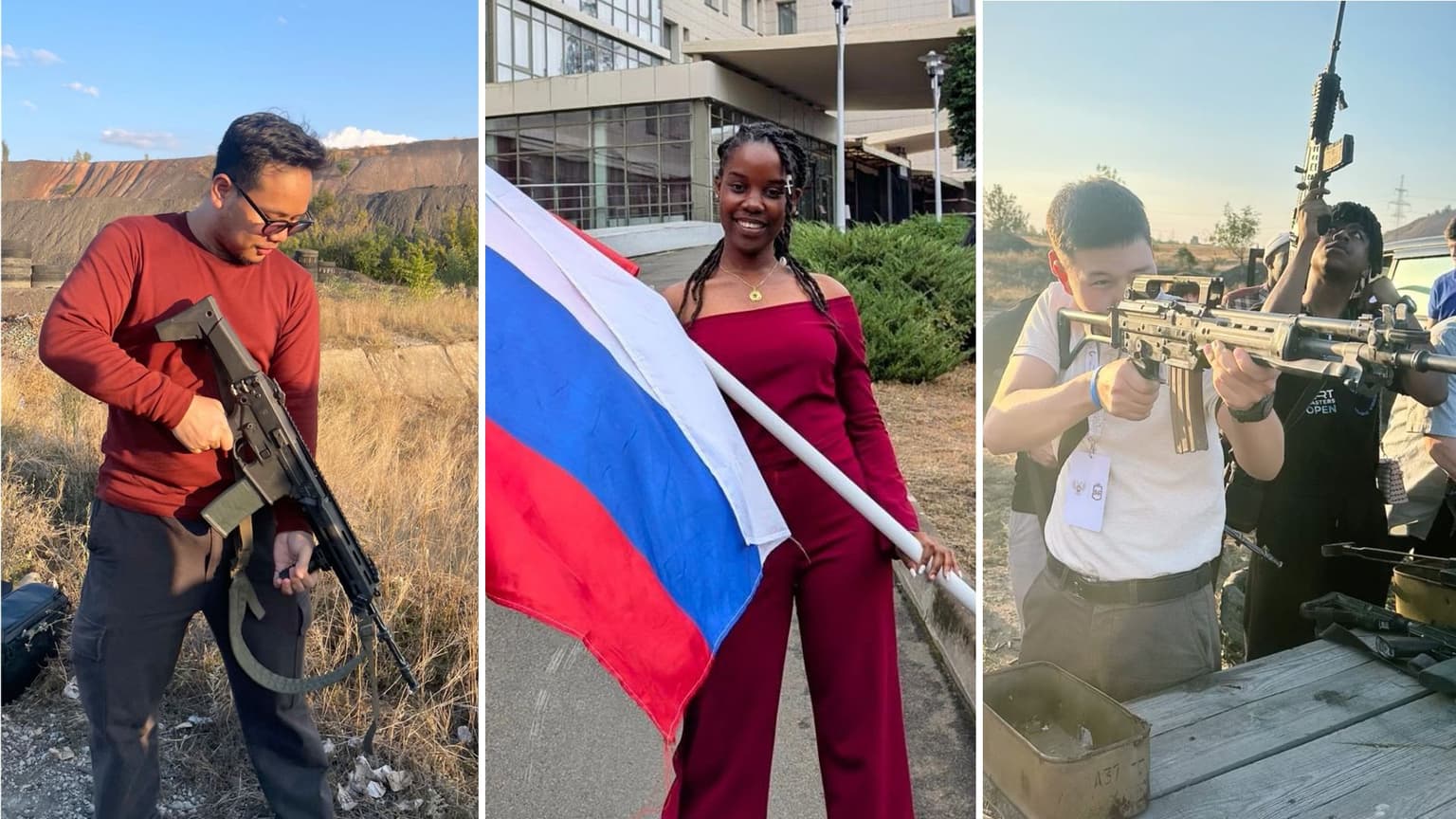
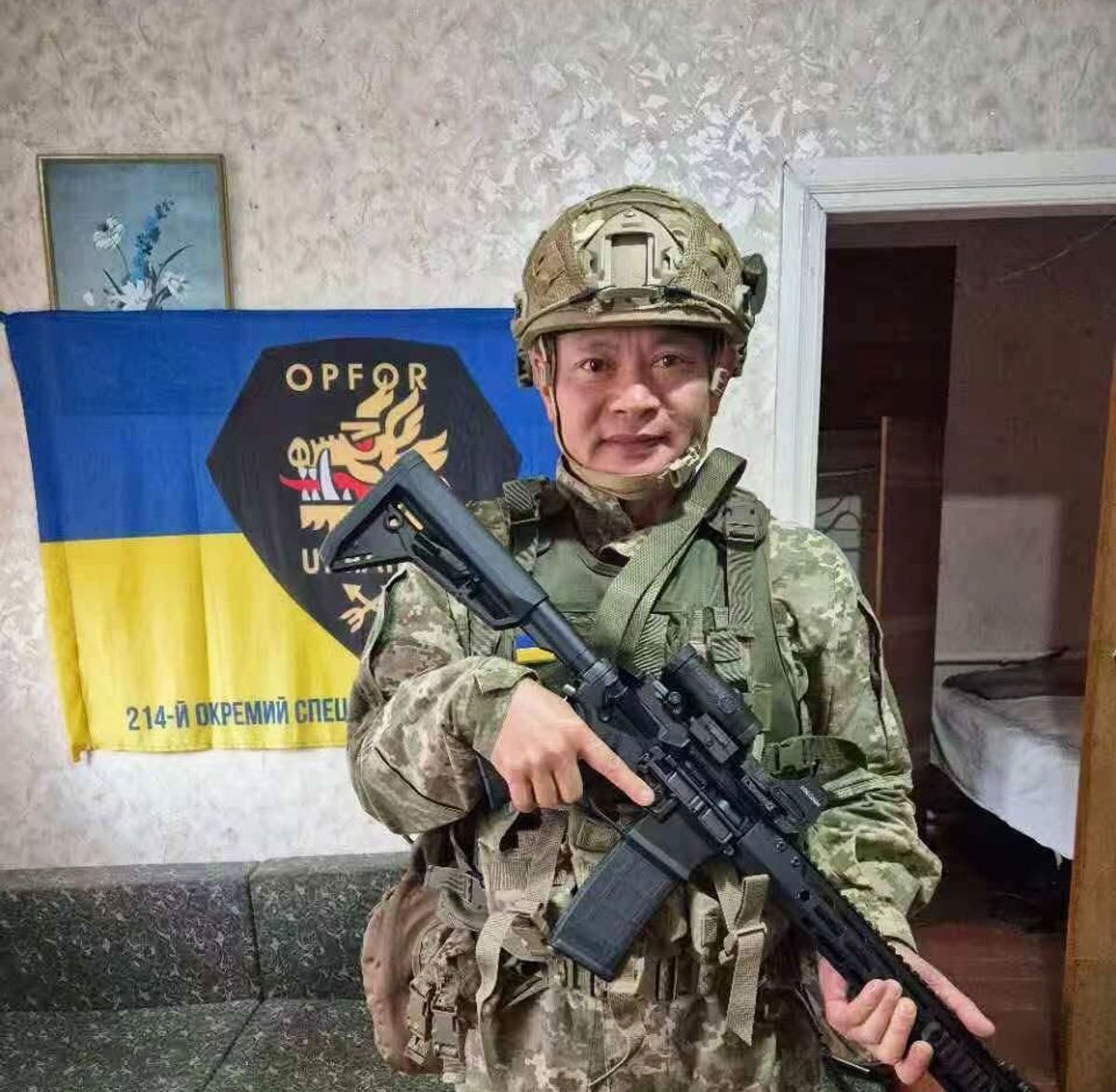
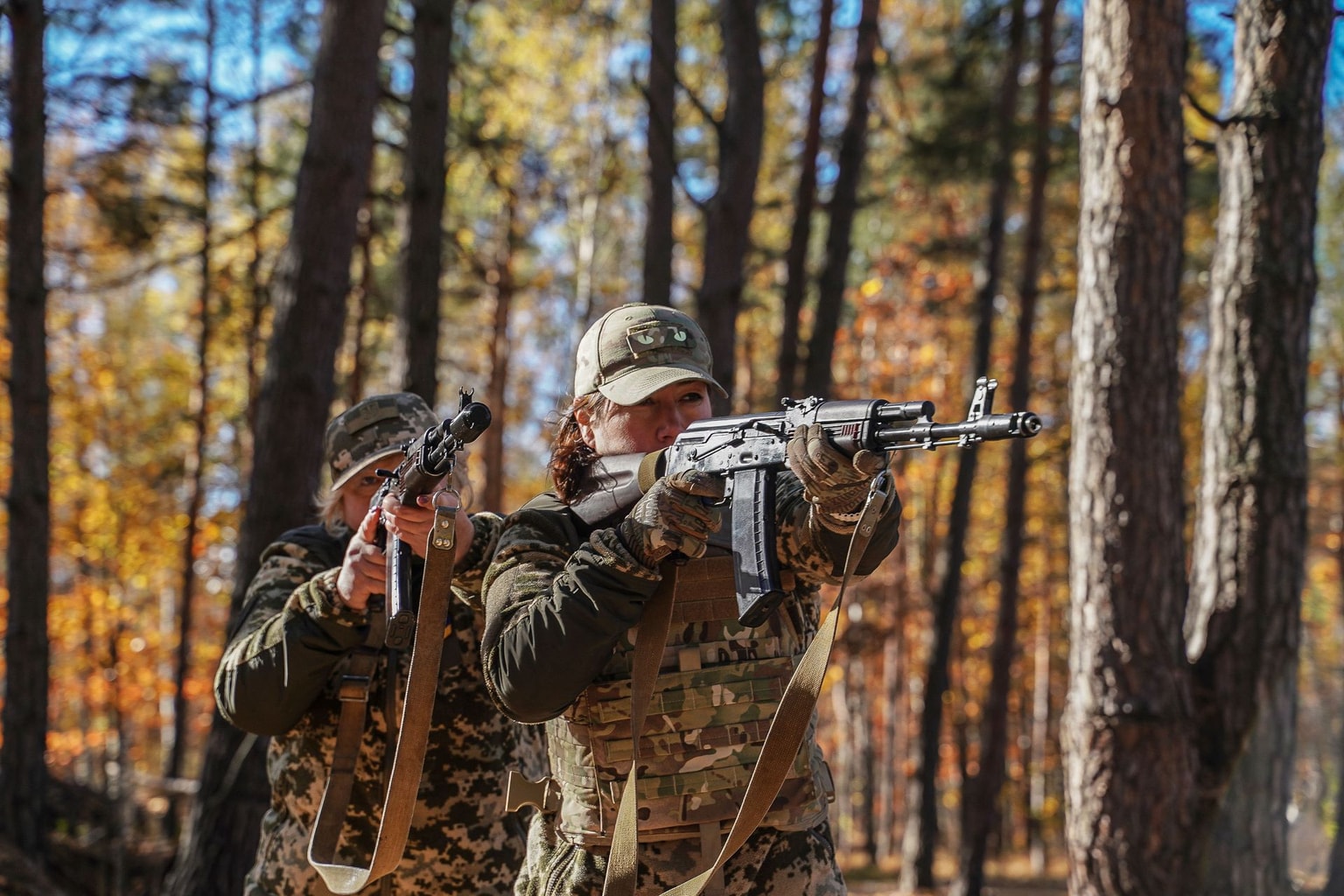
L, R: Nor Arif Prastyo, a delegate from Indonesia, and (R) Baiel Abdybekov of Kyrgyzstan and Peter Vesko of South Africa hold rifles at a shooting range in Russian-occupied Donetsk Oblast, Ukraine, in September 2026. C: Eclat Allan, a participant from Tanzania, holds a Russian flag. (Nor Arif Prastyo / Instagram, Eclat Allan / Instagram, Baiel Abdybekov / Instagram)
 on Google
On the social media accounts of a group of young foreign visitors touring the Russian-occupied part of Donetsk Oblast, the war-ravaged region is presented as an appealing travel destination.
In Instagram videos, the visitors release white doves — symbols of peace — into the sky and stroll through the Mariupol Drama Theater, rebuilt after Russian forces destroyed it during the 2022 siege. But their next stop is a shooting range, puncturing the fragile illusion of peace they have carefully constructed.


"First time ever holding a gun and the only instruction I got was in Russian, also didn't expect the recoil to hit THIS hard," Indonesian law graduate Nor Arif Prastyo wrote under a photo of himself with a rifle.
Prastyo was one of 15 young people from Africa, Asia, Latin America, and Europe brought to the partially occupied region as guests of the International Festival of Youth, a Russian state-backed event held in mid-September as a revival of a Soviet-era tradition.
The tour of Russian-occupied parts of Ukraine's Donetsk Oblast offered visitors a carefully staged portrayal of life under Russian rule. Experts told the Kyiv Independent that the visit was part of a broader effort to whitewash Russia’s international image, legitimize its occupation and turn the visitors into unwitting amplifiers of Russian propaganda.
Russia first seized parts of Donetsk Oblast, including the regional capital of Donetsk, in 2014. Following the launch of its full-scale invasion in 2022, Russian forces occupied additional cities across the region, including Mariupol.

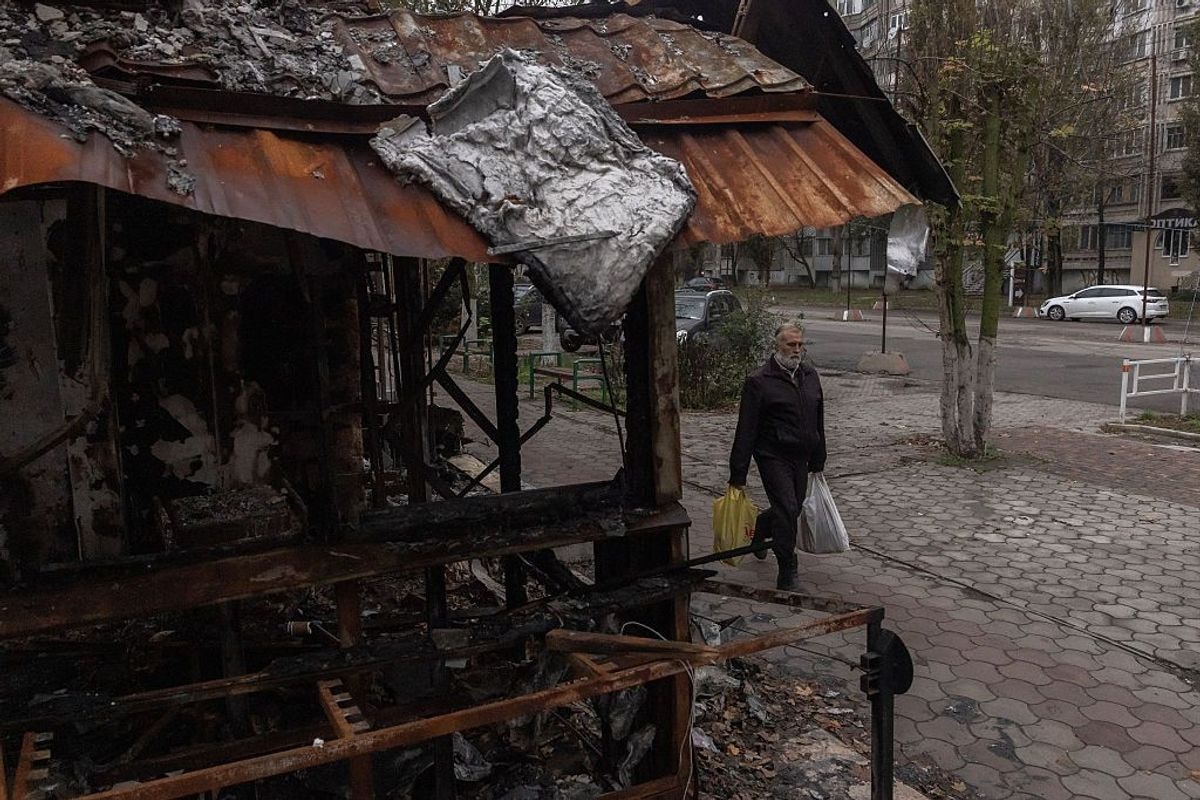
The region remains devastated, and the occupied territories are ranked as the least free places in the world.
But social media posts of the young foreigners Russia took to Donetsk Oblast present the occupied territories as welcoming and thriving. They also ignore Russia's repression and its responsibility for the devastation of cities and the deaths of thousands of civilians.
The Kyiv Independent analyzed social media posts, obtained the program's itinerary, and spoke with a source with direct knowledge of the program to examine what the participants' accounts leave out.

Russia’s friendship show with 10,000 guest
The International Festival of Youth is funded by the Russian state and organized primarily by the Federal Agency for Youth Affairs, a state body also known as Rosmolodezh.
For 2026, the Russian World Youth Festival Directorate, which runs the event, was allocated 4.7 billion rubles ($57 million), nearly five times its funding the year before, independent Russian outlet Agentstvo reported, citing the federal budget.
"Consider it a quid pro quo: they get to travel to Russia for free, but they must only say good things about Russia."
In its promotional materials, the festival says its mission is to help shape "a multipolar world" — a term the Kremlin uses to describe a global order that limits Western dominance and gives Russia a greater role in international affairs.
This year's main event in Yekaterinburg brought together around 10,000 participants, half of them from abroad, according to the organizers.
Much of the festival centered on entertainment, with concerts, folk shows, and a performance featuring more than 1,000 artists. Woven into it was a political message.
Russian President Vladimir Putin addressed the opening ceremony online on Sept. 13, and his speech made its way onto delegates' social media, with footage of them posing with their national flags in front of the screen.

Russia’s approach has remained the same in recent years, said Andrey Makarychev, a professor of regional political studies at the University of Tartu in Estonia.
The Kremlin uses such cultural events to "demonstrate the futility of Western attempts to isolate and sanction Russia, to culturally integrate into the so-called 'global majority' (the global South), and to normalize the ongoing war," he told the Kyiv Independent.
Guests could also visit an exhibition on "Ukrainian neo-Nazism," translated into seven languages, including Arabic, Chinese, and Spanish, Russian state media reported. Displayed at the exhibition was a quote by Putin claiming that Ukrainian statehood is built on neo-Nazi ideology.
The claim has been a staple of Russian propaganda since 2014 and has served as a pretext for the full-scale invasion. The claim has been debunked on multiple occasions, with far-right parties winning less than 2% of the vote in Ukraine's 2019 parliamentary election, and failing to enter parliament.
Touring the occupation
To be selected for the festival, candidates had to record a video introduction and write an essay. Organizers favored applicants who were active on social media and could create content for their audiences, a source with direct knowledge of the program told the Kyiv Independent, who spoke on condition of anonymity due to safety concerns.
Most participants paid nothing for the trip. According to the festival's promotion materials, organizers covered flights, accommodation, and food. Some participants with partially funded spots had to pay for their flight tickets.
"Consider it a quid pro quo: they get to travel to Russia for free, but they must only say good things about Russia," the source said.
After four days in Yekaterinburg, participants split into smaller groups for regional programs, including in the occupied part of Donetsk Oblast and in Abkhazia, a Russian-occupied region of Georgia.
The delegation that traveled to occupied parts of Donetsk Oblast included participants from Tanzania, Indonesia, South Africa, Uzbekistan, Brazil, Serbia, and India.
"The group was taken to the Mariupol Drama Theater, which Russia rebuilt after its air strike in March 2022 killed civilians sheltering inside. Amnesty International concluded the attack was a war crime."
Baiel Abdybekov, a participant from Kyrgyzstan, told the Kyiv Independent he had not independently chosen a destination and was sent to certain locations by the organizers.
Entering occupied Ukrainian territory through Russia is illegal under Ukrainian law. In 2023, after a group of Chinese bloggers visited occupied Mariupol, Ukraine's Foreign Ministry moved to ban them from entering Ukraine.
Over five days, the youth festival delegation visited Donetsk, the nearby city of Makiivka, and Mariupol. Several participants later posted on Instagram the flag used by Russian proxies and occupation authorities in Donetsk Oblast.
The group was taken to the Mariupol Drama Theater, which Russia rebuilt after its air strike in March 2022 killed civilians sheltering inside. Amnesty International concluded the attack was a war crime.
None of that was featured in the participants' accounts of the visit.

"I strongly recommend visiting this city, which went through the most severe situations and endured," Radmir Hamdamov, a musician from Uzbekistan, was quoted as saying by the Russian-installed culture authorities in occupied Donetsk.
The said "situations" were a nearly three-month Russian siege that killed at least thousands of civilians and left much of Mariupol in ruins.
In Mariupol, the group met Anton Koltsov, head of the Russian occupation authorities in the city, while in occupied Donetsk, they attended a lecture on the region's history at a university run by the occupation authorities.

Members of the group also fired guns at a shooting range and shared drinks and food with men in camouflage wearing military patches.
"Welcome to the Donetsk People's Republic, a land where Russia’s industrial heart beats to the rhythm of modern transformation," reads a trip guide obtained by the Kyiv Independent, using Russia's term for Ukraine's Donetsk Oblast.
The guide lists stops at sites central to Russia's propaganda narrative, including the "Russia — My History" historical park and the Savur-Mohyla memorial, a Soviet World War II monument heavily damaged during the 2014 fighting and rebuilt by Russia in 2022.

Moscow now uses the memorial to cast its war against Ukraine as a continuation of the Soviet fight against Nazi Germany.
The itinerary also included a welcome breakfast with the occupation authorities' youth department head, with "regional television channels" present.
On the way back, a drone narrowly missed a car carrying participants, the source told the Kyiv Independent. One participant was allegedly so shaken that he cried upon arrival. The incident could not be independently verified, and none of the participants' posts mentioned it.
Whitewashing Russia
The visitors are not meant to be only passive observers.
The guide includes sessions on creating social media posts. On its final page, it urges participants to share "short videos, reels, stories, and photo carousel posts" using official hashtags, promising that "the best posts will be featured" on the organizers' channels.
"The point is distribution, so the content looks like independent foreign journalism rather than Russian state media."
Most participants did just that, posting extensively about the trip in reels, posts, and stories saved to their highlights.
"Dear Russia… you've successfully, effortlessly stolen my heart," Eclat Allan, a participant from Tanzania, wrote under a photo of herself smiling in front of displayed artillery and armored vehicles. She geotagged the post as "Donetsk, Russia."


Yet the same guide asks participants to avoid "discussions of sensitive topics," including politics and international conflicts.
Allan told the Kyiv Independent that she saw the festival not as political, but as a sign of "a government that is willing to heavily invest in youth."
Bringing foreigners to the occupied territories helps Moscow get its message past an "information blockade" imposed on Russia, said Jade McGlynn, professor at King's College London.
"The point is distribution, so the content looks like independent foreign journalism rather than Russian state media," she told the Kyiv Independent.
These tours stop at showpiece sites like the rebuilt Mariupol Drama Theater, McGlynn said, and "foreign voices make that picture more believable."
The content also targets audiences in Russia and occupied Ukraine: occupation newspapers run stories about foreign visitors, sending residents the message "that the world has accepted the new status quo."
Still, McGlynn said Russia’s efforts to attract international youth to the occupied territories remain "real but small," relying on visitors who are "few and hand-picked."
Abdybekov said his participation should not be seen "as support for any side of the conflict or as recognition of any particular political status of the territories."
"I took part in the trip as a young person interested in international experience, history, and culture," he said. "I maintain a neutral position."
According to McGlynn, such personal motivations matter very little, since participants must know Russia will use their attendance to justify its invasion and occupation.
"If anything, such comments are at best ignorant and at worst manipulative," she said.