Investigation: Rising hate against Ukrainians in Central Europe part of a coordinated campaign
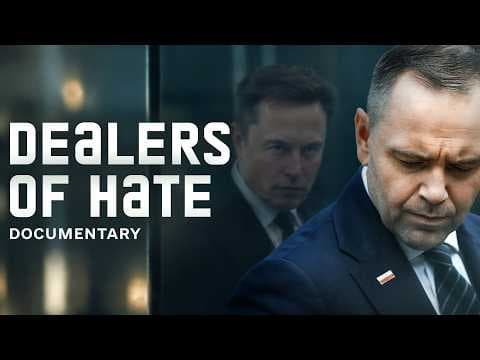
"Dealers of Hate", a documentary published by The Kyiv Independent’s War Crimes Investigations Unit. (The Kyiv Independent)
 on Google
Ukrainians in the three EU countries that have taken in the largest numbers of Ukrainian refugees are increasingly facing aggression — from insults on public transport to knife attacks. Journalists at the Kyiv Independent analyzed tens of thousands of posts on X and found that the same narratives circulating online are picked up and amplified by popular local politicians.
Editor's Note: The story is based on the documentary "Dealers of Hate," published by the Kyiv Independent's War Crimes Investigations Unit.
Left unprotected
Eva Yakubovska and Vladyslava Vorobiova have lived in Germany for nine years, where they founded the organization Vitsche. After Russia launched its full-scale invasion of Ukraine, the two began holding regular rallies in support of their home country. At these rallies, they have found not only support but, increasingly, faced aggression.
"We've seen all kinds of things at those rallies. People spat at those who came, shouted at them, and got right up in their faces, screaming at them aggressively," Vorobiova said.

In the first months of Russia's full-scale invasion, Ukrainian refugees in EU countries were met with a wave of support that began right at the border. Today, aggression against Ukrainians is increasingly common in those EU countries that have taken in the largest numbers of Ukrainian refugees — Poland, Germany, and Czechia.
On Ukraine's Independence Day, Aug. 24, 2024, as Vorobiova and Yakubovska held a rally near the Brandenburg Gate in Berlin, Vorobiova noticed a man approaching them with a knife in his hand. Yakubovska only remembers that he was shouting something about Russia.
"I thought I would protect Vlada because I'm older — I could die," she said.
When the attacker realized the activists had noticed the knife, he began cutting his arms and chest and dropped to his knees. The women called for the police over and over but received no help initially. "They didn't respond," Yakubovska said.

Although the police did eventually subdue and detain the man, it later turned out that the officers had not logged the incident. The women had to go to the police again, where they were told the attacker had a mental illness and would undergo a brief rehabilitation program.
Yakubovska and Vorobiova do not feel protected by German police, and they are not alone.
"There have been many pro-Ukrainian German activists who have ultimately decided, 'Okay, I'm not going to do this because I can't protect my family.' For example, at the beginning of the full-scale invasion, we had a head of logistics whose home was simply broken into. And the police never logged it," Yakubovska said.
'I'm afraid to speak Ukrainian'
Kateryna Lebed fled the war from Zaporizhzhia to Czechia with her young son in 2022. In Prague, she opened a laser hair-removal studio. In June 2025, she was attacked while walking through the city with a friend. Near a tram stop, a local man started shouting at the women.
"He shouted, 'Ukrainian whores!' That's the first thing I heard," Lebed said. The man blew smoke in her face, shoved her, kicked her, then grabbed her and threw her hard onto the road.

Unlike their German counterparts, Czech law enforcement reacted quickly. The attacker, Patrik Slastan, was identified, arrested, and sentenced to 20 months in prison for assaulting Lebed. He had already assaulted two Ukrainian women in Prague in 2023.
In Warsaw, Oleksandra Iwaniuk, who has lived in Poland since 2010 and teaches at the University of Warsaw, was verbally abused on a tram. She was speaking Ukrainian with a friend when a man began loudly repeating, "Russian whores."
"What struck me most was the reaction — or lack of reaction — from the other people on the tram," Iwaniuk said. In the past, she said, someone would always step in when something like this happened. "I felt like it had become normal for someone to publicly insult another person simply because of the language they speak."

"My friend stopped speaking Ukrainian to her child on public transport. I haven't, because it's really important to me that my child never sees that I'm afraid to speak Ukrainian. But the truth is I am afraid," she said.
Both Lebed and Iwaniuk wrote about these incidents on social media. In the comments under their posts, many others shared stories of anti-Ukrainian aggression on public transport, in stores, and on the streets.
Beyond the statistics
How many Ukrainians exactly fall victim to such attacks is unknown. Statistics that the Kyiv Independent requested from Germany's Federal Criminal Police Office showed that thousands of crimes against Ukrainians had been logged in the country since Feb. 24, 2022. Police classified only 139 of them as politically motivated attacks against Ukrainians, 137 of those involving physical assault.
Human rights activist Oleksandra Bienert, director of CineMova Ukrainian Empowerment Network, which collects statistics on attacks against Ukrainians, stressed that the data is far from complete. "We don't know about these cases because people don't report them or register incidents of discrimination," she said.
Seemingly minor violations of rights, such as bullying of Ukrainian children at school or refusals to book doctor's appointments for people who don't speak German, also remain outside the statistics.
In Czechia, the human rights organization In Iustitia had documented 129 anti-Ukrainian attacks since 2022 as of early 2026 — roughly half of all hate-motivated violent incidents recorded in the country. Klara Kalibova, head of In Iustitia, said the Czech Republic has never seen a wave of aggression against a particular group as intense as the one now targeting Ukrainians.
But Ukrainians often do not report incidents to the police, even in cases of outright violence. According to a study by PAQ Research cited by Kalibova, 57% of Ukrainians who arrived in Czechia have experienced verbal abuse, and 5% have experienced physical attacks. In actual figures, that is about 216,000 and 19,000 people, respectively.
Ukrainians are not the only victims of anti-Ukrainian sentiment in EU countries. In Iustitia human rights activists documented a case in which an adult man kicked and punched a 13-year-old Czech girl near her home — he had mistaken her for a Ukrainian.
Polish media reported similar cases in the summer of 2026. In Gdansk, a Polish man attacked two fellow Poles after mistaking them for Ukrainians, breaking one person's arm.
'We're not in Ukraine'
In each of the three countries, influential politicians have made grievances against Ukraine and Ukrainians part of their political agenda.
In Germany, the most prominent example is the increasingly popular Alternative for Germany (AfD). "No aid to Ukraine, no money for Ukraine, no weapons for Ukraine — and no German troops!" AfD co-chair Alice Weidel said at a rally in July 2026.
The party's other co-chair, Tino Chrupalla, regularly claims that 700,000 Ukrainians in Germany do not work and receive Buergergeld, Germany's basic welfare benefit. This claim has been repeatedly debunked by German fact-checkers and contradicted by official statistics.
About a quarter of the 700,000 people cited are children or people unable to work, and only about 200,000 able-bodied Ukrainian recipients of Buergergeld are unemployed.
Last year in Czechia, Andrej Babis repeatedly claimed that Ukrainian refugees placed an excessive burden on the state budget, including during the televised debates with then-Prime Minister Petr Fiala ahead of the 2025 parliamentary election. "We don't have enough money here for our own people," Babis said. "We're not in Ukraine… We're in the Czech Republic!" Babis won the election and became prime minister.

The Freedom and Direct Democracy party (SPD), led by Japanese-born Czech nationalist Tomio Okamura, has promoted anti-Ukrainian rhetoric since the beginning of Russia's full-scale invasion. As early as May 2022, Okamura told parliament about Ukrainian refugees, quoting a regional politician, "We're talking about people who can't write, can't read, can't even use a simple toilet or turn on an electric kettle… Obviously, they've never worked and never will."
The SPD also campaigned on explicitly anti-Ukrainian slogans in the 2025 parliamentary election, which saw Okamura emerge as speaker of the lower house of parliament. In November 2025, he made a point of removing the Ukrainian flag from the parliamentary building.
In Poland, the first sources of hate speech toward Ukrainians were far-right organizations and politicians, said Rafal Pankowski, professor at the Institute of Sociology of Civitas University in Warsaw and president of the Never Again Association (Nigdy Wiecej), a human rights organization.
Grzegorz Braun, leader of the far-right Confederation of the Polish Crown, launched the slogan "Stop the Ukrainianization of Poland!" In 2023, he was reelected to the Polish parliament, and in 2024, he was elected to the European Parliament.
"What Ukrainianization of Poland could there possibly be? Yes, it's a large group of refugees, but it's roughly 1 million people in a country of roughly 40 million, so talking about the 'Ukrainianization of Poland' is absurd," Pankowski said.
During the 2025 presidential campaign, the eventual winner of the election, Karol Nawrocki, also used anti-Ukrainian narratives. He posted a campaign video captioned with "Ukrainians — to the back of the line."

"In queues for doctors and clinics, Polish citizens should have priority. In schools and kindergartens, Polish children should come first," he said.
American researcher Susan Benesch, founder of the Dangerous Speech Project, stressed that hate speech is "a very useful political tool."
"If you want to get more supporters or you want your supporters to be more loyal to you, it's very effective, unfortunately, to tell them that their problems are caused by this other group of awful people," she said.
Vorobiova in Berlin also pointed to a clear overlap between politics and spikes in anti-Ukrainian hate, saying, "The closer we get to elections, the more these narratives spread, fueling anti-Ukrainian sentiments, opinions, and conclusions."
In Czechia, Kalibova also pointed to a direct link between the spread of anti-Ukrainian rhetoric and elections.
Iwaniuk in Poland has made the same observation. "When the presidential campaign began, it only took a few months for us to see a rise in hatred on the streets," she said.
After Nawrocki clashed with Ukrainian President Volodymyr Zelensky this summer and revoked his Order of the White Eagle, Poland's highest state honor, a wave of attacks on Ukrainians swept across the country.
A virtual mirror of hate
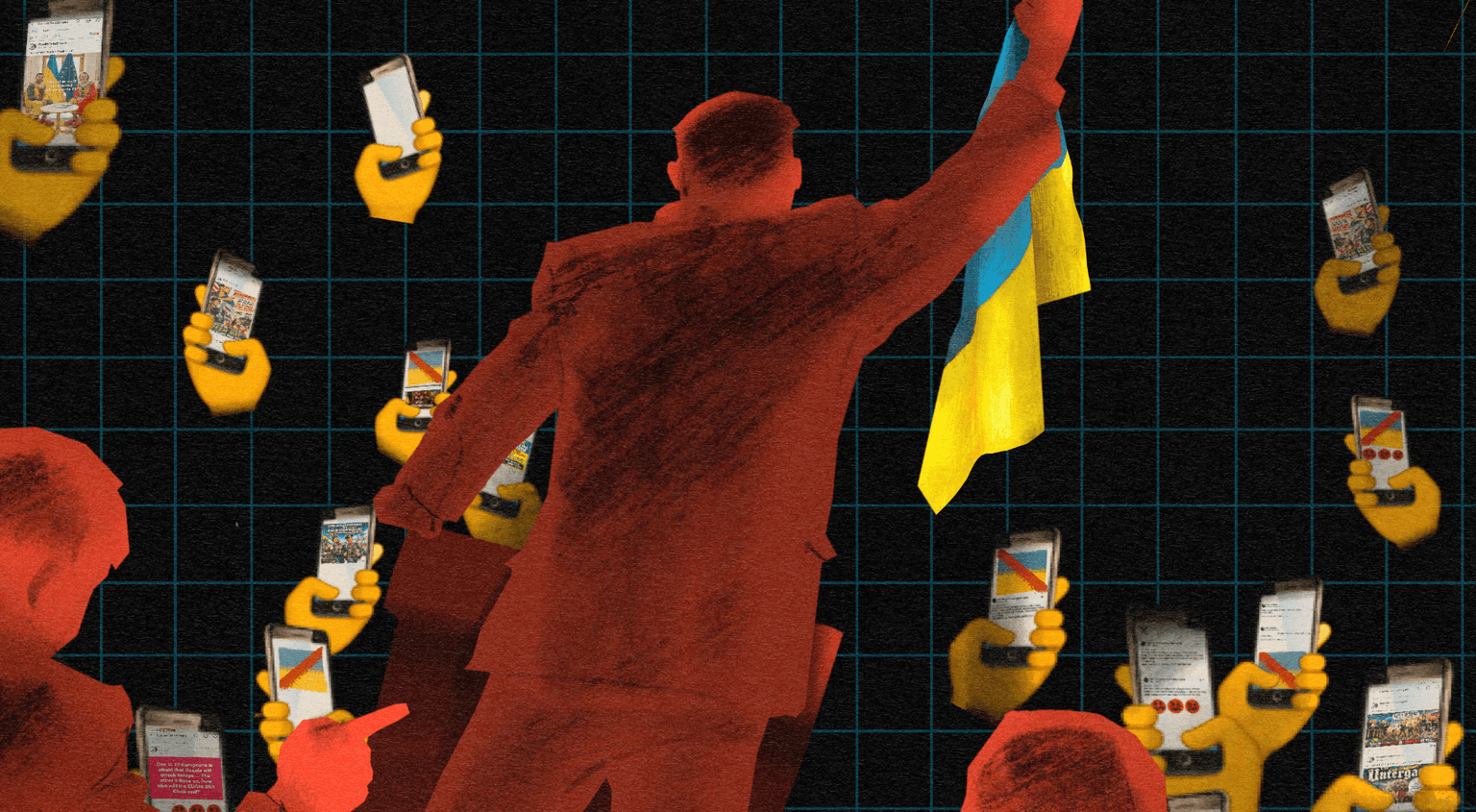
The anti-Ukrainian narratives heard on the political stage are almost the same as those spreading en masse on social media, especially on X, formerly Twitter.
Journalists from the Kyiv Independent collected about 140,000 posts on X in German, Czech, and Polish, published between the summer of 2024 and the summer of 2025, a period that coincided with a number of election campaigns, to investigate anti-Ukrainian sentiment in these countries.
From those, they filtered 98,000 posts "that we considered substantive — meaning they actually contained meaningful content," data analyst Denys Hubashov said. The narratives in these posts were identified by an AI model, which journalists trained on hundreds of posts they had labeled themselves. The model's results were then manually reviewed and verified.
For Germany, the journalists analyzed 12,000 German-language posts about Ukrainians. A quarter of them focused on the alleged harm Ukrainian refugees cause to German society, including the strain on the welfare system cited by politicians. "Why don't we finally send all those Ukros who are living entirely off our dime back home?" one post read.
More than 1,000 other posts accused Ukrainians of Nazism. This is a common Kremlin narrative, but it taps into particularly sensitive issues in German society. "This narrative works in Germany… Because Germany has a memory, Germany has a history, and Germany has a responsibility," Vorobiova said.
For Czechia, the journalists analyzed 23,000 Czech-language posts and replies. Some 2,500 of them focused on the claim that Ukrainians were bringing crime and danger to Czechia. "How much longer are Ukrainians going to terrorize us in our own country?" one user wrote.
For the past 15 years, roughly two-thirds of Czechs have consistently viewed foreigners as a security threat to their country. Czech journalists and the fact-checking organization Demagog have repeatedly shown that the crime rate among Ukrainians in Czechia is about the same as in Czech society as a whole. Police statistics confirm this reporting. Nevertheless, Okamura has spread claims that Ukrainians are behind rising crime in Czechia.
"If you really want to make people condone or commit violence, you want to make them afraid."

Most of the analyzed posts about Ukraine and Ukrainians were in Polish. The dominant theme was also the alleged danger posed by Ukrainians, particularly claims about rising crime. But another popular topic was the shared history between the two nations. Ukrainians are called Banderites and Nazis, in reference to the ethnic conflict between Ukrainians and Poles that escalated into mass killings in Volyn in the 1940s. "The only enemy nation is the Banderites," one user wrote.
Many of these narratives bear the hallmarks of Russian propaganda. But Pankowski warned against blaming everything on Russia.
"It is equally important to recognize the problem posed by the far-right groups operating in Poland. They act in Russia's interests and against Ukraine and Ukrainians in Poland. Groups whose base is in Poland itself, not outside the country, not in Moscow, not in Minsk, and not elsewhere," he said.
Drops of hatred
"When we see big surges of hate speech and dangerous speech, it is typically because somebody starts it and then spreads it… It always starts because it's useful to someone," Benesch said.
She stressed that the operative emotion here is not hatred but fear, which is usually unfounded. "If you really want to make people condone or commit violence, you want to make them afraid," she added.
Benesch cited the example of Rwanda, where the 1994 genocide was accompanied by an intense campaign of hate speech, spread mainly through radio. One witness at the International Criminal Tribunal for Rwanda said that the propagandists "dripped petrol little by little all over the country until one day you could strike a match and it would burst into flames."
Pankowski said the link between hate speech — online or offline — and real violence against Ukrainians is obvious to him.
"We had a case at a school in Slupsk where a teacher was spreading anti-Ukrainian narratives among the class. Some of the students also held anti-Ukrainian views, and eventually, Ukrainian students were beaten by Polish students. So we're dealing with an ideological, xenophobic message that ultimately, in a sense, leads to physical aggression," he said.
Because of this link, Benesch prefers the term dangerous speech to hate speech — defining it not by the intent of the speaker but by the consequences of their words, "by the harm that it causes to other people."
Benesch said that even if a politician does not explicitly call for violence but their supporters take their words that way, this "should not exonerate that person of at least a very strong moral responsibility, though they may not have a legal one."