Ukraine war latest: Russian drones kill 1, damage 2 European embassies, cathedral in hours-long drone raid on Kyiv
 on Google

Key developments on Nov. 19:
- 'For Russia, nothing is sacred' — Massive Russian drone attack on Kyiv kills 1, damages St. Volodymyr's Cathedral, embassies
- 'We will not negotiate' — Putin addresses Ukraine's strikes on Crimean Bridge
- 'Please vacate Crimea' — Crimean Bridge hit by Neptune missiles, Ukraine confirms, railway traffic halted
- Fuel restrictions reportedly cause gas station queues in occupied Sevastopol after Crimean Bridge strikes
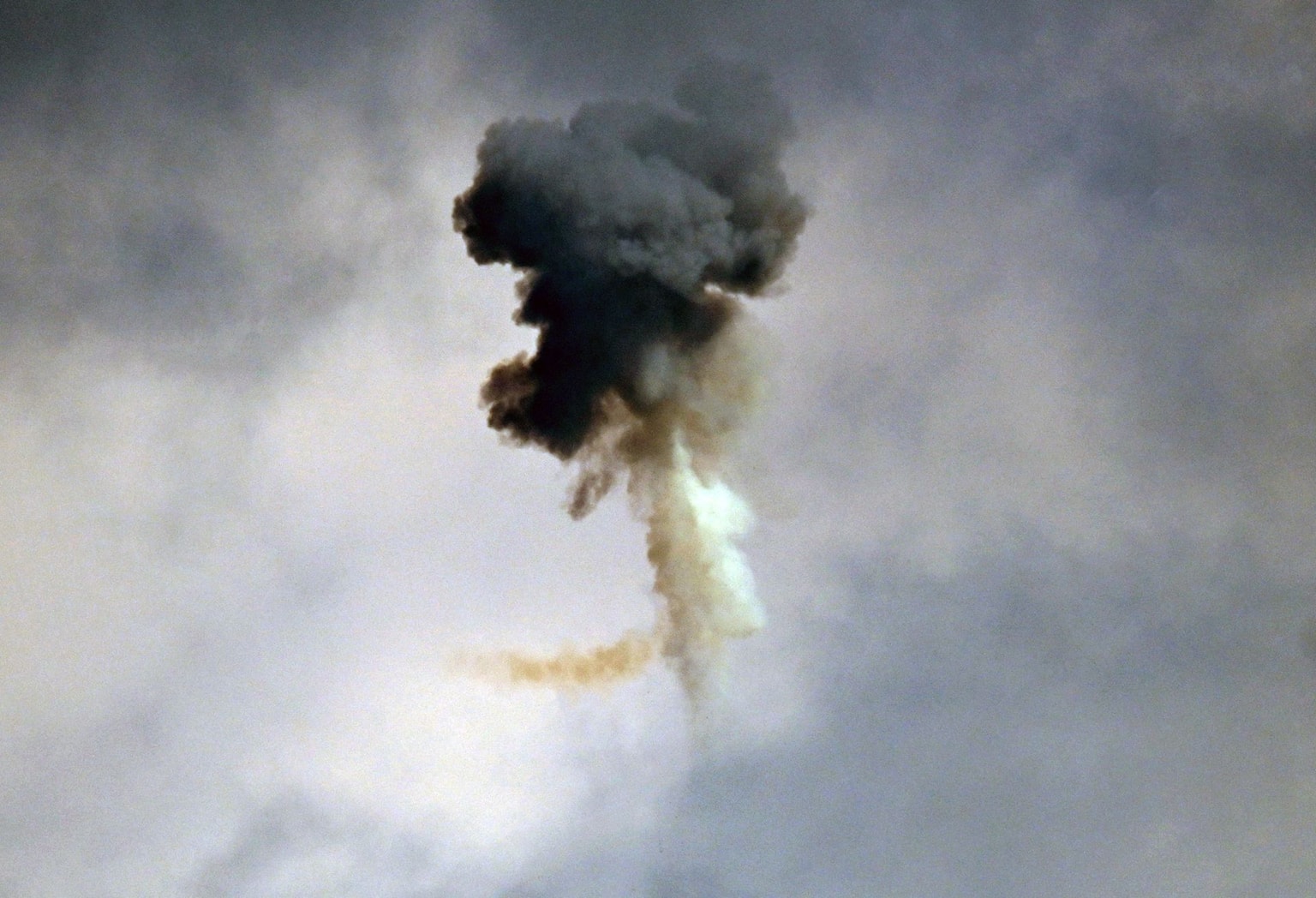
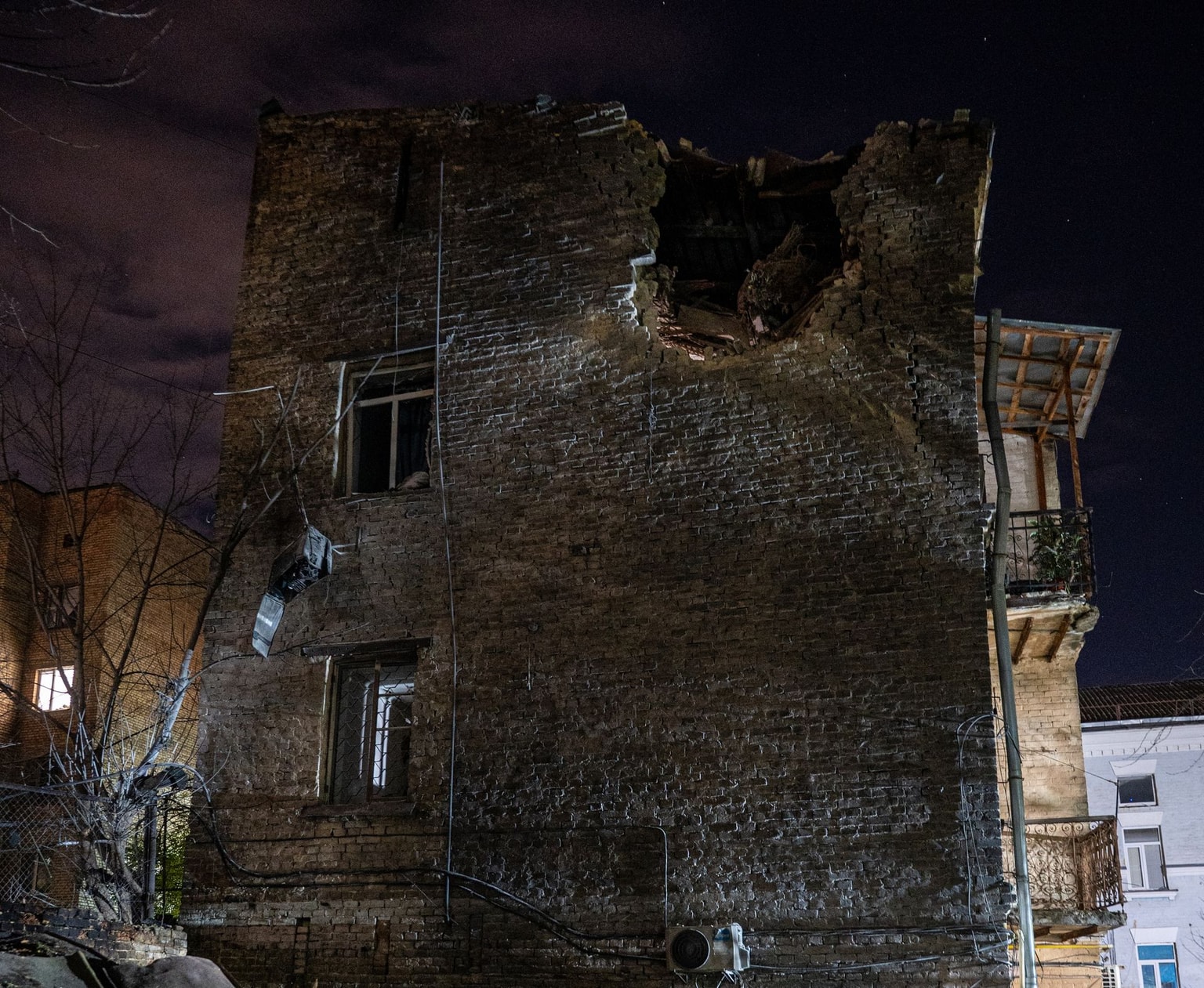
A Russian drone crashed close to the Dutch and Austrian embassies in Kyiv, damaging cars, a security post, and shattering windows in the building, during an hours-long attack on the capital that killed at least one person, and injured five others.
"This afternoon, a projectile struck behind the Dutch embassy in Kyiv," Dutch Foreign Affairs Minister Tom Berendsen said in a post on social media.
"Fortunately, our colleagues are unharmed, though there is some minor damage to the building. We are investigating exactly what happened. Our priority now is the well-being of our staff," he added.
Later in the day, Austrian Foreign Minister Beate Meinl-Reisinger said the Austrian Embassy had also been damaged in the attack.
"I have just spoken by phone with our team on the ground and am very relieved that everyone is safe and well," Meinl-Reisinger wrote on X.
Meinl-Reisinger said she had ordered "additional measures to further protect embassy staff."
It has not been confirmed if the drone was targeting the area in which the Dutch and Austrian embassies are located or if it was shot down.
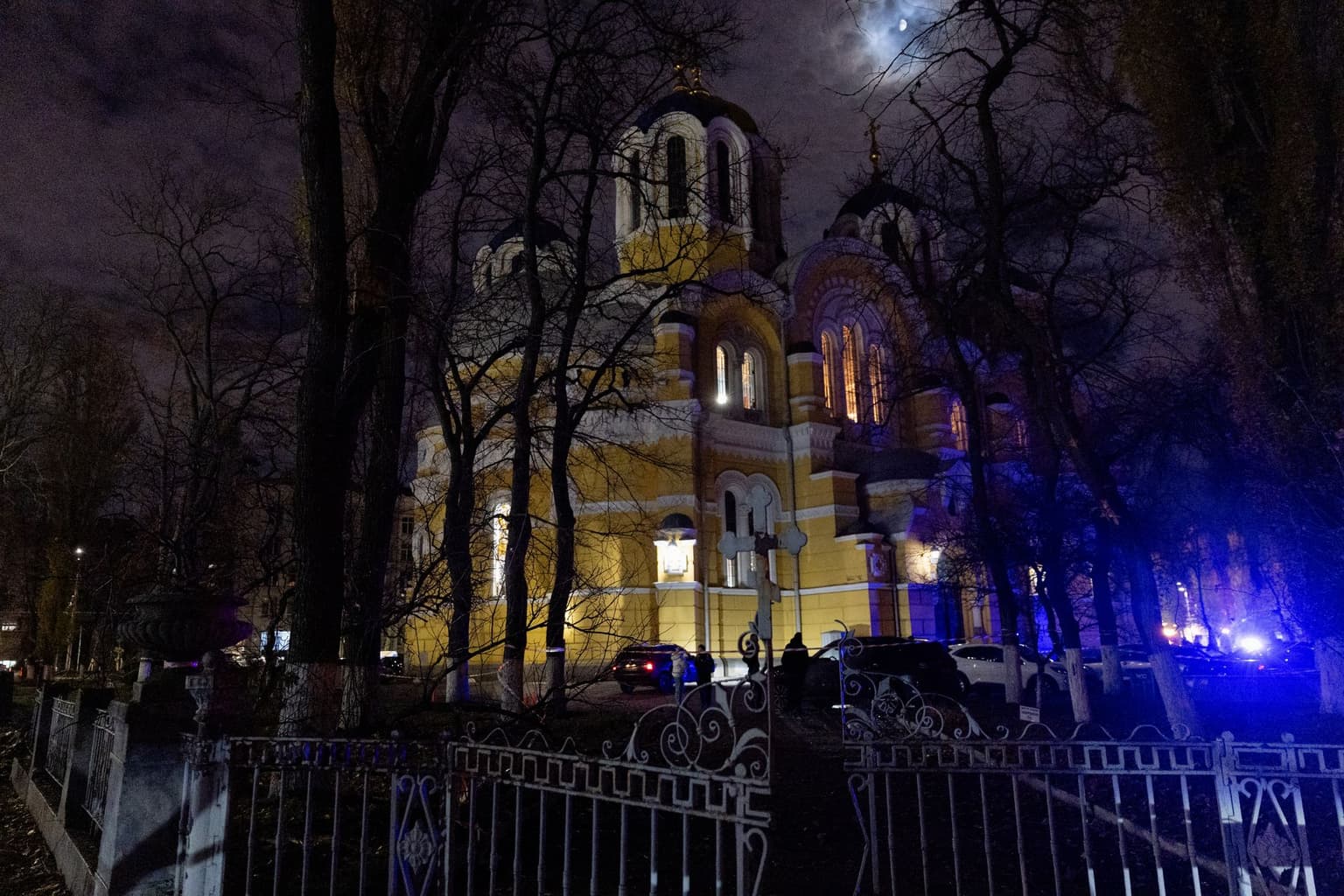
The Dutch Embassy is in Kyiv's Podilskyi District, just north of the city center, an area filled with restaurants, cafes, and offices. The Austrian Embassy is located in Kyiv's Shevchenkivskyi District, near St. Volodymyr's Cathedral, where windows were also shattered in the attack.
Culture Minister Tetiana Berezhna said the attack also damaged cornices at St. Volodymyr's Cathedral, but preliminary assessments found no damage to the murals or structural elements.
A 26-year-old man was killed and five others injured, Kyiv authorities reported. Kyiv Mayor Vitali Klitschko later clarified that the man was killed in the Podilskyi district.
Apart from the Podilskyi and Shevchenkivskyi districts, drone debris also fell in the Obolonskyi District, according to Klitschko.
read also
'We will not negotiate' — Putin addresses Ukraine's strikes on Crimean Bridge
Moscow no longer plans to discuss ceasefires covering energy infrastructure and Black Sea shipping following Ukraine's strikes on the Crimean Bridge, Russian President Vladimir Putin said on Nov. 19.
The remarks marked the Russian president's first public reaction to the attacks on the bridge, which he described as having sustained "serious damage."
"Our retaliatory actions... will be far more painful than what (Ukraine) did to the bridge... With today's precision weapons, it's not that difficult to do," Putin said.
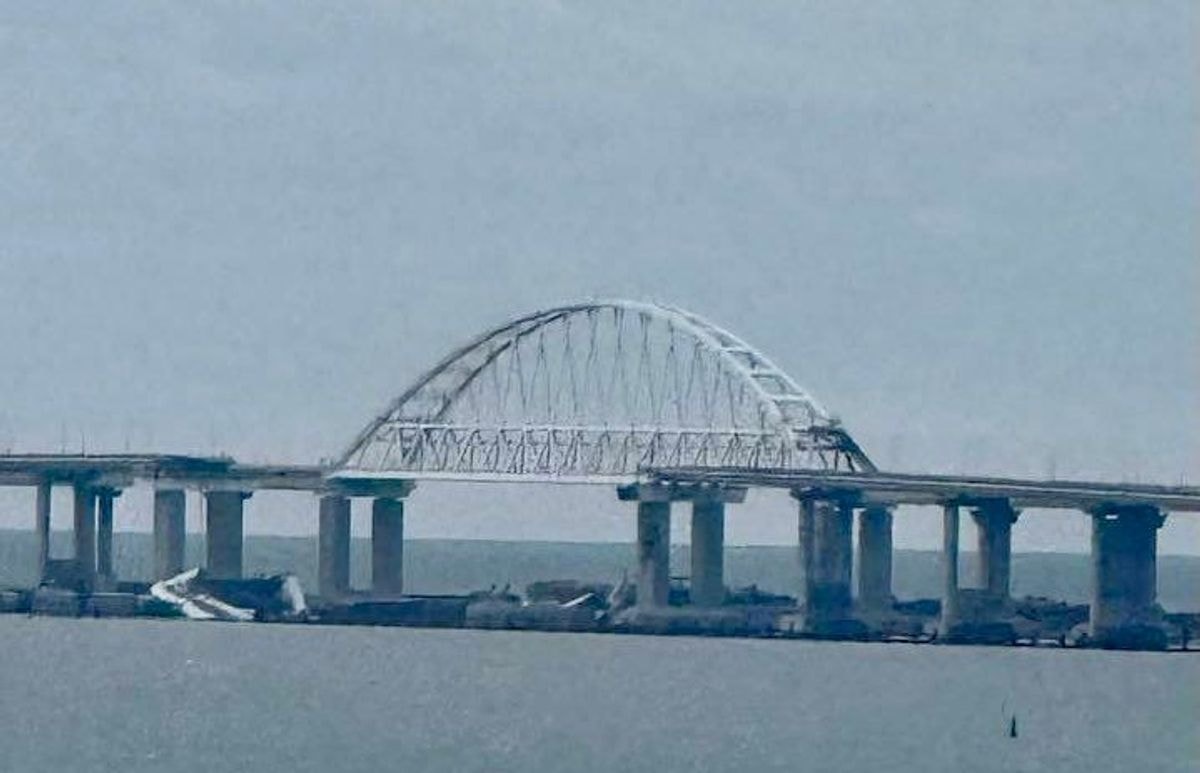
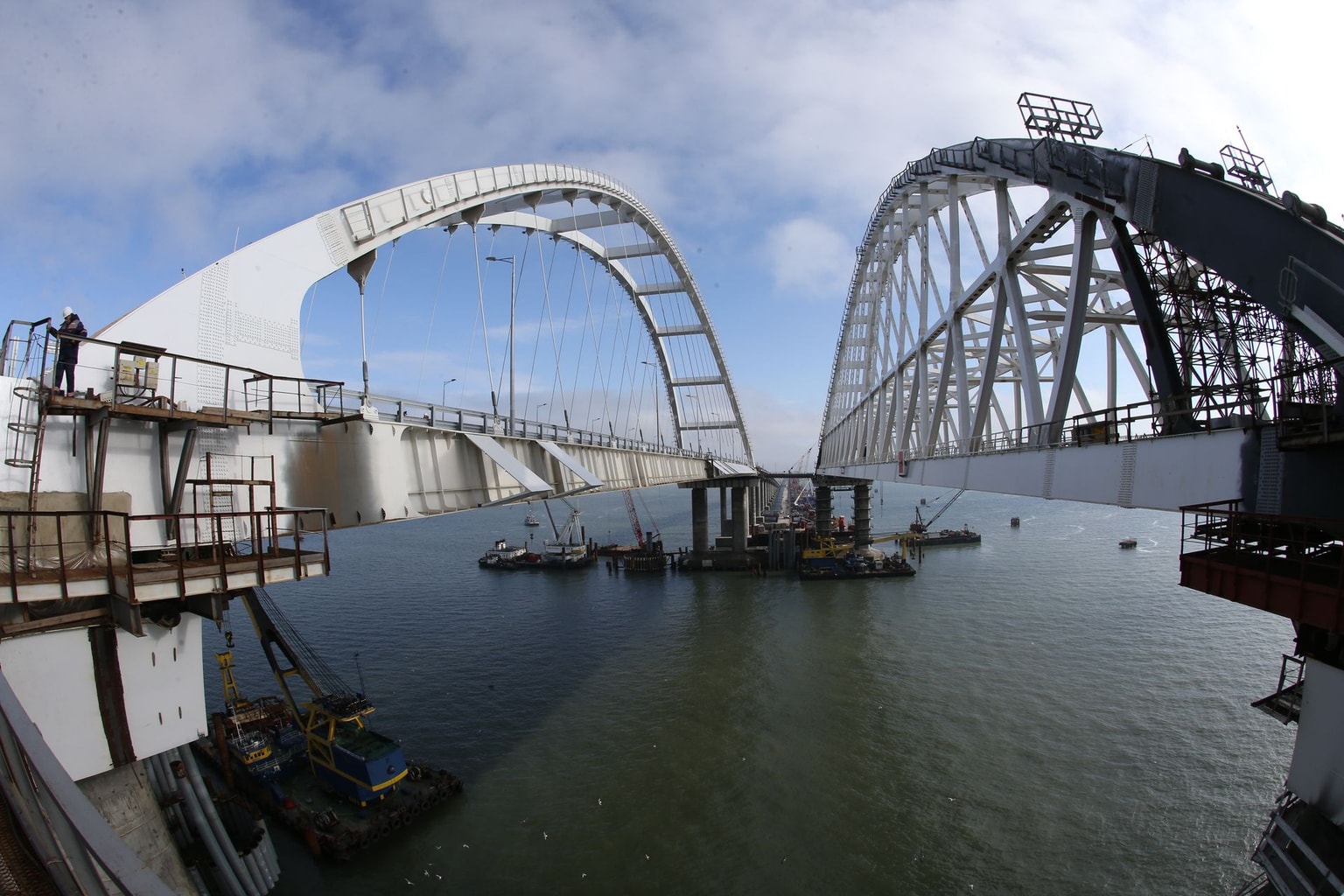
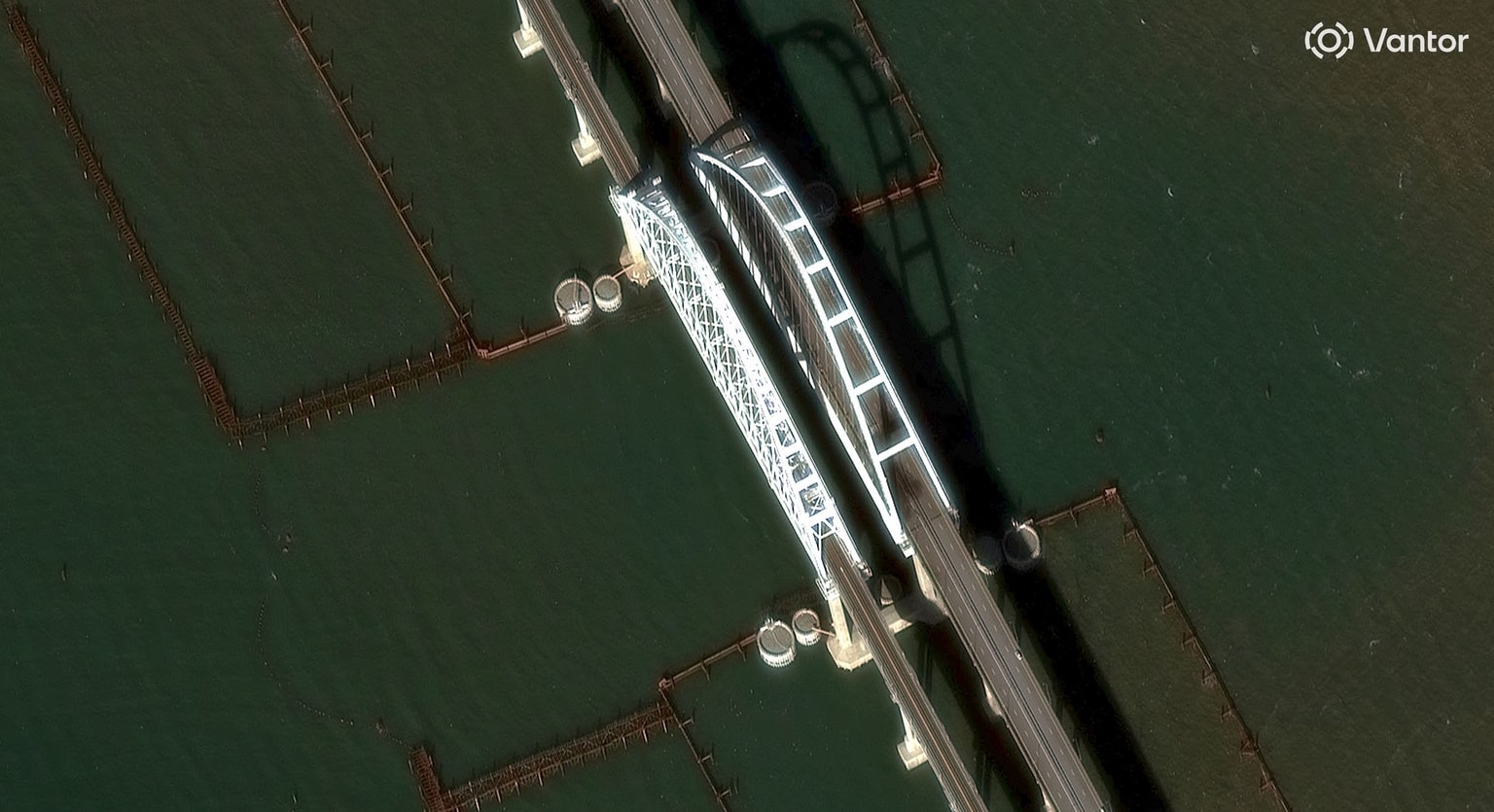
The Crimean Bridge, built after Russia's occupation of the peninsula in 2014, serves as a critical supply and transport route for Russian forces in occupied Ukrainian territories. A section of its roadway collapsed following a Ukrainian Flamingo missile strike overnight on Nov. 17.
Putin said he had previously discussed the possibility of ceasefires covering energy infrastructure and commercial vessels in the Black Sea with members of Russia's Security Council.
"I asked everyone to think it over and return to this issue in the hope that, perhaps, we might be able to agree on something. But after the strikes ... we will not negotiate," he said. "We will respond."
Ukraine has repeatedly urged Russia to agree to limited ceasefires covering specific sectors. Kyiv proposed halting attacks on Russian oil refineries in exchange for an end to Russian strikes on Ukraine's civilian energy infrastructure, but Moscow rejected the proposal.
'Please vacate Crimea' — Crimean Bridge hit by Neptune missiles, Ukraine confirms, railway traffic halted
Ukrainian forces hit the Crimean Bridge on Nov. 19 with Neptune missiles, Ukraine's Defense Ministry confirmed, less than two days after a strike collapsed an entire section of the key Russian bridge.
"Hits have been confirmed near the arch and the railway tracks. The extent of the damage is currently being assessed, but for now, all train traffic has been halted," the ministry said in a post on social media.
The attacks on the bridge involved more than 16 strikes using multiple weapon systems and technologies, including Flamingo and Neptune missiles, Ukrainian defense company Fire Point, which produces the Flamingo missile, said on Nov. 19.
Ukraine's Defense Ministry said the bridge serves as a "war conveyor belt," transporting materiel to Russia's forces fighting in the occupied parts of southern Ukraine.
"That conveyor belt has now broken down. The alternative route runs overland, along the front line — where our drones are waiting to greet the cargo," it said.
"Final stop. Please vacate Crimea," it added.
Originally, Neptune was Ukraine’s ground-launched, domestically produced anti-ship missile with a maximum range of 300 kilometers which it famously used in April 2022 to sink Russia’s Black Sea flagship, the Moskva.
It has since been upgraded and a "Long Neptune" is capable of hitting targets up to 1,000 kilometers (621 miles) away.
Fuel restrictions reportedly cause gas station queues in occupied Sevastopol after Crimean Bridge strikes
Video footage shared by Ukrainian monitoring channel Exilenova+ on Nov. 19 claims to show residents of Sevastopol in Russian-occupied Crimea rushing to buy fuel amid fears of supply disruptions, as occupation authorities introduced fuel restrictions on Nov. 18.
The rush comes as Ukrainian forces hit the Crimean Bridge on Nov. 19 with Neptune missiles less than two days after a Ukrainian strike collapsed an entire section of the key Russian bridge, halting any road traffic. Russia's Transport Ministry also suspended train services on the Crimean Bridge on Nov. 19.
Constructed after Russia's illegal occupation of Crimea in 2014, the Crimean Bridge — also known as the Kerch Bridge — is a critical supply and transport route for Russia to occupied Ukrainian territories.
The Exilenova+ footage shows long queues of cars at a gas station in occupied Sevastopol on Nov. 19.
The panic buying prompted Russian-installed authorities to impose fuel purchase limits at two major gas station chains in the city. Drivers can fill their vehicles' tanks and buy up to an additional 20 liters of fuel in canisters, head of Sevastopol's occupation authority, Mikhail Razvozhaev, announced on Nov. 18.
The new restrictions took effect at midnight on Nov. 19 for the Atan and TES gas station chains, as residents were filling up gasoline in extra containers of up to 500 liters (132 gallons) at a time, Razvozhaev said.
In a video shared by Supernova+, a resident of occupied Crimea complains that her husband can no longer visit her by train.
"My husband, for example, in Krasnodar did not have time to come to Crimea. We thought he would come by train. He will not come by train now," she said.
The Crimean Bridge was the safer route back to Russia for hundreds of thousands of Russian settlers who moved to Crimea since the Russian annexation.
"Growing isolation of the occupied peninsula will certainly weigh on the minds of the illegal Russian settlers or those seeking to relocate there and thus may shape the public sentiment around the future sustainability of Moscow's imperial ambitions," Tomas Jermalavicius, Head of Studies at the International Centre for Defense and Security, told the Kyiv Independent earlier.
"It is one thing to brag about a successful annexation but quite another when it becomes a major burden and headache to the entire regime and occupational authorities," he said.