Zelensky says Serbia faces 'new chapter' after Vucic concedes defeat
 on Google
Editor's note: The story has been updated to include comments from President Volodymyr Zelensky.
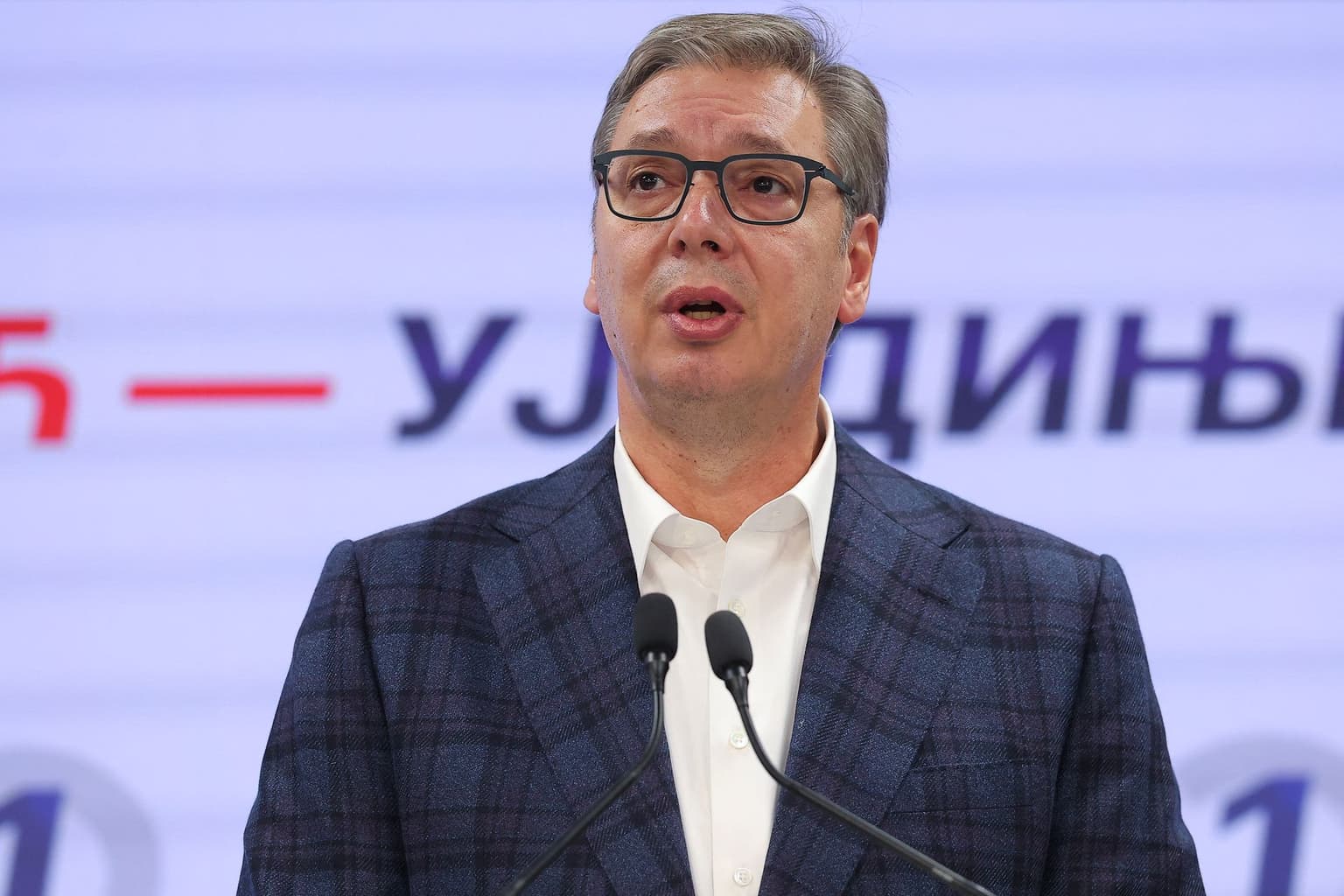
Ukraine is ready to continue expanding cooperation with Belgrade, President Volodymyr Zelensky said on Oct. 26, after former Serbian President Aleksandar Vucic conceded defeat in parliamentary elections to a student-led protest movement.
"Based on a stratified sample, it is clear that we have lost this election. The student blockade list won," Vucic said in a press briefing on Oct. 25.
According to Vucic, the Students' List party, backed by the protest coalition, is projected to take between 135 and 140 seats in Serbia's Parliament. Vucic's Serbian Progressive Party appears to have come in second in the elections, and will have 105 seats in Parliament.
"This is clearly a new chapter in the history of the country and its people", Zelensky said in a social media post following the election.
"We wish Serbia success, real development, and warm relations with the European community. We in Ukraine thank Serbia for respecting our people, our state, and our independence."
For almost two years, student-led demonstrations in Serbia rallied against Vucic's right-wing incumbent Serbian Progressive Party. Protesting against alleged corruption in the government, the movement was triggered when a train station canopy in the city of Novi Sad collapsed in 2024, killing 16.
Vucic previously announced his resignation as Serbia's president on Sept. 27, allowing him to run as prime minister in the nation's October parliamentary elections.
Vucic, having served as either Serbia's prime minister or president since 2014, was known as a right-wing populist leader with authoritarian tendencies and warm ties with Russia.
The elections saw Serbia's highest voter turnout, 70%, since the dissolution of Yugoslavia in 1992, according to Reuters.
The election results are being hailed as a momentous political shift for Serbia, potentially turning the Balkan country away from ties with Russia and Vladimir Putin, who endorsed Vucic.
Kremlin spokesperson Dmitry Peskov told reporters on Oct. 26 that Moscow "greatly appreciated" Vucic's contribution to Russia-Serbia ties.
He added that Moscow hopes Serbia's new government would continue developing relations with Russia, which he said "was in Serbia's interests."
The defeat of Serbia's right-wing government echoes recent elections in Hungary. In April, populist leader Viktor Orban, also endorsed by Putin, was defeated in a landslide election.
Hungarian Prime Minister Peter Magyar drew an explicit parallel between this election and that in his country which saw him rise to power, celebrating the Serbian opposition's victory in an Oct. 25 post on X.
"In Serbia, (Aleksandar Vucic) has conceded defeat. The Students’ List has won an absolute majority in the elections. Celebrations have begun in the streets across Serbia. Sound familiar?" Magyar wrote.
The Guardian also reported that Magyar subsequently spoke with the Students' List leadership and offered Hungary's support, saying his own electoral victory in April had encouraged the Serbian movement during its struggle.
Since Russia launched its full-scale invasion of Ukraine in 2022, Serbia has sought to strike a careful diplomatic balance between Moscow and the West. Russia has historically been one of Serbia's key diplomatic allies, and Serbia relied heavily on Russia for natural gas.
According to reports, Serbia has also indirectly supplied arms to Ukraine, although Vucic publicly denied it in May 2025.