'We have nothing left to fear' — Chinese volunteer soldiers in Ukraine
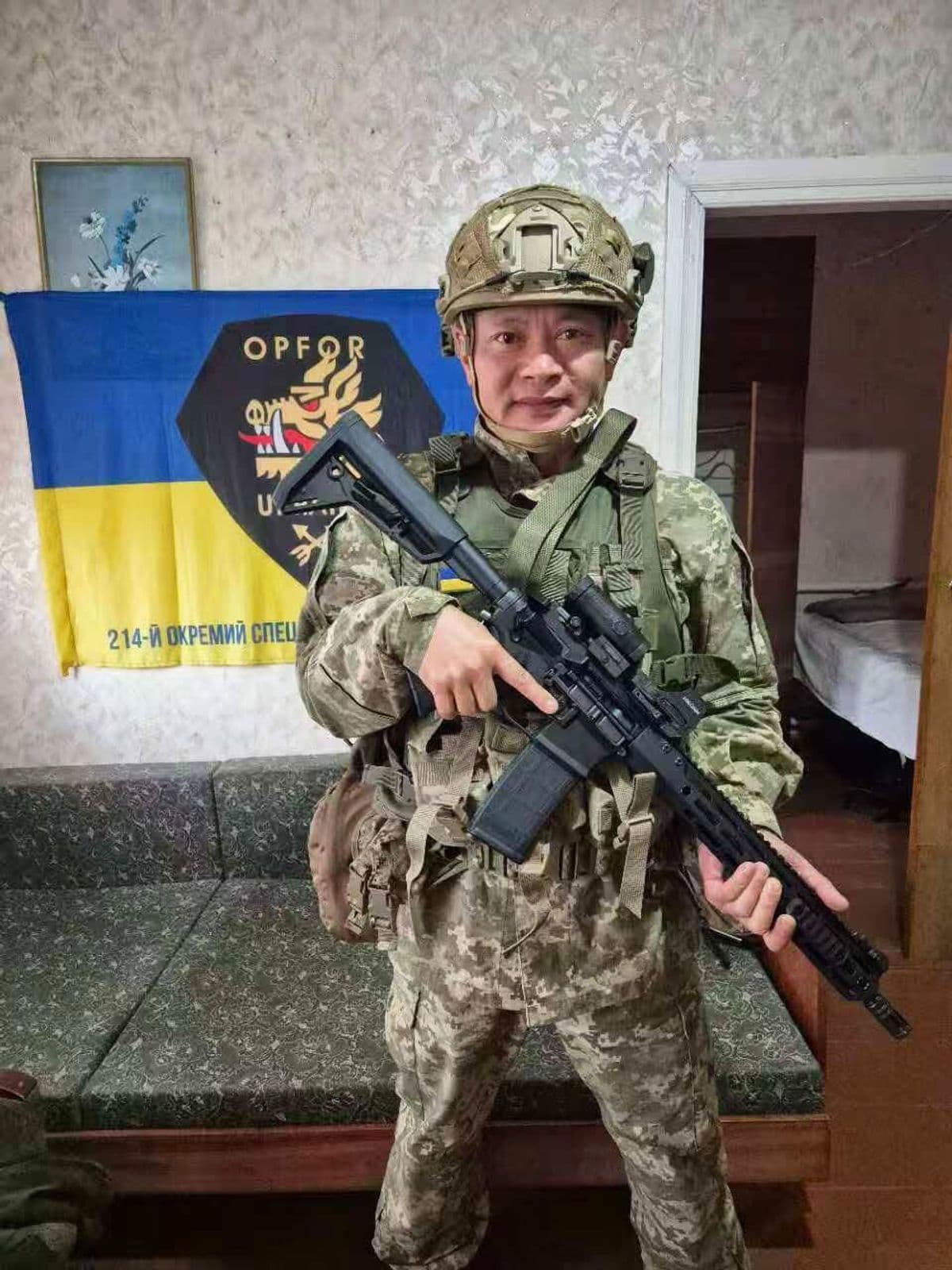
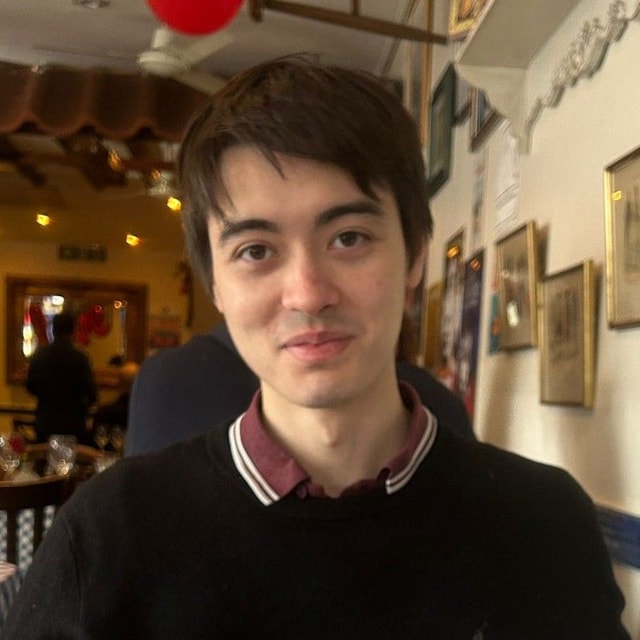
Luo Haizhou, a Chinese volunteer serving in the Ukrainian Ground Forces' 214th Separate Assault Battalion, stands next to the battalion's flag in an undisclosed location in Ukraine, undated. (Personal archive / Luo Haizhou)
 on Google
Luo Haizhou had once asked to be referred to only by his call sign "Brunko," but his reticence has since gone. Luo recruits fellow Chinese volunteers for Ukraine's military, despite warnings from Chinese state security officers to his family back home. He knows that returning to his native Shenzhen is now impossible.
"For the few dozen Chinese who have joined Ukraine's military, the choice may have cost them the option of ever returning home."
Luo met with the Kyiv Independent a day before he was due to report to the Ukrainian Marines in Odesa. Through promoting the Ukrainian cause on Chinese social media, a delicate task given the Chinese Communist Party's strict online censorship regime, Luo knows most of the roughly 50 Chinese volunteers fighting all across the Ukrainian front line, he said.
A small group with often disparate personal motivations, each one, he stressed, was here in defiance of the Chinese government's tacit support for Moscow.
"We have nothing left to fear," Luo said.
Beijing claims neutrality in Russia's full-scale war while deepening trade with Moscow and sustaining Russia's drone and missile production with Chinese-made components.
Chinese nationals are fighting for Russia, while Chinese military officers reportedly visit areas near Russia's front line to draw tactical lessons from the war. For the few dozen Chinese who have joined Ukraine's military, the choice may have cost them the option of ever returning home.
Cautious optimism
Luo's own journey began when he grew disaffected with China's communist leadership. The Chinese Communist Party (CCP), he said, remains Soviet in its mentality, meaning party officials and their associates enjoy the profits of China's rapid economic growth, while the average citizen remains exploited and disenfranchised.

Despite Chinese President Xi Jinping's extensive anti-corruption drive, Luo said, corruption remains pervasive in China. In Shenzhen, a prominent local party official tried to seize an industrial property Luo owned and pressed him to donate 300,000 yuan (about $45,000) for the construction of a concrete road by the property, he claimed.
Instead, Luo built the road himself, only to have it declared substandard by the government. The official has been arrested for an unrelated corruption case, as reported by the state-controlled Yangcheng Evening News, but Luo suspects he might have run afoul of a party superior.
The promise of a new life initially lured Luo to Ukraine. A scrap-metal merchant by trade, he thought that his services would be in high demand in a post-war Ukraine.
But after arriving in December 2023, he quickly found himself devoting most of his time to humanitarian efforts, supplying food and electronics to refugees and evacuating civilians from front-line territories.
Although he could extend his stay periodically, the visa situation for Chinese citizens in Ukraine remains difficult, as crossing into Ukraine requires both a Ukrainian visa and either a Schengen visa from bordering Hungary, Poland, Slovakia, or Romania, or a visa from Moldova, the latter of which has occasionally refused entry to Chinese citizens. Luo eventually concluded that the best way to stay was securing residency through enlistment.
Being a drone hobbyist, Luo trained as a drone operator in the Ukrainian Ground Forces' 214th Separate Assault Battalion. With him were four more Chinese volunteers, all of whom he had helped recruit.

Deployed in reserve first to Sumy and then Dnipropetrovsk oblasts, subunits from the battalion were attached to brigades on the front line.
He and the battalion's other Chinese service members asked for combat postings, but their commander explained that the strong language barrier made it difficult for them to function effectively on the battlefield and gave them support roles instead. While their English and Ukrainian were passable for basic interactions, communication would likely be impacted in combat situations, where clarity and speed are essential.
The commander also said that as foreigners "they did not hate Russia enough," according to Luo.
After shuttling supplies and vehicles to the front for a short while, Luo volunteered to modify old munitions for UAVs. Cannibalizing the vast array of grenades, mortar bombs, and artillery shells of all vintages and origins donated by Ukraine's allies proved a dangerous task. On one occasion, a Shahed-type drone fell about 80 meters short of their explosive-filled workshop, prompting a hurried relocation, Luo said.
In August, Luo was hospitalized with a kidney stone. During his recovery on the Black Sea coast, he first encountered the Ukrainian Marines. Impressed by their professionalism and tempted by proximity to Odesa's growing Chinese community, he asked for a transfer.

His next posting, Luo said proudly, is to be in an anti-drone air defense unit, defending his new home.
He remains optimistic about the future. To China, Russia is a "pawn to be used and then discarded," weakening Europe at the cost of itself, he said. He believes that a deal between U.S. President Donald Trump and Xi, allowing Russian President Vladimir Putin to end the war without "loss of face," may soon be struck.
Deal or not, Luo intends to stay. He inquired about a post-war position in the State Border Guard Service and plans to learn Ukrainian. Once the war ends, he said, he wants to bring his family over.
Survival
"Mustang" does not share Luo's optimism. A drone operator in the 12th Azov Brigade, he asked to stay anonymous due to security reasons, but talked to the Kyiv Independent during a brief medical appointment in Kyiv. Russia's war has brought new purpose to his life, he said.
In what he described as a drab and draconian post-Covid China, Mustang was living unemployed and listless after years abroad, he said, until the death of Peng Chenliang in November 2024 spurred him into action.
Peng was the only mainland Chinese volunteer in Ukraine then, and the publicity his death received inspired many of the Chinese volunteers in Ukraine today, Mustang said.
He regrets nothing, he said, as Ukraine's cause is just and he is proud to fight for it. Yet he remains pessimistic. The rules-based order he believes in is disappearing, he said, replaced by a world where might makes right.
If China becomes strong enough, he said, Xi has set his sights firmly on Taiwan. Perhaps this war will escalate and spread into a global fire, as he believes Trump squandered U.S. global influence over Iran, and Xi might feel emboldened, he said, shrugging.
To Mustang, Russian manpower seems inexhaustible. He has seen droves of Russian infantry die at Ukraine's "drone wall" during his year-long deployment near Kostiantynivka.
"He believes Russian soldiers must be misled about battlefield conditions to willingly enter what he described as an "intentional massacre." He does not understand how anyone, however poor or desperate, would volunteer for such a brutal, pointless death."
Advancing in pairs or individually, each man, once spotted, now draws multiple FPVs and Vampire bombers, he said, and few survive to establish new forward positions. Hardly any reach the Ukrainian line.

He believes Russian soldiers must be misled about battlefield conditions to willingly enter what he described as an "intentional massacre." He does not understand how anyone, however poor or desperate, would volunteer for such a brutal, pointless death.
"There are proportionally far fewer (soldiers) now than a year ago."
Though his drone company has not suffered any fatalities in the last year, he said, they are in constant danger from Russian artillery and glide-bomb strikes. He recalled that they had to shift their position three times in a day, with their last two positions getting struck shortly after being abandoned.
The greatest threat to his company, however, is enemy drones. Their Russian counterparts, Mustang said, are skilled opponents. His unit's logistics hub was spotted and struck, destroying four vehicles and ammunition.
Their saving grace, he said, is dugouts and trenches, minimizing their exposure to enemy sight and fire. While his drone company has been lucky so far, he said, the infantry in his battalion have suffered heavy casualties.
"There are proportionally far fewer (soldiers) now than a year ago," he said.
The war, Mustang said, is likely his future. He has given hardly any thought to what comes after.
Perhaps he will remain in Ukraine, provided he learns the language, or seek work in Europe or America, he said. Having kept a low profile and uncertain what the Chinese government knows of him, he sometimes thinks about returning to China. For now, he is focused on surviving.