Journalist Roshchyna's body missing organs after Russian captivity, investigation says
 on Google
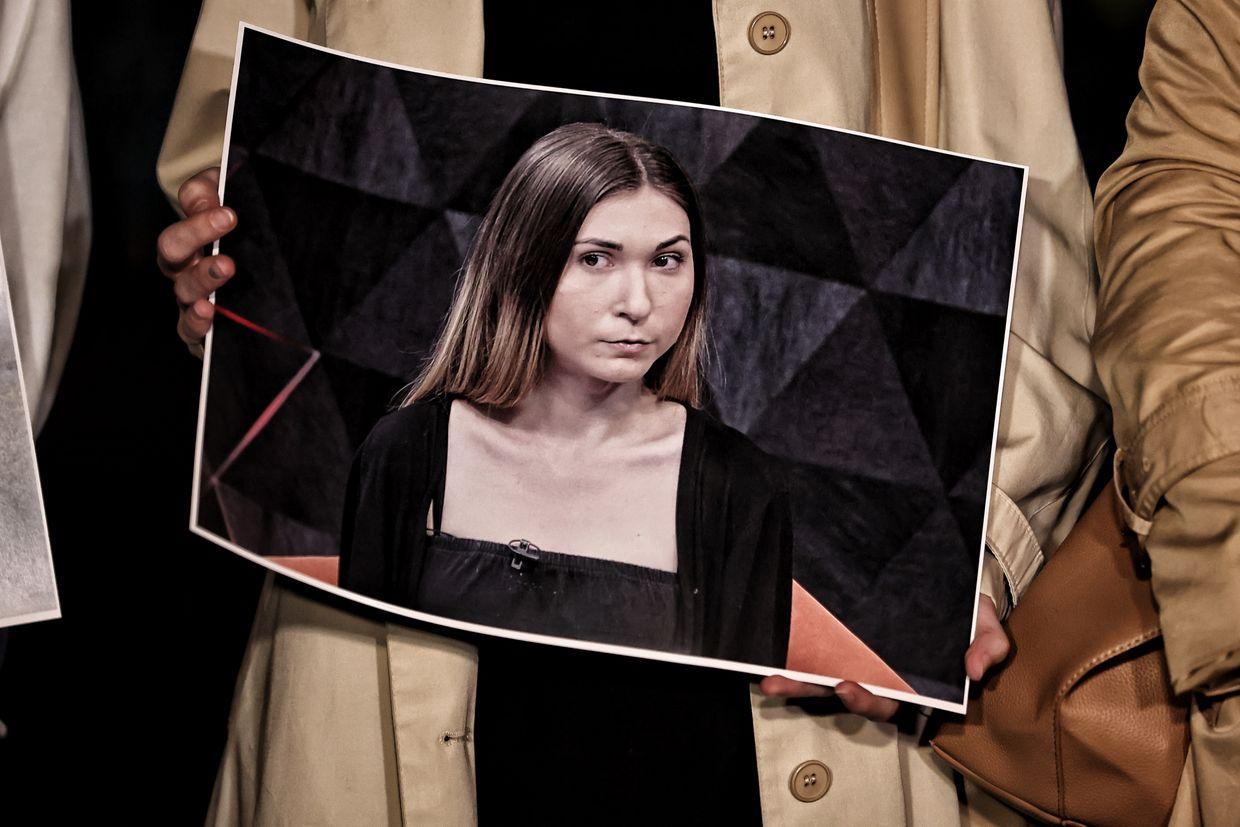
The body of journalist Viktoriia Roshchyna, who died and underwent torture in Russian captivity, was missing some internal organs, according to an investigation by the Forbidden Stories journalism network published on April 29.
An international forensic pathologist said that the missing organs may have been deliberately removed to obscure signs of suffocation or strangulation, reported Ukrainska Pravda, which took part in the investigation.
More than 40 journalists from 13 international media outlets participated in the investigation, conducting over 50 interviews with former prisoners, ex-prison guards, and human rights activists.
Roshchyna's body was handed over in late February, reportedly tagged with the number 757 and falsely identified in Russian documents as an "unidentified male."
A forensic examination in Ukraine later confirmed the body was female. Soon after, the DNA testing identified it as Roshchyna’s with 99% certainty.
Yurii Belousov, head of the war crimes department at the Prosecutor General's Office, said last week that numerous signs of torture and ill-treatment were found on the journalist's body. Experts also saw signs that Roshchyna could've been tortured with electric shocks.
According to investigators, her body showed evidence of an autopsy conducted in Russia before it was returned to Ukraine.
During the examination in Ukraine, it turned out that Roshchyna's brain, eyes, and part of the trachea had been removed, the investigation said.
A bruise on Roshchyna’s neck, along with a suspected fracture of the hyoid bone — a common indicator of strangulation — further supports this suggestion.
The journalist's body was also marked with the Russian abbreviation "SPAS" during the exchange. Journalists suggest this "total failure of the arteries of the heart," a designation that may have been used by Russian authorities to fabricate an official cause of death.
So far, the condition of the journalist's body has made it impossible to determine the exact cause of death.
Roshchyna, 27, disappeared in August 2023 while reporting from Ukraine's Russian-occupied territories, with Moscow admitting her detention the following year.
Ukrainian officials confirmed Roshchyna's death on Oct. 10, 2024, but said that the circumstances were still under investigation. Russia did not hand over her body for about five months.
According to Russia, Roshchyna died on Sept. 19, 2024.
The Media Initiative for Human Rights, a Ukrainian NGO, reported that Roshchyna had been held in at least two notorious Russian prisons: the penal colony n. 77 in Berdiansk in occupied Ukraine and the detention center n. 2 in Russia's Taganrog.
Both facilities are known for the use of torture against prisoners.
Previously, in March 2022, Roshchyna was detained for 10 days by the Russian Federal Security Service (FSB) officers while leaving Berdiansk in the direction of Mariupol. As a condition of her release, she was forced to record a video saying Russian forces had saved her life.