The Balkan blockage on Ukraine's EU membership quest
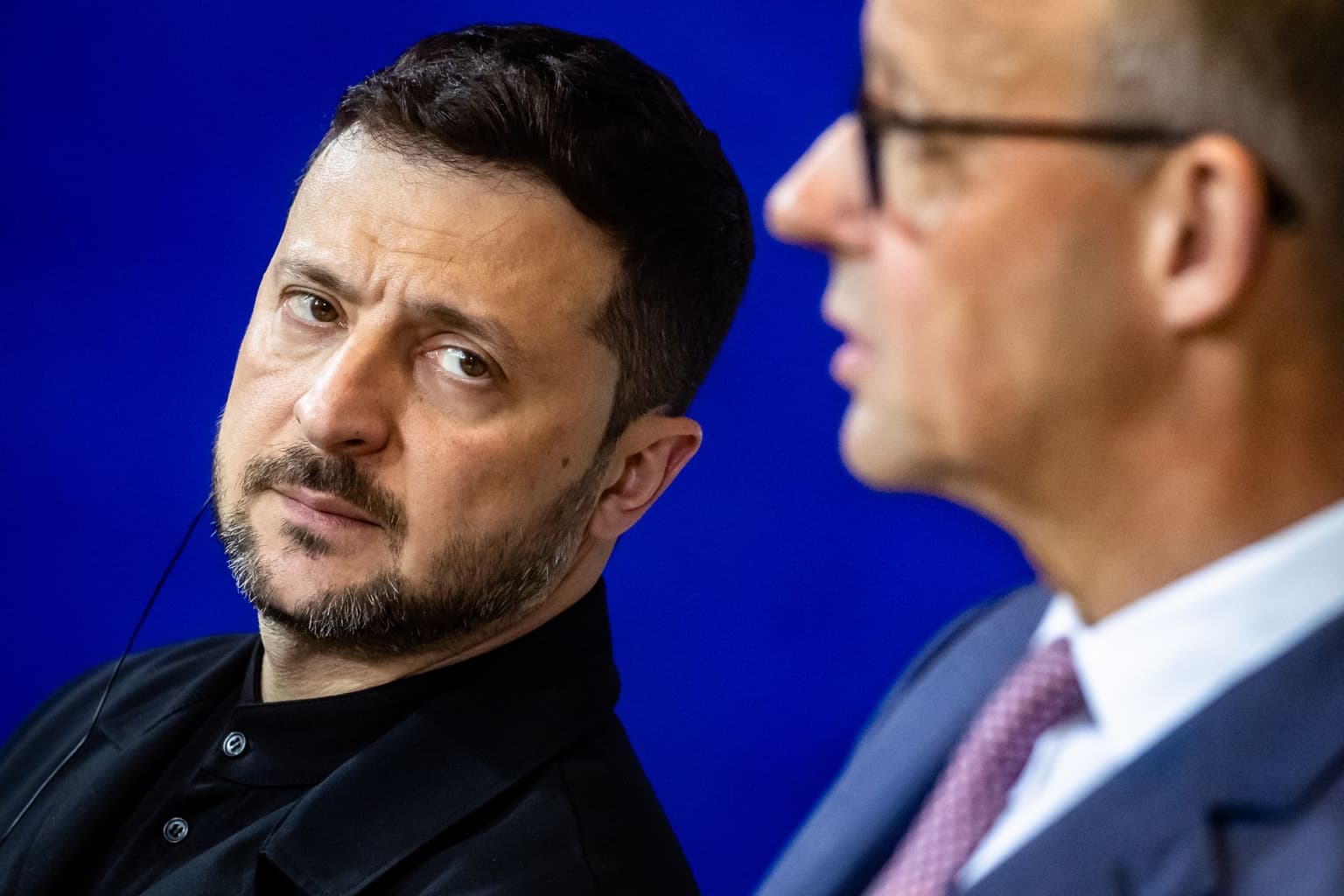
President Volodymyr Zelensky (L) looks at the German Chancellor Friedrich Merz (R) in Berlin, Germany, on May 28, 2025. (Emmanuele Contini / NurPhoto / Getty Images)
 on Google
A number of EU countries, including Austria and Greece, are holding up progress on Ukraine's membership process by insisting that countries in the Western Balkans not be overlooked and left at the back of the line.
This objection comes on top of Hungary stalling the opening of Ukraine's accession talks over the rights of Ukraine's ethnic Hungarian minority, Poland flagging issues over agriculture and the trucking industry, and Ukraine's parliament slow-walking the passing of required reforms.
"The same rules and conditions must apply to all candidates. Here we always have this special focus on the countries of the West Balkans," Austria's Europe Minister Claudia Bauer told journalists at a ministerial meeting in Brussels on May 26.
"For some, there is an overtaking track, with which some can already have a foot in the European Union, while others have to work for decades on membership," Bauer said.
And an EU diplomatic source told the Kyiv Independent that while Greece "supports the accession process of Ukraine and Moldova … it is essential that progress in their accession paths does not come at the expense of the Western Balkans, whose European perspective has been clearly recognized since the Thessaloniki Agenda of 2003."
Since that 2003 meeting, when the EU formally recognized that the countries of the Western Balkans have a future in the EU, only Slovenia (2004) and Croatia (2013) have successfully joined the bloc.
Montenegro and Albania are respectively next in line, with Montenegro expected to be the next country to join the EU, and Albania having passed a key milestone towards membership on May 26.
"there is no longer a convenient fig-leaf to conceal wider reluctance about EU enlargement."
Other countries of the region languish far behind.
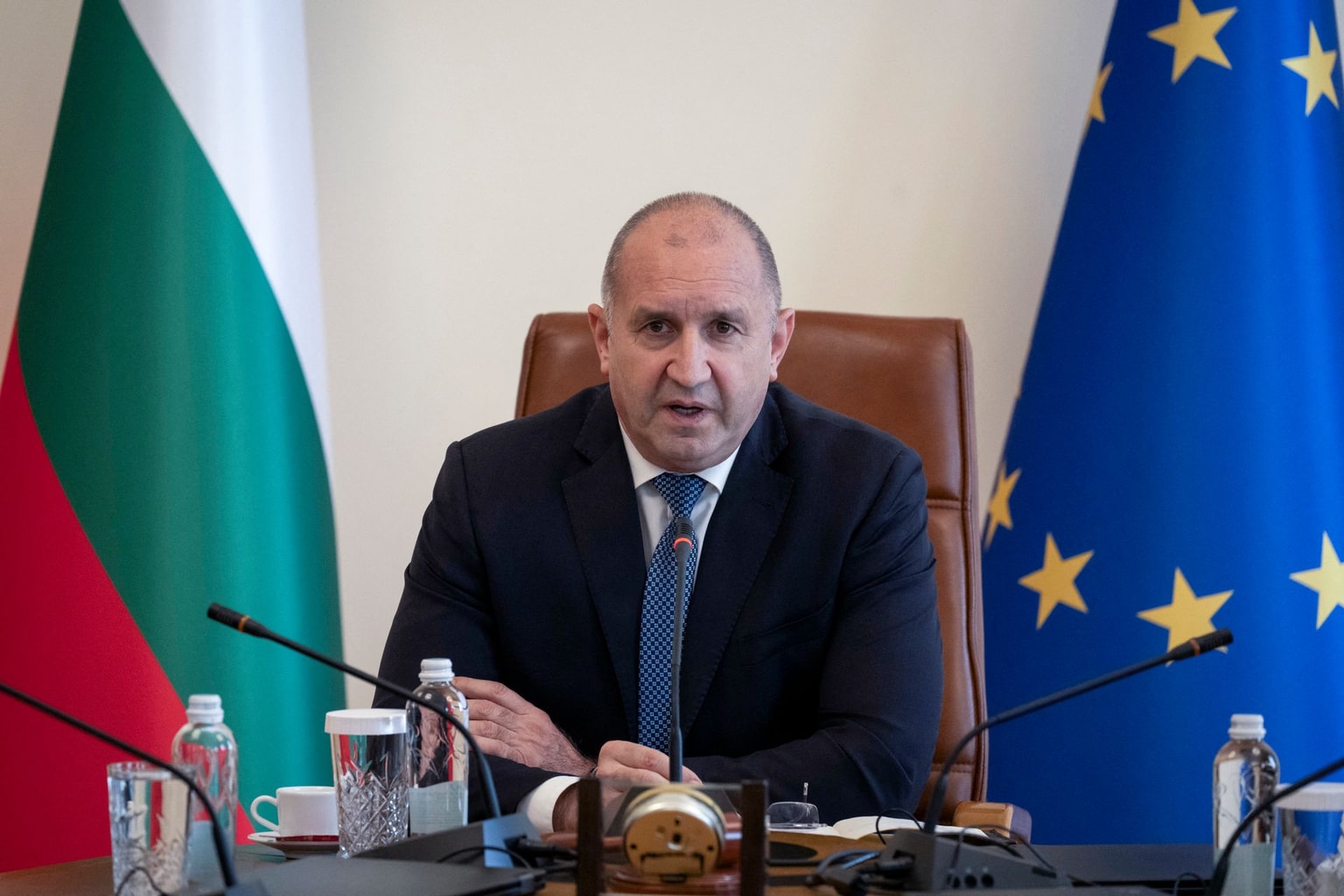
North Macedonia has been a candidate country since 2005, but further progress was blocked for years by Greece, and now, because of a dispute with Bulgaria over ethnic identity issues.
Serbia became a candidate in 2005, made some progress on the accession criteria, but has been democratically backsliding. That has prompted the EU to discuss freezing Belgrade's access to funding.
And Bosnia-Herzegovina and Kosovo have yet to become formal candidates for membership.
Ukraine overtook the latter two when it was awarded candidate status in 2022. If it begins opening enlargement clusters, as expected in June, it will also leapfrog North Macedonia.
The taste of fudge
German Chancellor Friedrich Merz sent a letter to the EU's presidents on May 18, pitching additional EU rights for all candidate countries and associate membership for Ukraine.
Merz's proposal "rightly recognizes the geopolitical necessity of enlargement, and Berlin's pitch is a pragmatic attempt to reconcile this imperative with the reticence felt in many national capitals about special treatment for Ukraine," Martin Leng from the Brussels Institute for Geopolitics told the Kyiv Independent.

The chancellor first floated this idea at an informal meeting of EU leaders in April, but the letter marked a formal step towards trying to press ahead with it, in which he asked for a task force to be established on the topic.
Although Germany supports Ukraine's full EU membership and wants to proceed with negotiations as quickly as possible, Merz's idea of associate membership was received badly in Ukraine, where President Volodymyr Zelensky ruled out anything short of full membership.
And Bauer said, "We are happy to discuss it (Merz's idea) here, but there must not be two classes of candidates," a sentiment expressed by multiple EU leaders.
The EU's heads of government will have the opportunity to potentially discuss Merz's proposal at a meeting with Western Balkan countries on June 5 and again at the summit of EU leaders on June 18.
For Leng, the reactions to Merz's plan reveal an uncomfortable truth: "there is no longer a convenient fig-leaf to conceal wider reluctance about EU enlargement."
"Kyiv will have to acquire a taste for the unsatisfying Brussels fudge, which, too, is part and parcel of the European project," Leng said.