Ukraine strikes Russia's Omsk oil refinery in Siberia, General Staff confirms
 on Google
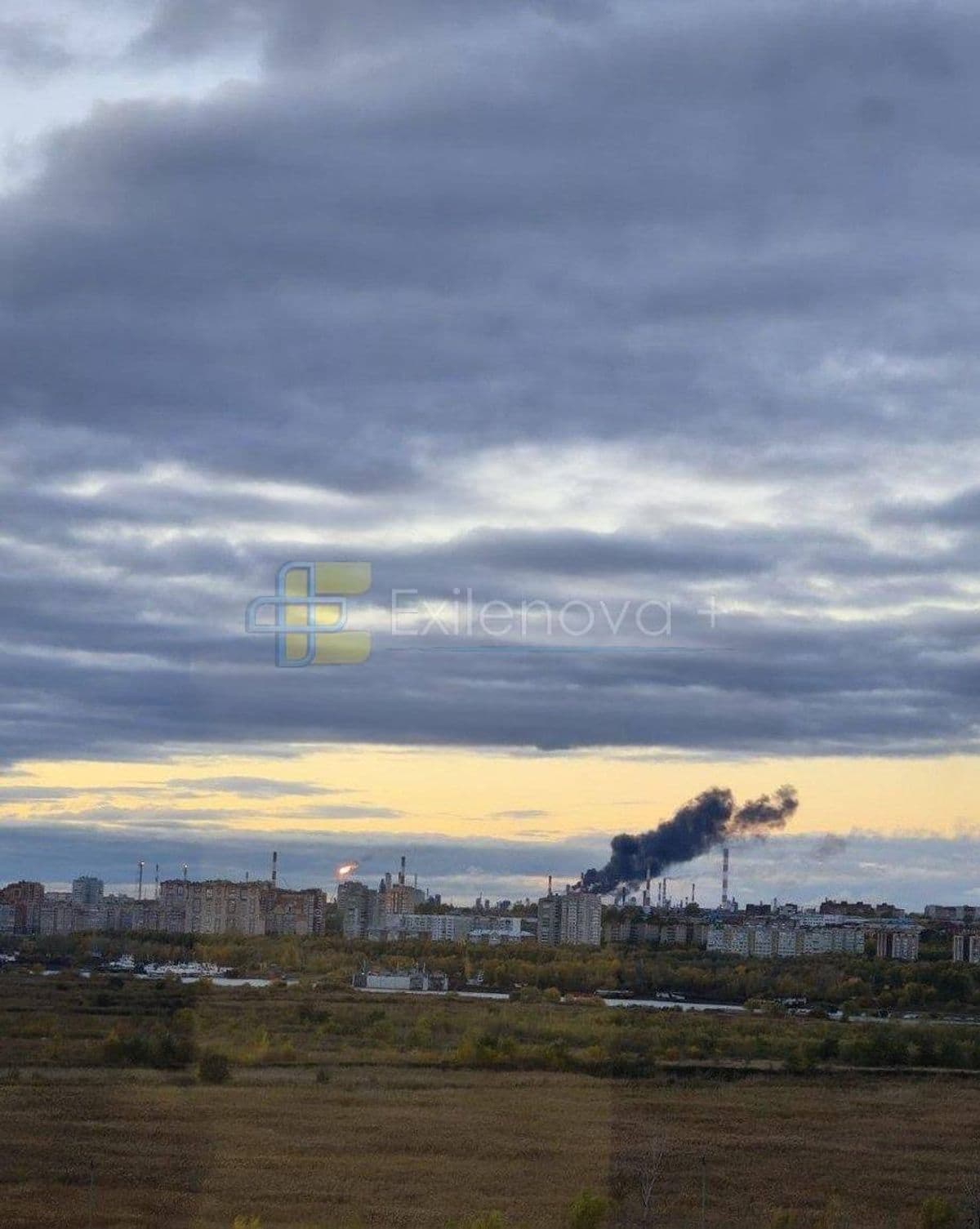
Ukraine's General Staff confirmed that its forces struck Russia's Omsk oil refinery in Russia's Omsk Oblast on Oct. 8.
"The destruction of such facilities is the exercise by Ukraine of its inalienable right to self-defense in accordance with Article 51 of the UN Charter and is aimed at reducing the military-economic potential of the Russian Federation," the General Staff said.
Ukrainian drone manufacturer Fire Point had previously reported an attack on the refinery, saying that the refinery was hit with its own long-range FP-1 attack drones.
Videos and images from local residents, shared by Ukrainian monitoring channels, show explosions, fire, and smoke rising from the area surrounding the oil refinery.
Omsk Oblast Governor Vitaly Khotsenko confirmed that there was a drone attack on the region. Ukrainian authorities have not yet confirm a strike on the refinery.
Omsk is located in southwestern Siberia, north of the Kazakh border. The city of more than 1 million people is some 2,500 kilometers (about 1,550 miles) east of Ukraine controlled territory.
The Omsk oil refinery is owned by Russia's state-owned energy giant Gazprom. It's the country's largest refinery by refining capacity, processing more than 21 million metric tons of crude oil per year.
The plant produces a wide range of fuels, lubricants, and petrochemical products and is involved in supplying the Russian military, Ukraine's General Staff said after Ukraine struck the refinery on July 6. According to the military, the facility has a refining depth of about 99%, one of the highest rates in Russia.
Earlier, an overnight Ukrainian strike on the Gazprom Neftekhim Salavat oil refinery in Russia's Bashkortostan region caused a large blaze at the plant, Ukraine's General Staff confirmed on Oct. 8.
Several images and videos show the moment the plant was struck, as well as thick smoke and fire coming from the grounds of the refinery.
"(The facility) is one of Russia's largest oil refining and petrochemical complexes," the General Staff said in a post on social media. "The facility has a processing capacity of up to 10 million (metric) tons of hydrocarbon feedstock per year and produces automotive gasoline, diesel fuel, fuel oil, bitumen, polyethylene, and other oil refining and petrochemical products."