What the US midterms could mean for Ukraine
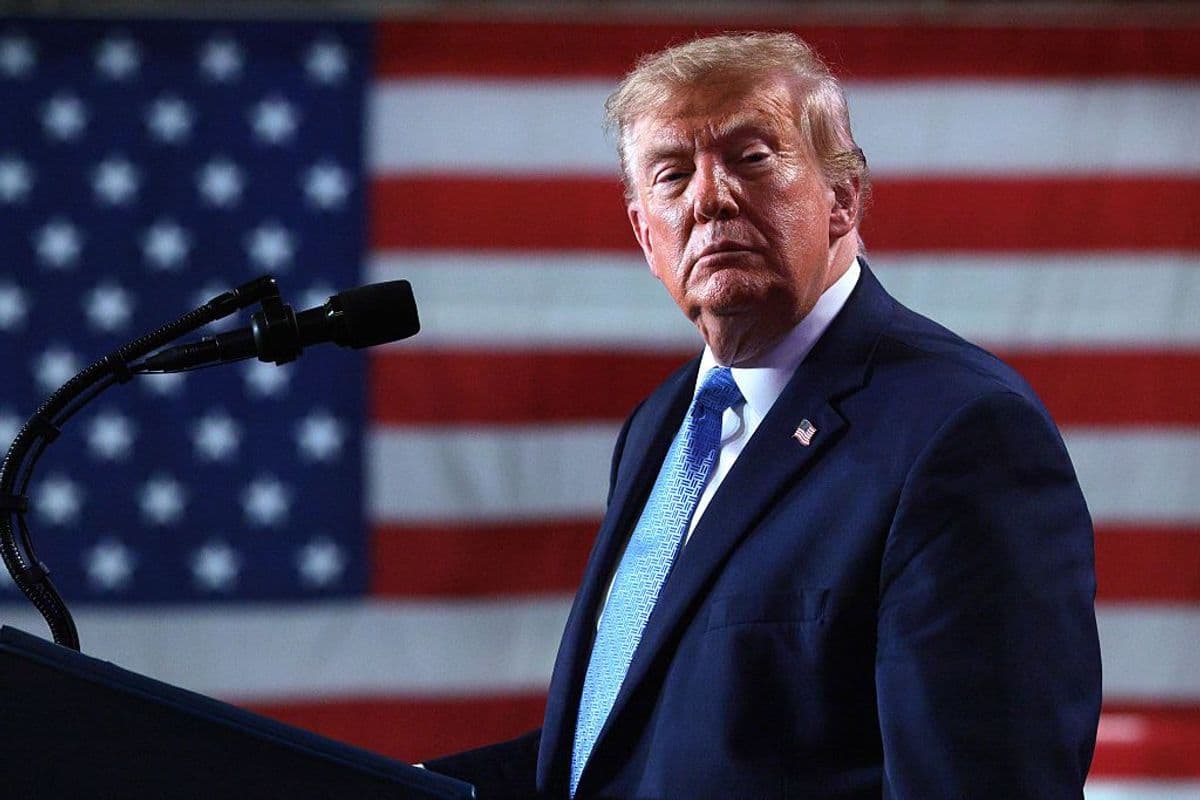
U.S. President Donald Trump delivers remarks during a campaign rally at Crossroads Arena on Oct. 26, 2026 in Corinth, Mississippi. (Chip Somodevilla/Getty Images)
 on Google
For months, Ukraine has faced mounting pressure from U.S. President Donald Trump, as he seeks to secure political gains ahead of the November midterm elections.
With both chambers of Congress at stake on Nov. 3, the key question is how heavily Republicans will lose — and whether the scale of any setback will be enough to shift Washington's foreign policy.
The vote comes at a low point in U.S.-Ukraine relations.
Trump drew fire from U.S. lawmakers, Kyiv, and European capitals for allowing Russian diesel into the U.S. and easing sanctions on Russia, running counter to the West's long-standing strategy for ending the war in Ukraine.
And while Moscow avoids pressure, Kyiv is pressed to end its strikes against Russian refineries while grappling with disruptions in intelligence support and Patriot air defense shipments.
A Democratic victory might give Ukraine a sympathetic Congress and offer greater scrutiny over Trump's foreign policy pivots. However, experts who spoke with the Kyiv Independent say that the U.S. president would ultimately keep firm control over his country's foreign policy.
Pushing Ukraine aid past Trump
This week, U.S. voters will elect all 435 members of the House of Representatives, where Democrats are widely expected to win a majority for the first time since 2020.
The Democratic Party faces steeper — but not insurmountable — odds in the Senate, where only about one-third of the 100 seats are up for a vote, with a mere seven considered toss-ups.
Even if the Democratic Party ends up with 51 Senate seats needed for a majority, they would still need the Republican Party to overcome a filibuster, a U.S. policy where 60 votes are needed in the Senate to pass crucial legislation.

For Kyiv, that is not the end of the road, however.
U.S. senators have shown they can build a bipartisan majority around support for Ukraine, most recently in August, when they passed the Lindsey Graham Act — spearheaded by the late Republican Senator Lindsey Graham — with 86 votes.
But this bipartisan consensus cannot be taken for granted when it comes to Republican lawmakers challenging Trump.
"In today's highly polarized political environment, most lawmakers hesitate to oppose a president of their own party, even when they disagree with his policy choices," James M. Lindsay, a U.S. foreign policy expert at the Council on Foreign Relations, told the Kyiv Independent.
Should Democrats muster enough support to push through a bill on assistance for Ukraine or tougher sanctions against Russia, Trump wields powerful veto rights.
Only a two-thirds supermajority in both chambers can override it, and that number is something Democrats are unlikely to whip up.
"Congress has a poor track record in overturning presidential vetoes, especially in foreign affairs," Lindsay notes.
Still, a Congressional majority would hold some leverage.

Lawmakers could include measures supporting Ukraine in "must-pass" legislation, such as defense appropriations bills or the National Defense Authorization Act (NDAA).
Congress would then "dare Trump to veto it," said Daniel Hamilton, a U.S. foreign policy expert at the Brookings Institution. "He is unlikely to do so, since the overall bill funds the Defense Department."
But even when the bill leaves the desk with a presidential signature, there comes another obstacle — the chance of Trump simply ignoring it afterward.
When the president sidelines Congress
It has happened before.
A sweeping Russia sanctions bill, championed by the late Senator Graham, was passed with great fanfare and signed into law by the president in September.
Yet, Trump has not toughened up on Russia since — quite the opposite.
On Oct. 16, the president issued a broad waiver of Graham's sanctions, days after his Treasury lifted restrictions on Russian diesel purchases.
This was not the first time the administration had sidestepped Congress on Ukraine matters either.
Earlier this year, the Pentagon delayed $400 million in military assistance under the Ukraine Security Assistance Initiative (USAI) for months, even though Congress had already authorized it.
This illustrates the limits of Congress's power: passing a law does not guarantee that the executive will carry it out as lawmakers intended.
Ironically, Congress was quite capable of disrupting the White House's Ukraine course during the Biden administration.
The Republican-led House famously blocked a massive aid bill from late 2023 until 2024, leading to a critical ammunition "hunger" among Ukrainian forces.
But this dynamic would not translate to a clash between Trump and a Democratic-led House. For the Ukraine policy he is pursuing, Trump does not need congressional consent, Lindsay said.
"Some presidential powers, such as when to negotiate, whom to negotiate with, and what to negotiate over, are beyond Congress's power to direct, restrain, or regulate."
It was Trump who — to the chagrin of many pro-Ukraine lawmakers — publicly humiliated President Volodymyr Zelensky in the Oval Office in February 2025 and who pulled Russia out of diplomatic isolation by hosting Russian President Vladimir Putin in Alaska a few months later.
"A Democratic House or Congress may bristle at President Donald Trump's diplomacy with Russia, but it cannot compel him to change it," Lindsay said.
Beyond legislation
A Democratic victory would not upend Trump's policy, but could boost Ukraine's voice on Capitol Hill.
If House Minority Leader Hakeem Jeffries replaces Mike Johnson as speaker, Republican skeptics could no longer keep pro-Ukraine legislation off the floor, as they did with Biden's aid bill.
Majorities in one or both chambers would also give Democrats leadership of committees and allow them to subpoena executive officials.
According to Hamilton, Democrats may use this power to investigate SpaceX founder Elon Musk, U.S. Defense Secretary Pete Hegseth, or Trump's peace envoys Steve Witkoff and Jared Kushner.
Musk is allegedly responsible for the temporary throttling of Starlink services in Ukraine, Hegseth is said to be delaying shipments of Patriot missiles, and the U.S. peace envoys have faced scrutiny for at times pushing peace deals favorable to Moscow.

A House majority would also allow Democrats to impeach executive officials, including, for the third time, Trump. This would not guarantee a conviction and removal — a supermajority of senators is needed for that.
Lawmakers who spoke to the Kyiv Independent see the midterm election as a chance to set the legislative agenda on Ukraine and to scrutinize Trump's policies more closely.
"We will use every legislative and oversight tool available to hold this administration accountable and ensure Ukraine receives the security assistance it needs to defend itself," said Mike Levin, a Democratic representative for California's 49th congressional district.
Backchannel deals with the Kremlin, and any disruptions to intelligence sharing or Ukraine's Starlink terminals would face "rigorous oversight" if Democrats win House committee gavels, he told the Kyiv Independent.
Gregory Meeks, a Democratic representative and ranking member of the House Foreign Affairs Committee, pledged to work with lawmakers from both parties to push through legislation to "compel the Trump administration to deliver to Ukraine the security, economic, and intelligence support it needs to defend its people from Putin's brutal and illegal invasion."
In his statement for the Kyiv Independent, Meeks further committed to "fixing" the Graham Act, "including by denying President Trump the ability to unilaterally import Russian energy and undermine U.S. national security interests."
Nevertheless, Ukraine is unlikely to be front and center in Democrats' focus after the midterms.
The party's 100-day post-victory plan focuses on issues most pressing for U.S. voters, such as the cost of living and restraining Trump's war against Iran, which has driven up inflation and fuel prices.
Ukraine is far from the top of the agenda.
And even with his back against the wall in the legislature, the president will still have a bite on the international scene.
"Historically, most presidents in this situation have turned to foreign policy, and so Trump is likely to be even more outrageous in some of his initiatives than before, perhaps including working with Putin and (Chinese President) Xi (Jinping) at the expense of Ukraine and Europe," Hamilton said.
"A Democratic Congress would do what it could to block that; how such battles unfold will depend on the specific issues."
Lindsay also argues that Trump appears unconcerned about how unpopular his foreign policy maneuvers are, be it the Russian diesel deal or the sanctions waiver.
And since he cannot run for another term, he has even less incentive to temper his policy, the expert added.
"Those are not decisions of a president who is following the political winds."
read also
Note from the author:
Hi, this is Martin, the author of this article.
After Russia launched its full-scale invasion, the U.S. has been Ukraine's first and foremost ally. American weapons, intelligence, and sanctions have helped Ukraine hold the line.
This alliance now looks fragile. But Ukraine and the U.S. have shown they can weather political storms because their support has never rested on a single president. It rested on lawmakers, voters, and ordinary people who decided that helping Ukraine mattered.
If you believe in the work we do here in Ukraine and want to see more reporting like this, please consider supporting us by joining the Kyiv Independent community.
Thank you.