Musk's meddling in Ukraine's Starlink is a warning to every country relying on private tech
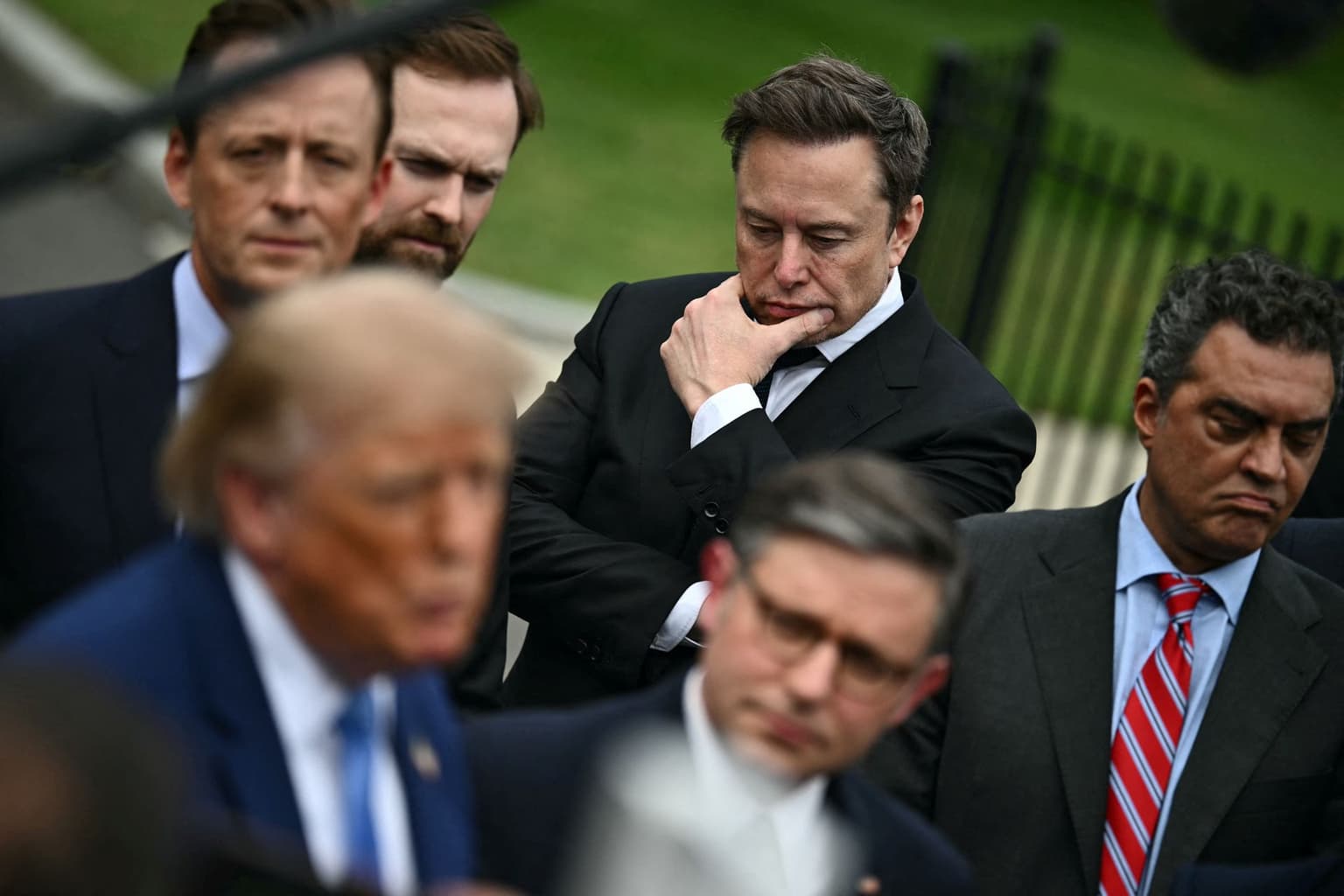
SpaceX CEO Elon Musk looks on as U.S. President Donald Trump speaks to reporters after a meeting with technology executives about artificial intelligence at the White House, Washington, D.C., U.S., on Sept. 29, 2026. (Kent Nishimura/AFP via Getty Images)
 on Google

Cory Alpert
Researcher at the University of Melbourne
In the midst of Donald Trump's attempt to turn Russian diesel into a political asset to help him avoid disaster in November's midterm elections, the internet went out on the front lines.
Since the beginning of the full-scale invasion, Ukrainian forces have relied on Starlink to communicate, and essentially to manage the battlefield of the 21st century. When its service was cut to Ukraine this October, there were big questions about who was responsible for pulling that particular lever.
The Wall Street Journal now reports that Elon Musk personally ordered the Starlink shutdown.
While Musk played with the levers of war and peace toward his own political benefit, Secretary of State Marco Rubio said that the U.S. government has no control over decisions made by private companies.
That leaves Ukraine at the mercy of a private citizen, with no formal responsibility for U.S. foreign policy, able to make a decision that immediately affected another country's ability to defend itself.
And while this matters most urgently to Ukraine right now, the very fact that modern warfare depends so heavily on technologies such as Starlink, vesting so much power in private hands, should prompt a rethink in capitals around the world, particularly those whose own security may be compromised.
One of the great paradoxes of this war is that Ukraine has redefined modern warfare while never quite gaining control over the technologies on which its own survival depends.
Elon Musk is not a neutral figure. His willingness to dictate what Ukraine can do on the battlefield is a choice defined by his own incentives.
Surrounding his Starlink decision, Musk invested $443 million to help Republican candidates in the midterm elections. While Trump has a political interest in diesel prices, Musk's interest in the election is self-preservation.
If Democrats take either chamber of Congress, he will face intense scrutiny about what his companies and his wealth have been deployed to do.
Lying on a social media platform you own is not a crime, but lying to Congress is.
The problem in this fiasco is that Ukraine's military strategy is seemingly now subject to domestic American political incentives. Most troubling is that those include private citizens who have a vested interest in the outcome of an election and influence over battlefield technology.

Ukraine is exposed to domestic American politics because it is fighting the war of the future, one powered by private technology.
The nature of this technology has changed.
For most of the 20th century, military technology could be bought, then a country was free to do as they chose with it. Once an airplane rolled off of a Boeing assembly line, it belonged to the purchaser.
The shift toward the internet-enabled battlefield is that the technology operates more like a subscription than a purchase. Military systems are reliant on software and privately maintained infrastructure. Buying a piece of technology doesn't necessarily mean getting control over how or where it's used.
For the first four years of the full-scale invasion, Ukraine's President Volodymyr Zelensky has met with Congress, sat with Presidents, and built relationships across the American political scene.
That was done on the assumption that the effects Ukraine would feel from the United States would come from political decisions.
Political figures can be challenged on political terms. Ukraine, even with coverage diminished in American media, remains an issue on which politicians can be judged.
But when the terms are being set by a private corporation, Ukraine has no ability to contest its decisions through the channels it has spent years cultivating. Washington tells the world that it is central to Ukraine's survival, and yet it declares itself impotent to affect the decisions of the Republican Party's most generous donor.
This has been one of the hallmarks of the second Trump Administration: the winding together of Washington and Silicon Valley.

Weeks before Starlink was closed off, Musk, alongside Anduril CEO Palmer Luckey and former House Speaker Newt Gingrich, were tapped to define the future of American military power.
All the while, Trump is leveraging American diplomatic power to demand that allies and partners make themselves dependent on American AI technology.
While the U.S. criticizes China for the deep integration of the CCP and its technology sector, the U.S. government under Trump is using its power worldwide to sell American technology to private buyers while asking Silicon Valley's leaders to make decisions about the future of American security.
And yet, when one of those companies makes a move that is politically beneficial to Republicans' political fortunes, suddenly the division between public and private sectors is sacred.
This transformation has required a far greater emphasis on private production, on companies able to innovate using their own money and then selling to governments, rather than governments specifying what they want ahead of time.
That has left Ukraine vulnerable to decisions made by the people who lead those private companies.
Ukraine continues to fight a war to prevent an invading regime from determining its future as a nation. But what does political independence mean if the ways that a country defends itself can be restricted by private interests beyond its political reach?
As American allies and partners invest more heavily in American technological infrastructure, their political relationships with Washington may no longer be sufficient to guarantee their sovereignty.
Editor's note: The opinions expressed in the op-ed section are those of the authors and do not purport to reflect the views of the Kyiv Independent.