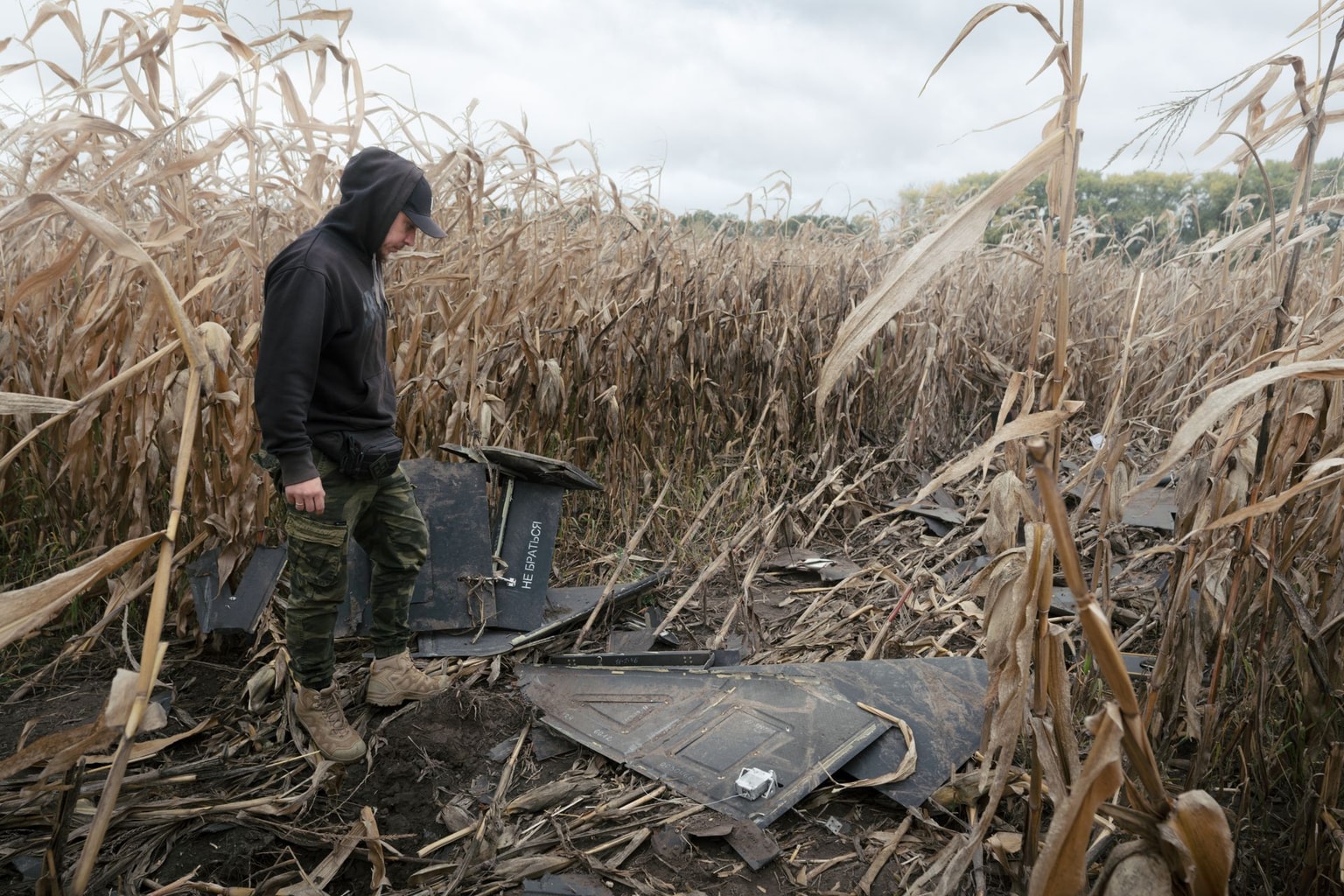
Ukrainians fled west for safety. Now Russian drones are following them
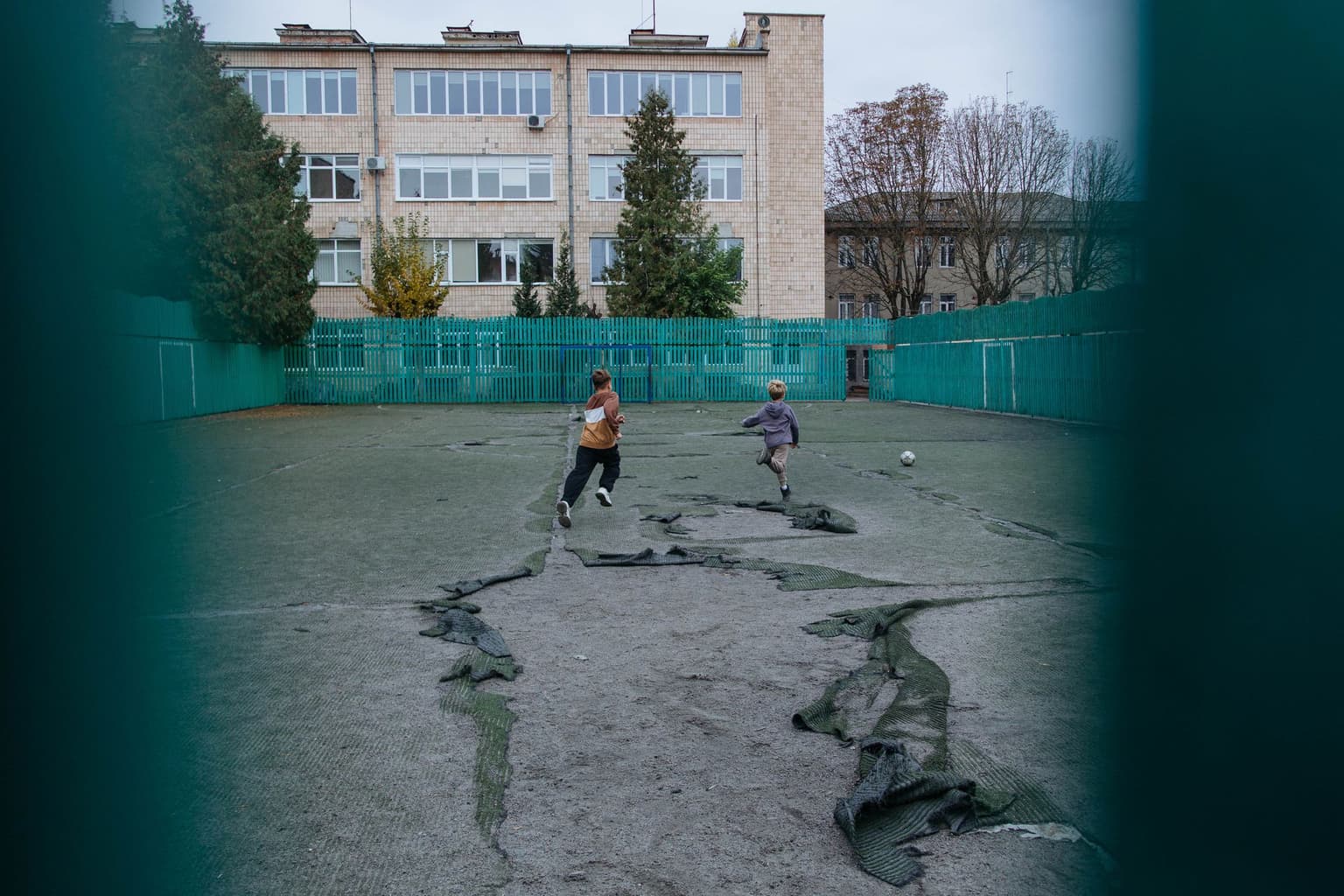
Children play on the playground at Lutsk Lyceum No. 4 during the early autumn school break in Lutsk, Volyn Oblast, Ukraine, on Oct. 22, 2026. (Alona Malashyna/The Kyiv Independent)
 on Google
Andrii Mazur has spent 24 years with Ukraine's State Emergency Service in Volyn Oblast, but during all that time, nothing has compared to the situation that has unfolded in recent weeks.
He and his team have been dispatched to disaster areas eight times in seven days, operating round the clock as swarms of Russian jet-powered drones bombard Western Ukraine.
"Above all, we fear for our colleagues on site, as nothing outweighs the worth of a human life," he told the Kyiv Independent.
Russia has intensified its attacks on western Ukraine in recent weeks, increasingly targeting regions far from the front line, including Volyn and Rivne oblasts in the country's northwest.
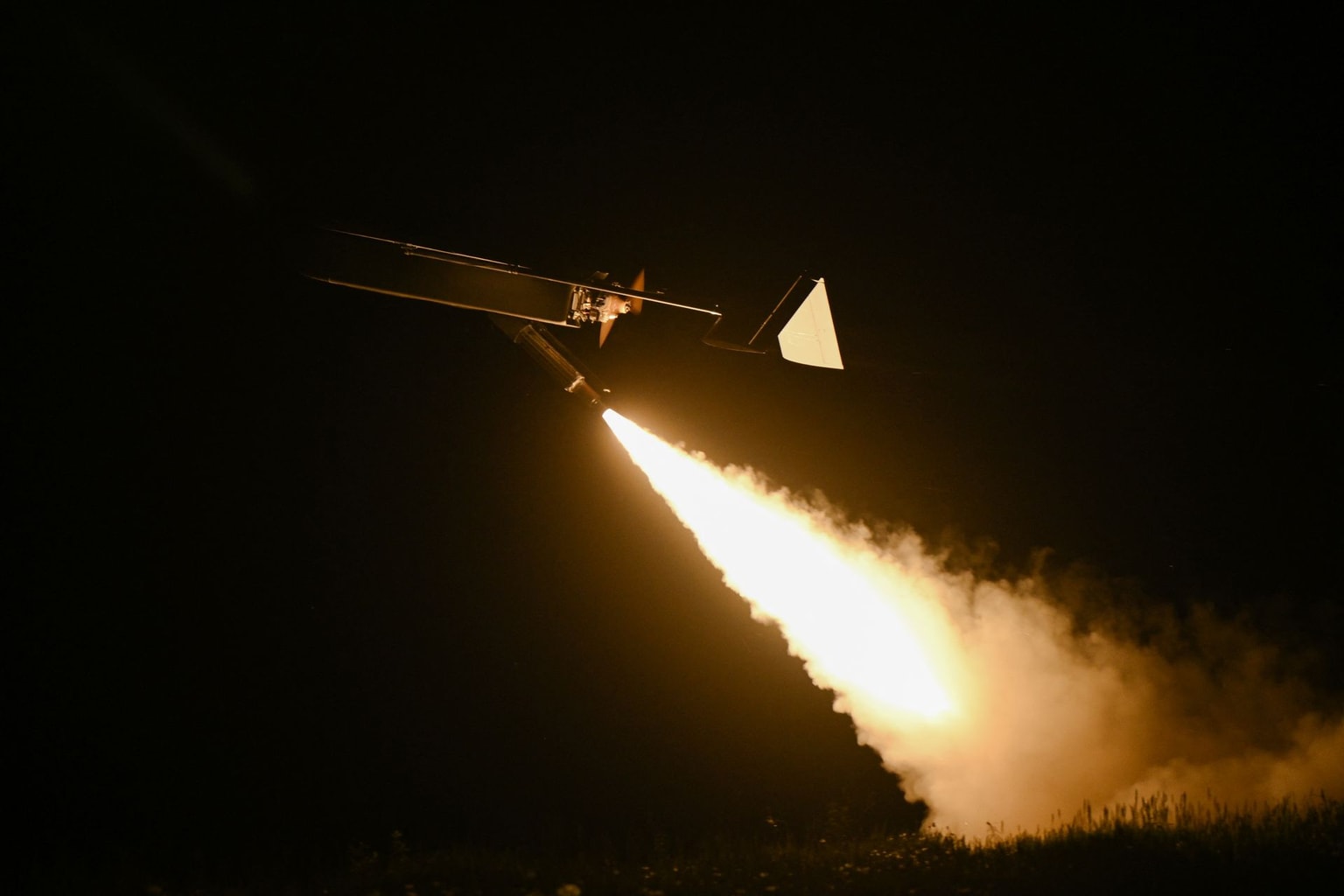
The escalation comes as Russia expands its production and use of Geran jet-powered attack drones, which are faster than conventional versions and far harder to intercept.
Local residents in the regional capital of Lutsk say drones are "terrorizing" them day and night, as air alerts last hours and drones constantly target critical infrastructure.
The attacks have caused civilian casualties in Lutsk and Rivne. On Oct. 14, a drone strike in Lutsk killed six people and injured 12, damaging a food warehouse and a residential building. That same day, drone strikes in Rivne injured eight people, following an attack a day earlier on a university building that injured 25.
Kateryna Kovalchuk, founder of the Katelab clothing brand, designed minimalist T-shirts featuring a subtle Ukrainian emblem early in Russia's full-scale invasion. She sent them to President Volodymyr Zelensky, who wore them often in the war's early months.
Kovalchuk experienced the impact of the recent attacks firsthand when an explosion shook her apartment building this week. The blast wave shattered the window of a neighboring apartment where her friend lives. She moved from Kyiv to Lutsk with her two children, hoping to find a safer place to spend the winter, as many Kyivans are doing by relocating to western cities.
"It's hard for me to call Lutsk safe now," Kovalchuk said. "Drones cross our skies constantly. That illusion of peace is completely gone."

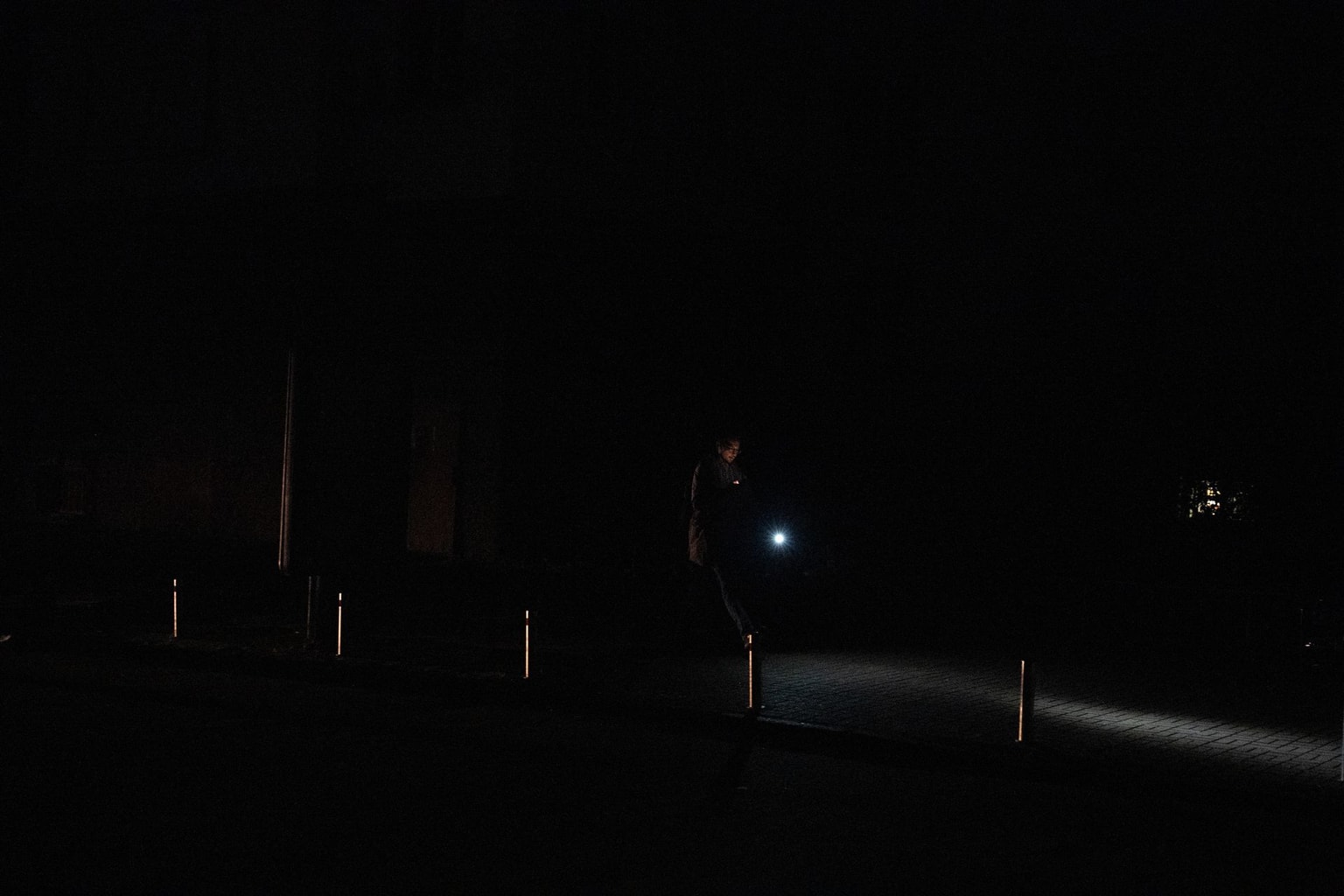
On the morning of Oct. 23, much of Lutsk was without electricity following a Russian attack targeting energy infrastructure. In the city center, generators hummed loudly in the streets. The noise gave way to silence as a convoy carrying a fallen Ukrainian soldier passed down the main street.
People stepped out of cafes and lined the road to pay their last respects as the convoy passed. Hours later, air defenses brought down a drone. A deafening blast ripped through the city center, sending pedestrians on the bustling street running for a shelter nearby.
Mazur's family remain in Lutsk, clinging to the hope that the city would remain a relatively safe haven away from the front lines. But the fear of the situation taking a turn for the worse is never far away. When emergency calls come in, there is little time for reassurance, let alone a proper goodbye.
"Fighting a fire, deployed right now," he messages her, or simply: "I'm safe. Still here."

Among the most agonizing duties is retrieving victims killed by Russian strikes and observing the anguish of surviving relatives. Reflecting on the recent strike targeting a commercial storage facility where six individuals perished, Mazur remembered family members gathering to confirm the deceased.
"Nothing compares to the sorrow when families show up to identify loved ones," he said. "Watching a son learn that his mother, father, and their friend lie dead inside is agonizing. Every loss of life hurts, but facing those grieving relatives remains the most painful for me."
Kovalchuk said she has no plans to leave Lutsk for now, but is preparing for possible power and heating outages by storing water and charging her power station.
If heating is significantly disrupted this winter, she may move to her mother's village around 30 kilometers (19 miles) from the Belarusian border, despite the risks. During a recent visit, she saw an attack drone flying low over houses, seemingly directly above her mother's home.
Some of Kateryna's friends with children, however, are considering leaving Ukraine. For families with school-age children, the decision also raises questions about whether they can continue their education safely.

According to Oksana Shchyboruk, a biology teacher and deputy director at Lutsk's Lyceum No. 4, schools have adjusted their routines around ongoing air alarms, yet continuous disruptions severely hinder regular classes.
Educational institutions across Lutsk have implemented a blended instructional model, granting families the choice between physical attendance and remote learning. Educators try to teach during brief lulls between alarms, while students on campus must constantly retreat to shelters.
"Sometimes we have normal classes, but on certain days, our time was mostly spent repeatedly moving back and forth between the classrooms and the shelter," Shchyboruk said.

Heightened security risks prompted municipal authorities in Lutsk to move the scheduled autumn school break forward, acting mayor Andrii Razymovskyi announced on Oct. 21.
Olha Paliona, a senior researcher at the Kramatorsk History Museum in Donetsk Oblast who specializes in local embroidery from her home region, relocated to Lutsk in the summer of 2026 after enduring years of Russian bombardment.

The persistent danger posed by Russian first-person-view (FPV) drones in Kramatorsk made daily routines agonizingly hard. Local residents were often forced to stay hidden inside almost all day to avoid FPV drones hunting them.
Paliona opted for Volyn Oblast largely due to bonds forged amid the full-scale war, including connections with servicemen from the Lutsk-based 100th Brigade and a local ceramic artist. Upon arriving in Lutsk, Volyn Regional Historical Museum staff "embraced her warmly." Together, they curated an exhibition that bridged Kramatorsk's heritage with Lutsk's.
Having survived Russian strikes herself, Paliona is not yet alarmed by the attacks. She said they are an inevitable consequence of the war. But she urged Lutsk residents to take air alerts seriously and move to shelters rather than staying out in the open during alarms as they usually do now.

Lviv, where the threat becomes psychological
Further west, in Lviv, residents have yet to face the same pressure as those in Lutsk, but many are bracing for the possibility that deadly Russian attacks may soon reach them, too.
"I've come to realize that sooner or later, this could happen in any city, including Lviv," says Anastasiia Polianska-Maherovska, an IT specialist living in Lviv, when talking about the recent strikes in the Volyn and Rivne oblasts.
"You can never fully prepare for something like this, or simply stop caring about it. But at the same time, this has become our everyday reality. It's a terrible psychological burden to live with this contradiction."
"We try to focus on daily life and not think about the future hardships of winter in Ukraine."
Vira Kostenko-Kuznietsova, a strategist and media expert who lives in the western city with her husband and 10-year-old son, speaks bluntly: "I think (the increasingly heavy attacks will come), but that’s the reality of war."

Although only an hour's drive from the Polish border, Lviv has never been truly safe from Russian drones and missiles. Like other cities in Ukraine, it has periodically sunk into darkness during Moscow's winter onslaughts against the Ukrainian power grid.
Yet compared to Kyiv and eastern regions, Lviv has been a relative refuge for much of the year. Air raid alerts have been sparse throughout the summer and early autumn, while the capital faced near-endless attacks.
That is beginning to change as Russian jet-powered drones probe the city, sometimes circling at high altitudes, keeping the entire population on edge about where — or when — they will hit.
So far, the drones have come in small numbers and caused little damage, but air raid alerts are becoming near-daily.
"It's frustrating," says Dmytro Maherovskyi, Polianska-Maherovska's husband, who also works in the IT sector. "Power cuts are back, and businesses have to suspend their work more often. So even if a drone doesn't hit its target, there is still clear economic and psychological pressure."

Polianska-Maherovska says she has to center her daily routine around air-raid alerts — from doctor visits to buying groceries to walking her dog.
But Maherovskyi says he can't say for sure whether he feels more in danger than before. The city has faced worse attacks, and the situation is a far cry from the threat facing cities like Kyiv, Dnipro, or Zaporizhzhia, he says.
"Maybe we've become somehow desensitized to the threat over time. And we've been lucky, too, as our street hasn't suffered any damage."
As the temperature drops, locals are preparing for another brutal winter of Russian attacks, stocking up on power banks, blankets, food, and warm clothes. Having endured four wartime winters, Lviv denizens know what to expect and what precautions to take.

But preparing oneself mentally is a different challenge, one that grows harder as the full-scale war approaches its fifth anniversary in just a few months.
"We try to focus on daily life and not think about the future hardships of winter in Ukraine," Kostenko-Kuznietsova says. "But we do plan a trip to visit relatives abroad in the middle of this winter to make it end more quickly."
"I try to believe that we'll get through the winter more or less okay and make it to the spring and warmer weather," Polianska-Maherovska says, adding she tries to enjoy little things in everyday life rather than focus on the coming difficulties.
"I try not to dwell on the worst-case scenarios, although that gets harder every year."
Chernivtsi, where safety is relative
For Ukrainians who have fled Russian occupation and bombardment, Chernivtsi has offered something increasingly difficult to find: a place where daily life can begin to feel normal again.
In the southwestern city, located near the Romanian border, the war has so far been less immediate than in much of Ukraine. Aside from a Russian drone and missile attack in July 2025 that killed five people, Chernivtsi has avoided major mass-casualty strikes. Residents are more likely to experience the war through blackouts caused by Russian attacks on the energy grid and funeral processions for fallen soldiers than through the sounds of air defense.
But as air raid alerts become more frequent across the region, the question of how long that relative safety will last is becoming harder to ignore.

For Oksana Kudria, a psychotherapist who fled Russian-occupied Kherson and settled in Chernivtsi in spring 2022, the answer is shaped by what she has already lived through.
“It won’t be more dangerous than it was during the Russian occupation or than it is now in Kherson,” Kudria told the Kyiv Independent. “I trust in our air defense.”
After four years, Chernivtsi has become “her” city, and she has no plans to leave. She is drawn to its cultural heritage, including that of Olha Kobylianska, the pioneering feminist writer who made her mark in the city in the late 19th and early 20th centuries.
Yet leaving Kherson and following the daily attacks on those still living there has taken an emotional toll. Kudria attends therapy herself to work through the experience, even as she helps her own clients do the same.

“How we process and work through these experiences really affects how well our minds can adapt,” she said.
Kudria is not alone in finding a second home in Chernivtsi. Iryna Kolomiets arrived with her family from Vyshneve, a town less than an hour from Kyiv, three months ago. They left after a Russian attack on July 5-6 struck an ammunition warehouse belonging to a state defense-industry enterprise, killing nine people and damaging hundreds of homes in secondary explosions.
“We just didn’t have the emotional strength to put up with it anymore. We have three children,” Kolomiets told the Kyiv Independent.
The frequent air raid alerts in Chernivtsi worry her, but she says they are different from those she experienced at home and in other regions under constant attack.
Like Kudria, Kolomiets has been struck by the city's “magical” quality. In three months, she says, she has not met “a single unpleasant person.” She hopes her family will eventually return to Vyshneve.
She’s just not sure they will be able to do so by spring.