Ukraine war latest: Russian chemical plant, oil depot set ablaze following Ukrainian strikes
 on Google
Key developments on June 13-14:
- Russian chemical plant, oil depot set ablaze following Ukrainian strikes
- Russia fired nearly 2,000 drones at Ukraine in one week, Zelensky says
- Black Sea Fleet command plans relocation from Crimea to Russia’s Novorossiysk, pro-Ukrainian partisans claim
- UK seizes Russian shadow fleet oil tanker in 'first operation of its kind'
- UN records highest civilian casualty toll in Ukraine since 2022
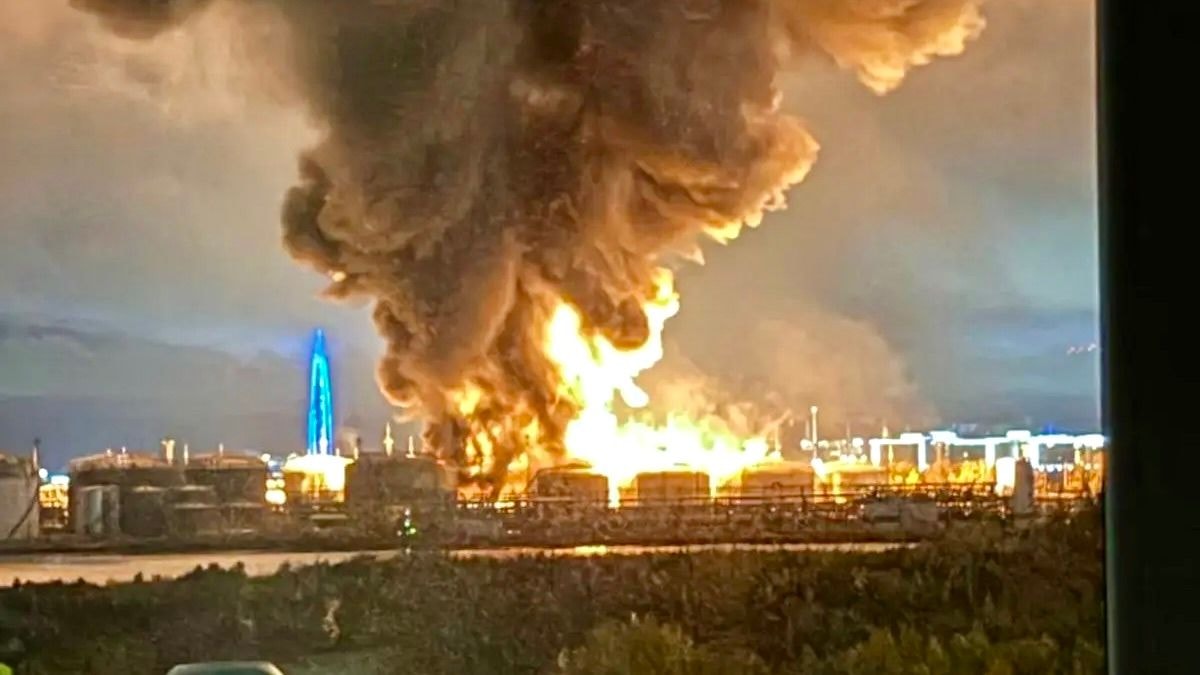
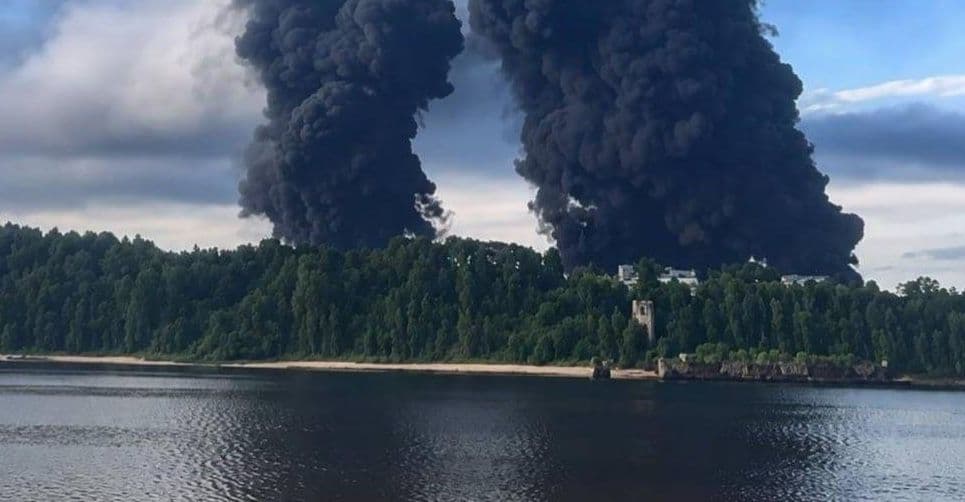
Ukraine struck a chemical plant in Russia's Tula Oblast, an oil depot in Yaroslavl Oblast, and other targets overnight on June 14, social media channels first reported and Ukrainian officials later confirmed.
The Azot chemical plant in the Russian city of Novomoskovsk, Tula Oblast, was set ablaze following strikes, according to independent Telegram monitoring channel Exilenova Plus. Novomoskovsk is located about 395 kilometers (245 miles) from Ukraine.
Russian authorities confirmed Novomoskovsk was targeted in an overnight attack, but did not comment on the reported strikes at the Azot plant specifically, mentioning an unnamed "industrial enterprise."
"During the repulsion of the aerial attack, fragments of downed Ukrainian drones fell onto the territory of one of the industrial enterprises in Novomoskovsk," Tula Oblast Governor Dmitriy Milayev claimed.
In Rybinsk, Yaroslavl Oblast, an oil depot was struck and a fire broke out at the facility afterwards, Exilenova Plus reported.
The Security Service of Ukraine (SBU) confirmed that operatives from its Special Operations Center "A" carried out a successful strike on the Temp reserve oil depot in Rybinsk.
The Temp oil depot is part of the Russian Federal Agency for State Reserves and is used to store gasoline, diesel fuel, and other fuels and lubricants. It supplies Russia’s northeastern regions and maintains strategic fuel reserves for military needs.
Following SBU drone strikes, at least three major fires were reported at the tank farm, which consists of more than 60 storage tanks.
President Volodymyr Zelensky confirmed Ukrainian strikes on the Azot chemical plant in Novomoskovsk and the Temp reserve oil depot in Rybinsk.
He also said flight restrictions were introduced at six Russian airports, while air-raid alerts were declared across 28 regions of Russia since last evening.
Russia fired nearly 2,000 drones at Ukraine in one week, Zelensky says
Russian forces launched nearly 2,000 strike drones against Ukraine over the past week, Ukrainian President Volodymyr Zelensky said on June 14.
Overall, Russia fired 1,920 combat drones, 1,790 guided aerial bombs, and 17 missiles of various types, he said.
"We need to step up our countermeasures against these attacks. We are preparing for meetings with partners to strengthen our defense against this Russian terror," Zelensky wrote on Telegram.
He noted that the upcoming G7, EU, and NATO summits are an opportunity to secure concrete decisions.
"First and foremost, we need support for air defense and our long-range capabilities, an expansion of cooperation in the Drone Deals format, and further strengthening of sanctions pressure on Russia," Zelensky said.
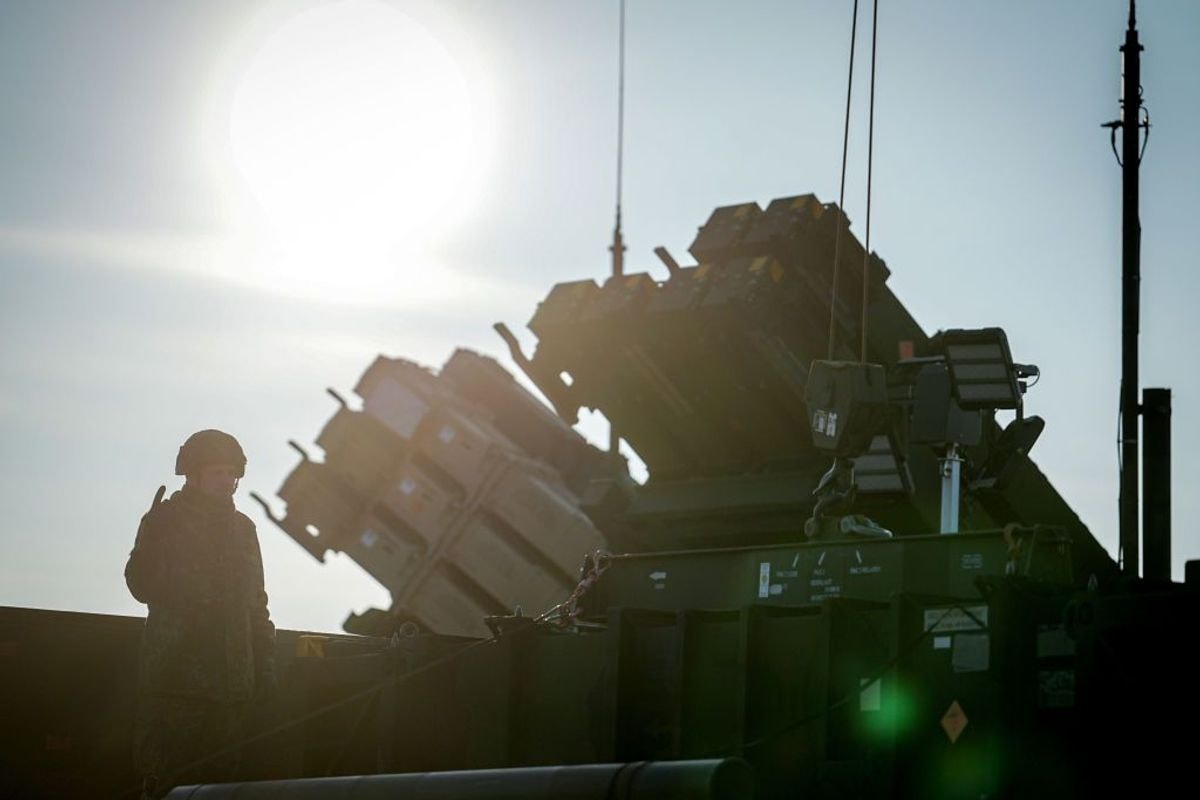
Ukraine continues to face a pressing shortage of anti-ballistic defenses amid large-scale Russian attacks that increasingly rely on ballistic missiles. U.S.-produced PAC-3 Patriot interceptor missiles remain the most effective systems for countering these threats.
Black Sea Fleet command plans relocation from Crimea to Russia’s Novorossiysk, pro-Ukrainian partisans claim
he Russian Black Sea Fleet is reportedly developing plans to relocate the remaining command and control units from its headquarters in occupied Sevastopol, Crimea, to Novorossiysk, Russia, the pro-Ukrainian Atesh partisan group claimed on June 14.
The partisans link the relocation to the increasing strikes on Crimea by Ukraine, including after the May 27 strike on the Russian Black Sea Fleet aviation headquarters.
"Since then, strikes on the peninsula have only intensified, and the logistical situation for the occupying forces in Crimea has significantly worsened," Atesh wrote on Telegram.
The Kyiv Independent couldn't independently verify Atesh's claim.
According to military informants cited by the group, some officers are already privately arranging relocation for their families, disposing of property they cannot take with them, and settling into a new base in Novorossiysk, without waiting for official orders.
The mood among the fleet's leadership is reportedly subdued, with those who understand the situation preferring not to delay, Atesh claimed.
"The relocation of command structures is a logical consequence of sustained pressure on the fleet's infrastructure in Crimea. Maintaining headquarters structures on the peninsula is becoming an increasingly costly and risky decision for the occupying forces," the statement read.
"Judging by how the situation is developing, the coming months could be the most difficult for Russian forces in Crimea since the start of the war."
UK seizes Russian shadow fleet oil tanker in 'first operation of its kind'
The United Kingdom's armed forces boarded and detained a sanctioned Russian shadow fleet tanker in the English Channel on June 14, the country's Defense Ministry and Prime Minister Keir Starmer said.
The shadow fleet of more than 700 vessels transports around 75% of Russia's sanctioned oil and serves as a key source of revenue for the Kremlin, according to U.K. Defense Secretary Dan Jarvis. He said the income generated helps fund missiles and drones used in attacks on Ukrainian civilians and supports Russia's war effort.
Royal Marine Commandos and specially trained officers from the National Crime Agency intercepted the vessel, "Smyrtos," in the early hours, with Starmer's personal authorization.
The operation lasted around six hours and was described as the first U.K.-led operation of its kind.
"This successful operation delivers yet another blow to Russia and reminds those fueling Putin's war in Ukraine that we will not let them hide," Starmer wrote on X.
The vessel, Smyrtos, has been transporting Russian crude oil and petroleum products and is sanctioned by the EU, the United Kingdom, Switzerland, Canada and Ukraine, according to Ukraine's military intelligence agency's database of shadow fleet vessels.
The vessel will be moved provisionally to an anchorage off the south coast of England and monitored for environmental and safety concerns.
President Volodymyr Zelensky thanked Keir Starmer and all the British people for "their principled resolve."
"It was Russia’s hubris, fueled by high oil and gas revenues, that paved the way for this war, and every decision by partners that deprives Russia of money also limits the war itself," he wrote on X.
UN records highest civilian casualty toll in Ukraine since 2022
More than 2,000 civilians were killed or injured in Ukraine in May, making it the deadliest month for civilians since April 2022, the U.N. Human Rights Monitoring Mission in Ukraine (HRMMU) reported on June 12.
The mission verified at least 274 civilian deaths and 1,763 injuries during the month, the highest monthly casualty toll recorded in the past four years.
"The intensification of hostilities and the increasingly frequent use of powerful weapons in urban areas led to high numbers of civilians killed and injured across the country," Danielle Bell, head of the HRMMU, said in a statement.
Among the deadliest incidents documented by the mission in May were a May 5 strike on an industrial area in Zaporizhzhia that killed 12 civilians and injured 42, and a May 14 missile strike on a residential building in Kyiv that killed 24 civilians and injured at least seven others.
The U.N. said the increase continued a seasonal pattern of rising civilian casualties during the spring and summer months, but noted that casualty levels in 2026 are significantly higher than in previous years.
"The harm documented was not confined to communities near the front line," Bell said. "In cities across Ukraine, repeated missile and aerial bomb attacks killed and injured civilians far from areas of active ground combat."
While most casualties occurred in government-controlled territory, the mission also documented civilian deaths and injuries in Russian-occupied areas. Among them was a strike on a training facility in occupied Starobilsk, Luhansk Oblast, on the night of May 21-22 that killed 21 civilians and injured others.
Near the front line, short-range drone attacks remained a major driver of civilian harm. The U.N. verified at least 64 deaths and 539 injuries from short-range drone strikes in May, the highest monthly figure recorded for that weapon type since the start of Russia's full-scale invasion.
Kherson was among the hardest-hit cities. The mission documented 14 civilian deaths and 221 injuries there in May, including six deaths and 132 injuries caused by short-range drone attacks. Russian drone operators have repeatedly targeted civilians, emergency workers, and civilian vehicles in what has become known as a "human safari."