Ukraine war latest: Kyiv endures day-long Russian drone, missile attack
 on Google
Key developments on Aug. 27:
- Kyiv endures day-long Russian attacks that began overnight;
- Russia destroys all generating equipment at Kherson thermal power plant ahead of heating season;
- Ukraine reveals latest intelligence on Russia’s mobilization plans;
- Russian lieutenant colonel reportedly killed in car explosion in St. Petersburg;
- Russian e-commerce giant Ozon reports Ukrainian attacks on facilities in Ufa, Orenburg.
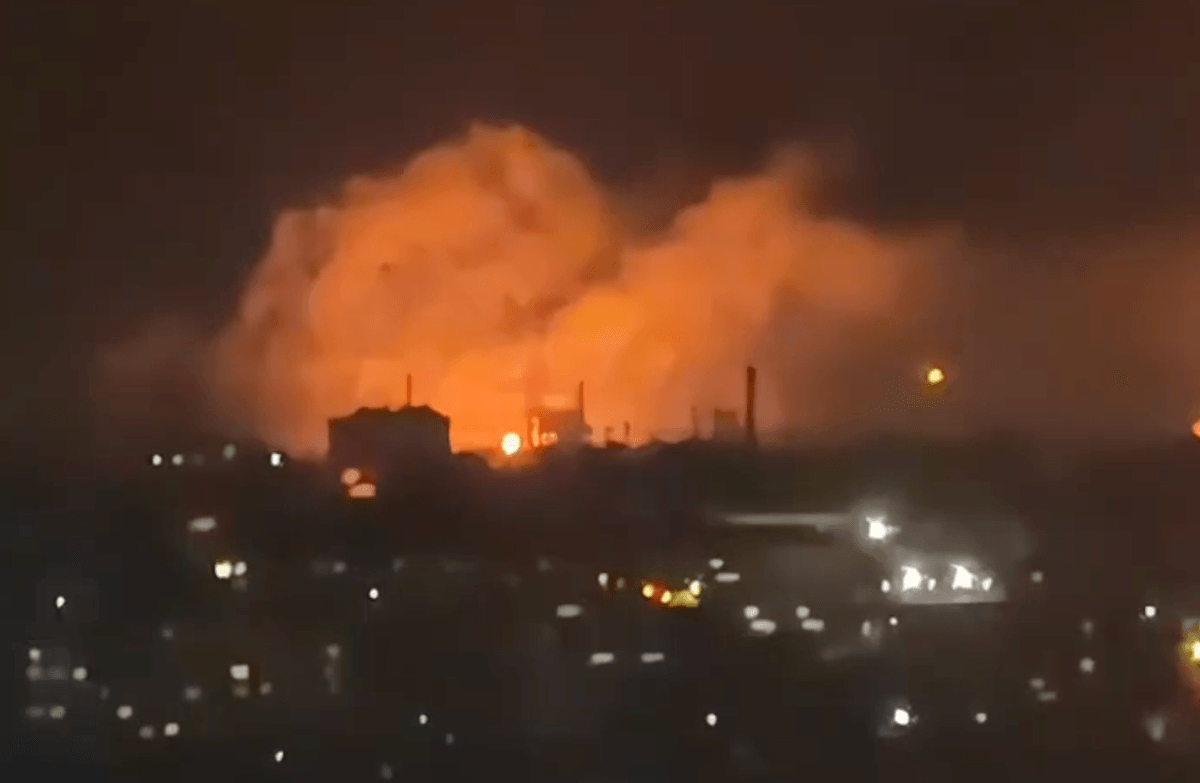
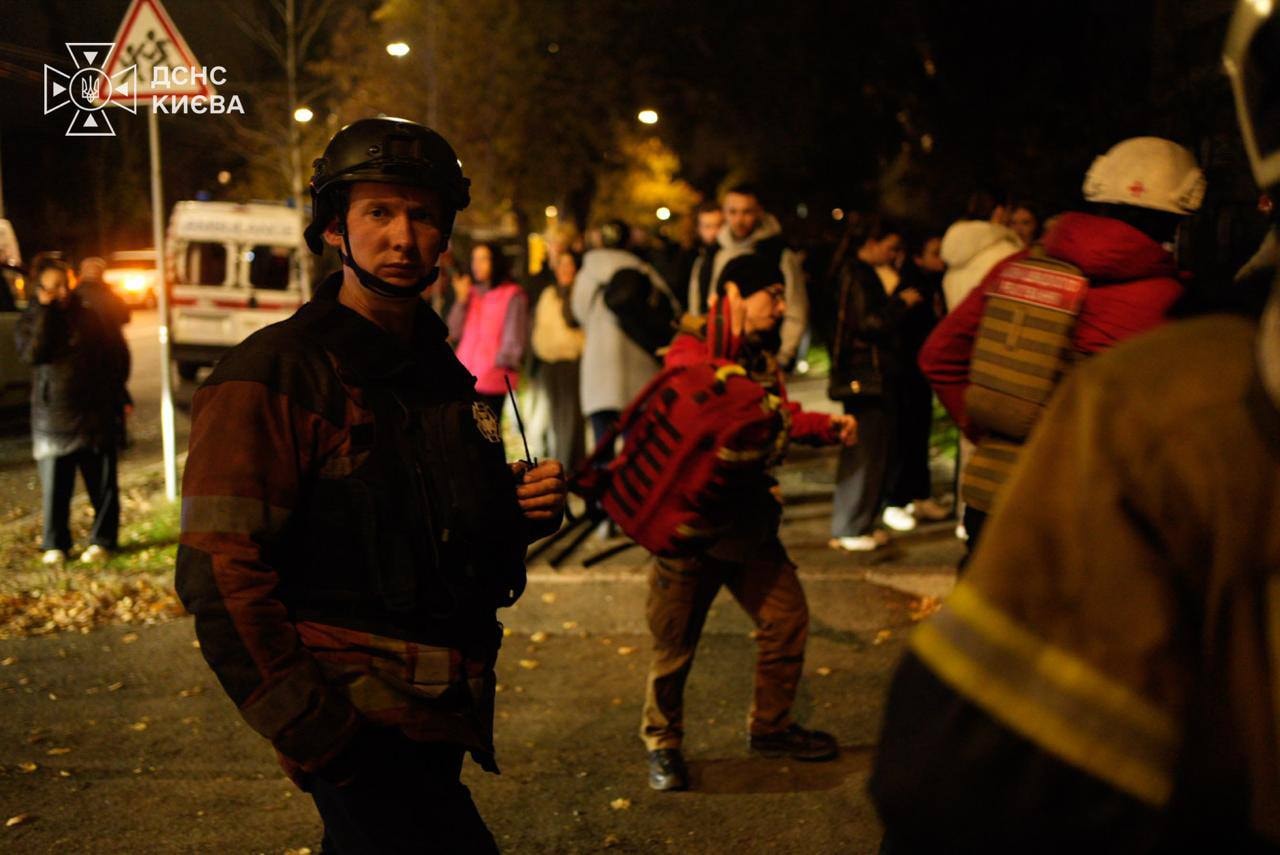
The sounds of explosions, air defense fire, and jet-powered drones filled the morning air in Kyiv on Aug. 27, as an hours-long aerial barrage once again targeted Ukraine's capital.
Russian forces launched ballistic missiles, cruise missiles, and drones at Kyiv in the early hours of the morning.
At least six explosions were initially heard in the capital in quick succession around 3 a.m. local time on Aug. 27, Kyiv Independent editor Chris York reported.
Debris was later found in the city's Podilskyi and Shevchenkivskyi districts, with two schools damaged.
After sunrise, as Kyiv began to go about its Thursday, Russia targeted the capital with more jet-powered drones, with explosions and air defense fire audible in the city throughout the morning and afternoon and on into the evening.
"There have already been several alerts today," 33-year-old doctor Vitalii who asked to be identified by first name only, told the Kyiv Independent while taking shelter in Khreshchatyk Metro station.
"The all-clear sounds, and then another alert follows. While walking down the street, I heard air defense systems at work and explosions, most likely following hits and detonations."
According to city authorities, a sporting facility was damaged, with local Telegram channels reporting a fire near the Valerii Lobanovskyi Stadium — home of Dynamo Kyiv — in the city center.
The stadium is in the heart of Ukraine's government quarter, adjacent to Mariynskyi Palace, the Cabinet of Ministers, and not far from the Presidential Office. It later announced it had not been damaged in the attack.
A drone also fell on a main road in the Holosiivskyi district in the southern part of the city center shortly after midday, Kyiv Mayor Vitali Klitschko said. He added that four people had been injured in the capital as of 3:30 p.m. local time.
At around 7:04 p.m., a four-story residential building was damaged in Kyiv’s Podilskyi district, the Kyiv City Military Administration said. Information on possible casualties was still being clarified.
Smoke was reported near the Gulliver shopping center in central Kyiv. A spokesperson from the building's owner, Oschadbank, told the Kyiv Independent it was undamaged. It comes just a few days after Russia hit a shopping center in Kryvyi Rih, killing at least 16 people.
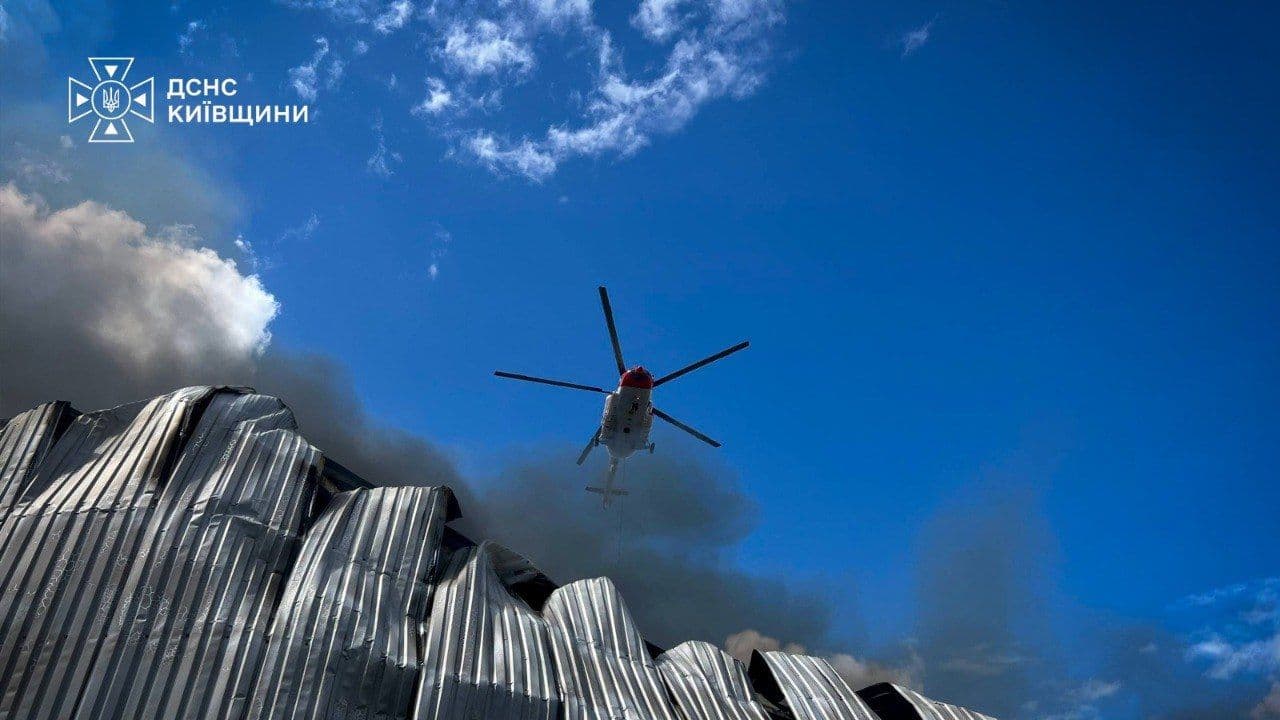
Forbes Ukraine reported that a warehouse used by the supermarket chain Fora was damaged in the overnight attack, as well as distribution centers belonging to the Toy House chain, and domestic appliance store Comfy. Supermarket chain Kolos later reported one of its warehouses had also been hit.
The attack also destroyed an Avrora multimarket chain distribution center in Kyiv Oblast, co-owner Taras Panasenko said. No employees were injured, he added. It was the second attack on an Avrora distribution center in less than a week, after Russia struck another facility in Poltava Oblast on Aug. 22.
A Russian daytime strike also destroyed a Roshen confectionery warehouse near Boryspil in Kyiv Oblast, the company said.
"Air raid alerts, of course, disrupt your routine because you can’t work properly or carry on with the things you had planned," Vitalii said, adding: "(My family and I) have adapted to this reality. We always have a plan for situations like this."
Ukrainian Railways reported long delays of up to 13 hours on some trains on Aug. 27.
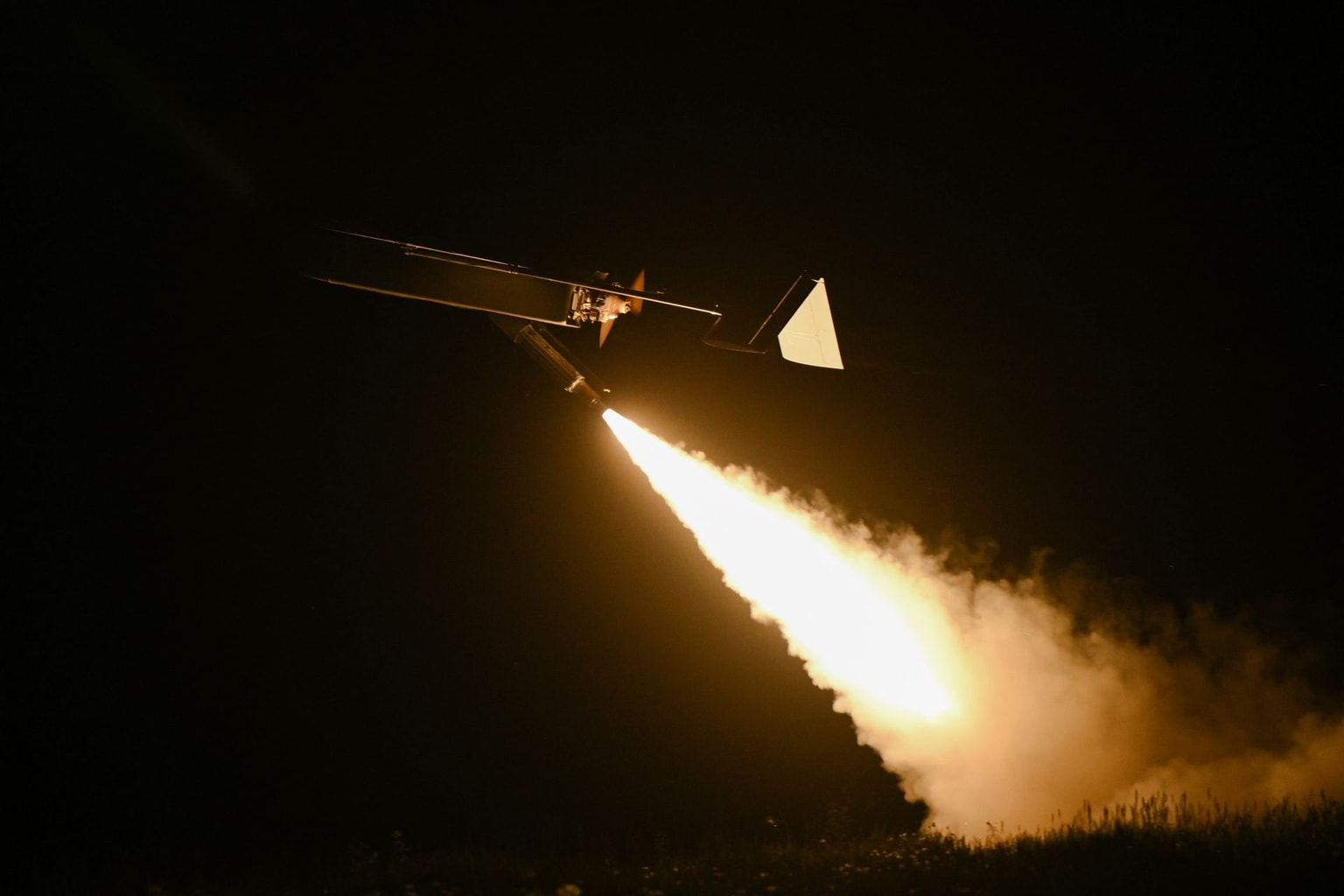
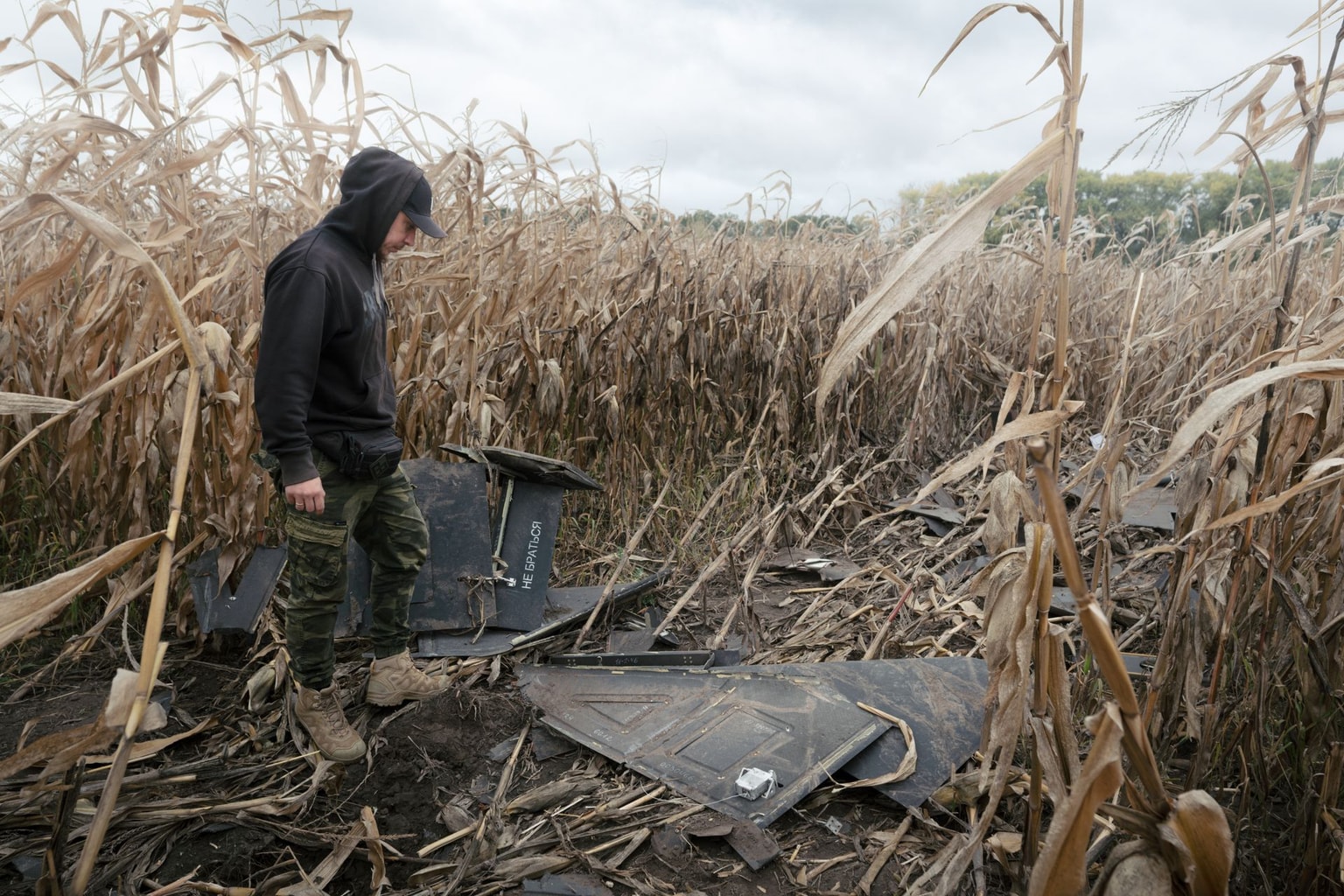
The jet-powered drones, based on the Iran-designed Shahed platform, have presented a major challenge for Ukraine's air defense, forcing manufacturers to quickly experiment with jet-powered interceptors, as standard interceptor drones are simply not fast enough.
Ukraine's Air Force announced earlier in the morning that seven Russian Iskander-M or North Korean-built KN-23 ballistic missiles had been shot down. The total number of ballistic missiles fired at Ukraine wasn't disclosed.
Russia destroys all generating equipment at Kherson thermal power plant ahead of heating season
Russian forces struck the Kherson thermal power plant with four glide bombs overnight, destroying all heat- and power-generating equipment at the facility ahead of the heating season, state energy company Naftogaz said on Aug. 27.
The attack caused critical damage to the plant, which supplies heat to a significant number of residential buildings in Kherson.
"This attack has no military purpose. Its sole aim is to terrorize civilians and attempt to deprive tens of thousands of Kherson residents of a source of heat ahead of the heating season," acting Naftogaz CEO Sergii Fedorenko said.
Employees were in shelters at the time of the attack and were not injured, Naftogaz said.
The strike came just a day after Russian forces hit the same plant with a glide bomb on Aug. 26, causing what Naftogaz at the time described as serious damage to Kherson's main source of heating.
The Kherson plant has been repeatedly targeted by Russian forces.
Naftogaz reported earlier in August that Russia had attacked its facilities 293 times since the beginning of 2026.
"The intensity of the attacks has more than doubled compared with previous years," the company said.
Kherson, located close to the front line, faces daily Russian attacks that regularly kill and injure civilians and damage homes and critical infrastructure.
Despite the relentless strikes, more than 60,000 residents, including over 4,000 children, still live in the city, according to local authorities.
read also
Ukraine reveals latest intelligence on Russia’s mobilization plans
Russia plans to mobilize 600,000 recruits in 2026-27 as growing public dissatisfaction with the war in Ukraine reduces the number of people willing to volunteer, Ukraine's President's Office said on Aug. 27.
Detailing a briefing from intelligence officials, the office said in a statement that mobilization will target 300,000 people this year and another 300,000 next year.
"Russia’s political leadership views an additional wave of mobilization as a response to the aggressor state’s loss of the initiative in the war, the continued increase in personnel losses on the front, and the significant slowdown in contract recruitment across the regions," the office said.
Since Russia's full-scale invasion of Ukraine, Moscow has only once turned to forced mobilization to fill the ranks of its military: in fall 2022, when successive Ukrainian counteroffensive successes threatened a broader collapse of Russia's defense lines.
The move triggered an exodus of hundreds of thousands of Russians from the country, with long lines at border crossings, particularly at the state border with Georgia.
Since then, Russian President Vladimir Putin has gone to great lengths to avoid more large-scale forced mobilization, seeing it as a threat to his image as a provider of strength and stability to ordinary Russians apathetic to questions of politics and war.
Instead, Moscow has relied on lucrative bonuses offered to those who sign a contract, with responsibility resting largely on regional authorities to meet tough recruitment quotas.
The President's Office cites "internal Russian documents" that show the need for mobilization — a politically risky move for Putin — is fueled in part by "a significant increase in dissatisfaction with the war across the regions," which is said to be as high as 69% in some regions of Russia.
Kyiv has been vocal in recent weeks about the threat of another wave of Russian mobilization.
Speaking to journalists earlier this week, President Volodymyr Zelensky said Russia plans to mobilize around 300,000 people after State Duma elections in September, but will do so without touching the country's major cities in an effort to minimize backlash from society.
According to Zelensky, the 300,000 mobilized troops would complement existing inflows of recruits into the Russian army, and will either be used to boost Moscow's main offensive effort on the "fortress belt" cities of Donetsk Oblast, or to create new threats in other areas, including Ukraine's northern border.
Russian lieutenant colonel reportedly killed in car explosion in St. Petersburg
A Russian lieutenant colonel has reportedly died after his car exploded in St. Petersburg on Aug. 27, Russian media reported.
According to local news outlet Fontanka, the blast occurred around 10 a.m. local time near a supermarket in the city's Shushary neighborhood.
Authorities confirmed an investigation was underway, adding one person had been killed, but describing the incident as a "vehicle fire," not an explosion.
The victim has not been named. His wife, reportedly also in the vehicle at the time of the incident, was critically injured.
No suspects have been identified.
Ukraine has previously targeted Russian military officials and other figures involved in Moscow's full-scale invasion.
Damir Davydov, a Russian military official responsible for supplying missile and artillery ammunition to the front, was killed in a car bombing outside Moscow on June 9.
Ukraine has not commented on the latest incident.
Russian e-commerce giant Ozon reports Ukrainian attacks on facilities in Ufa, Orenburg
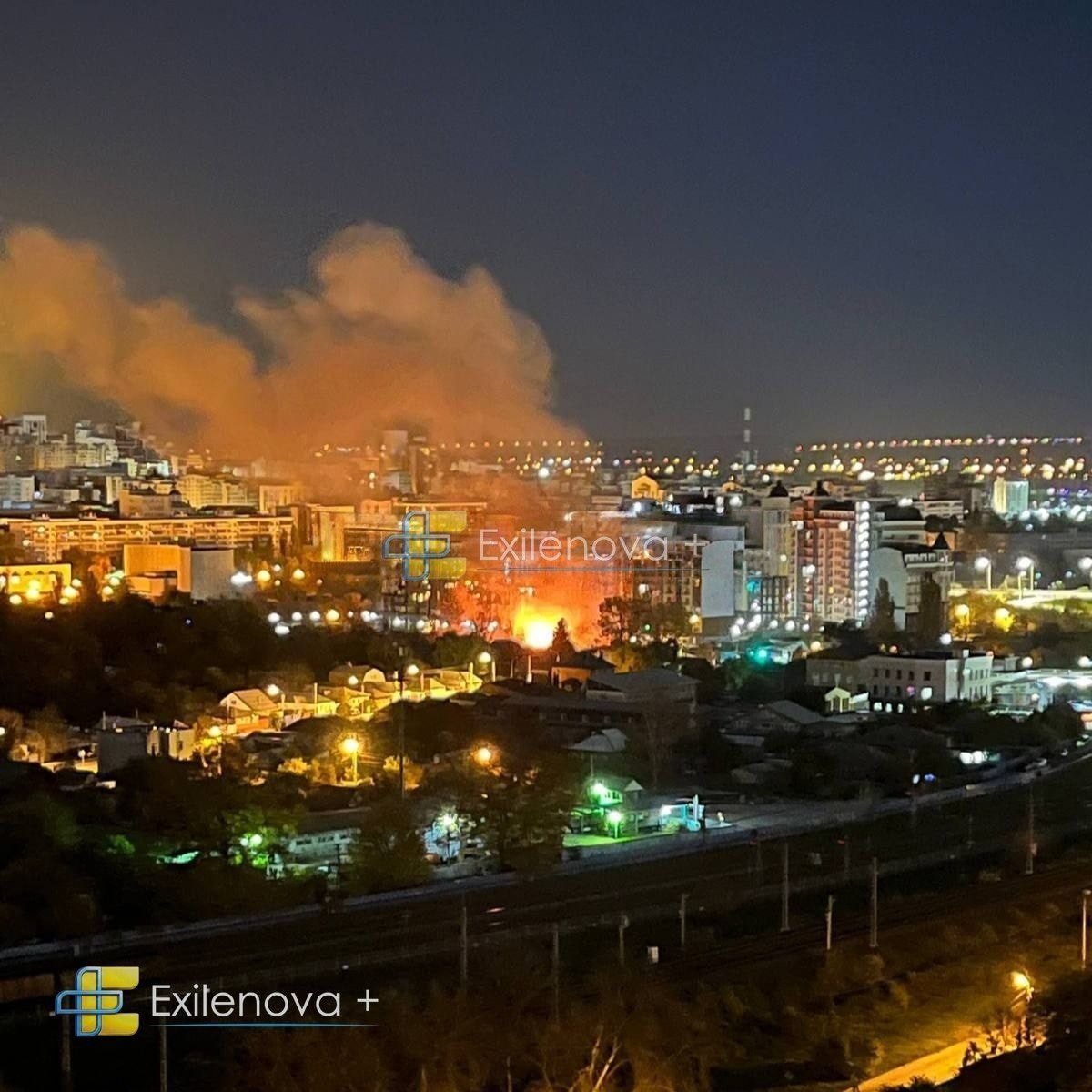
Warehouses belonging to Russian online retailer Ozon in the cities of Ufa and Orenburg in the Ural Mountains came under attack on the night of Aug. 27, the company reported on Telegram.
Ozon is the main rival of Wildberries in Russia, a larger e-commerce company often dubbed "Russia's Amazon," which has been the target of an intense strike campaign by Ukrainian forces.
Neither attack on the Ozon facilities caused a major fire, nor were photos of the trademark large columns of smoke from burning warehouses posted on social media.
"The logistics complex in Ufa received minor damage, but is still closed and the area needs to be thoroughly inspected," the company said.
According to Ozon, the Orenburg warehouse has already resumed operations.
Ukraine's military had not commented on the attack as of midday Aug. 27. The Kyiv Independent couldn't independently verify the damage.
After devastating Wildberries facilities across the European part of Russia, including around Moscow, Ukraine first turned its attention to Ozon on Aug. 22 with a strike destroying a warehouse in Samara Oblast.
Ukraine's Defense Ministry confirmed the strike on Ozon in a post the following day.
"Ukrainian defense forces have struck the first blow against logistics hubs belonging to the Russian company Ozon," the ministry said.
"Systematic strikes on storage centers for dual-use goods are making it more difficult for the enemy to operate and are negatively impacting the overall economy of Russia. After Ukrainian units targeted 15 of the largest logistics hubs belonging to Wildberries, it was Ozon's turn."
Two days later, four more Ozon facilities came under attack. On top of the stated aim of targeting commerce in dual-use goods, Ukraine's strike campaign is seen as bringing the effects of Russia's war closer to its citizens, and potentially triggering major financial shocks in the country.