Baltics assessment of Russia threat 'unchanged' after CIA director's Moscow visit
 on Google

Editor's note: The story has been updated with additional comments.
Estonia and Latvia on Aug. 27 reiterated that they remain vigilant, but their overall assessment of Russia's threat remains unchanged, despite media reports about the U.S. intelligence chief warning Moscow against possible provocations targeting NATO's frontier.
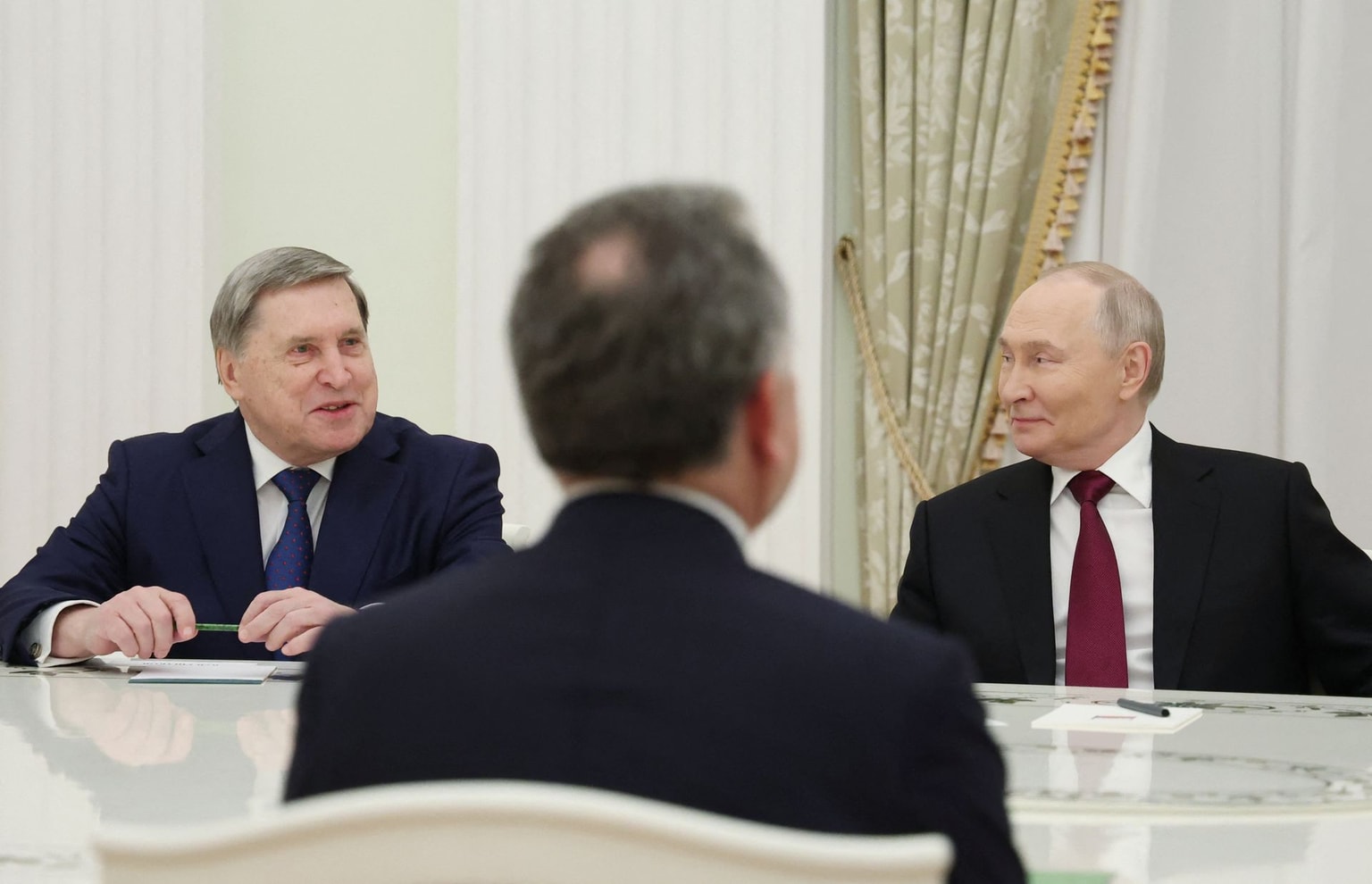
CIA Director John Ratcliffe's unexpected visit to Moscow on Aug. 25 sparked speculations about its purpose. Politico reported, citing an undisclosed source, that the main goal was to "warn Russia against any escalatory action against the Baltic states."
The rare trip followed heightened tensions in the region as the Baltic governments accused Russia of cyberattacks, sabotage, attempts to influence public opinion, and aerial incursions.
"The threat posed by Russia and possible provocations against NATO must be taken seriously, and that is precisely what the allies are doing," Estonia's Foreign Minister Margus Tsahkna told the Kyiv Independent.
"We must remain vigilant, but Estonia's threat assessment has not changed."
His comments were echoed on social media by his Latvian counterpart Baiba Braze, who added that "together with our NATO allies, we are taking the necessary measures to strengthen our security.
Latvia's Prime Minister Andris Kulbergs came out more forcefully to downplay fears.
"I want to clearly tell the people of Latvia: there is currently no reason for concern. Latvia's level of military threat has not changed. The risk of direct military invasion threats to Latvia is currently low," Kulberg said.
"Readiness for a possible threat is not the same as an immediate threat. These two things must not be confused."
The Latvian prime minister also warned that the security situation should not be turned into an issue for the election campaign. Latvia will elect a new parliament on Oct. 3.
U.S. President Donald Trump likewise downplayed Ratcliffe's Moscow visit, saying "he's there on very sort of semi-routine (business) — I hate to disappoint people."
NATO's deterrence test
U.S. Under Secretary of Defense for Policy Elbridge Colby is attending a meeting of NATO ambassadors in Brussels on Aug. 27, where U.S.-Russia talks are expected to be discussed.
U.S. Republican lawmaker Don Bacon called for Washington to return 5,000 troops to Poland and the Baltic states as a clear show of "deterrence."
Separately, Latvia and Lithuania have called on the EU to provide more financial support to the bloc's eastern flank countries for their effort to secure the common external border.
For Tsahkna, deterrence remains key.
"It is in the interests of Estonia and NATO as a whole that Russia does not miscalculate when it comes to NATO's collective defense. The more clearly the allies make it understood in Moscow that NATO's collective defense remains rock-solid, the better."
Tomas Jermalavicius, a security expert at the International Center for Defense and Security (ICDS) in Tallinn, calls it encouraging that the "U.S is involved and, indeed, leads the way in an apparent effort to send deterrent messages to Moscow."
Yet, the expert notes that the U.S.'s review of forces in Europe, Trump's behavior, and the war in Iran have done much to undermine Washington's deterrence credibility vis-à-vis Russia.
"... Trump's willingness to go to great lengths to accommodate Russia may leave an impression in Moscow that whatever the CIA director says, he cannot back it up with real action," Jermalavicius told the Kyiv Independent.
"Time will tell how seriously he has been taken."