Why a U.S. Marine fought — and died — for Ukraine
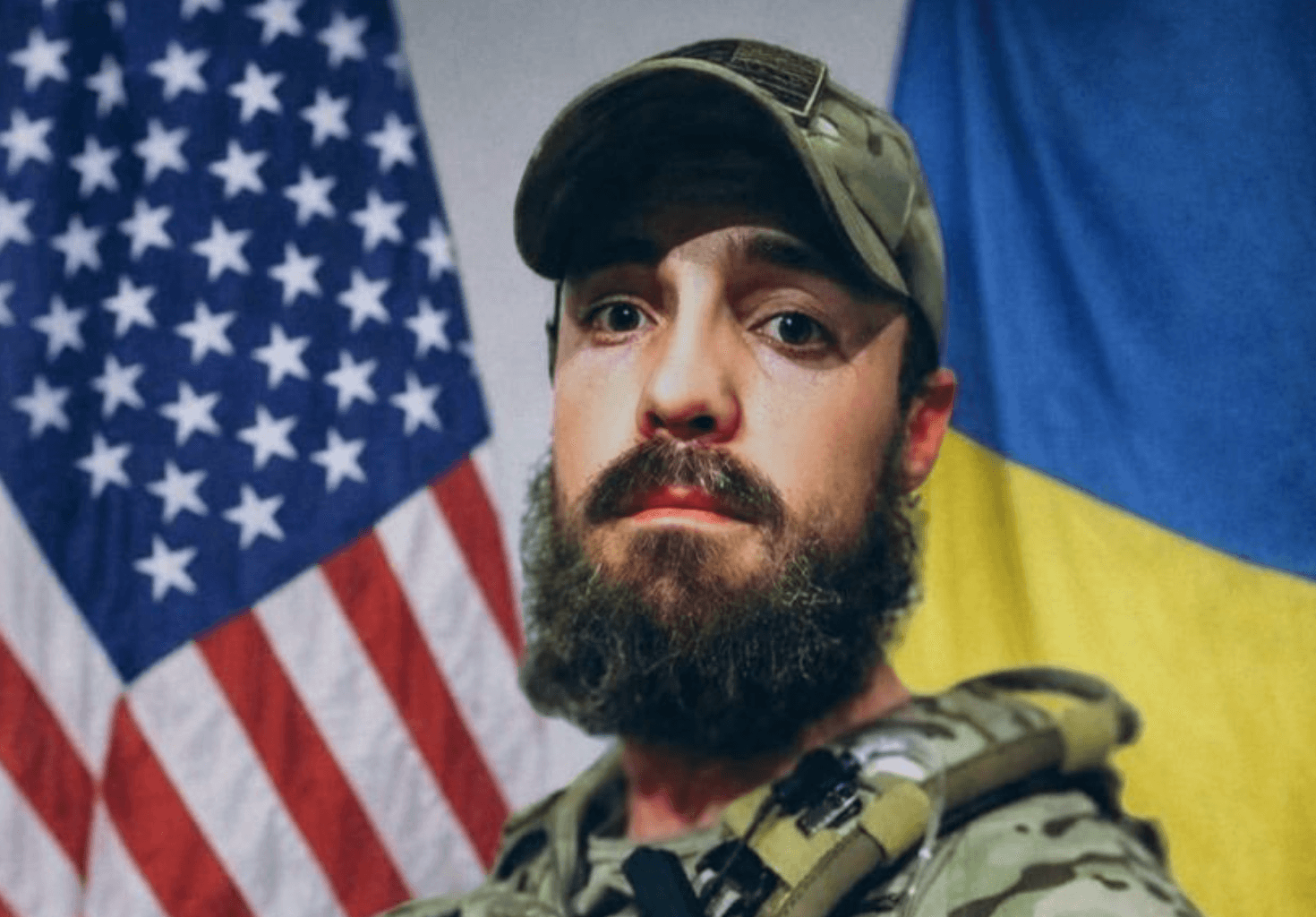
Shane Tackett, from a ceremony held in his honor in Shawnee, Oklahoma, on April 17, 2026. (Riley-Walker Funeral Service)
 on Google
On Thanksgiving morning 2025, Shane Tackett texted his wife to say he was heading out on a mission and would be gone for a couple of days. He was killed three days later, on Nov. 30, in the basement of a house his unit was clearing in a contested town in Ukraine.
Tackett, 36, was a former U.S. Marine from Prague, Oklahoma, who had been looking for a way to fight for Ukraine since the first weeks of the full-scale invasion. It took him three years to find one. He arrived in Ukraine on Aug. 6, 2025, and served with the Azov Brigade’s international battalion under the call sign Ares. He is survived by his wife, Amariah Tackett, and daughters Lily and Iris.
From a young age, his preferred bed was a military cot, and every Christmas he wished for anything related to the military or survival. “We have a home VHS tape of one of our Christmases, and he's like 14, maybe 13, and he got a military-grade sleeping bag and he's so excited. It's like the actual military one they were issuing at the time, and he absolutely loved that,” his brother, Chad Tackett, remembered. Chad called him his best friend.
Tackett joined the Marine Corps out of high school and met Amariah after his service. “He called me by my name, Amariah, and not a lot of people can say it right,” she said. “I thought he was kind of handsome.”
They married Feb. 10, 2017, and lived in a small apartment in Oklahoma City. In October 2018, after talking it over with Tackett, Amariah enlisted in the Air Force. They both liked the idea of moving around and the sense of adventure. “I always say ‘we joined the military’ because I feel like we did it as a team,” she said. “Even though technically I was the one that enlisted, we did it as a family. We made that decision and he followed me everywhere I went.”

The couple hiked and camped, and had climbed 14,000-foot (4,270 meters) mountains together. “That was one of the things I loved about him. He was just very adventurous,” Amariah said. When they couldn’t get outside, they played survival games on their computer.
They had been married eight years and had come to believe, after trying for a child, that it would not happen. Then Amariah learned at a routine appointment that she was pregnant.
read also
She told Tackett with a Pokémon card which both of them collected. “I got a Pokémon card pack, and I opened it gently, and slipped a little card in there that said I was pregnant,” she said. “He was so surprised. He just walked around the house the rest of the evening in a daze.”

Iris was born in May 2025. Tackett was not an emotional man, Amariah said, but when he saw his daughter, “he cried, and was so excited to meet her, and absolutely loved her.”
Tackett also had a 16-year-old daughter, Lily. He called them “our little flowers,” Amariah said.
When Russia launched its full-scale invasion in February 2022, Tackett wanted to join the Ukrainian military almost immediately. With Amariah’s help, he tried, but at that stage there was no clear route in for foreign volunteers. They let it go, but he kept following the war.
“He just had this desire to go over and help, or figure out a way to help,” Amariah said. In 2025, he left his job as a safety specialist. “I told him we'll find another one,” she said. “He was looking for what he needed to do.”
His brother remembered a smaller kid who fought other people's fights and a man who refused to sit still when a country was being bullied. "We're humans, it's not a country thing, it's not a border thing, it's a human thing. Atrocities are happening," Chad recalled him saying. Tackett was brave enough, his brother said, to give his life for something that might stop it, or at least slow it down.

“My husband ever since he was younger has had a heart for justice,” Amariah said. “He wanted to protect innocent people. He really just felt that the Ukrainian people needed help.”
In 2025, there was a route in. “We were able to actually reach out to Azov and get him on there, and it just opened up at that point,” Amariah said. “They have a really good process now. At the beginning they didn't have it as streamlined as it is now.”
By the time Iris was three months old, the new parents had decided it was the moment. The couple had agreed their daughter was young enough not to register Tackett’s absence. They both believed Tackett would return home after three years, when Iris would be old enough to get to know her father.
Before he left, he recorded videos for Iris so she would not forget him. “He was excited to come back and raise her.”
Amariah was scared for Tackett’s life, but she fully supported his decision. She knew his desire to help Ukraine since the full-scale invasion never subsided. Even while he approached Ukraine through Poland, she guided him through any issues he encountered by phone.
Before he left, Tackett told his brother the Ukrainians would have to fight for every inch, and even in retreat would give nothing away for free. “I think he was very proud before even getting into Ukraine,” Chad said. “Proud of the Ukrainian people and their fight against evil.”
The onboarding process with the Azov Brigade’s international battalion was thorough, Amariah recalled. The team sent a full information packet, walked him through the application and was honest about conditions at the front. Tackett knew what he was going into.
The call sign came with him. “Ares is the god of war. It's something he's used ever since he was little,” she said. “He used it as his gaming name. It's kind of like his alter ego. When he was headed over to Ukraine and heard that everyone goes by call signs, he hoped he could be Ares. And when he went over there, no one had Ares.”
A soldier in his unit who goes by the call sign Cheese said Tackett had achieved the highest score on the combat lifesaver test when he arrived. “He was a Marine from the start. He had a very Western NATO mindset. He was definitely super loyal to the team. He was prepared as a soldier, as a gunfighter, as everything. He was really, really good,” Cheese said.
Shane and Amariah talked almost every day on WhatsApp. Unless he was out on a mission, he had Wi-Fi in the field. The last message Amariah received about her husband came Nov. 29, from a man in his unit writing on his behalf: Ares is alive, it’s going well, he loves you.
On Nov. 30, the unit was sent to clear a street with houses on both sides. One team would assault the first building. Tackett’s team would follow behind and clear a second.
After the first side was cleared, the team split. Tackett was among those sent back to cross over and work up the opposite side. Command then warned of incoming fire and ordered them to take cover. They fell back into a building they had already cleared, and Tackett and another man went down into the basement first. The rest of the team followed.
“I was standing outside in the back. I heard gunfire going off inside,” Cheese said. “Two members of my team came running up the stairs and out of the basement. I posted up on the door and explosions started going off. I started yelling down to Ares and my two (seconds-in-command). There was no response.”
Russian soldiers were still alive inside the basement and killed the three men, Cheese said. “We waited for about an hour and then went back to that position and we sat there and we dug until we got them out. We carried them about a kilometer down the street and waited to have their bodies taken out.”

Tackett’s body was recovered the day he was killed. Three days later, on Dec. 3, Amariah was driving to work when the U.S. embassy in Kyiv called to tell her that her husband had been declared missing in action, a bureaucratic peculiarity that precedes an official declaration of killed in action.
“They did let me know that it’s almost the same as being killed in action,” she said. “I turned around and went back home. Obviously with the status of missing in action, I had hope that he would be found, but they were very honest with me at the embassy that if someone's missing in action, it's very rare that it would be anything else.”

The embassy and the battalion kept the family updated throughout, she said, and the unit held a ceremony for Tackett in Ukraine. “I was super impressed by what they were able to accomplish to get Shane back home,” she said.
The R.T. Weatherman Foundation, which supports the families of foreign military volunteers killed or missing in Ukraine, handled the paperwork and guided the family through the process. The foundation also connects the American families of volunteers killed in Ukraine with one another.
Shane Tackett was buried April 17, 2026, in Shawnee, Oklahoma.

“You just don't want it to be true,” Amariah said. She has had support from her family and friends, from her military family and from Iris. “I knew I couldn't just stop. At that point she was six months old, so she still needed me a lot. She still does, and she keeps me going.”
The family remains committed to Ukraine, though, as an active-duty service member, Amariah is limited in what she can say publicly. “I think the Ukrainian people are amazing. You know, they have a heart like I've never seen before. They are so inventive and innovative,” she said. “I have more of an investment in it because of the sacrifice my family's had so I really want to see them win now. I would like it for my husband, because he was very passionate about them.”

When Iris is older, Amariah plans to take her to the country her father helped defend. “We'll plan a trip to Ukraine eventually, when things settle down,” she said. “There are people over there just like us, and they're trying to do right by their people. I would like to see good relations with the United States and Ukraine.”
“Just remember why your loved ones went over there and know that the support you gave them while they were over there was so important,” she said. “We wanted all our loved ones to come home. But that doesn't negate the reason why they went over there.”