Kyiv now feels like a front-line city — but its resolve is holding, for now
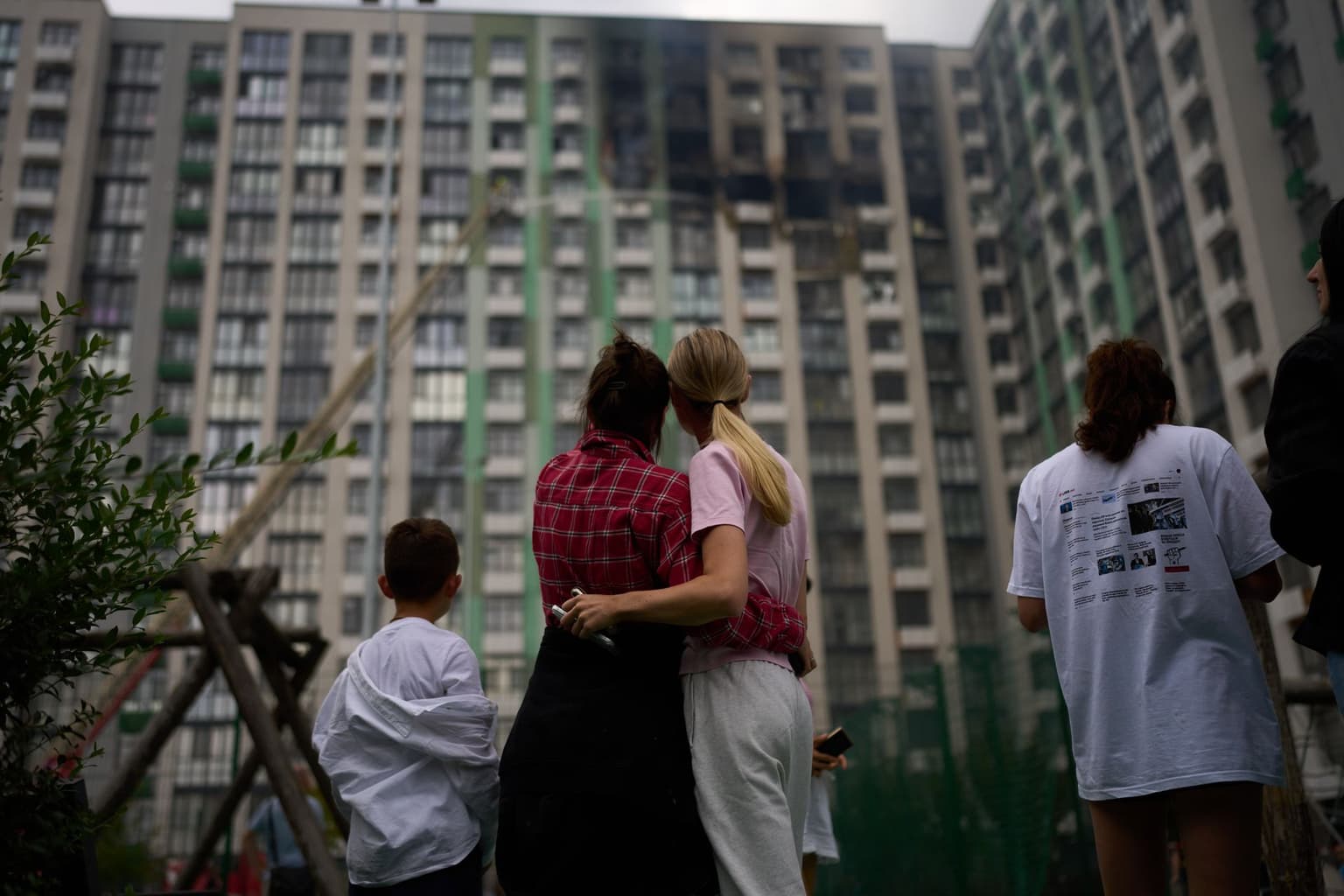
Firefighters work after a Russian drone attack struck a residential building in Kyiv, Ukraine, on Sept. 1, 2026. (AP Photo/Francisco Seco)
 on Google
For much of Russia's full-scale war, massive attacks on Kyiv came mainly at night. Residents learned, as much as possible, to organize their lives around them. They would sleep in hallways or bathrooms, check Telegram channels for updates in the dark, then emerge in the morning and go to work, cafes, concerts, or dinner.
That fragile division between wartime nights and relatively normal days is now disappearing. In recent weeks, Russia has increasingly launched jet-powered attack drones toward the capital around the clock, bringing air raid alerts, air defense fire, and explosions into the middle of workdays, commutes, and afternoons in the city. The Russian campaign, started in late August, has changed the rhythm of life in the Ukrainian capital.
"In this sense, Kyiv can already, to some extent, be called a frontline region."
The last days of September and the first of October were particularly intense, and Kyiv has barely had time to come up for air.
On Sept. 25, a Russian drone tore into a high-rise apartment building in the central Pecherskyi district, killing a 14-year-old boy. The next morning, Sept. 26, residents had already heard the air raid siren five times by 10 a.m. On Sept. 27, another attack stretched into a nine-hour alert.
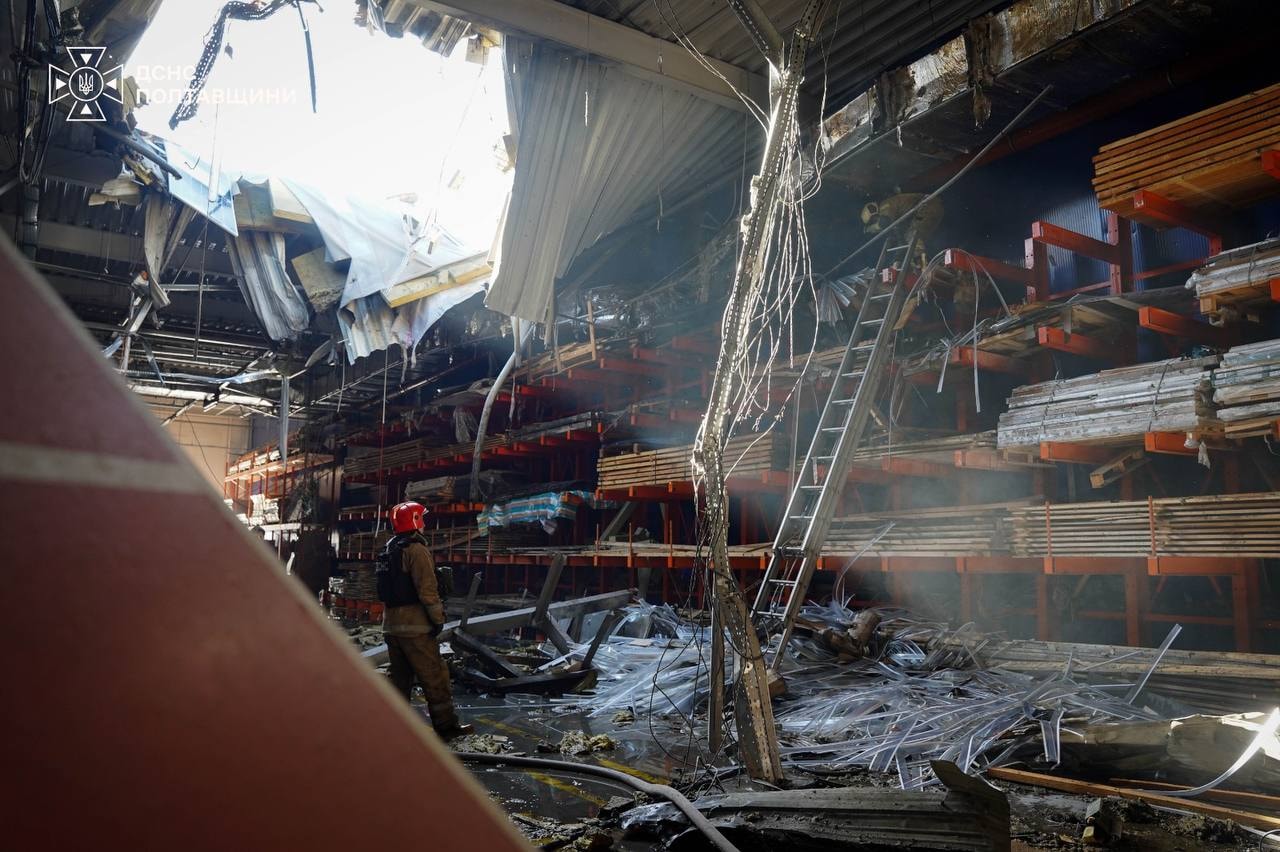
On Sept. 28, Russian drones struck central Kyiv in broad daylight, killing two people and injuring 26. A building of Ukraine's National Academy of Sciences, an institution behind many of the country's major scientific achievements, caught fire after a Russian attack. Videos showed people trying to escape through windows as smoke poured from inside.
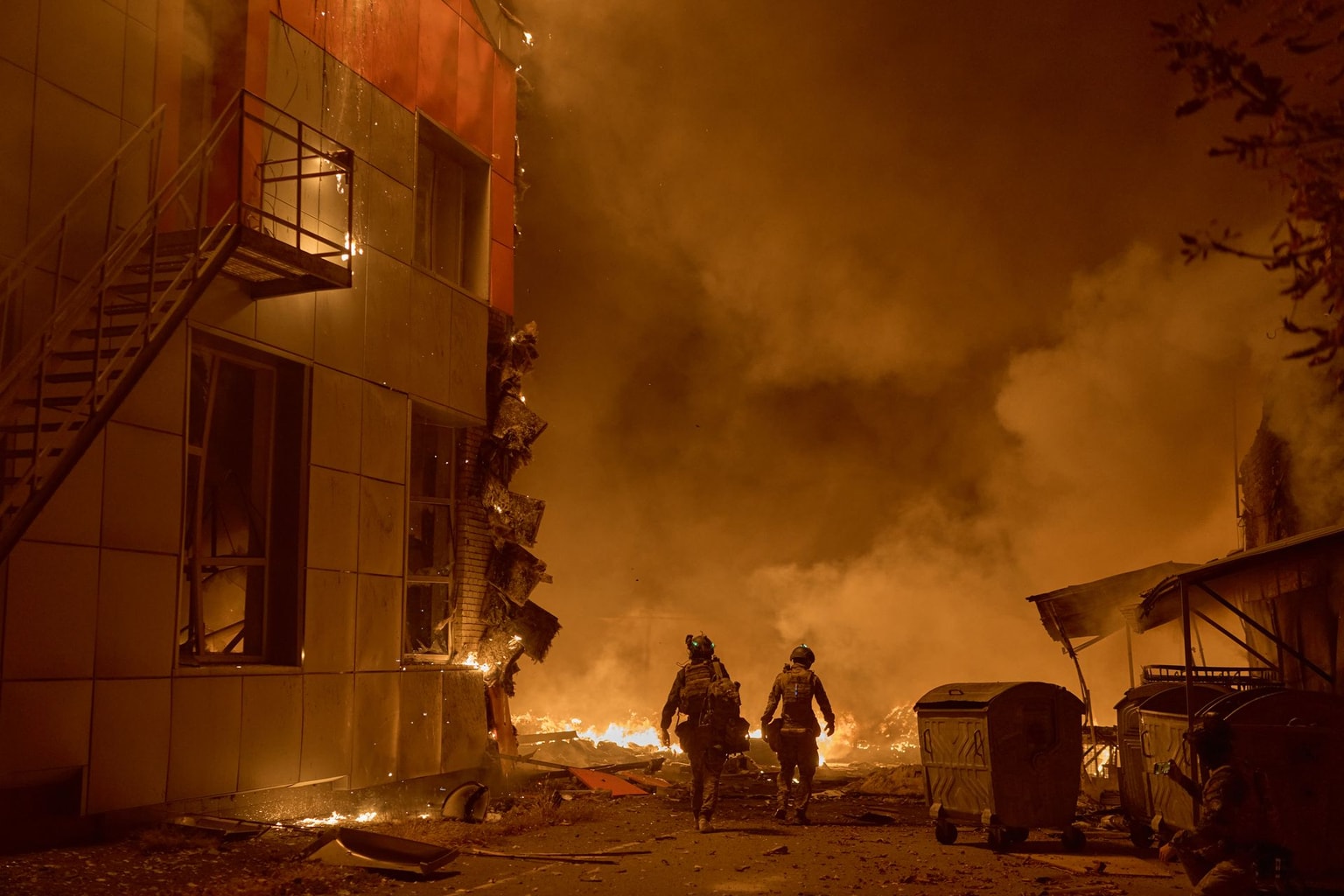
The following night, Russian missiles and drones hit an educational facility, apartment buildings, a railway depot, data centers, and business centers.
By Sept. 30, Russia had struck again, this time targeting Kyiv's energy infrastructure, already weakened by repeated attacks during the previous cold season. In the afternoon, authorities announced emergency power shutdowns in the capital.
On Oct. 1, the attacks pushed further into Kyiv's daytime routine. A drone hit a school, and two others struck the Southern Bridge as cars and a metro train were crossing. The next day, bridge restrictions caused major traffic jams across the city, with some residents crossing the Dnipro on foot to get to work.
At least 16 people were killed and more than 100 others injured in Kyiv and the surrounding region between Sept. 25 and Oct. 2, according to a Kyiv Independent count based on official reports. The highest number of injuries came on Sept. 25, when at least 59 people were wounded as drones caught residents in the middle of the working day.

By the end of this intense stretch, the city had disappeared beneath a dense gray haze. It was not mere autumn fog, but smoke from the prior attacks that had accumulated over Kyiv in the still air. Authorities urged residents to keep their windows closed.
Buildings faded into the gray, as temperatures were falling. Parts of the city were without electricity. After more than a week of continuous strikes, the city looked as exhausted as it felt, and winter had not even begun.
Front-line city
A shift is visible not only in Russia's attack frequency. Sociologists are starting to see Kyiv move closer, on certain indicators, to Ukraine's eastern regions much closer to the front line.
Oleksii Antypovych, director of Rating Group, a Ukrainian polling and sociological research organization, said Kyiv residents increasingly resemble people in the east on several indicators, including worsening health, loss of income, and damage or destruction of property.
"In this sense, Kyiv can already, to some extent, be called a frontline region," he said.
Antypovych described the prevailing mood not as panic, but as anxiety and uncertainty about security, the city's protection, and what comes next.
"Before, at least you could expect the worst to happen at night and, if you wanted, prepare for it. Now it just feels like a lottery."
A survey conducted from Aug. 21 to Sept. 10 by the Kyiv International Institute of Sociology (KIIS) found that 83% of Kyiv residents believed Ukraine should continue armed resistance even if Russia tried to deprive people of electricity, heating, and water during the winter.
"Kyiv had the highest share of people (compared to other surveyed regions) who supported continuing armed resistance under any circumstances," Anton Hrushetskyi, KIIS executive director, told the Kyiv Independent.

A separate KIIS survey conducted in late July and early August found that the share of Kyiv residents ready to endure the war for as long as necessary had risen from 61% to 69% since April.
That people in Kyiv continue to stay, work, and build their lives in the city suggests that they are adapting, Antypovych said.
These latest polls suggest Kyiv residents are defiant in the face of Russia's effort to exhaust the country and weaken its will to resist. Yet, the polls were conducted prior to the continuous pressure Russia subjected the capital to in the last week.
'Normal life has been a forgotten concept'
Daria Lisich, a 28-year-old poet, had lived in Kyiv for only three months when Russia's attacks intensified in late August. She lives on the top floor of a five-story building. Staying in Kyiv is partly about conserving what little energy she has left, she said, because another move feels even harder.
"Moving is a huge effort and a major change. I just want this to end or at least to get easier," she said.
For four consecutive days, Russia struck the area close to where she lived. On the fourth day, a strike landed right next to her home, prompting her to leave the city for a while.

"All of the strikes were nearby, but the last one was the closest — right next to my home, in the neighboring building. I was at home during all of them," Lisich said. "I couldn't even take a shower. I constantly had my phone next to me, tracking where it was flying."
She left Kyiv for Lviv for three weeks. Back in the capital, the attacks continued.
Semen Krishtal, a 27-year-old creative marketer, has thought about leaving Kyiv for years, and the latest attacks have only intensified them.
"I want to move to Odesa, but the situation there is even worse in winter than in Kyiv," he said.
He felt the new reality set in clearly on Sept. 28, when a Russian drone struck the National Academy of Sciences in central Kyiv.
Krishtal was riding a trolleybus along Shevchenko Boulevard with his headphones on, listening to Sophie's "Immaterial" — a bright, euphoric pop song about freedom and becoming whoever you want to be. The city had already been filled with alerts and explosions that day, so he kept turning the music up to drown out the noise.

"At night, it's medication and deep sleep. During the day, it's music at full volume," he said. "Just so my brain can function at something other than a critical level of anxiety, at least at a moderate one."
But reality broke through anyway when the sound of another explosion cut through the music in his headphones. Minutes later, police cars and ambulances began speeding past his trolleybus.
Krishtal got off and walked toward the National Academy of Sciences. By the time he reached the attack site, emergency crews were already unfolding ladders to reach people trapped inside the burning building. He stopped and watched the scene unfold.
"Normal life has been a forgotten concept in Kyiv for a long time," Krishtal said. "Before, at least you could expect the worst to happen at night and, if you wanted, prepare for it. Now it just feels like a lottery."