Klitschko's promise of 50 mobile shelters for Kyiv set to fall far short
 on Google

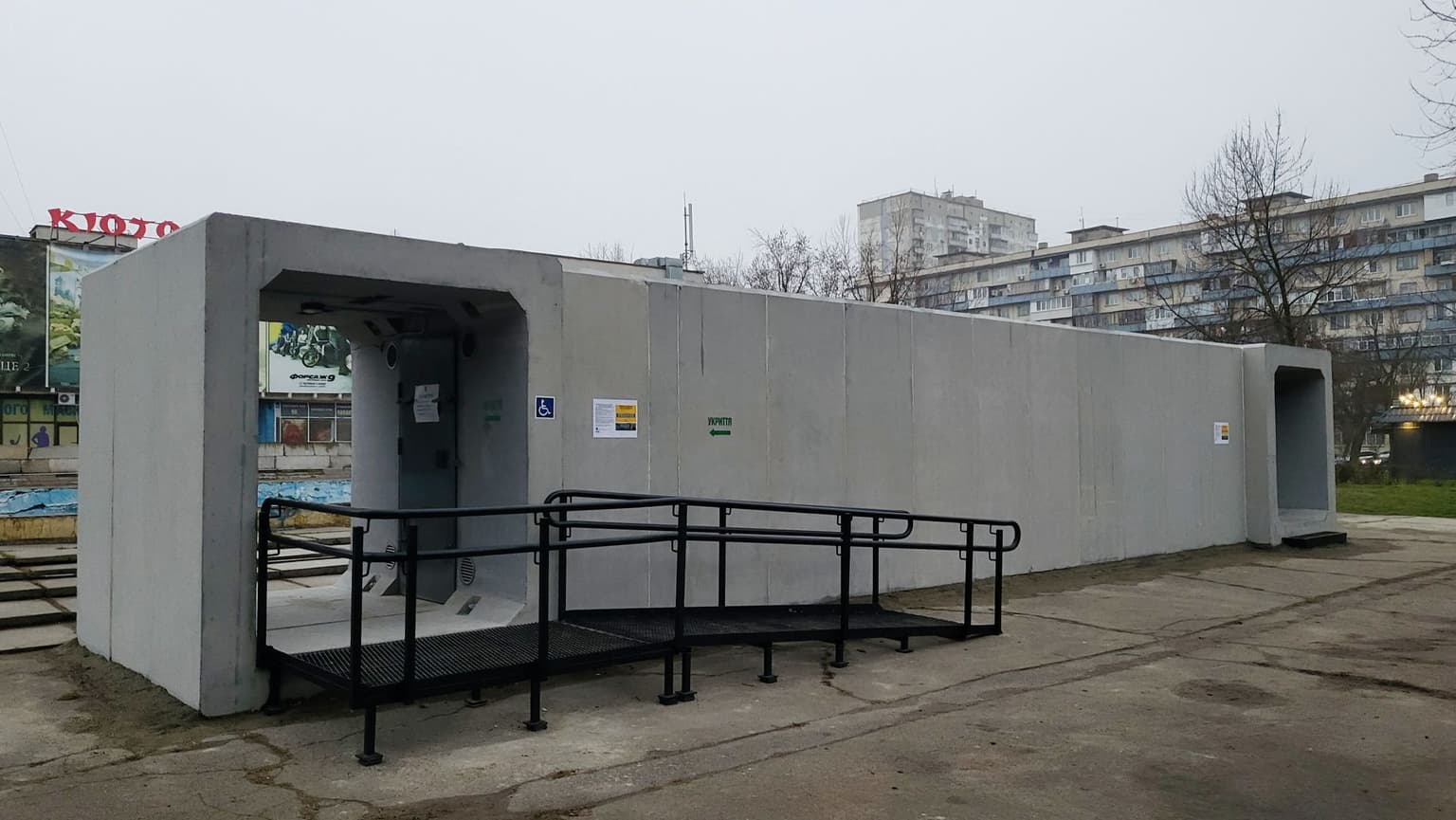
Kyiv City Mayor Vitali Klitschko's September promise that the capital will receive "40 to 50" mobile shelters "within a month" is set to fall short after it was revealed on Oct. 6 that only 14 will arrive by the end of the year.
"We have already purchased shelters and within a month, the first batch, roughly, as far as I remember, 40 or 50 units, will be set up at transport stops where there are no stationary shelters nearby. And we are continuing this program," Klitschko said on Sept. 12.
But the Kyiv City State Administration (KMDA) told media portal Slidstvo.info on Oct. 6 that far fewer will arrive on a far longer timescale, despite Klitschko saying some had already been purchased.
Currently, only four mobile shelters operate in the city, installed by private organizations, according to Slidstvo.info. Meanwhile, KMDA's press service told the media portal that the city required at least 620 mobile shelters and 7,894 conventional ones.
The municipal transport company Kyivpastrans is supposed to buy the 14 mobile shelters after its new financial plan is approved, Slidstvo.info reports. The new shelters will be placed at Kyivpastrans branches and at the final stops of public transport lines.
The estimated costs are around Hr 54.2 million (about $1.2 million) in total, including VAT, while a single shelter for 50 people costs about Hr 4.8 million (about $107,000), Slidstvo.info said. The city's budget for public safety and civil protection for 2027 to 2029 sits at Hr 300 million.
According to the city administration, the capital's several district administrations did not request funding for mobile shelters when the city budget was drafted, and the city itself did not buy any shelters, Slidstvo.info said.
Kyiv's city government allocates funding for the capital's shelters, but the capital's 10 district state administrations are responsible for carrying out their share of shelter construction and repairs.
The district administrations, however, do not answer directly to the mayor. Their heads are appointed and dismissed by the president on the submission of the Cabinet of Ministers.
Individual owners and balance-holders are also responsible for maintaining some facilities in the network.
Kyiv's civil-protection shelter network currently includes 4,385 facilities, according to information provided by the KMDA to the Kyiv Independent.
Nearly nine out of every 10 shelters are classified as "basic shelters," which Ukrainian law does not consider protective civil-defense structures. These are usually basements, semi-basements, and other underground spaces adapted so people can take cover during an attack. They are not purpose-built protective structures and offer a low level of protection.
In a comment to the Kyiv Independent, KMDA said 397 facilities across the capital currently need work before they meet readiness requirements.