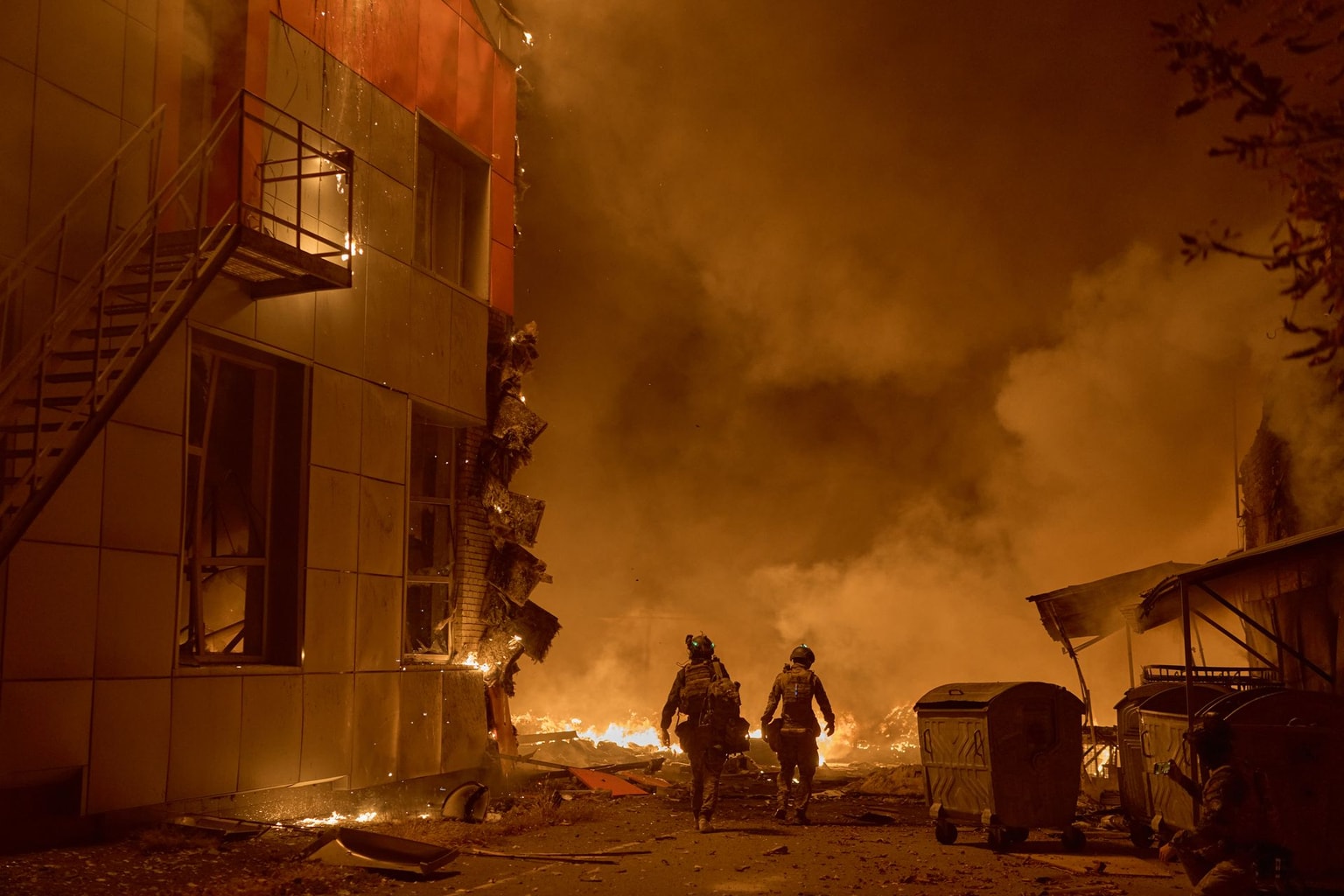
'The city is dying' — Ukrainians in Kramatorsk brace for worst as Russian forces inch closer
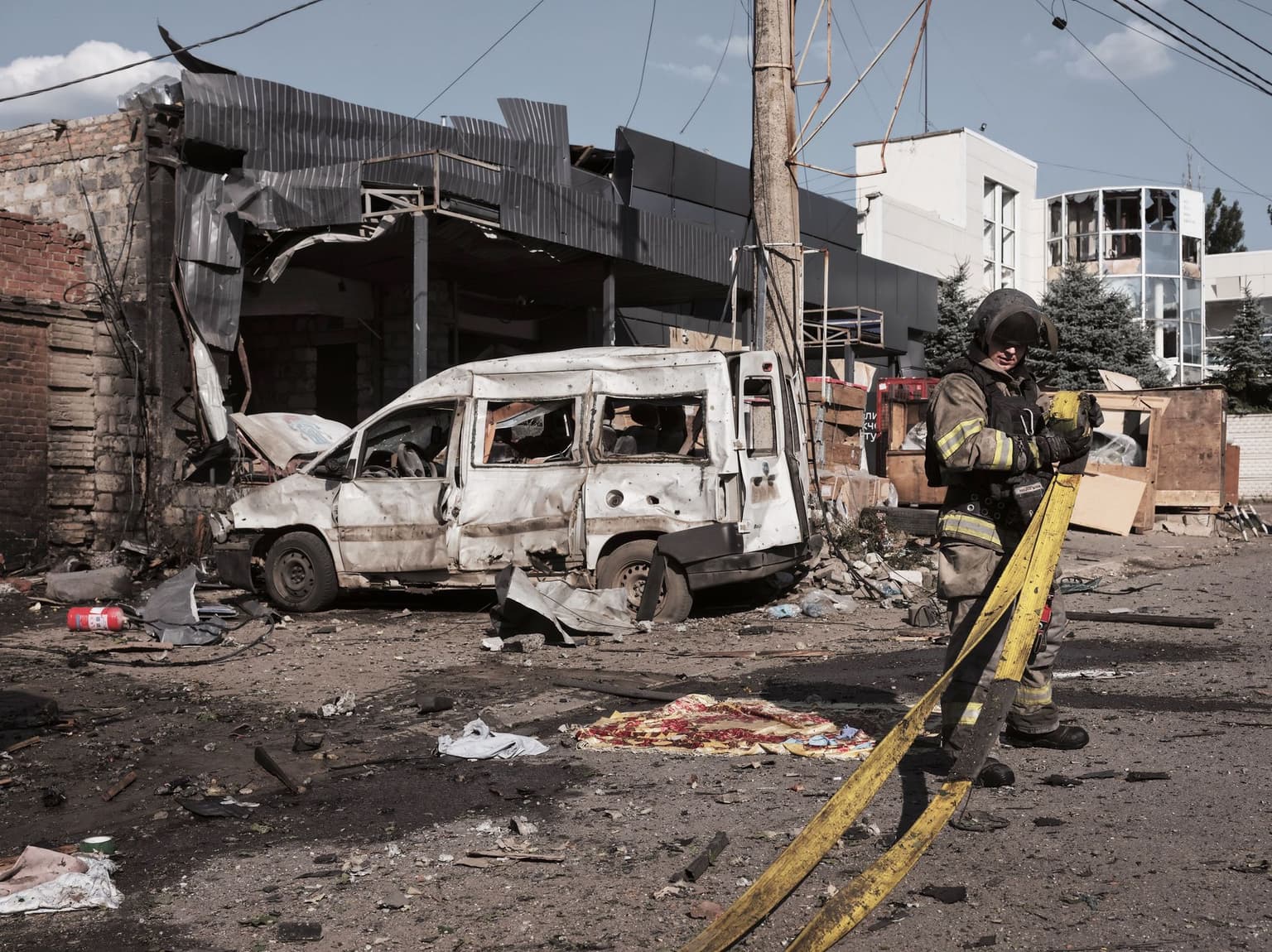
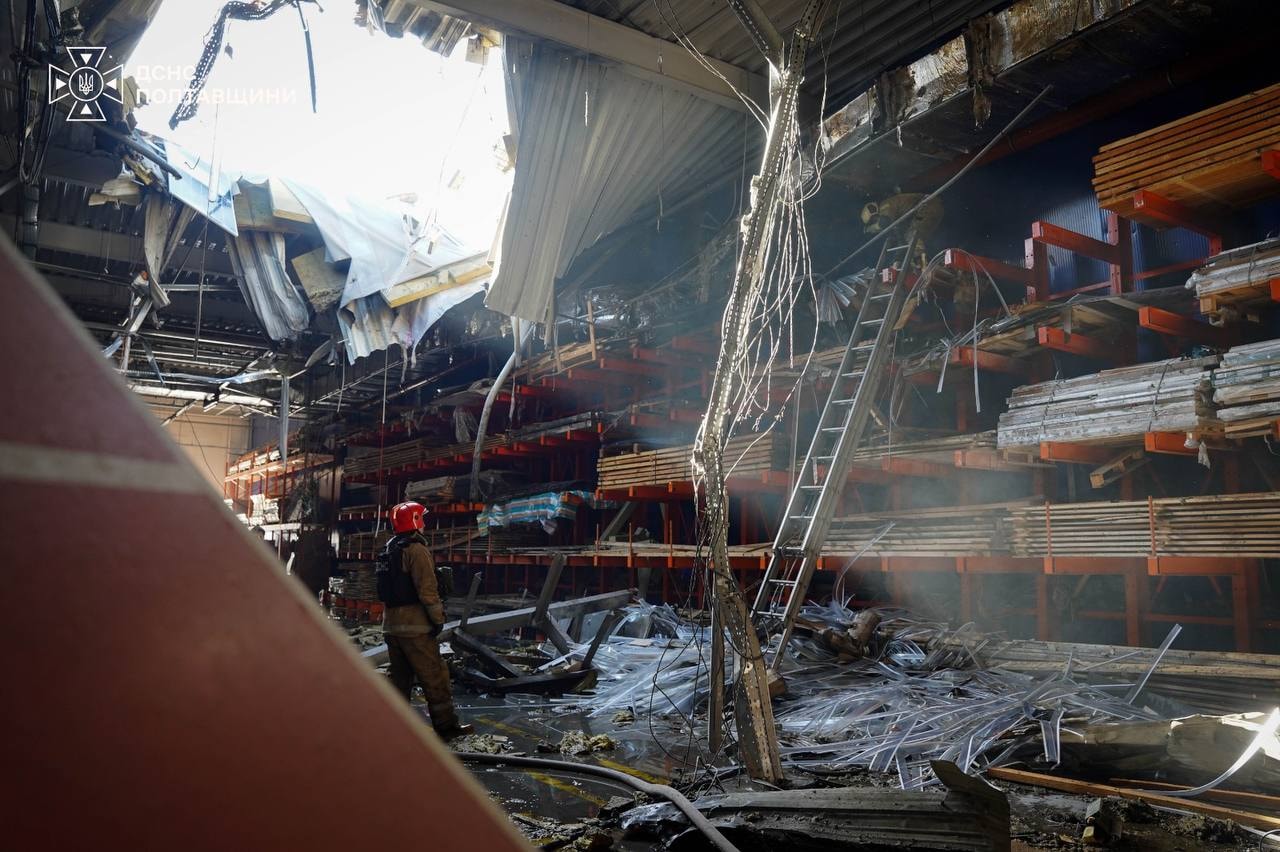
A rescuer deals with the aftermath of a Russian attack in Kramatorsk, Donetsk Oblast, Ukraine, on Aug. 16, 2026. (Lisa Bukreyeva / The Kyiv Independent)
 on Google
KRAMATORSK, Donetsk Oblast — Morning sunlight settles over a narrow street in Kramatorsk, lined with vendors selling their homegrown vegetables and meat at what used to be a bustling market.
Intensified Russian attacks on the front-line city, which had long served as a key logistics hub tucked away in the rear of eastern Donetsk Oblast, have driven most potential customers away. But the vendors still need to make a living and arrive at around 6 a.m., enduring constant power and water outages in a city that is gradually emptying.
Among the vendors is Serhii, a tanned, short-haired 54-year-old man with a touch of gray, standing behind a foldable picnic table bearing two whole chickens. Visibly unbothered by the buzzing of a first-person view (FPV) drone flying above the market, he is trying to sell his last remaining two chickens so he can go home.
"See, it flies away, and no one even flinches anymore because people have already gotten used to bad things," Serhii, who asked to only be identified by his first name for security reasons, told the Kyiv Independent on a Sunday morning.
"We can't do anything about it anyway."

Even as Russia scales up its attacks using glide bombs (KABs) and drones against Kramatorsk, the vendors at the market try not to talk about the ongoing situation, Serhii says.
Seeing familiar faces at the market brings comfort to the vendors, many of whom have been working there for years — 15 in Serhii's case. He says there is a concrete shelter at the market, but no one takes cover there, even when there are explosions.
A middle-aged woman with her gray-streaked blonde hair tied back in a ponytail approaches Serhii's stand to inspect the chicken. After a short back-and-forth, she decides to buy one for the price of 150 UAH ($3.40) per kilogram.
"Have a nice, wonderful day. Good luck," Serhii says, after packing the chicken into a plastic bag, as an explosion echoes in the distance.
As Russian troops gradually advance toward Kramatorsk, which has become the de facto regional capital, the security situation in the city has significantly worsened over the summer.
The local authorities formally designated Kramatorsk, along with its surrounding villages and Sloviansk, as areas of active hostilities in an administrative order that came into effect on Aug. 21. The classification by the Regional Development Ministry allows local authorities to make decisions on civilians safety and evacuation, as well as regulate social benefits and provide state aid.

As of noon on Aug. 26, at least 13 people have been killed, and about 150 others have been wounded in Kramatorsk this month, according to the Donetsk Oblast Military Administration.
Just over 10 kilometers (six miles) away from Russian troops, the city now faces a heavy barrage of FPV drones, particularly in the morning and at night. Local residents told the Kyiv Independent they are trying to limit movement around the city, leaving their homes only for work or necessary errands during the day. But now the glide bombs are becoming increasingly frequent during the daytime.
White and green anti-FPV nets cover most of the city's roads, offering some protection from drones — but not glide bombs — for both military and civilian vehicles driving beneath them.
"Kramatorsk is increasingly suffering the fate of other cities in the Donbas as Russian forces inch closer," military analyst Michael Kofman, a senior fellow in the Russia and Eurasia Program at the D.C.-based Carnegie Endowment for International Peace, told the Kyiv Independent.
"The city is becoming unsafe for civilians with Russian drones operating in the eastern parts, and daily bombardment from glide bombs."

Before the full-scale war, Kramatorsk was a major industrial hub, home to the Starokramatorsk Machine-Building Plant, dating back to 1896, and other giant factories manufacturing mining equipment and metal products.
When Russia invaded Donbas in 2014, Kramatorsk endured a three-month occupation before Ukraine liberated it in July of that year. Despite some large-scale attacks on Kramatorsk since 2022, such as a Russian missile strike on the train station that killed 61, the city had enjoyed relative calm until 2025.
In the late afternoon of that Sunday in August, a Russian drone attack hit a Nova Poshta branch, killing one person and injuring seven others, local authorities said. The regional police rushed in to document the aftermath of the strike before hiding under the trees and then driving off quickly due to the threat of a double-tap attack.

As conditions worsen in Kramatorsk, locals remain divided on whether to flee or stay, despite knowing the situation is unlikely to improve. Life in Kramatorsk goes on for now, with many restaurants, cafes, and shops remaining open — though some have begun to close their doors.
At the busy Chudo Market supermarket in the city center, 50-year-old clerk Lyudmila Drovko assists customers at the self-checkout, wearing a bright orange uniform. She had previously worked at another branch in the city for three years, until a Russian attack destroyed it on Aug. 3.
A few days later, on Aug. 20, a Russian glide bomb attack destroyed her new workplace.
"We are not sleeping, the attacks are constant and unexpected each time…"
Donetsk Oblast Governor Vadym Filashkin said one person was killed and 10 others were injured as Russia launched nine glide bomb strikes on Kramatorsk. Drovko says the entire staff was hiding in the shelter at the time of the attack, likely preventing even more casualties.
"It's extremely hard to be forced to change work more than once in a single month, while also living through the intensifying attacks not just at work but at home as well," Drovko told the Kyiv Independent.

"We are not sleeping, the attacks are constant and unexpected each time… We hear loud explosions, and everything inside us flinches as we instinctively take cover."
Drovko, whose parents are both over 70, says that despite the escalating attacks, she is not ready to flee Kramatorsk because it is difficult to find an apartment for her large family, and she would miss home wherever she goes.
Her best memories, from marrying her husband to giving birth to her now-20-year-old son, were made in Kramatorsk. She longs for the days when concerts were held in the city, and her family would gather on the weekends.
"It was just dust. I didn't see where to run, and I didn't know where to run."
Walking around her beloved city brings pain, as she witnesses the destruction at long-familiar places — from the kindergarten or school where her son studied to a movie theater where graduation parties were held, she added.
Drovko says a power and water outage recently lasted for five days, but she hopes there will be heating this winter. She says not seeing an end to the situation is extremely hard, fueling her anxiety, as hospitals start closing and the city she has known her entire life is quickly changing.

"We can't believe what is happening (to the city) now," Drovko says, explaining how parks and the apartment courtyards, which used to be filled with kids playing, are now empty.
"The city is dying."
Just down the street from the now-destroyed Chudo supermarket is a coffee stand where Lina, a tired-looking 54-year-old blonde barista, works every day. Sitting nervously outside by herself, she says she is afraid to work, especially after a recent daytime Russian FPV drone strike on the building above her coffee stand. She says she has little choice as it's currently difficult to find another job in Kramatorsk.
While Lina doesn't recall when exactly the attack occurred in 2026, she vividly remembers broken glass falling as soon as the drone struck it. She rushed to a small grocery store just next to her coffee stand, sheltering with others who work in the same area.
"Everything just collapsed suddenly, the doors blew out, everything, the ceiling blew out," she says. "It was just dust. I didn't see where to run, and I didn't know where to run."

"I didn't even have the time to get scared."
After a few days of repairs, the coffee stand reopened, and she resumed work, according to Lina.
Struggling with constant fear and stress in Kramatorsk, Lina says the only thing scarier than working at the coffee shop is going back home after 8 p.m., where she lives alone in a mostly empty apartment building. She tries to wear herself out during work hours so that she will fall asleep as soon as she gets home, before loud explosions can keep her awake all night.
With only a few people remaining in the apartment building, Lina says her worst fear is to be "stuck under the rubble" if the building was hit. Her surroundings, including the two schools where she studied, have been destroyed, she says.
"We hope (the situation will get better), but there is less and less hope," Lina, who used to work as a kindergarten teacher, says.

Lina, who asked not to reveal her full name for security reasons amid the war, says she plans to stay in Kramatorsk unless there is a full-scale evacuation. She says she fears leaving Kramatorsk because she may never be able to return to her hometown.
For some residents, Kramatorsk remains a relatively safe haven compared with their Russian-occupied or embattled hometowns farther east, closer to the front line.
One of them is 43-year-old Anna Zaytseva from the neighboring heavily contested town of Kostiantynivka in Donetsk Oblast. She works at a barber shop in a cozy tree-covered street in the center of the city beside popular cafes and shops.

After fleeing Kostiantynivka in February 2025, Zaytseva has built a life for herself in Kramatorsk. Many of her previous clients from Kostiantynivka also relocated to Kramatorsk, making the city feel like her new home.
She rarely traveled to Kramatorsk during her childhood, but she remembers making the half-hour drive for her now 12-year-old son's rehabilitation, and the city's resemblance to Kostiantynivka helps her feel almost at home.
Zaytseva works six days a week, with each day usually filled with five to seven clients from 11 a.m. to 7 p.m. On her days off, she tries to do household chores and, most recently, has been visiting the Salt Lake in Sloviansk to sunbathe. She understands there is likely a deadline for how long she can stay in Kramatorsk as the situation worsens, but she says she wants to live every moment and explains how much her work has helped her psychologically.
"It's war, but just sitting and waiting until something flies at you is not an option," Zaytseva told the Kyiv Independent at her barber shop.
"Life continues; we are living in the only way currently possible."