Ukraine war latest: Russian missile, drone barrage kills at least 15 in Kyiv, damages children's hospital
 on Google
Key developments on Aug. 20:
- At least 15 dead after hours-long Russian missile, drone attack on Kyiv, children's hospital damaged
- Ukraine strikes Russia's Taneco oil refinery, Tamanneftegaz terminal, General Staff confirms
- Ukraine hits Russian drone-launch airfields in Primorsko-Akhtarsk, occupied Donetsk, HUR says
- Russia still has 50 Kinzhal missiles after pausing production, HUR claims
- Defense ministry procurement chief announces early resignation after new minister takes office
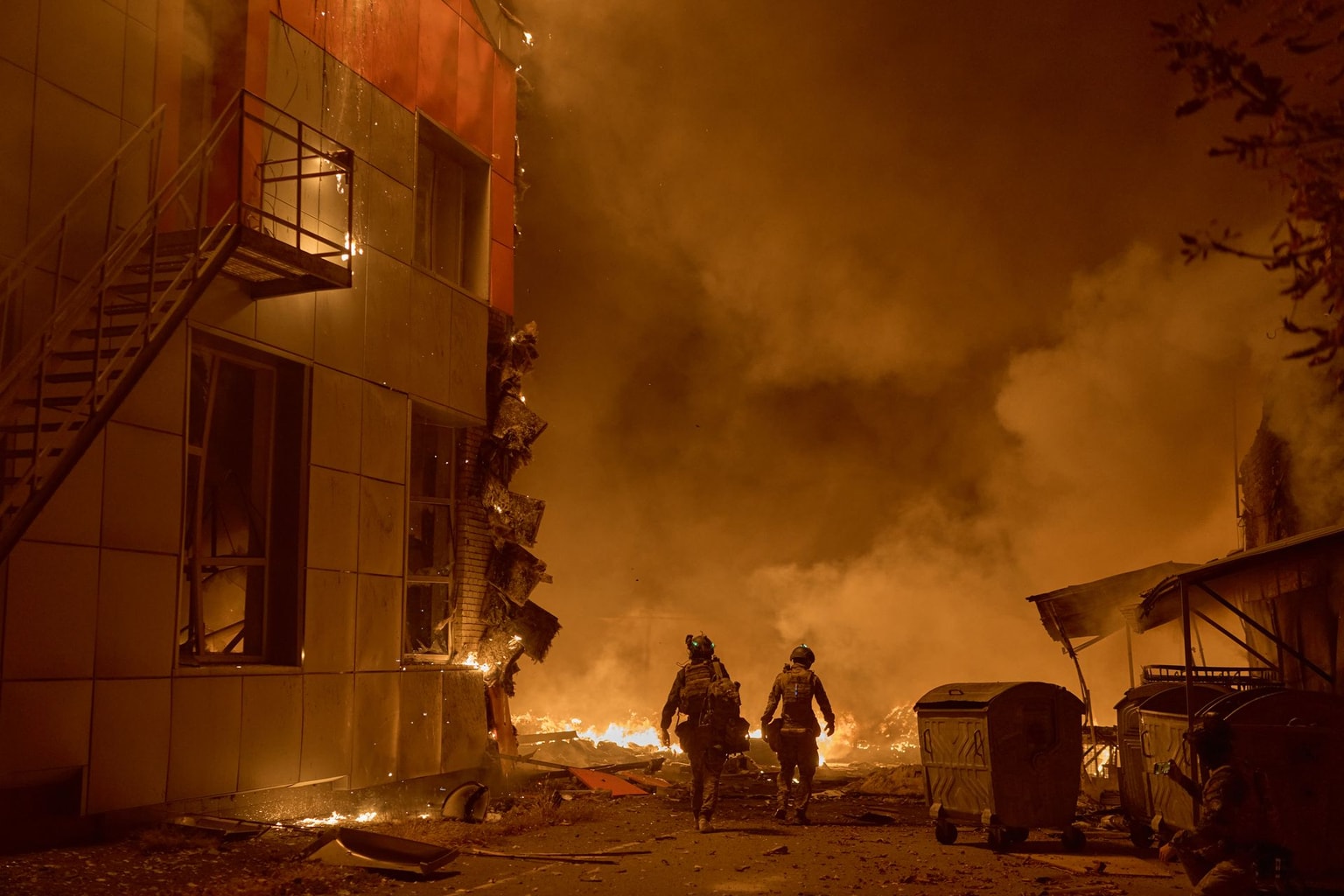
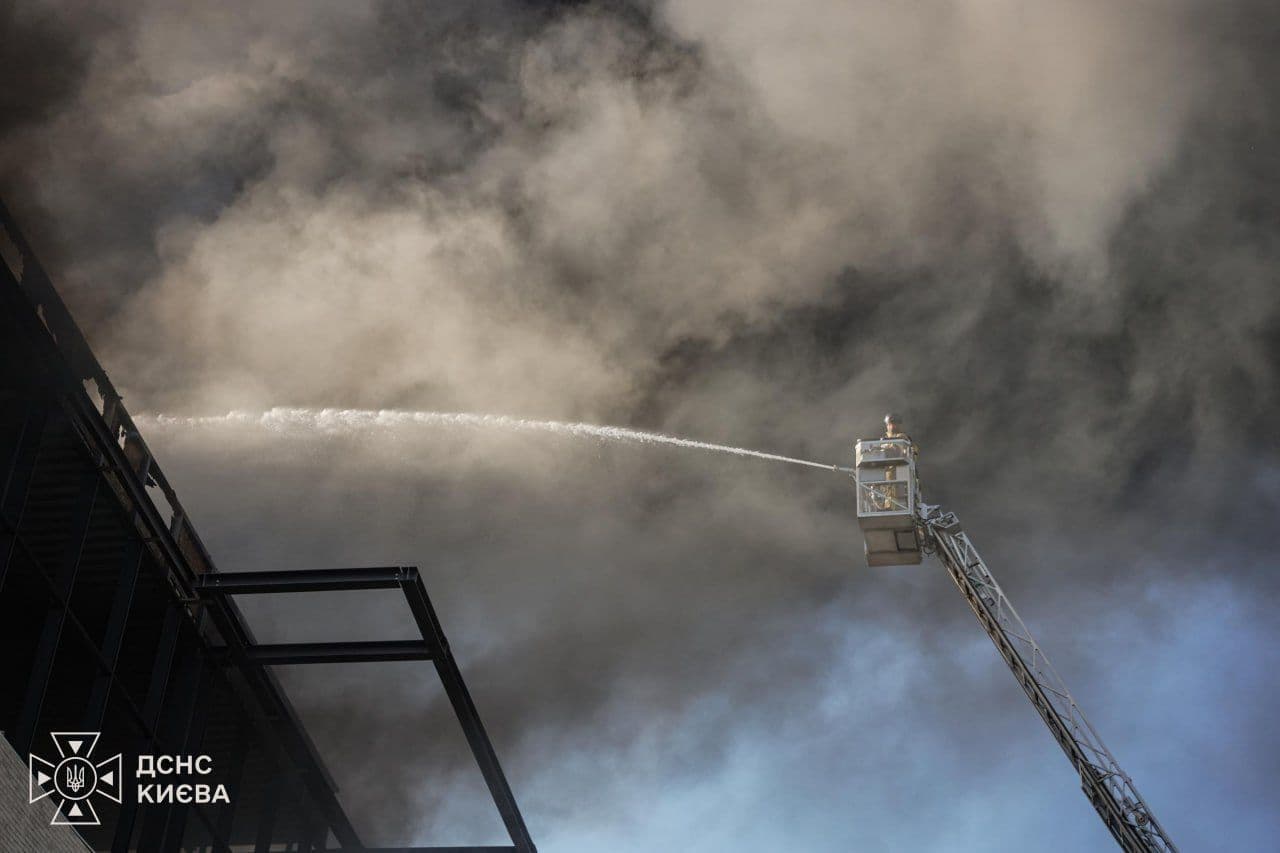
Russia launched a large ballistic missile and drone attack on Kyiv shortly after midnight on Aug. 20, killing at least 15 people and injuring dozens more, officials reported.
Numerous consecutive explosions were reported in several parts of the city beginning just after midnight local time. Another round of explosions occurred at 6:17 a.m. amid the hours-long attack.
"There were two explosions at the same time, like nothing I'd ever heard before," Galina Morozova, a resident of a building damaged in Kyiv's Solomianskyi district, told the Kyiv Independent.
"I didn't see any light, just sound. And that's it, I was covered. I was lying under a blanket and was covered with glass, blinds, and bits from the frame. But thank God I wasn't hurt."
A brief all-clear sounded at 8:36 a.m, but another alert was issued around 30 minutes later with reports of Russian Banderol missiles heading toward Kyiv. Another all-clear was issued at 11:10 a.m. but further alerts, reports of drones, and explosions were heard in the capital throughout the day.
Kyiv Mayor Vitali Klitschko said at least 15 people had died and emergency services were still working at the scene of the attacks. Aug. 21 has been declared a day of mourning in the city, he added in a post on social media.
President Volodymyr Zelensky earlier said around 40 people had been injured.
"It was a massive attack," Zelensky said in a post on social media. "The Russians had been preparing for a long time, combining different types of ballistic missiles, cruise missiles, and drones, aiming to cause as much damage as possible to civilian infrastructure."
Following the large-scale overnight attack, Russian forces continued to launch jet-powered drones at Ukraine throughout the day, primarily targeting Kyiv and Kyiv Oblast, according to the Air Force.
The daytime attacks on the capital killed one person and injured three others, Kyiv Mayor Vitali Klitschko said.
Klitschko added that a critical infrastructure facility in Kyiv was "deliberately targeted" during the daytime attacks for the first time in several months. As a result, residents of the Desnianskyi and Dniprovskyi districts may experience disruptions to their hot water supply, he said.
Ukraine strikes Russia's Taneco oil refinery, Tamanneftegaz terminal, General Staff confirms
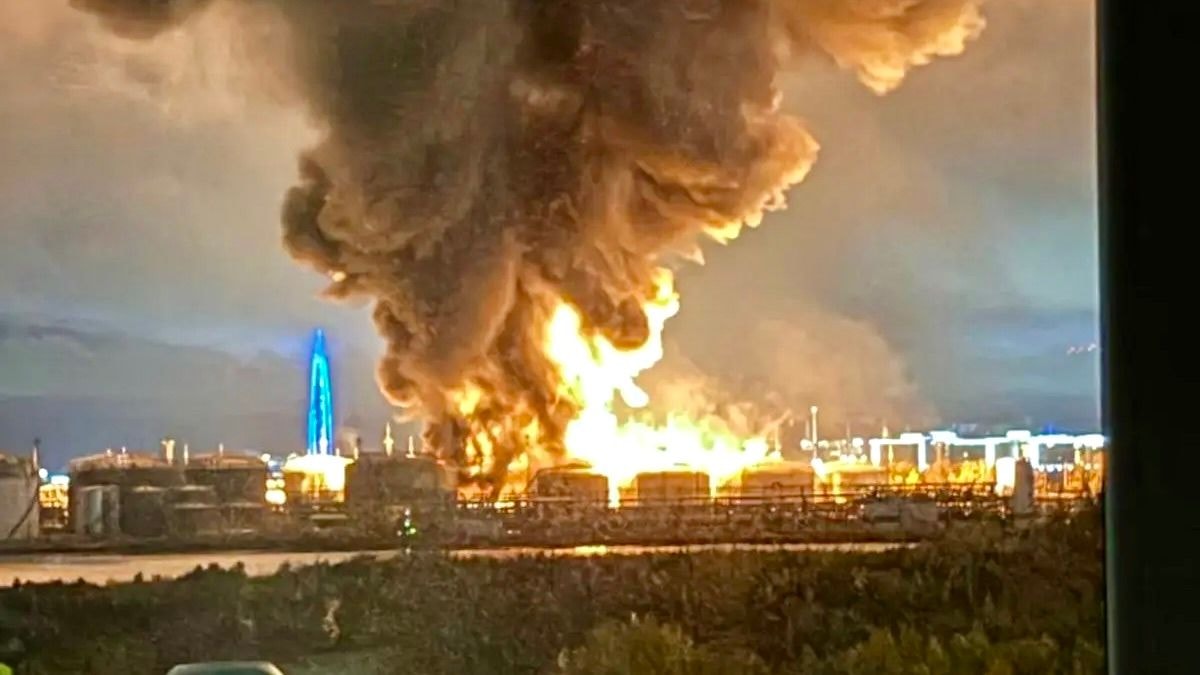
Ukraine struck an oil refinery in the Russian Republic of Tatarstan and an oil terminal in Krasnodar Krai overnight on Aug. 20, the General Staff confirmed.
Drones targeted the Taneco oil refinery in Nizhnekamsk, Russian Telegram media channels originally reported. Photos and videos posted to social media purport to show long-range drones striking the refinery overnight.
"Taneco can process up to 16 million tons of crude oil per year," the General Staff said in a post on social media. "It produces a wide range of petroleum products, including motor fuels and other oil refining products. It is involved in supplying the enemy army."
The Taneco refinery was previously targeted by Ukrainian forces on Aug. 10, when Ukraine's General Staff confirmed a strike on the facility and said a fire had been recorded at the site.
Taneco is a major Tatneft-owned refinery in Nizhnekamsk, roughly 1,200 kilometers (745 miles) from Ukraine.
Nizhnekamsk's oil and petrochemical infrastructure has repeatedly been targeted by Ukraine. Ukrainian forces struck the TAIF-NK refinery in July, while the neighboring Nizhnekamskneftekhim petrochemical plant was targeted in May and June.
Ukraine hits Russian drone-launch airfields in Primorsko-Akhtarsk, occupied Donetsk, HUR says
Ukrainian forces struck airfields in the southern Russian city of Primorsko-Akhtarsk and Russian-occupied Donetsk overnight on Aug. 20, targeting sites used by Moscow to launch long-range drones, Ukraine's Military Intelligence (HUR) said on Telegram.
HUR operators struck Russian drone storage and launch sites, as well as two radar systems — the 55Zh6U Nebo-U and 55Zh6UM Niobiy, the statement read.
As a result of the strikes on Donetsk and Primorsko-Akhtarsk airfields, ground components and drone launchers were damaged, and fires broke out at the attack sites, HUR said.
The airfields were attacked as part of Ukraine's deep-strike operations, HUR said. Ukrainian troops have intensified strikes against military and industrial targets in Russia and the Russian-occupied territories, using domestically produced long-range drones to successfully attack oil refineries, weapons facilities, and other military targets.

Russia still has 50 Kinzhal missiles after pausing production, HUR claims
Russia still has about 50 Kh-47M2 Kinzhal air-launched ballistic missiles in its arsenal, despite pausing production of the munition in order to improve its accuracy, Ukraine's Military Intelligence (HUR) has claimed.
The Kinzhal is a modified version of the Iskander ballistic missile, which is launched by specially modified MiG-31K interceptor jets. Over the course of the full-scale war they have regularly been used to attack Ukraine.
"As of July 2026, the Russian Federation has about 50 Kinzhal aeroballistic missiles and about 50 North Korean ballistic missiles of the KN-23 series, including the KN-24 and KN-30 variants," HUR said in a statement to Ukrainska Pravda.
Leaked Russian documents obtained by Ukrainian outlet Militarnyi revealed each Kinzhal costs around $4.5 million to produce. The documents also said Russia had planned to produce 144 units in 2025.
Production of the Kinzhal has been suspended since April 2026. The accuracy of the munition had been negatively affected by Ukrainian jamming and GPS spoofing, according to aviation industry expert Arkady Dotsenko.
read also
Defense ministry procurement chief announces early resignation after new minister takes office
Arsen Zhumadilov, director of the Defense Ministry's Defense Procurement Agency (DPA), announced Aug. 20 that he has submitted his resignation and will step down early.
"I made this decision for myself back in June. It is my decision. It was not influenced by anyone or anything… As of today, my decision stands: Aug. 31 will be my last day on the job," Zhumadilov said during a press conference in Kyiv.
The announcement comes as Ukraine's parliament on Aug. 19 backed the appointment of Evhen Khmara, the former acting head of the Security Service of Ukraine (SBU), as the country's new defense minister.
Oleh Klots, former director general of the state-owned Medical Procurement of Ukraine, will serve as interim head of the agency pending the appointment of a permanent successor by Ukraine's new defense minister, according to Zhumadilov.
Klots headed the state-owned agency from January 2025 to May 2026. He joined Medical Procurement of Ukraine in 2021, during Zhumadilov's tenure as its head. Zhumadilov led the agency until 2023, when he took over as head of the State Rear Operator (DOT), which oversees non-lethal procurement.
Zhumadilov was appointed to lead the DPA in March 2025 after former Defense Minister Rustem Umerov dismissed its previous director, Maryna Bezrukova, amid tensions between the ministry's leadership and the agency.