Fedorov broke Ukraine's wartime election taboo. What happens next?
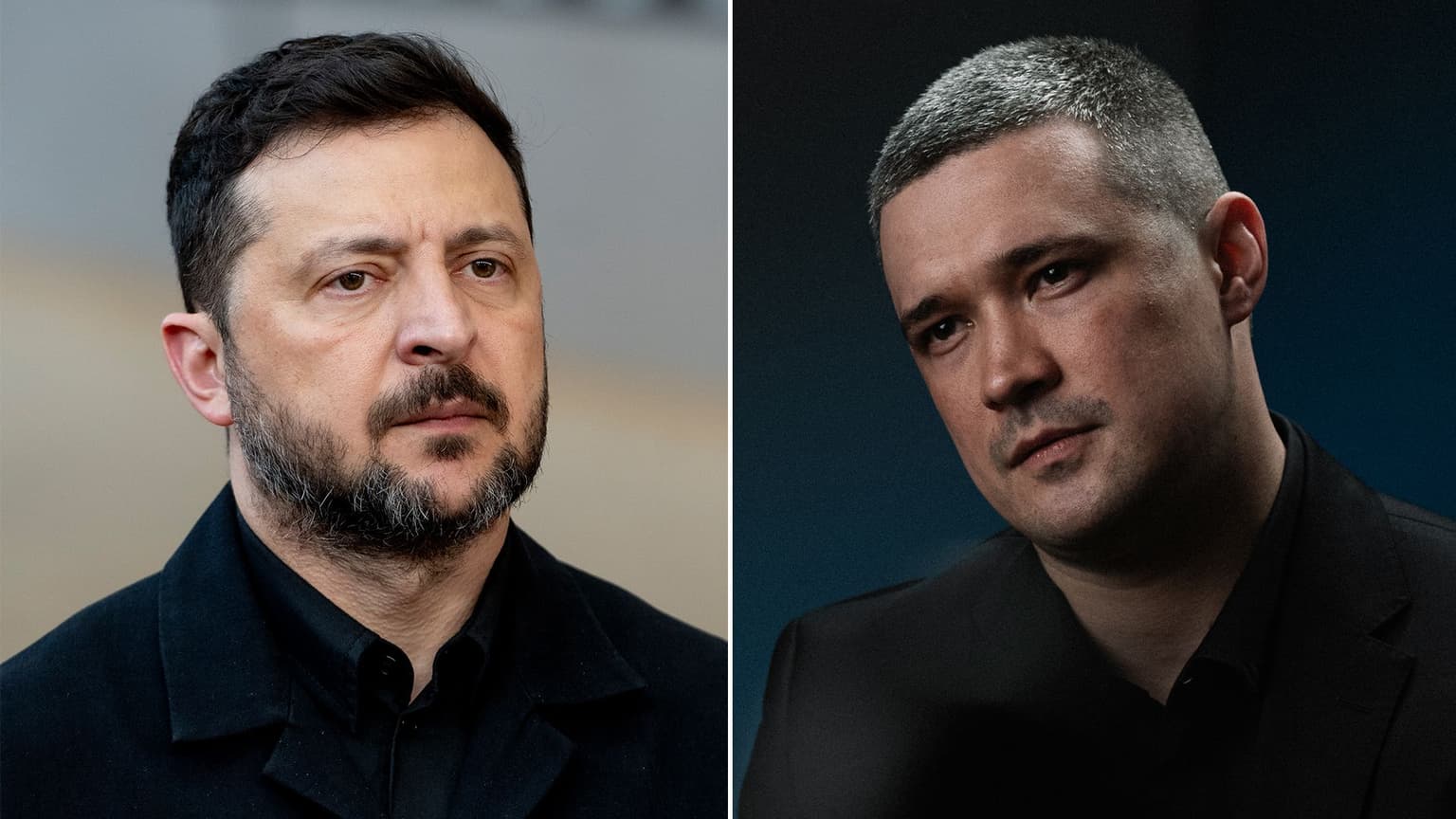
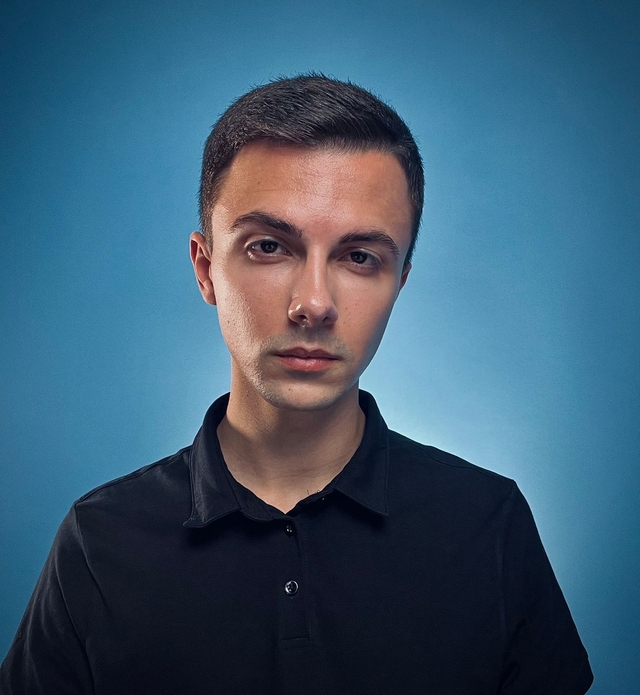
L: President Volodymyr Zelensky in Brussels, Belgium, on June 18, 2026. (Daniel Gnap / NurPhoto / Getty Images) R: Mykhailo Fedorov, then-Defense Minister of Ukraine, on June 17, 2026. (Roman Pashkovskiy / Mykhailo Fedorov's team);(Collage: The Kyiv Independent)
 on Google
Former Defense Minister Mykhailo Fedorov has broken one of Ukraine's most politically sensitive wartime taboos by publicly calling for elections, bringing into the mainstream a debate that Kyiv had largely rejected when raised by Russia and the United States.
Fedorov said Ukraine needs a "safe and realistic mechanism" to hold elections during wartime that protects the voting rights of soldiers, Ukrainians abroad, and people in front-line regions.
"We must not let Putin decide when Ukrainians can choose their government," Fedorov said in a video address, adding that democracy is "part of what we are fighting for today."
The timing matters. His appeal came after weeks of political turmoil that had shaken public confidence in President Volodymyr Zelensky's governance, including corruption scandals, a chaotic government reshuffle, and nationwide protests over Fedorov's dismissal as defense minister.
For years, Ukraine's answer to the proposal to hold wartime elections was simple: not now. The majority of Ukrainians have expressed no desire to hold elections before a ceasefire is reached, according to recent polls. That consensus, however, is becoming harder to maintain.
Zelensky's team already considered elections
Fedorov's call for wartime elections may have sounded like a break with the government's position. But the idea was not new inside the President's Office. Ukrainian officials had been quietly discussing the possibility of elections for months.
In mid-June, a government compound outside Kyiv became the setting for a rare high-level meeting, bringing together some of the most powerful figures in Ukraine's wartime leadership.
The meeting included Zelensky, his chief of staff, Kyrylo Budanov, his security adviser, Oleg Tatarov, and David Arakhamia, the leader of Zelensky's parliamentary faction. Fedorov represented the government, while then-National Security and Defense Council Secretary Rustem Umerov also attended.

"We need to hold elections in September, October," Fedorov told those gathered.
Zelensky's team seriously considered holding a presidential election as early as mid-fall.
The discussions were prompted in part by confidential opinion polling that had recently reached Zelensky's team. The results showed stronger support for the president than expected, according to people familiar with the discussions.
That appears to have encouraged the idea. The logic was straightforward: Zelensky's approval was rising, so the administration could try to capitalize on the moment before the political situation changed again.
Ultimately, Zelensky opted against holding elections, a position supported by his main political rival at that time, Ukraine's Ambassador to the U.K., Valerii Zaluzhnyi, former Commander-in-Chief of Ukraine's Armed Forces.
Zelensky's legitimacy during war
Zelensky's constitutionally designated five-year term ended in May 2024, raising questions about his legitimacy. Yet elections alone do not make a country democratic, just as Ukraine's inability to hold elections during wartime does not, by itself, indicate a drift toward autocracy.
Since Russia launched its full-scale invasion in 2022, much of Ukrainian society has accepted what could be described as an informal public contract: voters, civil society, and opposition parties have broadly agreed to postpone elections in exchange for national survival and stability during an existential war.
Under martial law, imposed on the first day of the full-scale invasion, elections are suspended, while elected officials remain in office until new elections can be held. Surveys and civil society organizations have repeatedly found strong public support for prioritizing national defense and preserving national unity over holding elections during wartime.
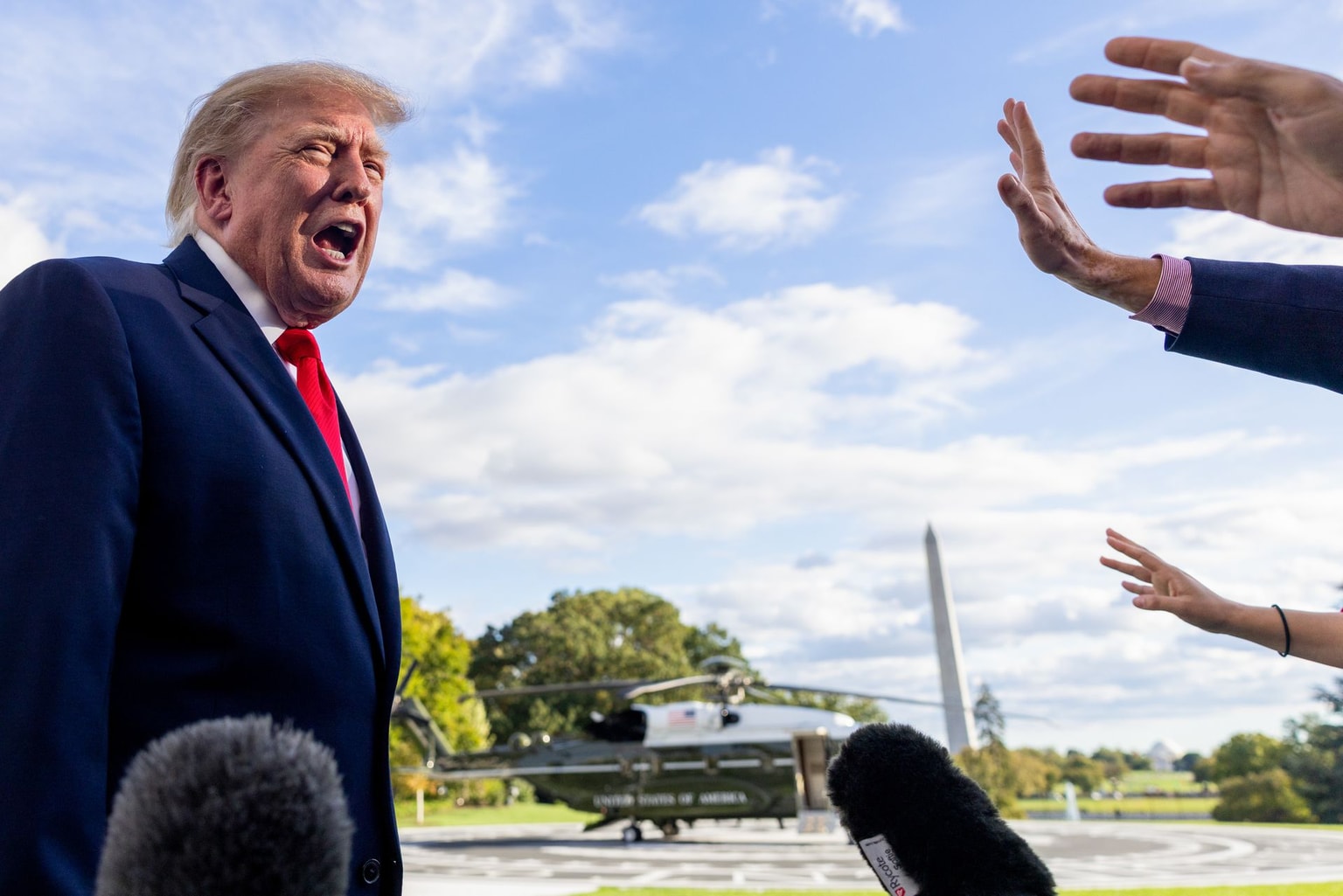
That understanding also helped shield Zelensky from criticism when U.S. President Donald Trump called him "a dictator without elections" after Zelensky refused to sign the first draft of a minerals deal with Washington in 2025.
At the time, Trump appeared to be pushing an idea contrary to Ukrainian public sentiment. Now, that unspoken consensus is being challenged from within.
The change followed a series of events that gradually weakened trust in Zelensky and his administration.
In July last year, Zelensky signed a law placing the National Anti-Corruption Bureau (NABU) and the Specialized Anti-Corruption Prosecutor's Office (SAPO) under the prosecutor general, an official appointed by the president, stripping them of their independence. Street protests and pressure from Brussels forced the government to restore the agencies' independence.

The controversy became more significant as it emerged that Ukrainian law enforcement agencies were investigating people close to Zelensky.
Timur Mindich, one of the president's closest associates, was among seven people charged in a major corruption probe announced by NABU on Nov. 11. According to NABU, the group "set up a major corruption scheme to control key state-owned enterprises," including Energoatom, Ukraine's state-owned nuclear energy agency.
Weeks later, Andriy Yermak, head of the President's Office, resigned after NABU searched his premises on Nov. 28. Yermak was investigated in a case involving Energoatom, which became the biggest corruption investigation of Zelensky's presidency. Mindich was allegedly identified as the ringleader.
The scandals weakened the argument that every controversial government decision could be justified by wartime survival. Still, Zelensky was able to weather the storm of public discontent by caving into popular demands and distancing himself from the most contentious topics.
Fedorov, protests, and lost trust
Earlier this year, Ukraine appeared to be in a relatively strong position.
In May, Ukraine liberated more territory than Russia captured for the first time since 2023, according to the Ukrainian monitoring group DeepState. The battlefield developments coincided with an improvement in Zelensky's approval ratings: his approval rose from 53% in February to 62% in early March, according to the Kyiv International Institute of Sociology. In early July, 61% of Ukrainians said they trusted Zelensky, while 34% said they did not.
Then came the government reshuffle.
Fedorov's dismissal was particularly difficult for the public to understand. He had become one of the government's most popular officials, overseeing reforms aimed at strengthening Ukraine's military and helping modernize the Armed Forces and expand the country's drone capabilities.
Zelensky never provided a detailed explanation for his dismissal, pointing instead to an alleged conflict between Fedorov and then-Commander-in-Chief Oleksandr Syrskyi. The explanation did little to calm public anger.
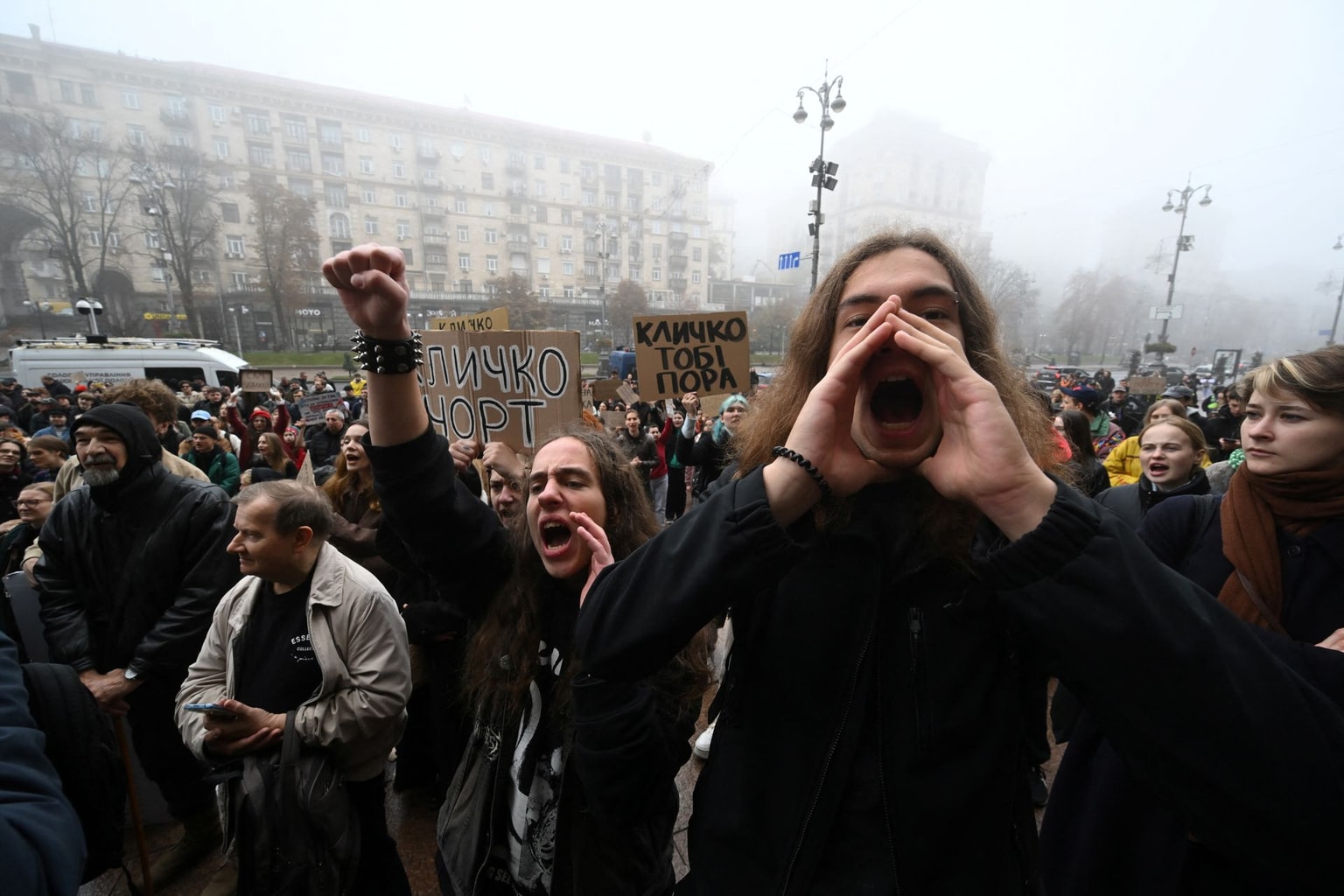
Protests erupted across Ukraine, with thousands gathering in Kyiv and other cities to demand Fedorov's return. The demands soon expanded to include Syrskyi's dismissal. Zelensky eventually removed him and appointed General Mykhailo Drapatyi, a widely respected commander, as his successor.
The move was welcomed by many Ukrainians, and some subsequent protests drew smaller crowds. But the central dispute remained unresolved: Fedorov was still out.
Thousands gathered in a Kyiv park on July 31 before marching through central Kyiv in what organizers called a "march for dialogue and reforms in defense." The protests continued, regularly drawing crowds in central Kyiv, showing that removing Syrskyi had not settled the anger surrounding Fedorov's dismissal.

With no way back into office, Fedorov recorded a video address alleging high-level corruption among people close to the president and demanding elections to reset the system, which the minister was part of for almost seven years.
Fedorov's election proposal went against the desires of those who took to the streets with their demands for the reinstatement of Fedorov as part of the existing power structure.
Dmytro Kozatynskyi, one of the protest organizers, wrote that "a street protest is definitely not the place for electoral discourse."
"I have a negative attitude towards elections during war — I cannot imagine how to technically provide the opportunity to vote and run for office to thousands of servicemen who are currently at the front," he added.
What changed?
Fedorov's call was preceded by a gradual shift in the public discussion. Ukrainian public figures and some of the country's most widely read media outlets had begun breaking the taboo around discussing elections, as Zelensky faced growing criticism for ignoring protests outside his office and refusing to meet demonstrators' main demand: Fedorov's reinstatement.
The parliamentary opposition, however, remains more cautious.
Yaroslav Yurchyshyn, a lawmaker from the opposition Holos party, told the Kyiv Independent that he cannot imagine elections taking place until fundamental problems are resolved.
"Until we have an answer to the question of how to ensure that military personnel and Ukrainians abroad can vote, until the voter registry is verified, and — most importantly — until there have been no attacks for at least six months — I can't imagine how to hold elections," he said.
"That's why I don't understand how Fedorov can call on them to do so."
Volodymyr Ariev, a lawmaker from the opposition European Solidarity party, largely agreed but put the responsibility on Zelensky.
"Zelensky's selfishness, his detachment from reality, and his inability to take the steps that Ukraine — not his administration — needs are leading the country into disaster," he said.
"We've reached a point where we have to choose between elections and chaos — that is, between a bad option and a catastrophe. It's not an easy choice, but if Zelensky doesn't come to his senses, then elections will be the way out."

Mykyta Poturaiev and Oleksandr Merezhko from Zelensky's own Servant of the People told the Kyiv Independent that they cannot imagine holding elections at this stage of the war.
"Holding elections under martial law is legally and politically impossible," Merezhko said.
"The best way to lose the war is to start an election campaign which will inevitably lead to internal political divisions, fierce political struggle, enhanced vulnerability of the country, and, as a result, a starkly divided and dysfunctional parliament incapable of adopting unpopular but necessary laws."
Poturaiev was even more direct.
"I categorically do not support the idea — at least not at this stage of the war," he said.
"Mykhailo came out with a political manifesto in order to launch his own political project."
Poturaiev was among the most vocal public supporters of Fedorov before his recent address.
'Between Shahed drones and ballistic missiles'
People close to Zelensky told the Kyiv Independent that they cannot imagine holding elections at this stage of the war.
Winter is an especially serious concern, as Russia is expected to target Ukraine's energy infrastructure again.
"It's just strange to even think about an election when we have Shahed (drones) and ballistic missiles every day," one senior official from Zelensky's office said. "(Fedorov) lives such a good life, completely detached from reality."
The official had held that view even before Fedorov called for elections.

Fedorov's team, meanwhile, points back to his own argument: democracy is not something Ukraine should postpone indefinitely because Russia attacked it.
"Democracy is not a peacetime luxury. Democracy is part of what we are fighting for today," Fedorov said.
He has not said whether he would run if elections were held. People around Fedorov say he currently has no intention of starting a political party or movement and plans to work in the miltech sector and with think tanks.
But his remarks about accountability quickly gained ground.
On Aug. 19, NABU searched the premises of Iryna Mudra, a deputy chief of staff in the President's Office, and lawmaker Vadym Stolar, according to a law enforcement source familiar with the investigation who spoke to the Kyiv Independent.
Zelensky fired Mudra shortly afterward. She had overseen the judiciary in the President's Office.
The timing showed the broader problem facing the Ukrainian government: the political argument over elections is no longer happening in the same environment as it was several years ago.
Before, whenever Russia or Trump raised the issue, Kyiv could respond with a straightforward argument: Ukraine was under martial law, elections were legally prohibited, and holding them could endanger the country's survival.
Now, the question is becoming more complicated.
Ukraine still faces a full-scale war. Its laws still prohibit elections under martial law. The security and logistical challenges remain enormous. But the political consensus that made the question almost untouchable has begun to crack.
Is an election even possible?
The legal obstacles remain substantial.
Ukraine's martial law, imposed after Russia's full-scale invasion in 2022, explicitly bans presidential, parliamentary, and local elections.
The Constitution extends parliament's authority until martial law ends. It does not contain similar provisions for presidential or local elections.
That means a presidential election would require either lifting martial law or changing the legislation governing it.
Even if the legal barriers were removed, holding an election during or immediately after the war would require extensive preparations.
Ukraine would need to adopt special election legislation, amend existing laws, update the voter registry, allow time for voter registration and public information campaigns, and establish procedures for voting in areas affected by the war.
Authorities would also need to protect polling from political violence, cyberattacks, and foreign interference.
They would need arrangements for Ukrainians living abroad and for military personnel serving on the battlefield.
The country would also have to plan the transition from military to civilian governance, secure funding and personnel, and fill vacancies on the Central Election Commission.
None of this is simple.
That is why some Ukrainians see Fedorov's proposal as unrealistic, while others see it as the beginning of a necessary conversation.
And that is perhaps the most important change.
For years, the question of wartime elections was largely treated as settled before it was even debated.
Now it is being debated inside Ukraine — in parliament, among protesters, among political camps, and even within the President's Office.
Fedorov has not provided a ready-made mechanism for making elections happen.
He has done something potentially more consequential: he has made it politically acceptable to ask whether Ukraine should start figuring one out.
Note from the author:
Hi, this is Tim. One of the authors of this article. Thank you for taking the time to read it.
At the Kyiv Independent, we don't have a wealthy owner or political backing. If you found this article interesting, consider joining our community today.