'Land for peace' won't stop Russia's war on Ukrainian identity
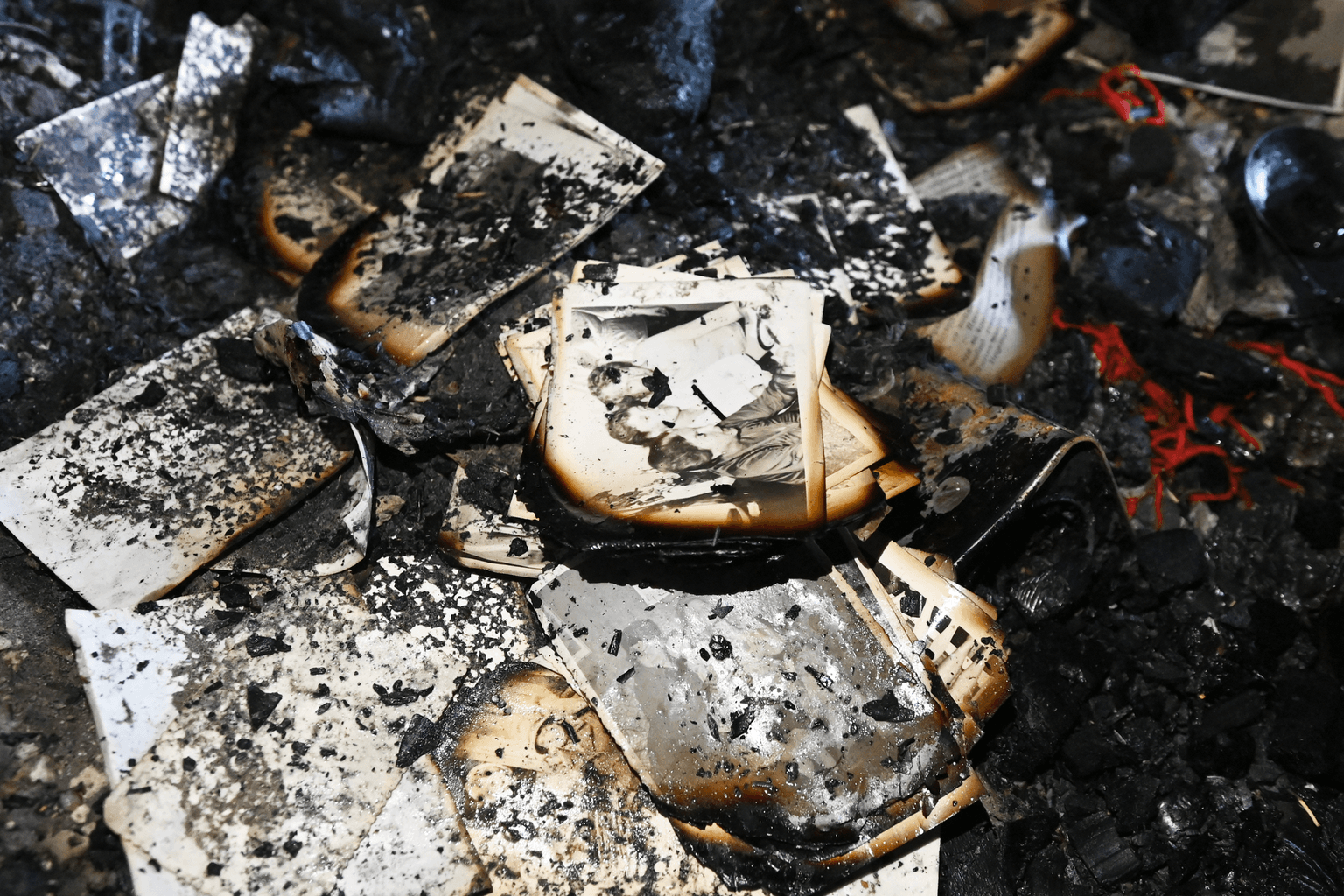
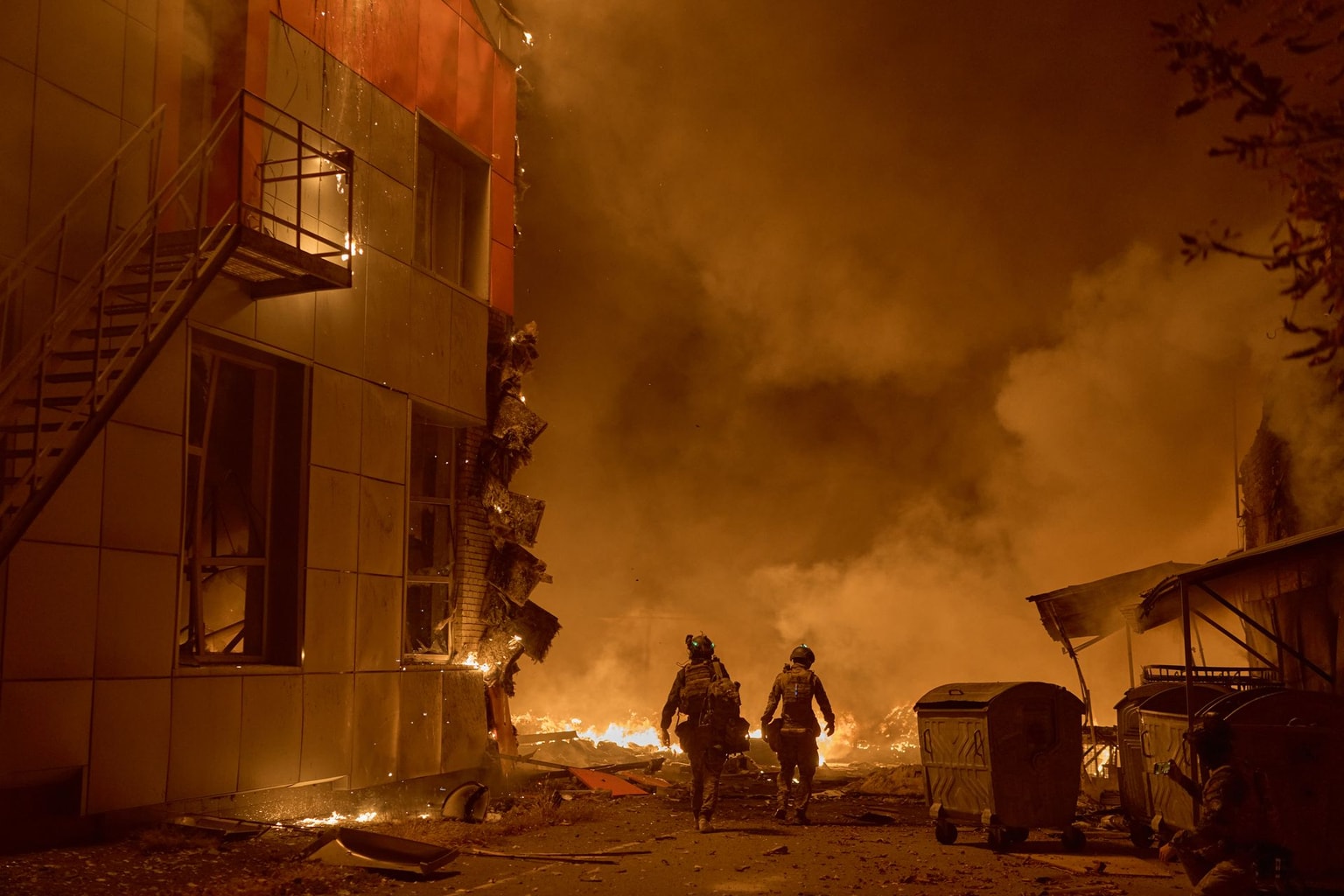
Burnt old photos and books remain in an apartment damaged by a Russian drone strike in Kyiv, Ukraine, on October 10, 2025. (Oleksandr Gusev/Global Images Ukraine via Getty Images)
 on Google
Vincent Artman
Senior Researcher at the University of Ostrava
As Russia's war against Ukraine grinds on with seemingly no end in sight and the Russian leadership rejecting any talk of ceasefires or meaningful negotiations, there has been a growing chorus arguing that Kyiv must face reality, admit that military victory is impossible, enter negotiations, and agree to territorial concessions.
"Land for peace" might be a "difficult choice," or so the argument goes, but it is the only way to avoid a crushing defeat.
Even setting aside the question of whether such unilateral concessions would actually produce a just and durable peace, what is strangely absent from "land for peace" proposals is any acknowledgment that what is at stake is more than "border adjustments."
Territory, after all, is not empty. Indeed, as Olga Burlyuk has argued, the "pornography of land concessions" requires us to imagine a Ukraine without people: since it's "just land" being traded away, "there is no harm in losing some."
But even if for some, "land for peace" may appear to be a tidy formula, reality is far messier: millions of Ukrainians live under an occupation regime that is designed to eradicate their identity.
"Without a just peace, the war will continue in the occupied territories until there are no Ukrainians left there."
Moscow already treats the occupied territories as permanent, inalienable parts of the Russian Federation and has established mechanisms to ensure that the occupation becomes self-perpetuating, including integration into Russian legal and political structures; the introduction of the ruble; establishing control over the information space; and coerced passportization, among many other things.
Many of these mechanisms, moreover, are explicitly targeted at children, whose identities and worldviews tend to be more malleable than those of adults.
This emphasis is reflected in the range of interventions targeted at youth from very early ages. Starting with their first interactions with the school system, children are subjected to a multi-layered system of indoctrination disguised as "patriotic education."

The Ukrainian language, meanwhile, has been all but eliminated in the educational system, with classes taught in Russian, often by ideologically reliable instructors from Russia.
Updated textbooks propagate distorted historical narratives about the "liberation" of "historically Russian land."
Additionally, children of all ages are exposed to paramilitary training, including in battlefield first aid and the use of weapons and drones, and are taught to glorify the Russian military and, ultimately, be willing to fulfill their patriotic duty to serve under arms.
Such policies, according to a recent OSCE report, are "aimed at erasing Ukrainian children's identity and replacing it with a Russian one. This is achieved through a purposefully instilled system in which the future development of any Ukrainian identity of children growing up in the occupied territories would be impossible."
As Moscow encourages migration into the occupied territories from other parts of Russia, often into the homes of the former inhabitants, the stakes are plainly much greater than “just land.”
What it really amounts to is an invisible war against Ukrainian culture and identity: if the occupation continues for long enough, future generations will be issued Russian passports at birth, be raised speaking Russian, and will undergo ideological socialization, growing up at best ambivalent towards Ukraine, if not openly hostile to it.

Moreover, beyond its human and ethical consequences, territorial concessions also carry normative risks.
Agreed to at gunpoint, they not only would effectively legitimize territorial aggression, but would also normalize the systematic destruction of Ukrainian identity by rendering it as an "internal" affair of the newly enlarged Russian Federation: what could formerly be condemned as an illegal occupation would become a process duly carried out in accordance with Russian laws inside Russian borders, camouflaging the violence of assimilation behind new maps of territorial sovereignty, allowing the world to avert its gaze.
Few of us are in any position to predict how the war will end, or on what terms.
Despite the recent spate of articles proclaiming that Putin's time is about up, rumors are swirling about an imminent mobilization, tens of thousands of North Korean soldiers are coming to Moscow's aid, and the Russian leadership remains doggedly uninterested in negotiations that do not amount to Ukrainian capitulation.
But at the same time, Ukraine's "long-range sanctions" campaign, the stabilization of the front lines, and the mounting isolation of Crimea are changing the landscape of the war in ways that would have been considered far-fetched even a year ago.
And so, Russia will continue to wage war, and Ukraine will continue to defend itself.
However the kinetic war ultimately ends, we must avoid vague platitudes about "territorial concessions," as if what is at stake is merely who controls this or that bit of land or who pays taxes to whom.
As inconvenient as it may be to acknowledge, without a just peace, the war will continue in the occupied territories until there are no Ukrainians left there.
Editor's note: The opinions expressed in the op-ed section are those of the authors and do not purport to reflect the views of the Kyiv Independent.