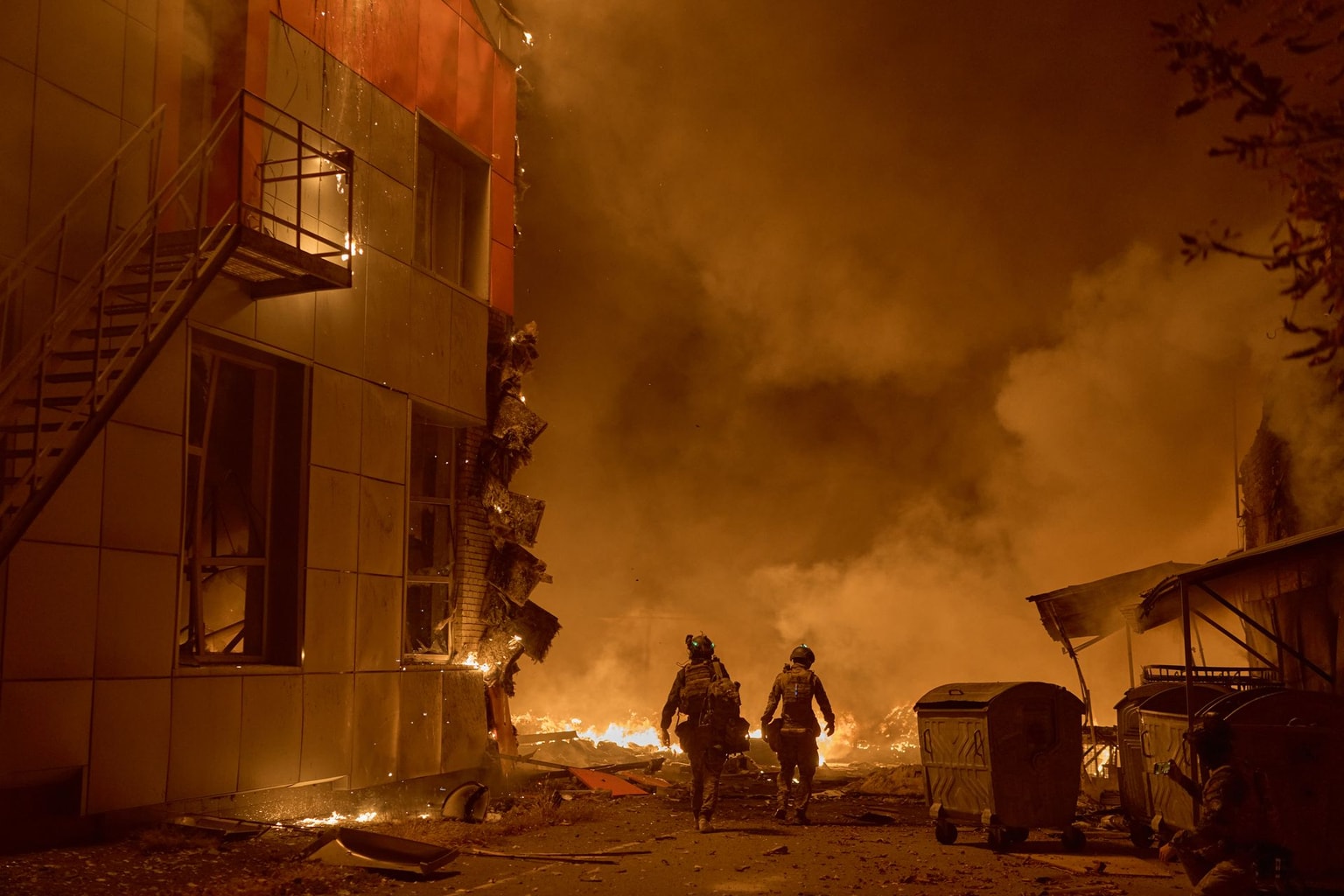
Ukraine can now forcibly evacuate children from the front line. Critics say it’s not that simple
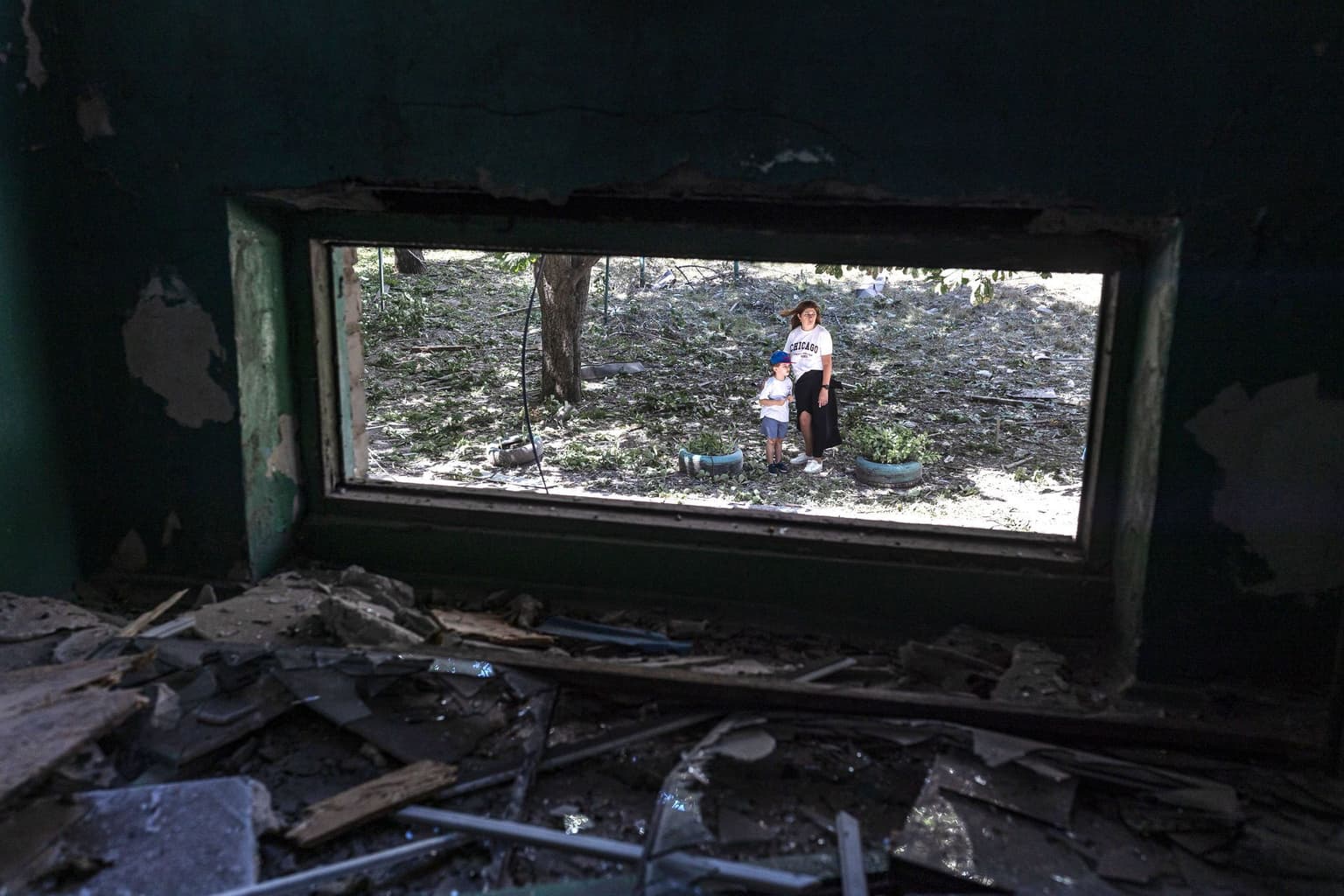
For illustrative purposes. A mother and her son stand at the scene of a Russian multiple rocket launcher attack on a neighborhood in Sloviansk, Ukraine, on June 21, 2026. (Diego Herrera Carcedo/Anadolu via Getty Images)
 on Google
Editor's note: Some names in this story have been changed to protect the identities of the mothers, who spoke on condition of anonymity.
As Russian forces advanced on a city in eastern Ukraine this spring, not everyone followed the evacuation orders. Mariia, mother of a two-year-old daughter, hesitated, wary of the uncertainty that comes with displacement.
Mariia’s family had already fled once before in 2022 at the start of the full-scale invasion, only for a lack of support to drive her family back to Ukraine’s "fortress belt" in eastern Ukraine.
Families choose to stay in front-line areas for many reasons — including little government help — leaving thousands of children in harm's way. As Russia's war rages and more and more territories become dangerous battlegrounds, the government passed a reform bill in March allowing the state to forcibly separate children from parents refusing to evacuate.
Previously, a local government could announce a "mandatory evacuation," but this was not a firm legal obligation — people could refuse to leave as long as they signed a waiver. In theory, parents weren't supposed to have a choice, but enforcing the rule was difficult in practice. Evacuation workers say some parents even hide their children rather than leave.
According to the new law, when parents refuse to leave a front-line area, their children can be forcibly evacuated but without depriving them of their parental rights. They can be reunited with their children within six months if they relocate to a safer area.
The new legislation has already caused concern among human rights groups and U.N. agencies who say that the coercive approach risks frightening families than protecting them. While the government maintains that the law is designed to protect children who remain in dangerous areas, its critics are calling for a system that addresses why families refuse to leave and provides clearer safeguards when they do.
Critics also say the law does not clearly lay out how forced evacuations should be done. In the only two cases of forced evacuation under the law, children were brought to healthcare facilities after being evacuated — one was later reunited with family, while the other was placed into the foster care system, according to the State Service for Childrens' Afffairs.

Mariia and her daughter were eventually evacuated by volunteers. By late May, Mariia had found a new home and placed her daughter in a children’s group, but had not yet found work. Their apartment was expensive, she said, because landlords were reluctant to rent to a displaced mother.
Olga, another mother speaking from a site for internally displaced people in Kharkiv, said a documentation issue was holding up her financial support, leaving the family reliant on daily food parcels.
Yuliia Matviichuk, co-founder of the human rights group Crisis Insight, said that the law "starts from the end of the problem, not the beginning," by pushing people away from danger rather than pulling them to safety.

Crisis Insight and other Ukrainian organizations in an open letter urged the president to veto the law. The NGO coalition deemed the methods of evacuation poorly defined, and warned that involving the Military Law Enforcement Service risked convoys coming under Russian attack.
A coordination group led by the UN Refugee Agency (UNHCR) issued guidance advocating for humanitarian support for evacuations to remain civilian, voluntary, and human-rights-based, including a recommendation not to support evacuations 'that involve coercive measures or lack of consent.'
UNICEF warned the approach would increase pressure on an overstretched care system, possibly undermining further reform.
People’s Deputy Oleh Bondarenko, who led work on the law, defended it in a written comment to the Kyiv Independent as "high-quality," and written with the "legal expertise of the relevant central executive authorities." He argued it "clarifies the tasks and specifies the powers of state authorities."
While controversial, some argue the law is necessary. Aksana Filipishina, a human rights expert with the Ukrainian Helsinki Human Rights Union, said: "The state is obliged to act decisively, even if these decisions are unpopular."

While the Convention on the Rights of the Child states children should not be separated from parents, it acknowledges there are cases where it’s necessary. Similarly, international humanitarian law says that civilians need to be moved away from military objectives, even forcibly in some cases.
The evacuation law itself, though, is still half-built. A government decree meant to accompany it has never been issued, and the evacuation process was not being carried out as systematically as it should be, according to Ukraine’s human rights ombudsman, Dmytro Lubinets. As of mid-July, Matviichuk said that as far as she knew, the missing regulations were finally in the works.
So far, forced separations remain rare. But the law shapes families’ behavior even when it is not used. Without fuller reform, Matviichuk said, the law works as a "tool to frighten parents into leaving" rather than a legal framework that provides "clear rules for all actors involved."