Ukraine war latest: Ukraine continues strikes on Russia's oil industry as Moscow races to expand missile production
 on Google
Key developments on Aug. 10:
- Ukraine's military intelligence reveals Russian missile production figures 'exceeding monthly targets'
- Ukraine strikes Russian petrochemical plant more than 2,000 kilometers from border, General Staff says
- Russian oil refinery in Tatarstan targeted as Russia claims Ukrainian 456 drones intercepted overnight
- Russia's version of Starlink deploying quicker than planned, Ukraine's military intelligence says
- Russia rules out freezing war in Ukraine ahead of US envoy visits to Kyiv, Moscow
Russia's monthly production of key missiles is running 10–20% above target, while output of some models is even higher, Vadym Skibitskyi, deputy head of Ukraine's military intelligence agency (HUR), said in an interview with RBC-Ukraine, published on Aug. 10.
According to Skibitskyi, Russia produced 87 Kh-101 cruise missiles in July, reaching 140% of its planned monthly output. Moscow had set a target of 72 Kh-101 missiles for both July and August.
A similar pattern can be seen with the Kalibr cruise missile: Russia planned to produce 26 in each month but manufactured 29 in July, exceeding its target by 11%. The largest overperformance was recorded in Kh-35 production, which reached 200% of the planned monthly output, the official added, without specifying the exact number of missiles produced.
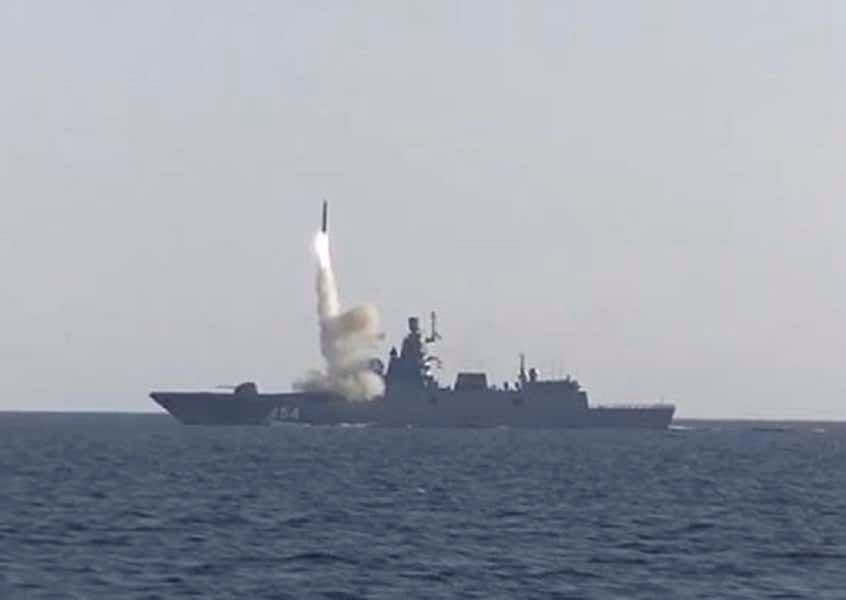
Skibitskyi added that, as of Aug. 3, Russia had already fulfilled its annual production targets for the Zircon and Oniks missiles, with 33 and 60 units manufactured in the first seven months, respectively.
Skibitskyi said Moscow has significantly increased ballistic missile production partly because Russian defense plants are now operating under a "simplified system of technical controls" for missile production.
"However, there is another explanation here — the Russians have also been able to increase ballistic missile production because they have now stopped producing Kinzhal missiles. Accordingly, the rocket fuel is no longer going to the Kinzhal, but to other ballistic missiles," Skibitskyi said.
"In addition, they have suspended the production and use of Kh-32 missiles, so the funds and components allocated for them have been redirected to other types of missiles, which are considered more effective."
Ukraine strikes Russian petrochemical plant more than 2,000 kilometers from border, General Staff says
Ukrainian forces struck the Tobolskneftekhim petrochemical plant in Russia's Tyumen Oblast on Aug. 10, the General Staff said.
An air raid alert was issued in Tyumen Oblast at around 1 p.m. local time amid a drone attack. Regional Governor Alexander Moor said around 4:40 p.m. that falling drones caused a fire at an industrial facility, but did not specify where the incident occurred.
The damaged facility is located in the city of Tobolsk, about 2,200 kilometers (1,370 miles) from the Ukrainian-Russian border. The attack struck the plant's central gas fractionation unit, according to the General Staff.
The unit processes 6.6 million tons of feedstock annually and produces materials considered critical to Russia's military-industrial complex, including butadiene, isobutylene, maleic anhydride, and MTBE, a high-octane oxygenate additive.
These products are used to manufacture rocket fuel components, aviation fuel, composite materials for drones, and high-octane gasoline, the report read.

Russian oil refinery in Tatarstan targeted as Russia claims Ukrainian 456 drones intercepted overnight
Ukrainian forces struck a Russian oil refinery in Tatarstan and hit military targets in occupied Ukrainian territories overnight on Aug. 10, while Russia claimed its air defenses intercepted 456 Ukrainian drones across the country.
Russia's Defense Ministry claimed that its air defenses intercepted 456 Ukrainian drones overnight across 16 Russian regions, Moscow, the occupied Crimean Peninsula, and the Krasnodar Krai, according to their statement.
Eyewitnesses posted footage of drones flying over the Russian city of Nizhnekamsk in the Republic of Tatarstan as an oil refinery was targeted by Ukrainian forces, according to Telegram channel Supernova Plus.
The drone attack on Nizhnekamsk reportedly killed 12 people and injured 39, according to the press service of Tatarstan's head Rustam Minnikhanov.
The Ukrainian General Staff later confirmed the strike on Taneco, saying a fire was recorded at the refinery in Nizhnekamsk. The extent of the damage was not immediately clear.
read also
Russia's version of Starlink deploying quicker than planned, Ukraine's military intelligence says
Russia is accelerating the deployment of its Rassvet satellite communications system, a domestic equivalent of Starlink, faster than previously planned, Ukraine's military intelligence deputy chief, Major General Vadym Skibitskyi, said on Aug. 10.
"Moscow is implementing Rassvet, effectively a Russian analogue of the Starlink system. And they have begun launching it significantly faster than was envisaged in their plans," Skibitskyi said in an interview with RBC-Ukraine.
Russia launched its first 16 Rassvet satellites into low Earth orbit in March 2026 and is continuing to expand the constellation, according to Skibitskyi. Earlier reports said a second batch of satellites was launched in July.
Skibitskyi added that Russia plans to build a constellation of 292 satellites by 2027 and expand it to 924 satellites by 2035.
"At the moment, they can operate only intermittently, when a satellite passes over our territory. When the Russians deploy a full constellation of satellites, this system will work like Starlink," Skibitskyi said.
Skibitskyi also said Ukrainian officials are already discussing how to counter the system, without providing details.
Russia rules out freezing war in Ukraine ahead of US envoy visits to Kyiv, Moscow
Russia will not agree to "freeze" its war against Ukraine without addressing what Moscow calls the "root causes," Russian Deputy Foreign Minister Mikhail Galuzin told state-owned TASS on Aug. 10.
"As Russian President Vladimir Putin has said on numerous occasions, no 'freeze' is possible without addressing the root causes of this crisis," Galuzin said. "It is clear that (President Volodymyr) Zelensky has lost all touch with reality and is trying to escalate the conflict."
Galuzin also criticized Washington's approach to the war, calling U.S. policy contradictory.
"The ongoing deliveries of U.S. weapons, the provision of intelligence, and other forms of assistance speak for themselves — they are incompatible with a commitment to peace," he said.